
Review · JAPAN
Zodiac Shrines and Naha Backstreets Cycling Tour
Naha’s best cultural moments are often tucked behind its main roads. This small-group ride takes you through back alleys, old neighborhoods, temple grounds, sacred springs, and royal sites while following a pilgrimage route tied to Okinawa’s zodiac traditions. You also get a practical bonus: an electric bicycle for the hills between Naha and Shuri.
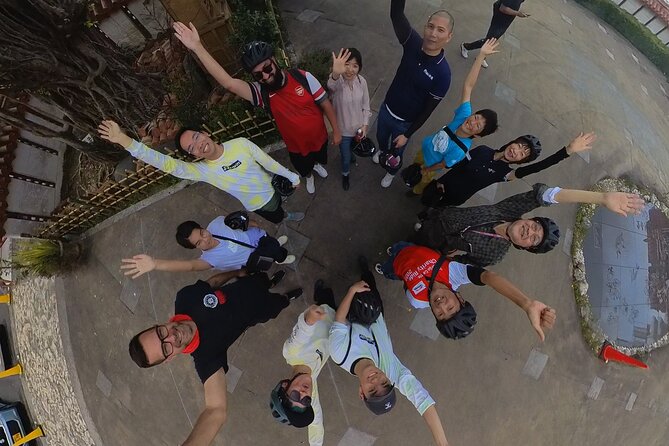
I like the chance to see Okinawan worship as something people still practice, not just something displayed behind glass. I also like the compact group size, capped at five, which gives guides such as Maria, Jojo, Sally, and Reija room to explain local customs and help with photos.
The main consideration is traffic. Part of the route uses busy streets, and the tour requires basic cycling confidence. The e-bike helps on hills, but you should still be comfortable riding near cars and following your guide.
Key points to know before booking
- A four-hour pilgrimage by e-bike: Ride between Naha and Shuri rather than moving from sight to sight by bus or taxi.
- Small groups capped at five: The format allows direct conversation with your guide and a more personal pace.
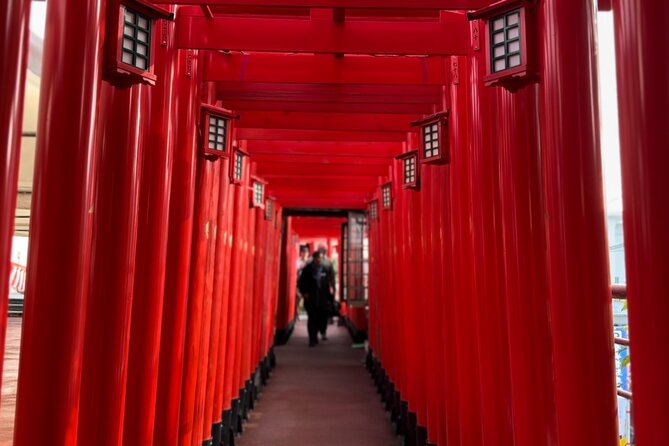
- Shrines, temples, and sacred water: Stops include Shuri Kannondo, Ankoku-ji, Sairaiin, Seikoji, and Shuritobarucho spring.
- A useful cultural souvenir: Your included goshuin-cho pilgrim’s book gives the route a clear purpose and something to keep.
- Some riding on busy streets: The route is not a traffic-free cycling path, so road awareness matters.
- Weather can change the plan: The operator may alter the route if rain is likely or severe weather is expected.
Why this ride shows you a different Naha

Most first visits to Naha revolve around Kokusai Street, the public market, Shuri Castle, and the monorail. Those places are worth your time, but they give you only part of the city. This tour shifts attention to smaller religious sites and ordinary streets where traditional houses still appear between newer buildings.
The focus is not simply sightseeing. You are following a pilgrimage connected to zodiac shrines and the spiritual life of Naha and Shuri. Along the way, you may see people visiting temples, honoring ancestors, or praying for health and family well-being. That makes the experience feel more like an introduction to living Okinawan customs than a standard list of famous landmarks.
The electric bicycle matters here. Shuri sits on higher ground, and the route includes hills. An e-bike reduces the strain, leaving you more energy to listen and look around. It does not remove the need to pedal or pay attention, but it makes the four-hour outing realistic for many people who would not choose a regular bicycle tour.
A few more rides around Japan worth a look
- Tokyo Great Cycling Tour
★ 5.0 · 811 reviews - Tokyo Top Highlights 3h Guided E-bike Tour
★ 5.0 · 714 reviews - Hiroshima in a Nutshell: Morning Bike Adventure
★ 5.0 · 524 reviews
Starting at Makishi with an e-bike
You meet near Makishi Monorail Station at 3-chōme-13-20 Makishi. The shop is about a one-minute walk from the station, which is useful if you are arriving by public transport. The tour begins with bicycle pickup and a short safety briefing.
The supplied bicycles are electric, and helmets are included. You also receive a goshuin-cho, a Japanese pilgrim’s book used to record visits to religious sites, plus snacks. Bottled water is not included, so bring your own water. Camera mounts and phone holders are also not provided.
The group limit of five is one of the strongest practical features. A larger cycling group can become awkward on narrow streets and makes questions harder. Here, the guide can keep an eye on the group and explain the meaning of each stop without addressing a crowd.
The route takes about four hours, although one ride was completed in roughly two and a half hours. Your exact timing may depend on the group, traffic, stops, and the guide’s explanations. Treat the stated duration as a useful planning figure rather than a strict stopwatch schedule.
Shuri Kannondo and the view across Shuri
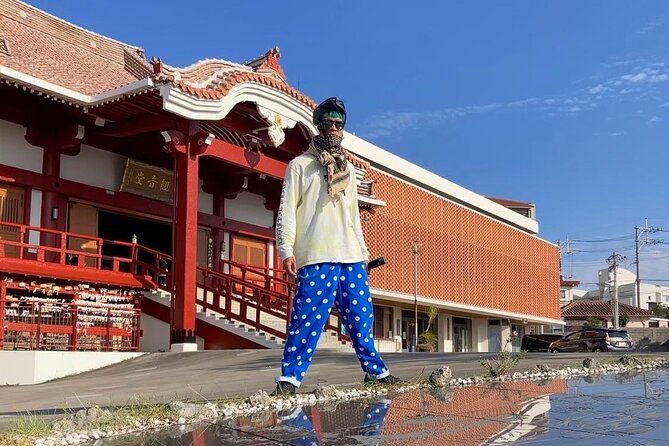
The first major stop is Shuri Kannondo, a bright vermilion temple associated with Kannon Bodhisattva, the guardian deity of the Ryukyu Kingdom. The color alone makes it easy to spot, but the carvings and ornaments reward a closer look.
The temple also gives you a view over Shuri. This is an early reminder that the tour is not confined to one kind of attraction. You get religious art, a royal connection, and a city view in the same short visit.
Your guide can help explain the role of Kannon and how the site fits into Okinawan belief. That context is important because temple buildings and bright decorations can otherwise blur together if you are visiting several in one morning.
Ankoku-ji and traditional Naha streets

The ride to Ankoku-ji passes through a local part of Naha where some traditional houses remain. This stretch may be as valuable as the temple itself. You are seeing how older forms of Okinawan housing fit into a working city rather than visiting an isolated historic display.
Ankoku-ji has practiced Okinawan Buddhism for more than 500 years. The site adds a long religious thread to the route, while the ride through nearby streets keeps the visit grounded in the present.
This is where the guide’s role becomes especially useful. Maria was praised for explaining Okinawan culture while helping the group through the city, and Reija took time to explain the meanings of the temples. You are not just being pointed toward a building. You are being given a way to understand why people come there.
Same roads, a different day in the saddle:
- Hiroshima 2hr Peace Cycling Tour with Local Guide
★ 5.0 · 321 reviews - Hiroshima: Peace Cycling Tour with Local Guide
★ 4.8 · 286 reviews - One-Day Osaka Bike Adventure: 5–6 Hours
★ 5.0 · 246 reviews - Eat, Drink & Cycle: Osaka Foodie Bike Tour
★ 5.0 · 224 reviews
Shuri Castle’s vermilion ceremonial gate
The stop at Shuri Castle focuses on a special ceremonial gate rather than a full castle visit. Its vermilion color and balanced design make it one of the most recognizable symbols of Okinawa.
You can take a photograph with your bicycle in front of the gate. That small detail gives the stop a relaxed cycling-tour feel rather than the formal mood of a standard palace visit. It also offers a clear photo opportunity without requiring a long stay.
Do not expect this tour to replace a full visit to the castle grounds. The listed stop is brief, about 20 minutes, and centers on the gate. If Shuri Castle is a top priority, plan separate time for it after or before the cycling tour.
Sairaiin, the Daruma Temple
Sairaiin is also called the Daruma Temple because of its bright red daruma dolls. People visit to pray for good health and pregnancy, while also giving thanks for their current lives.
That focus gives the stop a personal quality. It is not only about admiring color or architecture. You can see how a religious site connects to hopes for family, health, and gratitude.
The red daruma figures make this one of the easier stops to remember, especially if you are taking photographs. Still, treat it as an active place of worship. Your guide can help you understand the customs, but the setting calls for quiet attention rather than a quick photo stop.
Seikoji beneath the elevated monorail
Seikoji offers a sharp change of mood. You cross a main street and pass beneath the monorail running overhead. Then the route reaches a temple with a quieter, more sacred feel.
The current temple was rebuilt after the war, while an ancient Japanese wax tree remains beside it. That contrast gives the stop a useful lesson in Okinawa’s past: buildings can be lost and rebuilt, while older natural features and religious practices continue.
The approach also shows how closely different eras sit together in Naha. Modern transport, busy roads, rebuilt religious buildings, and older trees share the same small area. A guide can point out those connections in a way that is easy to miss when you move around only by car.
Shuritobarucho and the spring in the forest
Shuritobarucho is described as a miraculous spring. Local tradition says water was found deep in the forest after an Okinawan princess noticed waterfowl nearby.
The story connects the spring to the royal past, but the water itself gives the site a more immediate feel. You are visiting a place shaped by nature and belief, not simply looking at a monument. The stop lasts about 15 minutes, so expect a short visit rather than a long walk or swimming stop.
This is one of the places where the e-bike route earns its keep. You can reach a quiet, wooded sacred site without giving up half a day to transportation. The setting also breaks up the temple visits and adds a natural pause to the pilgrimage.
Sogenji-dori and the royal mausoleum area
The route includes a thrilling downhill ride along Sogenji-dori toward the sacred place where successive kings of the Ryukyu Kingdom were entombed. The area is now a city park with clean air, a stone gate, and a large banyan tree.
The downhill section sounds enjoyable, but it is also the point where you should ride carefully. Follow the guide’s pace, watch the road, and do not let the promise of a fast run distract you from traffic or pedestrians.
The royal burial site gives the tour a strong closing chapter. Earlier stops show worship, healing, family hopes, and sacred water. Here, the route returns to the rulers of the Ryukyu Kingdom and the political past that shaped Shuri.
How the guides shape the experience
The guide can make or break a cultural cycling tour. Names connected with this experience include Maria, Jojo, Sally, and Reija. The information provided about the guides points to a friendly, question-friendly style, with explanations of Okinawan culture and help taking memorable photos.
Jojo was especially willing to answer questions and take pictures. Sally guided a version of the outing that included the castle and other interesting areas, while Reija explained the meanings of the temples. The exact guide depends on the day, so do not assume you will get a particular person.
Because the group is small, you should have a fair chance to ask about customs, architecture, and the pilgrimage book. That is a major part of the value. Without explanation, some of the religious details could seem mysterious or repetitive. With a good guide, each stop has a distinct reason for being on the route.
Is $108.72 a fair price?
At $108.72 per person, this is not the cheapest way to see Naha. You are paying for the bicycle, electric assistance, helmet, guide, small group, snacks, and a carefully linked route through several sites.
The value improves if you want more than transportation between major attractions. A taxi-based outing could take you to Shuri Castle, but it would not give you the same slow movement through back streets, traditional residential areas, temples, and small sacred sites. You also avoid arranging several separate rides between Naha and Shuri.
The included goshuin-cho adds a useful personal touch. It turns the stops into a connected pilgrimage instead of a collection of unrelated photo opportunities.
Still, the price may feel high if you mainly want a standard Shuri Castle visit or if you are already planning to rent a bicycle independently. The tour is best value for someone who wants cultural interpretation, a set route, and the ease of an e-bike without planning every stop.
Who should book this cycling tour?
I would choose this outing if you enjoy local customs, religious sites, and seeing how a city changes from main road to back street. It also suits people who want a compact way to combine Naha and Shuri in one morning or afternoon.
You should be comfortable cycling for several hours and riding on some busy streets. The e-bike helps with hills, but it does not turn the activity into a passive sightseeing ride.
Families can ask about attaching a child seat for children aged one to five. Most people can participate, but the road element means you should consider your own cycling comfort and the needs of any child before booking.
The small group makes this a good choice for solo participants and couples who prefer direct contact with a guide. One outing had only one participant plus the guide, showing that the format can feel very personal when demand is low.
The tour requires good weather. If the precipitation probability exceeds 70 percent or severe weather is expected, the operator may change the plan and contact you the day before.
Booking, cancellation, and practical details
The tour uses a mobile ticket and starts and ends at the same shop near Makishi Monorail Station. After returning the bicycle, you are free to continue exploring Naha on your own.
Free cancellation is available up to 24 hours before the start time for a full refund. Changes or cancellations inside that 24-hour window are not accepted for a refund. If poor weather forces cancellation, you can choose another date or receive a full refund.
Bring water, since bottled water is not included. Wear clothing suitable for cycling and religious sites, and leave room in your schedule for the tour to run close to four hours.
Should you book it?
Book this tour if you want Naha to feel like more than a list of famous stops. The combination of e-bike riding, small temples, sacred water, royal sites, and a pilgrim’s book gives you a thoughtful view of Okinawan culture.
Skip it if you dislike cycling near traffic, want a deep interior visit to Shuri Castle, or prefer to explore at your own pace without a fixed route. For everyone else, the price is reasonable for a small group and a route that would be difficult to arrange efficiently on your own.
FAQ
Where does the tour start?
It starts at 3-chōme-13-20 Makishi, Naha, Okinawa 900-0013, Japan, near Makishi Monorail Station.
Where does the tour end?
The tour ends back at the same shop where you collect and return the bicycle.
How long does the experience last?
The tour lasts approximately four hours.
How much does the tour cost?
The listed price is $108.72 per person.
What is included?
The price includes use of an electric bicycle, an Incom-installed cycling helmet, a pilgrim’s book called a goshuin-cho, and snacks.
Is bottled water included?
No. Bottled water is not included, so you should bring your own.
Are phone holders or camera mounts provided?
No. Camera mounts and mobile phone holders are not included.
How many people can join?
The activity has a maximum of five participants.
Can young children join?
Children aged one to five can have a child seat attached to a parent’s bicycle. You should consult the staff for details.
What happens if the weather is bad?
If the precipitation probability exceeds 70 percent or severe weather is expected, the operator may change the plan and contact you the day before. If the tour is canceled because of poor weather, you can receive a different date or a full refund.
Just added around Japan
- Slow Cycling Tour at Uji’s Matcha Green Tea Fields and Heritage★ 5.0 · 25 reviews
- Tokyo Non-Touristy Local Private E-bike Cycling Tour from Asakusa★ 5.0 · 2 reviews
- Little Adventure with Cycling in Tokyo No. 1 Crystal Clear River★ 5.0 · 6 reviews
- Tokyo Night Bike Tour: From Shibuya to Tokyo Tower via Roppongi★ 5.0 · 29 reviews
- 2.5 Hour-Guided Cycle Tour in the Central Tokyo★ 5.0 · 25 reviews
- Tokushima & Mt. Bizan BROMPTON Slow Cycling Tour★ 5.0 · 5 reviews
- Tokyo’s hidden nature cycling tour – Okutama Historical Road Tour★ 5.0 · 6 reviews
- Wakimachi BROMPTON Slow Cycling Tour★ 5.0 · 5 reviews
Cycling Tours, compared.
Ninh Binh Day Trip: Hoa Lu-Trang An/Tam Coc-Mua Cave-Cycling-Boat
Read our review →
Cai Be Mekong Delta Tour: Cooking Class, Cycling & Craft Villages
Read our review →

Countryside Bike Tour from Amsterdam: Cheese, Clogs & a Windmill
Read our review →
Electric Cycling Tour of Ubud with Free Hotel Transfer and Lunch
Read our review →

Browse the lists this tour appears in