
Review · TOKYO
Tokyo’s hidden nature cycling tour – Okutama Historical Road Tour
Okutama gives you a very different Tokyo: forest roads, mountain villages, and clear spring water instead of towers and train stations. On this 3.5-hour ride, guide David leads you along an old trade route once used to carry goods toward Tokyo, with stops for wasabi fields, small shrines, a river valley bridge, Lake Okutama, and a local museum.
I like two things especially. First, the route brings you into everyday mountain life, not just a scenic viewpoint. Second, the small group, capped at six people, should make it easier to ask questions about local customs and history. The main consideration is fitness: you need a moderate level of conditioning, and the tour runs only in suitable weather.
Key points before you book
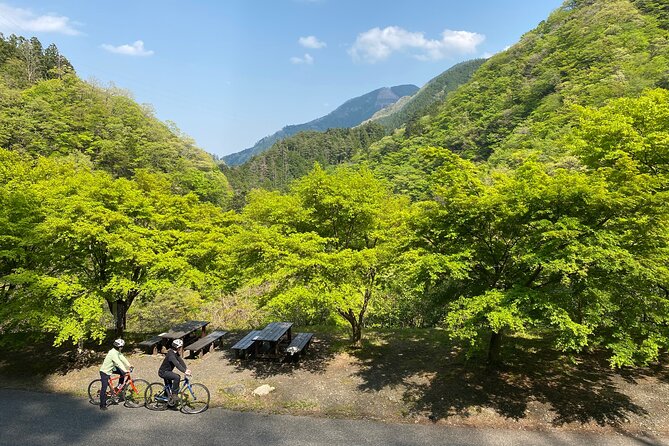
- An old trade road through rural Tokyo: Ride along Okutama Mukashimichi, a historic route lined with mountain homes, small religious sites, and forest.
- A close look at local food production: See wasabi growing near a spring and drink the water at a village source.
- Wildlife and river views: The high suspension footbridge offers a chance to spot monkeys, though wildlife sightings are never guaranteed.
- Lake Okutama by bicycle: Walk along the dam, visit a small heritage museum, and cross the Mugiyama Floating Bridge.
- A relaxing finish: Return to town for an onsen foot soak and time to shop for souvenirs.
- A compact, active outing: The tour lasts about three and a half hours, includes the bicycle, water, and an intercom helmet, and accepts no more than six people.
Why Okutama feels far from Tokyo
Tokyo Prefecture reaches well beyond the famous districts of Shinjuku, Shibuya, and Asakusa. In the western mountains, Okutama offers a quieter side of the prefecture, with forest, steep river valleys, springs, and small settlements.
That contrast is the main reason to book this ride. You are not simply pedaling through a park beside the city. You are following an old road that once served as a trade route into Tokyo, while your guide explains how people lived, worked, and worshipped in the mountains.
The experience is especially useful if you have already seen Tokyo’s major sights and want a day with a different rhythm. It is also a good choice if you prefer local culture delivered in small details: a roadside statue, a spring used by villagers, a small shrine under a rock, or the sight of wasabi growing in flowing water.
The tour begins at 1pm, but you should arrive by 12:30pm to check in and prepare. Since the ride lasts about three and a half hours, you still have time afterward for dinner or a return journey, though you should allow enough time to reach Okutama from central Tokyo.
More heritage and temple rides in Tokyo:
- Half-Day Ubud Electric Cycling Tour to Tirta Empul Water Temple
★ 5.0 · 315 reviews - Sukhothai: Historical Park & Countryside Cycling Tour
★ 5.0 · 276 reviews - Full Day Cycling tour to Sukhothai Historical Park
★ 5.0 · 163 reviews
Riding the old road at Okutama Mukashimichi
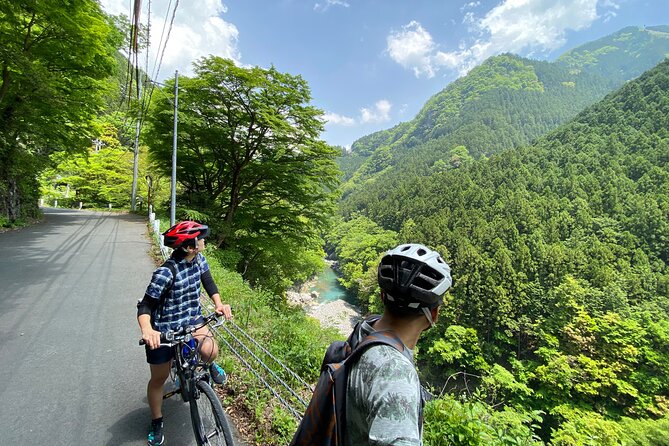
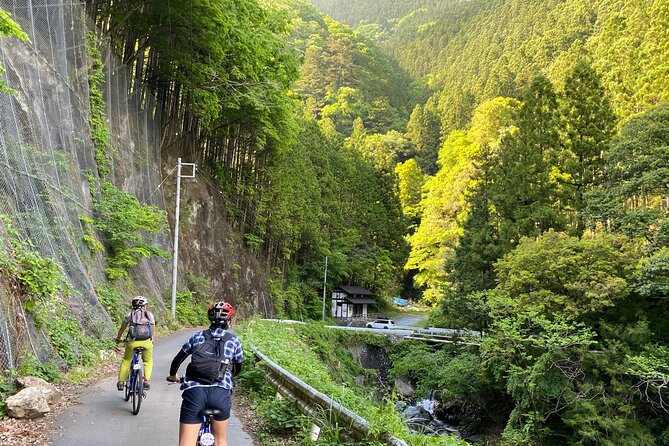
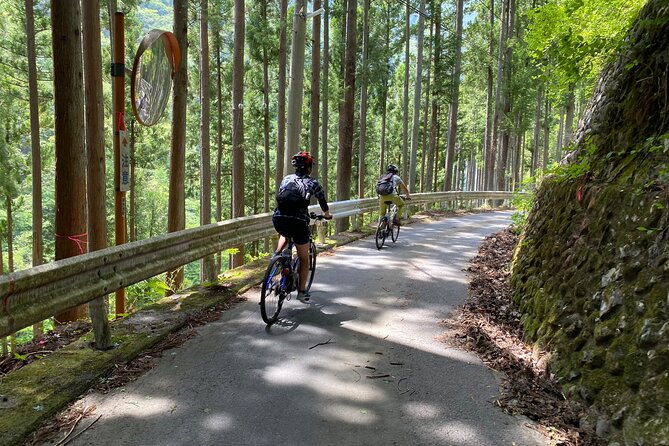
The first and longest part of the tour takes about 90 minutes. Okutama Mukashimichi is the heart of the experience, and the road gives you a useful sense of how this mountain area connects to Tokyo.
Expect forest cycling, village views, and a route that includes some cultural stops rather than one long, uninterrupted ride. The guide explains the small shrines and statues placed along the road, helping you notice details you could easily pass without understanding.
One stop brings you to a small mountain village with a spring water source. You can drink the water there, an appealing pause on an active afternoon. Nearby, you can see wasabi being grown. Wasabi is associated with Japanese food around the world, but seeing it in its local growing setting makes the crop feel much less abstract.
The spring and wasabi field also show why water matters so much in mountain communities. The tour does not treat the countryside as scenery alone. You get a glimpse of the practical relationship between clean water, farming, settlement, and food.
The route then reaches a mountain shrine built beneath a large rock. This is the kind of modest religious site that can be more revealing than a major temple. Its setting links local belief with the natural features of the mountain, and the guide can explain the meaning of the smaller shrines and roadside statues along the way.
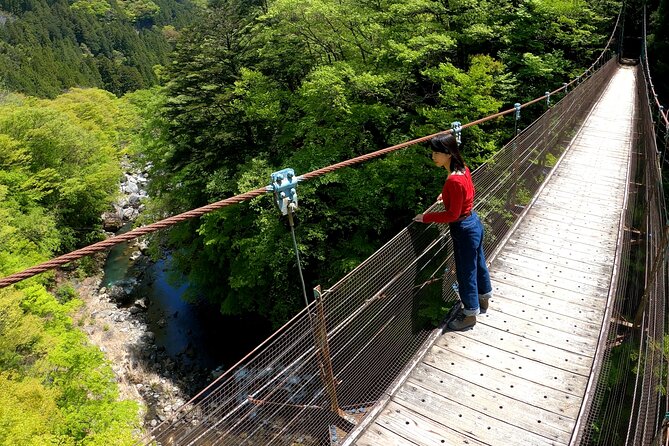
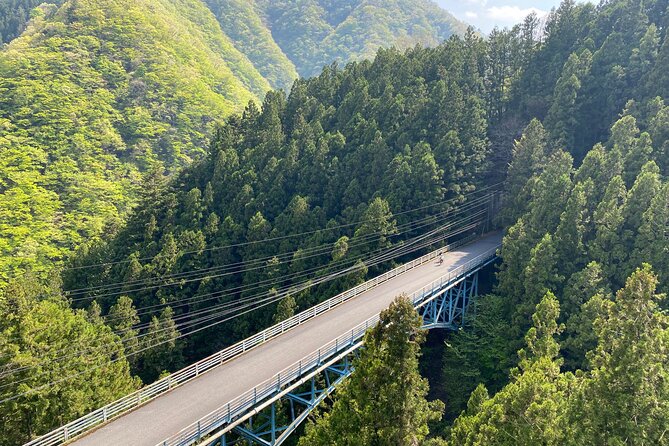
A high suspension footbridge over the river valley adds a change of pace. From here, you can look into the valley and perhaps see local wildlife, especially monkeys. Keep that perhaps in mind. The tour offers an opportunity for wildlife viewing, not a guaranteed animal encounter.
The bridge may be the most demanding part psychologically for anyone uneasy with height. You are also switching from cycling to walking at this stop, so sensible shoes and a steady pace matter. The supplied details do not give a precise distance or elevation profile, but the moderate fitness requirement is worth taking seriously.
What the small group changes
The tour accepts a maximum of six people. That matters on a narrow mountain route, where a large group would be slower and harder to manage.
A small group also suits the guide-led format. David, the guide and owner associated with Trekkling, explains local culture and traditions as you go. His role is not only to point out views. He helps connect the road, shrines, farming, and village life.
That personal guidance is one of the strongest reasons to choose this tour rather than simply renting a bicycle. A rental gives you freedom, but it may leave you guessing about the history behind the statues or the purpose of the old road. Here, the ride has a clear story.
The bicycles have been described as e-bikes by the operator in a response to a rider, and the experience includes use of a bicycle. Still, you should confirm the exact bicycle type when booking if electric assistance is important to you. Water and an intercom helmet are included, which should make it easier to hear the guide while riding.
Reaching Lake Okutama
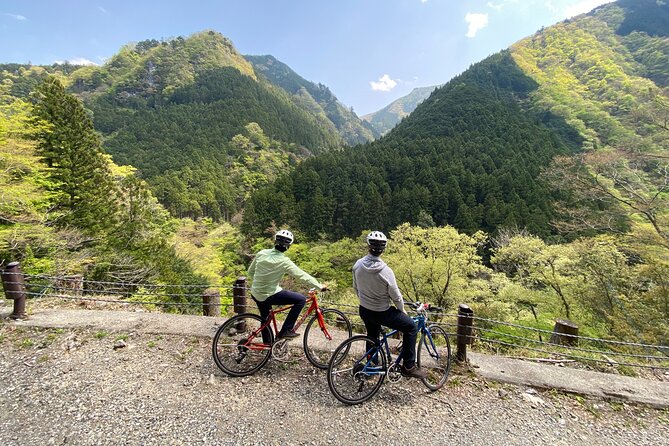
After the old road section, the route continues to Lake Okutama. This is a large man-made lake, and the change from forest road to open water gives the tour a pleasant sense of progress.
You have about 30 minutes at the lake to view a small museum about local heritage and walk along the dam. The museum is not presented as a major institution, so think of it as a compact stop that adds context rather than a full afternoon visit.
That short museum visit works well within a cycling tour. It gives you a chance to pause, learn about the area’s past, and understand the human work behind the lake. The dam walk should also appeal if you like combining local engineering with mountain scenery.
The lake is not simply a destination for taking pictures. It is part of the modern story of Okutama, while the road and villages show an older one. Moving between those settings in a few hours gives the tour more range than a basic countryside ride.
The 30-minute stop is brief, so you should not expect a long museum visit or a leisurely lakeside walk. The value comes from the combination of several small experiences rather than extended time at any single site.
More heritage tours in Tokyo:
- Berlin Wall History Small Group Cycling Tour
★ 4.9 · 152 reviews - Discover Trang An Natural World Heritage, Bich Dong Pagoda, Cycling Day Tour
★ 5.0 · 82 reviews - Sukhothai: Full-Day Historical Park Cycling Tour with Lunch
★ 4.9 · 55 reviews - Mountain Bike Historical Tunnel Trail to Hoover Dam from Las Vegas
★ 5.0 · 46 reviews
Crossing the Mugiyama Floating Bridge
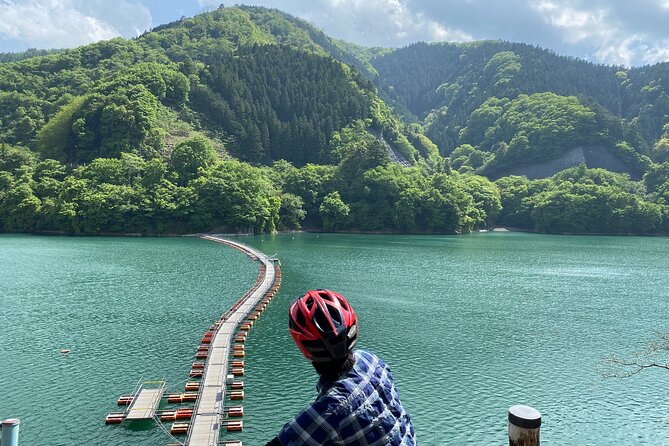
The Mugiyama Floating Bridge sits partway along Lake Okutama. The bridge gives you a chance to experience the lake from the middle rather than only viewing it from the shore or dam.
The stop lasts about 15 minutes. That is enough for a short walk and a quiet look across the water, but not enough for a long break. The calm setting makes this a useful contrast to the earlier ride and the height of the suspension footbridge.
Floating bridges can appeal to curious visitors because they make the lake itself part of the route. You are not just observing the water. You are walking across it, with the mountain surroundings around you.
The supplied details do not state how far you cycle between the lake, bridge, and other points, so do not plan around an exact mileage figure. The important point is that the tour mixes cycling with short walks and sightseeing stops.
Finishing with an onsen foot soak
After returning to town, the experience includes time to soak your feet at a local onsen, or hot spring. This is a smart ending for an active tour, especially if your legs feel the ride or you have spent the afternoon outside.
It is a foot soak rather than a full bathing visit, based on the tour description. You should not assume that a complete hot spring bathing session is included. The stop is followed by souvenir shopping, giving you time to browse for a small reminder of Okutama.
This ending also keeps the experience rooted in local life. The tour begins with an old road and village customs, then closes with a familiar Japanese way to relax and a chance to buy something from the area.
Price, timing, and practical value
The listed price is $184.61 per person. That is a substantial cost for a 3.5-hour activity, especially when the major sightseeing stops have no separate admission fee.
The value comes from the combination of bicycle use, a guide, a small group, equipment, local interpretation, and access to a route you might not understand as well on your own. Water and an intercom helmet are included. The museum, bridge, shrine, spring, and dam do not add entrance charges according to the tour details.
I would judge the price mainly against your priorities. If you want the cheapest way to ride around Okutama, a rental bicycle may cost less. If you want a guided introduction to the old road, local culture, and surrounding nature, the added cost pays for structure and explanation.
Group discounts are available, which may improve the value for people booking together. The mobile ticket is convenient, and confirmation is provided at booking. The meeting point is in Okutama, near public transportation, but the precise station-to-meeting-point instructions are not included here, so check those details before setting out.
Fitness, weather, and what to bring
You need moderate physical fitness. This is not a passive sightseeing ride. You will cycle through a mountain area, get on and off the bicycle, walk across bridges, and spend time outdoors.
The experience is available to children over age 12 or children at least 150 centimeters tall. The information uses those two thresholds, so families should check which condition applies to each child before booking.
Weather matters. The tour requires good conditions and may be canceled in poor weather. You can then choose another date or receive a full refund. Rain gear is not included, so bring waterproof clothing if the forecast is unsettled.
You should arrive 30 minutes early, at 12:30pm for the 1pm departure. That gives you time to check in and get ready without rushing. Wear practical clothing and shoes suitable for cycling and short walks. The included water is helpful, but you may still want to bring any personal drinks or snacks you normally need during an active afternoon.
The cancellation terms are straightforward: cancel at least 24 hours before the start time for a full refund. Changes or cancellations inside that window are not accepted and are not refunded. The operator also requires a minimum number of people, so a departure could be changed or canceled if that minimum is not reached.
Who should book this Okutama ride?
I would recommend it to you if you want rural Tokyo with a guide, especially after spending time in the city center. It suits people who enjoy light adventure, local stories, forest roads, and short cultural stops more than people seeking a fast or technically demanding cycling route.
It is also a good fit for active couples, small groups of friends, and older children who meet the age or height requirement. The small maximum group should feel more personal than a large bus excursion.
You may want to choose another activity if you dislike cycling, feel uncomfortable on suspension bridges, need a detailed flat-route guarantee, or want a full-day mountain outing. The tour is short, and its appeal comes from variety rather than long hours at the lake or museum.
Should you book it?
Book this tour if you want to see a side of Tokyo that feels rural, practical, and tied to local traditions. The best parts are the old trade road, the spring and wasabi field, the shrine under the rock, and the chance to hear David explain the area in a small group.
At $184.61, it is not a bargain rental. It becomes better value if you care about interpretation, an organized route, included equipment, and a relaxing onsen foot soak at the end. Check the weather, arrive early, and be honest about your fitness. If those points suit you, this is a strong way to trade Tokyo’s city noise for mountain roads without leaving the prefecture.
FAQ
Where does the tour start?
The tour starts in Okutama, in the Nishitama District of Tokyo, Japan. The exact meeting point is near public transportation.
What time does the tour begin?
The tour starts at 1:00pm. You should arrive at 12:30pm for check-in and preparation.
How long does the experience last?
The cycling tour lasts approximately three hours and 30 minutes. It ends back at the meeting point.
What is included in the price?
The price includes use of a bicycle, water, and an intercom helmet.
Is rain gear included?
No. Waterproof clothing is not included if rain is forecast.
How many people can join the tour?
The maximum group size is six people.
What fitness level is needed?
You should have a moderate level of physical fitness because the experience includes cycling and walking in a mountain area.
Can children join?
Children over 12 years old or children at least 150 centimeters tall can join, according to the tour conditions.
What places does the route visit?
The route includes Okutama Mukashimichi, a spring, wasabi fields, a mountain shrine, a suspension footbridge, Lake Okutama, the lake museum, and the Mugiyama Floating Bridge.
What happens if bad weather cancels the tour?
If poor weather causes a cancellation, you will be offered another date or a full refund.
Just added around Tokyo
- Tokyo Non-Touristy Local Private E-bike Cycling Tour from Asakusa★ 5.0 · 2 reviews
- Tokyo Night Bike Tour: From Shibuya to Tokyo Tower via Roppongi★ 5.0 · 29 reviews
- 2.5 Hour-Guided Cycle Tour in the Central Tokyo★ 5.0 · 25 reviews
- Little Adventure with Cycling in Tokyo No. 1 Crystal Clear River★ 5.0 · 6 reviews
- MTB, Hybrid or Gravel Road Bike Rental in Okutama, Tokyo★ 5.0 · 2 reviews
- Tokyo: Private Cycling Tour with cute E-bike★ 5.0 · 11 reviews
- Tokyo: Super Local Private E-bike Cycling Tour from Asakusa★ 5.0 · 4 reviews
- Tokyo: 3h Private E-bike Tours, Starting at Your Hotel★ 5.0 · 25 reviews
Heritage & Temple Bike Tours, compared.
Half-Day Ubud Electric Cycling Tour to Tirta Empul Water Temple
Read our review →
Full Day Cycling tour to Sukhothai Historical Park
Read our review →
Discover Trang An Natural World Heritage, Bich Dong Pagoda, Cycling Day Tour
Read our review →
Full-Day Historical Park Cycling Tour with Lunch
Read our review →
Full Day Cycling Amazing Chiangrai countryside and the White temple
Read our review →Browse the lists this tour appears in