
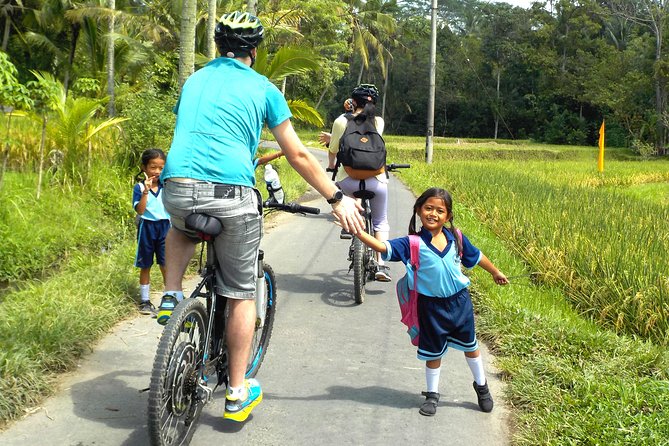
Review · UBUD
Electric Cycling Tour of Ubud with Free Hotel Transfer and Lunch
Ubud’s best views often sit beyond the town center, and this electric-bike tour gets you there without making every hill a personal battle. You’ll pedal through rice fields, village roads, and narrow paths, with guides such as Gusti, Gina, Putu, and Anilya helping the group handle traffic and explaining Balinese customs along the way.
I like two things here: the bikes let you choose how hard you work, and the route gives you more than a quick photo stop at Tegalalang. You also get a meal, bottled water, helmet, and Ubud-area hotel transfers for $41. The catch is that some riding takes place beside cars and motorcycles, and the rice-field paths can be bumpy and narrow.
Quick reasons to consider this Ubud e-bike tour
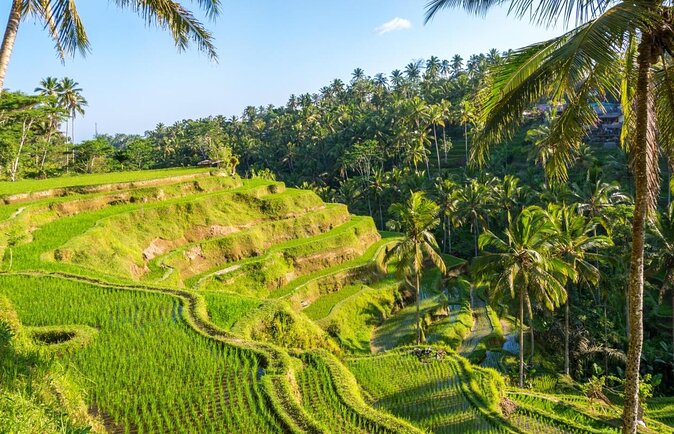
- Tegalalang by bicycle: Reach one of Ubud’s most photographed rice-terrace areas while seeing the countryside at a slower pace.
- Electric assistance for Ubud’s hills: Pedal as much or as little as you like, useful in Bali’s heat and on uneven roads.
- Guides manage busy crossings: The group is usually led and followed by guides, with traffic crossings handled as a team.
- More than a rice-field photo: Depending on the route, you may visit a temple, traditional compound, coffee plantation, or local community area.
- Meal included: Morning departures finish with lunch, while afternoon departures finish with dinner.
- Best for confident cyclists: You need real bicycle experience and comfort around traffic, narrow paths, and changing road surfaces.
Why an e-bike is a smart way to see Ubud
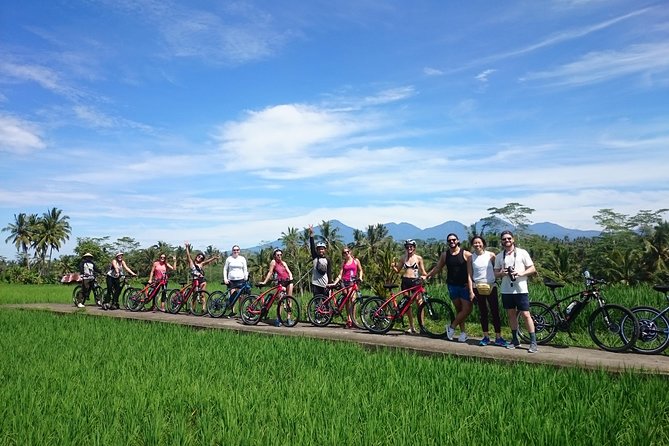
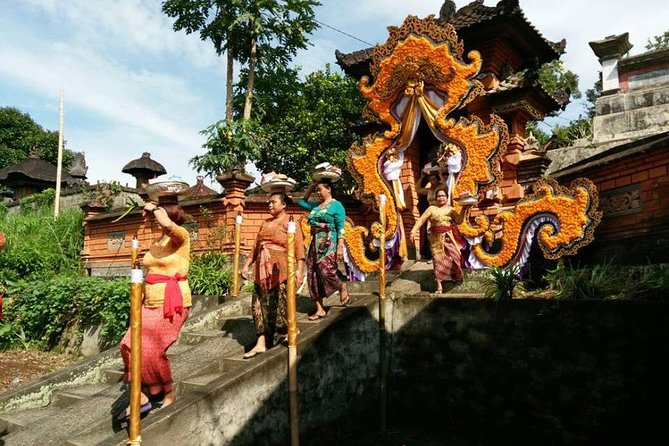
Ubud’s center is crowded, but the countryside begins quickly once you leave the main streets. A car can take you to a viewpoint, yet a bicycle lets you notice small details along the route: offerings being carried to a temple, rice being worked by hand, or homes arranged around a traditional family compound.
The electric motor changes the effort level. You still pedal, but you can ask the bike for help on hills and in the heat. If you want exercise, use less assistance. If you prefer a relaxed outing, let the motor do more of the work. The bikes are described as easy to learn, even for people who have not used an e-bike before.
That does not make this a ride for complete beginners. You must already know how to ride a bicycle, steer, brake, and react to traffic. The minimum height is 150 centimeters, and the maximum rider weight is 120 kilograms, or about 260 pounds.
I would also wear covered shoes rather than sandals. Add sunscreen, bring a little patience for humid weather, and do not assume the motor will handle every awkward patch of road for you.
A few more rides around Ubud worth a look
- Ubud: Downhill Cycling with Volcano, Rice Terraces and Meal
★ 5.0 · 536 reviews - Half-Day Ubud Electric Cycling Tour to Tirta Empul Water Temple
★ 5.0 · 315 reviews - Kintamani Cultural and Nature Cycling Tour ( Manual Bike )
★ 5.0 · 257 reviews
The start at eBikes Bali in Petulu
The listed starting point is eBikes Bali on Jalan Tirta Tawar in Petulu, northeast of central Ubud. Pickup and drop-off are offered within the Ubud area, which makes the tour easier to fit into a stay in town. The listed meeting point is also the stated end of the activity, so confirm your pickup details and final drop-off arrangement when booking.
At the start, you can expect to complete safety information, choose your meal, receive a helmet and bottled water, and test the bike for size. This fitting step matters. A bike that feels comfortable at the beginning will make the narrow paths and longer road sections much easier.
The tour is limited to a maximum of 20 people. The actual experience can feel more personal when the group is smaller, and some departures may have two guides. A guide at the front and another at the back helps keep the group together, especially when crossing roads.
The company uses an air-conditioned minivan for transfers. If you are staying outside Ubud, check the pickup area carefully. A long transfer from places such as Nusa Dua can take much of the day and weaken the value of a tour designed as a roughly three-hour activity.
Rice terraces, village roads, and the real ride
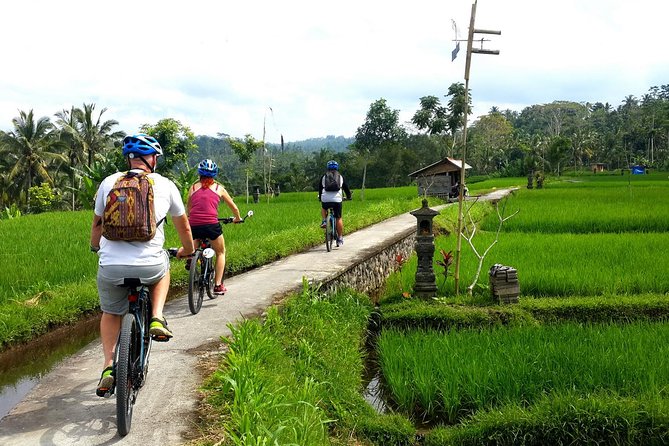
The route is not one continuous ride through rice paddies. You’ll spend part of the outing on public roads, including roads with motorcycles, cars, pedestrians, and occasional obstacles. Guides help with crossings and keep the group together, but you still need to watch your line and control the bike.
That road riding is both a drawback and part of the point. You get a more honest look at daily movement around Ubud than you would from a sealed vehicle. Still, if traffic makes you nervous, this may feel more demanding than the word tour suggests.
Away from the main roads, the ride becomes quieter and more scenic. You may follow narrow paths between rice fields, where the surface can be rough and the space to pass is limited. Some sections are described as suitable for more advanced riders, while the regular route is manageable for most people with solid bicycle skills.
The guides add value here. They do more than point toward the next turn. Along the way, they explain rice cultivation, Balinese offerings, temples, community life, and local traditions. Several guides have been singled out by name for keeping groups safe and making the cultural stops understandable, including Gusti, Gina, Putu, Saur, Ketut, and Anilya.
Tegalalang Rice Terrace for the big views
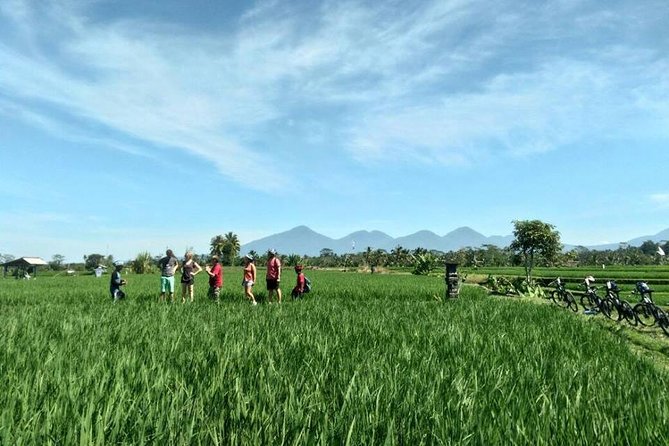
Tegalalang is the visual centerpiece. The terraces create layered green slopes that are easy to photograph, especially when you can stop and look rather than simply pass by in a vehicle. The scheduled visit is about 30 minutes, enough for photos and a short explanation, but not a long agricultural walk.
The site is described as an amazing UNESCO World Heritage rice-terrace area in the tour information. Your main reason to come is the view and the chance to understand how the fields fit into the local farming system.
Keep your expectations realistic. The tour does not turn the rice terraces into a private wilderness experience. The area is a popular sight, and the cycling approach includes roads and paths that may feel less polished than the viewpoint itself. That contrast is useful: the ride shows the working countryside, while the stop gives you the classic Ubud image.
I would place this tour early in your Ubud stay. It helps you understand the shape of the area, the role of rice farming, and the distance between town and countryside. It also gives you a better sense of which places deserve a longer return visit.
Same roads, a different day in the saddle:
- Bali Countryside Cycling Tours
★ 5.0 · 246 reviews - Half Day Cycling Tour ( Manual Bike )
★ 5.0 · 225 reviews - Bali Downhill Cultural Cycling Tour
★ 5.0 · 224 reviews - Ubud: Downhill Cycling with Volcano, Rice Terraces, and Meal
★ 4.9 · 189 reviews
The temple and local life stops
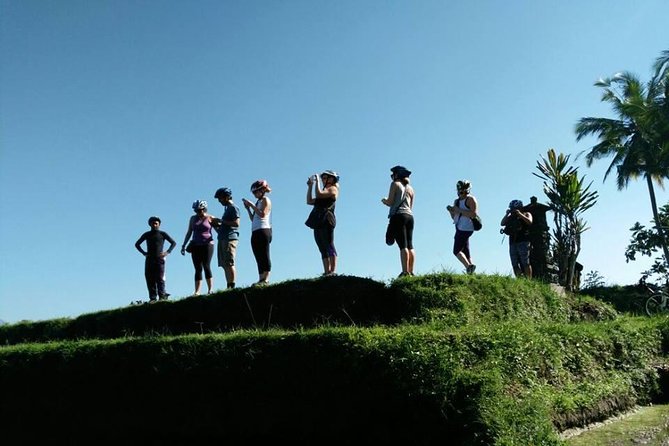
The exact cultural stops can vary, but the route may include a temple, a traditional Balinese household compound, and a community center. These stops are valuable because they give context to what you see on the road.
At a temple, the guide may explain offerings, ceremonies, and Balinese ideas about death and the celebration of life. At a family compound, you get a glimpse of how homes are organized around shared family space. These are short visits, not formal museum tours, so the quality depends heavily on your guide’s explanations and your willingness to ask questions.
This is where the tour feels more useful than a simple countryside bike rental. You are not only passing through pretty scenery. You are given reasons for the things in front of you, from offerings carried along the road to the way rice production shapes village life.
Jungle swing, coffee, or a choice worth thinking about
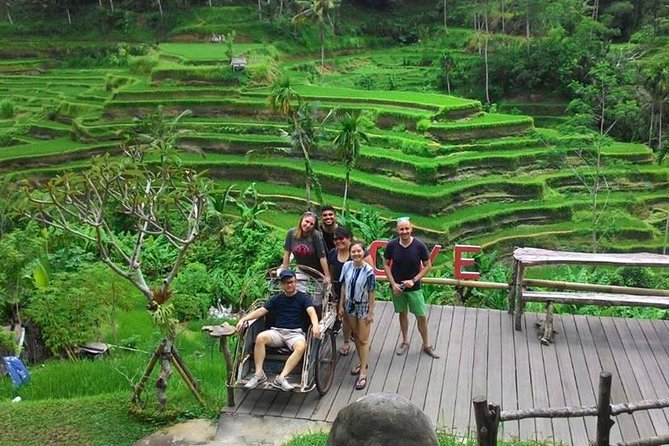
The listed stop includes an Ubud jungle swing, a local coffee plantation, and about 30 minutes at the stop. The swing provides a dramatic photo over the rice fields and is a clear highlight for many families and first-time visitors. It is also an optional-feeling tourist attraction rather than a quiet cultural encounter, so decide how much of that style suits you.
The coffee portion can include explanations of coffee and tea production, along with tastings. Some people enjoy sampling luwak coffee and different teas, and the stop gives the guide a chance to explain local agriculture.
I would approach the coffee visit with care. One detailed account raised serious concerns about the treatment of civets used for kopi luwak and described the plantation as a sales-focused stop. If animal welfare matters to you, ask if you can choose a traditional house or another cultural option instead. Do not assume every coffee stop follows good standards simply because it offers a tasting.
This is the one part of the tour I would clarify before setting out. The rice fields, cycling, temple, and local explanations are the stronger reasons to book. The coffee plantation may be enjoyable for some people, but it is not essential to the experience.
Lunch after the morning ride, dinner after the afternoon ride
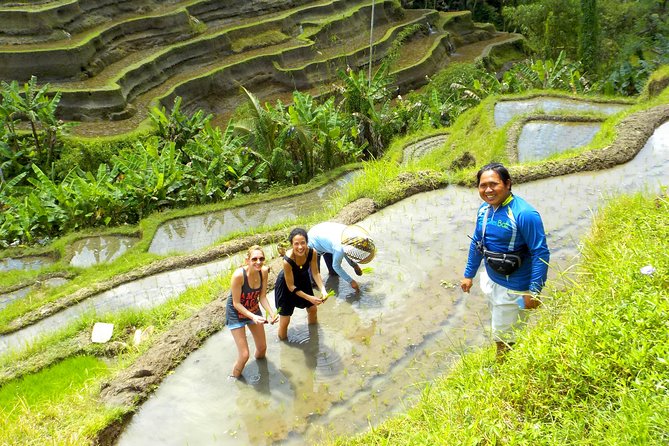
The meal is included, with lunch after the morning tour and dinner after the afternoon departure. It is served at a local restaurant or cafe, and the setting may include a jungle swing or views toward the surrounding fields.
The meal adds practical value. You do not have to find a restaurant while tired, hot, and ready to sit down. You can also choose your menu in advance, which helps the final stop run smoothly.
Do not book this expecting a long food tour. The meal is a pleasant finish, not the central attraction. The real value is the combination of food, transport, guides, equipment, and access to countryside roads for $41. Compared with paying separately for a driver, bike rental, guide, and meal, that is a fair price.
Safety, fitness, and traffic: the part to take seriously
The strongest safety feature is the guide arrangement. The group is generally kept together, guides help manage intersections, and a trailing vehicle may be available if someone becomes tired or faces an unexpected problem. Several routes also use quieter roads where possible.
Still, Bali traffic is real. You may ride beside motorcycles, cars, and pedestrians, and you need to remain alert. A guide can stop traffic for a crossing, but cannot control every road user or surface.
The rice-field tracks bring a different challenge. They may be narrow, uneven, and without a smooth paved surface. You should be comfortable with braking and steering at low speed. If you have not ridden a bicycle in years, practice before booking rather than relying on the motor to solve the problem.
Children must be accompanied by an adult. Most people who can ride a bicycle should be able to take part, but nervous cyclists may find the road sections stressful. Families with older children and teenagers who can manage traffic and uneven paths are a better fit than families with very young children.
Who will get the most from the three-hour tour
I would recommend this for you if you want:
- A countryside view of Ubud rather than another car-based sightseeing trip
- A flexible level of physical effort
- Cultural explanation from a local guide
- Rice terraces, village roads, a temple, and a meal in one half-day outing
- A structured activity with Ubud-area transport included
I would think twice if you want a fully quiet ride, a route entirely off public roads, or a serious athletic cycling challenge. This is sightseeing on an electric bike, not a mountain-bike expedition and not a traffic-free pedal through the countryside.
It also suits a first or second day in Ubud. You get an overview of the surrounding area, and the ride can help you decide where to spend more time later. The afternoon option works well if you prefer a later start and dinner afterward, while the morning option leaves the evening open.
Booking details that matter
The price is $41 per person, and the experience has a very high overall rating with 99 percent recommendation. That record fits the tour’s strongest features: friendly guides, easy-to-use bikes, cultural explanations, attractive scenery, and a meal included.
Free cancellation is available if you cancel at least 24 hours before the start time. Changes or cancellations inside that window are not accepted for a refund. The tour needs good weather, and a weather cancellation offers a different date or a full refund.
The activity uses mobile tickets and confirmation is provided at booking. Service animals are allowed. Since the tour ends at the listed meeting point while hotel drop-off is also included for the Ubud area, confirm exactly where your transport will return you.
Should you book the e-bike tour?
Book it if you want to see Ubud’s rice country with less effort than a standard bicycle tour and more contact with village life than a minivan route provides. The best parts are the guides, the road-to-rice-field transition, Tegalalang’s views, and the chance to ask questions about temples, farming, and Balinese customs.
Skip it if busy roads make you uncomfortable or if you want every minute devoted to untouched scenery. Also ask about the coffee-plantation option if animal welfare is important to you.
For most visitors staying in central Ubud, this is a good-value half-day introduction to the area. Bring sunscreen, covered shoes, basic road confidence, and an open mind about the route. Let the motor handle the hills, but stay alert when the countryside ride shares the road with Bali traffic.
FAQ
How long is the electric cycling tour?
The activity lasts approximately three hours, not including any hotel transfer time.
What is included in the price?
The price includes use of an electric bicycle and helmet, a local guide, bottled water, Ubud-area hotel pickup and drop-off, air-conditioned minivan transport, and a meal.
Is lunch or dinner included?
Morning departures include lunch after the ride. Afternoon departures include dinner.
Where does the tour start?
The listed starting point is Ubud Cycling Tours, eBikes Bali, on Jalan Tirta Tawar in Petulu, Ubud, Bali.
Does the tour provide hotel pickup?
Yes. Pickup and drop-off are offered for hotels in the Ubud area.
Do I need bicycle experience?
Yes. You must have bicycle riding experience. The ride includes public roads and narrow, uneven paths through the rice fields.
Is there a rider height or weight limit?
The minimum height is 150 centimeters. The maximum rider weight is 120 kilograms, or 260 pounds.
How many people can join the tour?
The maximum group size is 20 people.
What happens if the weather is poor?
The experience requires good weather. If the operator cancels because of weather, you can choose another date or receive a full refund.
Just added around Ubud
- Ubud: Kintamani Downhill Cycling with small group & Private★ 5.0 · 4 reviews
- Ubud: Half-Day Tegallalang Electric Cycling Tour★ 4.9 · 24 reviews
- Ubud: Downhill Countryside Cycling From Kintamani★ 4.5 · 4 reviews
- Ubud: Cycling Tour Local Villages, Temple, and Rice Field★ 4.8 · 12 reviews
- Ubud Cycling Tour : All Inclusive Cycling Adventure★ 4.2 · 7 reviews
- Bali Amazing Cycling Tour★ 5.0 · 4 reviews
- The Volcano Trail – Epic Volcano Cycling Adventure★ 5.0 · 12 reviews
- Ubud Eco Culture Cycling Exploration★ 5.0 · 31 reviews
Cycling Tours, compared.
Ninh Binh Day Trip: Hoa Lu-Trang An/Tam Coc-Mua Cave-Cycling-Boat
Read our review →
Cai Be Mekong Delta Tour: Cooking Class, Cycling & Craft Villages
Read our review →
Countryside Bike Tour from Amsterdam: Cheese, Clogs & a Windmill
Read our review →

The Stanley Park Bicycle Tour by Cycle City Tours
Read our review →Browse the lists this tour appears in