
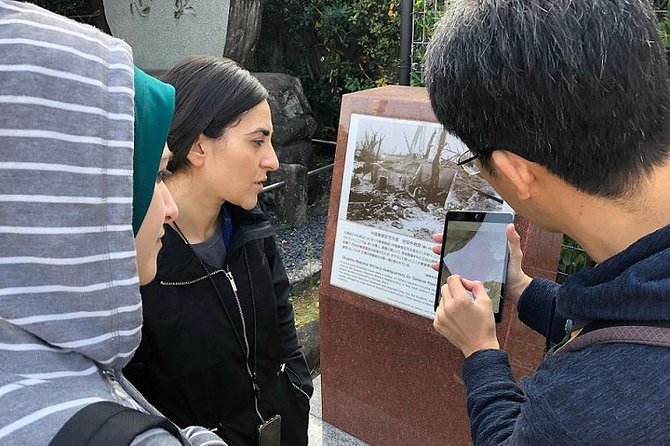
Review · HIROSHIMA
Hiroshima 2hr Peace Cycling Tour with Local Guide
Hiroshima’s Peace Park is moving on foot, but a bicycle lets you connect the memorials with the living city around them. This two-hour ride combines the A-Bomb Dome and major monuments with views and streets you would likely miss on a standard park visit.
I like the easy electric bikes and the local storytelling, especially when guides such as Shin or Kana add family connections to the bombing and the city’s recovery. The small group, limited to 10 people, also keeps the pace personal. The main drawback is time: two hours goes quickly, and the route can slow down when children or inexperienced riders are in the group.
Key points to know before booking
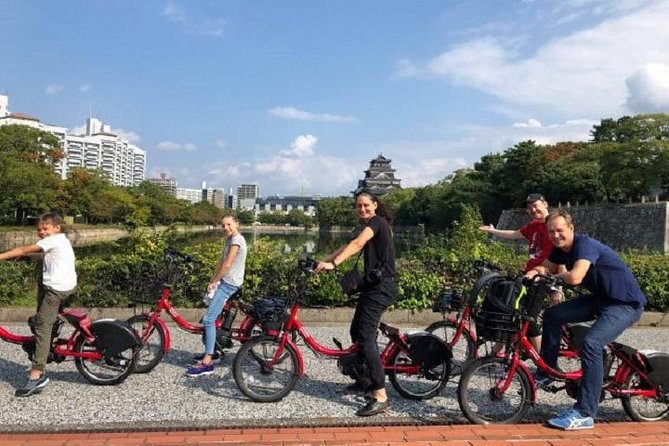
- Electric bikes make the route gentle: Hiroshima is flat, and the e-bikes require little effort.
- The guide adds local context: Shin, Kana, Bella, and other guides explain both the wartime events and the city’s recovery.
- You see more than the main memorials: The route includes city streets, surviving streetcars, and views of the A-Bomb Dome away from the usual stopping points.
- The Peace Park visit is central: Expect the Cenotaph, Children’s Peace Monument, Peace Bell, and Atomic Bomb Dome.
- Rain does not always end the experience: You may switch to a walking Peace Route or receive a refund if cycling is canceled.
- The tour returns to the Rest House: This makes it easy to continue to the Peace Museum or retrieve luggage from nearby lockers.
Why cycling works so well in Hiroshima
Hiroshima is a particularly friendly city for a short bicycle tour. The route is described as easy, the city is flat, and the electric assistance takes much of the strain out of riding. You can cover more ground than you would on foot without turning the outing into a hard workout.
That matters here. Hiroshima’s story is not confined to the Peace Memorial Park. The park holds the best-known monuments, but the wider city shows how Hiroshima rebuilt itself and functions today. Cycling links those two parts: the quiet memorial grounds and the ordinary streets, trams, neighborhoods, and public spaces beyond them.
The bikes are adult electric bicycles for participants at least 145 centimeters tall. Children between 110 and 145 centimeters can use one of the available children’s bicycles, and child seats are available for children under 22 kilograms and under 115 centimeters. The tour is not designed as a race. If someone in the group is not used to cycling, the guide adjusts the pace.
That shared pace is worth keeping in mind. A group of up to 10 is small enough for conversation, but it is still a mixed group. You may ride with confident cyclists, first-time e-bike users, and families together. The upside is a relaxed outing. The downside is that you may not cover every planned point as quickly as you would with a private guide.
A few more rides around Japan worth a look
- Hiroshima in a Nutshell: Morning Bike Adventure
★ 5.0 · 524 reviews - Hiroshima: Peace Cycling Tour with Local Guide
★ 4.8 · 286 reviews - Hiroshima and Miyajima by Bike and Boat
★ 5.0 · 172 reviews
Meeting at the Peace Park Rest House
The tour begins at the Hiroshima Peace Memorial Park Rest House at 11:00 or 15:00. Arrive early. The operator is strict about late arrivals, and missing the meeting without prior notice can mean losing the full payment.
The Rest House is a practical starting point because it puts you inside the park from the first minute. After a short meeting period, the guide begins explaining what the park represents and how the monuments fit together. You do not spend the opening part of the tour getting across town.
There is no luggage storage at the Rest House. If you have large bags, use the coin lockers at the International Conference Center Hiroshima or the Hiroshima Peace Memorial Museum, both about a six-minute walk away. That is a small logistical point, but it can save you from arriving with luggage and discovering that you have nowhere to leave it.
The tour ends back at the same meeting point at about 13:00 or 17:00. You can then walk to the Peace Museum, collect your bags, continue exploring, or head toward dinner.
Reading the Peace Memorial Park by bicycle
The first major section lasts about 55 minutes and focuses on Peace Memorial Park. You will visit the Atomic Bomb Dome along with the Cenotaph, Children’s Peace Monument, and Peace Bell.
The value of having a guide here is not simply learning names and dates. The park contains many monuments, and without context they can blur together. A guide explains the purpose of each one and helps you understand how the park remembers the bombing, the people who died, and the city’s call for peace.
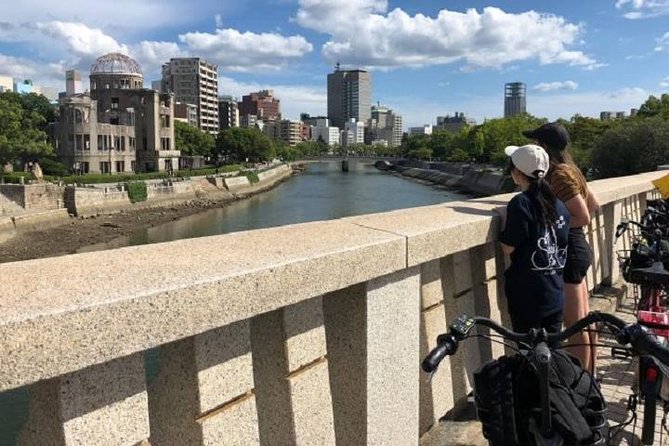
The Atomic Bomb Dome is the visual anchor. Seeing it from different city viewpoints adds something to the familiar photograph. The damaged structure is not isolated from daily Hiroshima. Trams pass, bicycles move along the streets, and the modern city carries on around it. That contrast is one of the strongest parts of the ride.
The Cenotaph and Children’s Peace Monument bring the focus back to individual lives. The Children’s Peace Monument is closely tied to the many children who died and to the paper-crane tradition associated with remembrance. The Peace Bell offers another expression of the city’s message. You will have time to stop, listen, and ask questions rather than simply pass each site in a parade.
This is also the most serious portion of the tour. The subject is painful, and the guide’s tone matters. The strongest guides, including Shin and Kana, are praised for combining historical facts with personal accounts and stories of survival. Shin’s family connection is especially direct: his mother was in utero when the bomb was dropped, and his grandparents lived through the bombing. That kind of family story can make the history feel immediate without turning the tour into a performance.
You should still visit the Hiroshima Peace Memorial Museum if your schedule allows. The cycling tour is not a replacement for the museum’s exhibits. Instead, it gives the sites around the museum shape and meaning, while the museum provides a fuller record of the bombing and its aftermath.
Leaving the memorial grounds for the living city
After the Peace Park section, the route moves into Hiroshima itself for about an hour. This is where the tour earns its claim to be more than a standard memorial visit.
The guide points out a streetcar that survived the atomic bombing and still operates today. Hiroshima’s A-Bombed Streetcars are a striking link between 1945 and the present. They are not just museum pieces. Their continued place in the transport network shows how memory and daily life meet in this city.
You also ride through parts of the rebuilt city and suburbs. The exact timetable may shift with conditions, but the purpose is clear: to show Hiroshima as a functioning, reconstructed city rather than only a site of destruction. You may notice modern streets, ordinary neighborhoods, and the practical shape of a city that had to begin again.
This section also gives the guide room to discuss prewar life, the bombing’s effect on residents, and postwar recovery. The two-hour tour keeps the emphasis on the wartime and postwar story. The three-hour version adds places such as Hiroshima Castle and offers more detail about the city’s earlier history and recovery. If you want a fuller historical route and more time with your guide, the longer option may suit you better.
For many people, the city ride is the emotional balance to the park. The memorials ask you to remember what was lost. The streets show what Hiroshima became. On a bicycle, you feel that change through the steady movement between quiet monuments and normal city life.
Same roads, a different day in the saddle:
- Tokyo Great Cycling Tour
★ 5.0 · 811 reviews - Tokyo Top Highlights 3h Guided E-bike Tour
★ 5.0 · 714 reviews - One-Day Osaka Bike Adventure: 5–6 Hours
★ 5.0 · 246 reviews - Eat, Drink & Cycle: Osaka Foodie Bike Tour
★ 5.0 · 224 reviews
The guides make the biggest difference
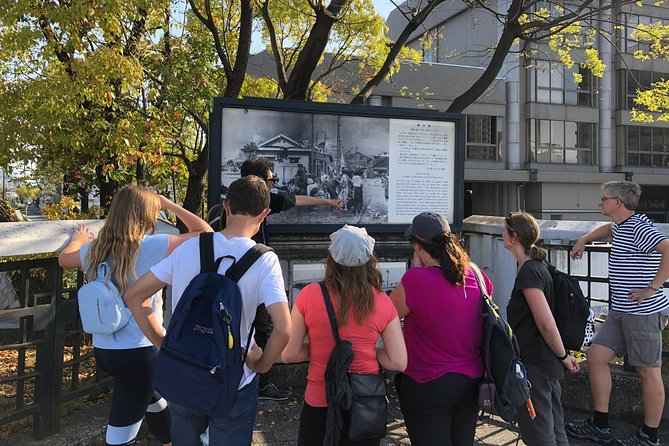
The route is worthwhile on its own, but the guide shapes the experience. Guides named in the feedback include Shin, Kana, Bella, Tomas, and Moet. Their styles may differ, so you should expect a shared tour rather than one fixed presentation.
Shin is particularly suited to visitors who want personal family context. His grandparents survived the bombing, and his mother was in utero at the time. His approach combines family stories with facts about the memorials and the city. Several comments also point to his warm personality and ability to answer questions.
Kana is praised for clear English, strong organization, and detailed explanations at each site. She also handles difficult weather sensibly, including changing a cycling outing to a walking tour in heavy rain. Bella is noted for taking people beyond the familiar park sights and for her enthusiasm for Hiroshima’s history.
Those details matter because this is not a silent bike ride with a few scripted stops. You are encouraged to ask questions. You may also receive restaurant suggestions or practical help with the rest of your Japan trip, as some guides have offered recommendations for Kyoto and dinner.
The most important thing is to listen for the human scale. A guide who explains how families and communities experienced the bombing can help you understand Hiroshima without reducing it to one date or one building. The best stories here lead toward peace, survival, and recovery rather than spectacle.
What the two-hour timing really means
Two hours is enough for a focused introduction, not a full study of Hiroshima. About 55 minutes are assigned to Peace Memorial Park, followed by about an hour in the wider city, with a short meeting period at the start.
That balance works if you want to see the main memorials and get your bearings before exploring alone. It is also a good first activity on your Hiroshima visit. You will learn the layout of the park, understand the role of the key monuments, and see how to move around the city.
It can feel short if you want long periods at every stop. The park deserves unhurried attention, and the subject does not lend itself to rushing. If you already know you want extended historical discussion, a three-hour tour may be a better fit. The longer route includes Hiroshima Castle and more material from different periods of the city’s history.
For a first visit, I find the two-hour format appealing because it leaves room for the museum afterward. Start with the bike tour, visit the museum while the park is fresh in your mind, then return to any monument that deserves a second look.
Price, group size, and practical value
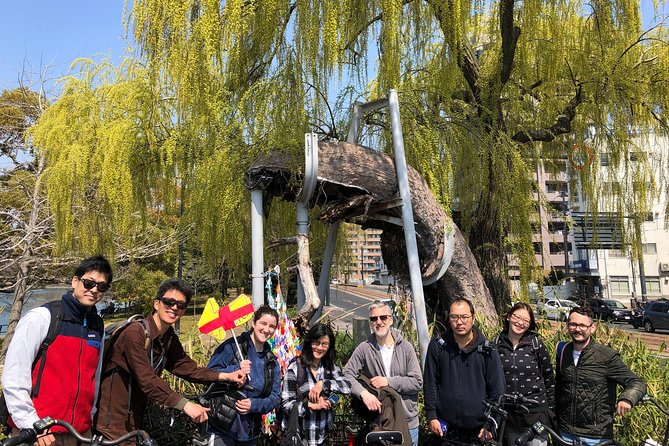
At $59.69 per person, the tour is not the cheapest way to see Peace Memorial Park. You can walk through the park for free, and the museum is a separate visit. The price makes more sense when you count the electric bicycle, guide, small group, city route, bicycle accident insurance, and the time saved moving between sites.
You are also paying for interpretation. A map can take you to the A-Bomb Dome, but it cannot explain why the Cenotaph, Children’s Peace Monument, and Peace Bell matter as a group. It cannot point out the surviving streetcars or connect the park to the rebuilt city in a clear sequence.
The group limit of 10 is a good middle ground. It is more affordable than a private tour, yet small enough for questions and direct conversation. Do not expect complete control over the pace. The guide may slow down for a child, an older rider, or someone new to electric bicycles.
Insurance for bicycle accidents is included. You should still ride carefully and follow the guide’s instructions. The route takes place in a real city, not a closed cycling course.
The tour has a 99 percent recommendation rate and a five rating based on 321 ratings. The strongest pattern is consistent: people value the electric bikes, the ease of the route, the guides’ personal stories, and the chance to see more of Hiroshima than the central park alone.
Rain, cold, and seasonal conditions
The experience requires suitable weather, and the timetable can change on the day. If rain makes cycling unsafe, you may be offered a rainy-day walking route or a refund.
The rainy route visits Peace Memorial Park, the Atomic Bomb Dome, the hypocenter, the Former Bank of Japan, Fukuromachi Elementary School, and the main street. It is scheduled to finish at the same time as the regular tour. The operator describes the walking portion as covering the hypocenter and an area about 0.5 to 1 kilometer around it.
This option is useful because bad weather does not automatically erase the historical focus. You will not get the same city ride, but you may receive a more concentrated walk through sites connected to the bombing.
Cold weather is another consideration. A winter ride can be brisk, especially in wind or snow. Bring layers and gloves if conditions look poor. The e-bikes reduce exertion, but they do not make the weather disappear.
If the tour is canceled because of weather, you can change to the rainy-day route or request a full refund. You can also cancel for a full refund up to 24 hours before the start time. Less than 24 hours is too late for a refund, and late arrival without notice can result in a full charge.
Who should book this Hiroshima bike tour?
I would recommend it to first-time visitors who want a clear introduction to the Peace Park and a sense of the modern city around it. It suits people who prefer active sightseeing but do not want a demanding ride. The electric assistance and flat route make cycling manageable for many ability levels, provided the height requirements are met.
Families can use the child bicycles or child seats within the stated limits. The pace may be adjusted for children, but families should accept that the group format can make the ride slower.
This is also a strong choice if you have already seen the A-Bomb Dome and Peace Museum. The guide takes you to places outside the usual park circuit and adds street-level context.
I would hesitate only if you want a private, highly detailed historical seminar, or if you dislike riding in a mixed group. In that case, the three-hour option may offer a better fit, though it remains a shared activity unless stated otherwise.
Should you book it?
Book this tour if you want Hiroshima’s memorial sites explained by a local guide, plus an easy ride through the city that rebuilt itself around them. The electric bikes, small group, and personal stories from guides such as Shin and Kana give the experience more depth than a simple walk between monuments.
Choose the three-hour option if you want Hiroshima Castle and more historical detail. Choose the rainy-day walking route if conditions turn poor. For most first-time visitors, the two-hour tour is a useful beginning: serious where it must be, active without being strenuous, and practical enough to leave time for the museum and further exploring.
FAQ
Where does the Hiroshima Peace Cycling Tour begin?
It begins at the Hiroshima Peace Memorial Park Rest House in Naka Ward, Hiroshima.
Where does the tour finish?
The tour finishes back at the Peace Memorial Park Rest House, the same place where it begins.
How long does the cycling tour last?
The tour lasts about two hours. The standard departure times are 11:00 and 15:00, with the tour ending around 13:00 or 17:00.
What sites are included?
The route includes the Atomic Bomb Dome, Cenotaph, Children’s Peace Monument, Peace Bell, and other parts of Hiroshima. It also includes city views, the rebuilt city, and the surviving A-Bombed Streetcars.
Are electric bicycles provided?
Yes. Adult electric bicycles are provided for participants at least 145 centimeters tall. Children’s bicycles and child seats are available within the stated height and weight limits.
What happens if it rains?
The tour may change to a rainy-day walking route covering Peace Memorial Park, the Atomic Bomb Dome, the hypocenter, the Former Bank of Japan, Fukuromachi Elementary School, and the main street. You can choose that route or request a refund if cycling is canceled because of rain.
Can I cancel for a refund?
You can cancel at least 24 hours before the start time for a full refund. Cancellations or changes made less than 24 hours before departure are not refundable.
Just added around Japan
- Slow Cycling Tour at Uji’s Matcha Green Tea Fields and Heritage★ 5.0 · 25 reviews
- Tokyo Non-Touristy Local Private E-bike Cycling Tour from Asakusa★ 5.0 · 2 reviews
- Tokyo Night Bike Tour: From Shibuya to Tokyo Tower via Roppongi★ 5.0 · 29 reviews
- 2.5 Hour-Guided Cycle Tour in the Central Tokyo★ 5.0 · 25 reviews
- Little Adventure with Cycling in Tokyo No. 1 Crystal Clear River★ 5.0 · 6 reviews
- Tokushima & Mt. Bizan BROMPTON Slow Cycling Tour★ 5.0 · 5 reviews
- Tokyo’s hidden nature cycling tour – Okutama Historical Road Tour★ 5.0 · 6 reviews
- Wakimachi BROMPTON Slow Cycling Tour★ 5.0 · 5 reviews
Cycling Tours, compared.
Ninh Binh Day Trip: Hoa Lu-Trang An/Tam Coc-Mua Cave-Cycling-Boat
Read our review →
Cai Be Mekong Delta Tour: Cooking Class, Cycling & Craft Villages
Read our review →
Countryside Bike Tour from Amsterdam: Cheese, Clogs & a Windmill
Read our review →
Electric Cycling Tour of Ubud with Free Hotel Transfer and Lunch
Read our review →

Browse the lists this tour appears in