
Review · TOKYO
Tokyo Night Bike Tour: From Shibuya to Tokyo Tower via Roppongi
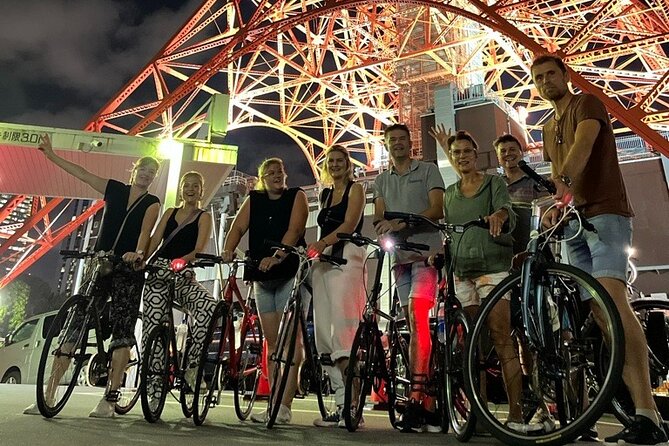
Tokyo looks entirely different from a bicycle after dark. This two-hour ride links Tokyo Tower, Roppongi, Omotesando, and Aoyama Cemetery, mixing famous sights with quiet streets that trains and buses cannot reach. I like the cooler evening air and the chance to cover several districts without wrestling with daytime crowds.
I also like the small group, limited to six people, and the personal guidance from Taichi or Ikeda. The main catch is simple: you need to be a confident city cyclist. You will ride at about 15 kilometers per hour, cross traffic lights, and pass through tight or crowded areas. This is not a gentle park ride.
Key points
- Tokyo after dark: See Tokyo Tower, Roppongi Keyakizaka Dori, and illuminated city streets at a cooler hour.
- Small groups: The maximum group size is six, allowing the guide to offer close support and conversation.
- A route beyond the train map: Reach Jingu Gaien, Aoyama Cemetery, and side streets that are not easy to visit by public transport.
- Bikes and helmets included: You do not need to arrange your own equipment.
- A real cycling pace: You should be comfortable holding about 15 kilometers per hour in city conditions.
- Easy central start: Meet at Umayamichi Park, about one minute from Yoyogi Station and roughly ten minutes from Shinjuku Station.
Why Tokyo is better by bike after 8 p.m.
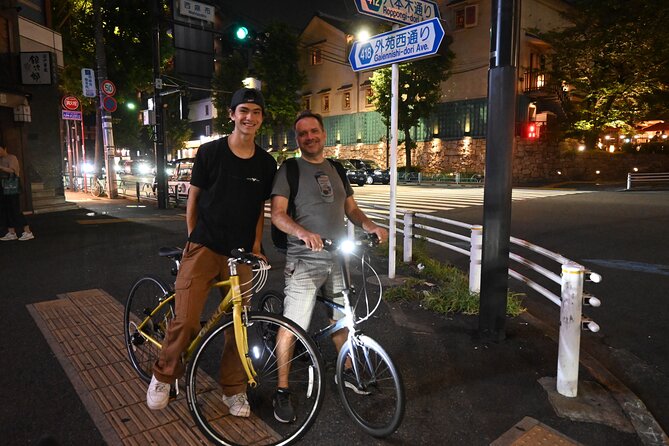
The ride begins at 8 p.m. near Yoyogi Station, at Umayamichi Park in Sendagaya. That location is handy if you are staying around Shinjuku or Shibuya, though you should allow time to find the exact meeting point. The activity ends back where it starts, so you do not need to work out a late-night return from another part of the city.
At night, Tokyo gives you a useful mix of calm and spectacle. Major roads remain active, but the air is cooler and some streets feel less pressured than they do during the day. Cycling lets you move between districts at a steady pace instead of waiting for a train, changing lines, and missing the small details between stations.
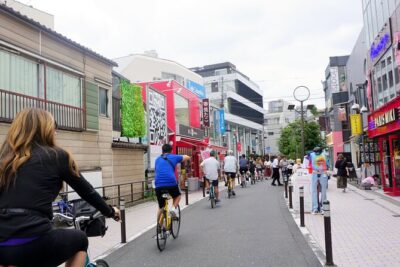
I especially like the route’s contrast. One moment you are near bright shopping streets and polished office districts. A few minutes later, you may be riding beside a cemetery or through a quieter avenue lined with trees. That shift gives you a better sense of how Tokyo’s neighborhoods fit together.
The guide handles navigation, which matters in a city where streets can change character quickly. You can focus on the ride and the views instead of checking your phone at every turn. Past participants also valued the guide’s safety briefing, clear pace, local explanations, and willingness to answer questions.
A few more rides around Tokyo worth a look
- Marina Bay Night Cycling Tour
★ 5.0 · 577 reviews - Sunset E-Bike Ride
★ 5.0 · 113 reviews - Bangkok: Night Bike Ride and Dinner at a Local Restaurant
★ 4.6 · 97 reviews
What the small group changes
The maximum group size is six. That is a useful number for a bicycle tour in Tokyo because a large line of riders can be hard to manage at intersections and narrow streets. A small group also makes it easier for the guide to keep an eye on everyone.
Taichi is the guide most often named in the available feedback, and Ikeda is also mentioned. Taichi is described as friendly, easy to follow, fluent in English, and good at explaining places beyond the standard sightseeing circuit. One solo woman specifically felt safe riding with him, while a family with a 15-year-old grandson found the pace and support comfortable.
That does not mean the tour removes every cycling challenge. You still need to control your own bicycle, watch traffic, and follow instructions. The guide can lead you, but cannot pedal for you. If you rarely cycle or feel uneasy around cars, this may not be the right way to see Tokyo.
The small size also helps with conversation. The ride is not just a silent procession from one photo stop to the next. You can ask about neighborhoods, local life, and the reasons behind the route. The strongest praise centers on the combination of cultural exchange, practical guidance, and a relaxed sense of safety.
Tokyo Tower gives the ride its big opening view
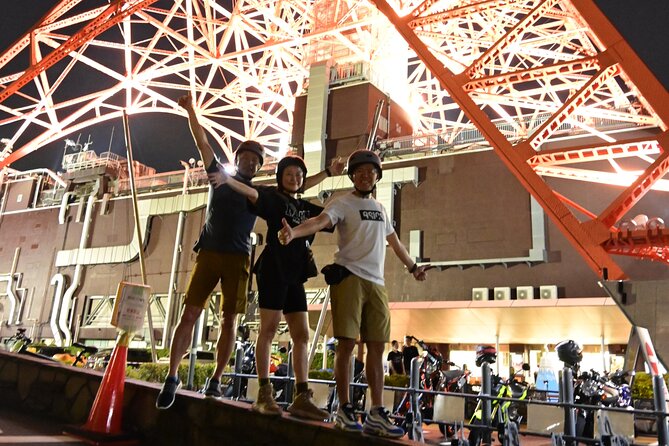
Tokyo Tower is one of the route’s headline stops, and it makes a strong night landmark. Its orange-lit structure is easy to recognize, especially after the darker streets around it. You get the classic Tokyo photograph, but you reach it under your own power rather than simply stepping out of a train or taxi.
The tower stop also gives the guide a natural chance to orient you. Tokyo can feel like a collection of separate districts when you first arrive. Seeing the tower from the street helps you connect Roppongi, Azabujuban, Aoyama, and the central districts in your mind.
Do not expect a long visit inside the tower or an observation-deck ticket. The experience includes bicycles and helmets, not admission to Tokyo Tower. This is a street-level sightseeing stop, so the value comes from the route and the guide’s explanations rather than from a paid tower visit.
Meiji Jingu Gaien brings trees and open space
Meiji Jingu Gaien, often called Jingu Gaien, offers a change of pace. After city streets and lit storefronts, the broad grounds and tree-lined sections can feel surprisingly open. It is one of the places that helps this ride avoid becoming a simple parade of neon signs.
The area is also difficult to experience fully by public transport because stations do not put you beside every useful viewpoint. On a bicycle, you can pass through and keep moving without spending much of your limited evening on walks between stations.
Night conditions can make the area quieter and cooler, which is one reason the tour works well in summer. Still, the ride is not a sightseeing stroll. You will continue at the group pace, so take in the surroundings while staying alert to the road.
Same roads, a different day in the saddle:
- Tokyo Great Cycling Tour
★ 5.0 · 811 reviews - Tokyo Top Highlights 3h Guided E-bike Tour
★ 5.0 · 714 reviews - Tokyo West-Side Cycling & Food Tour
★ 5.0 · 214 reviews - Small Group Cycling Tour in Tokyo
★ 5.0 · 184 reviews
Omotesando shows Tokyo’s polished side
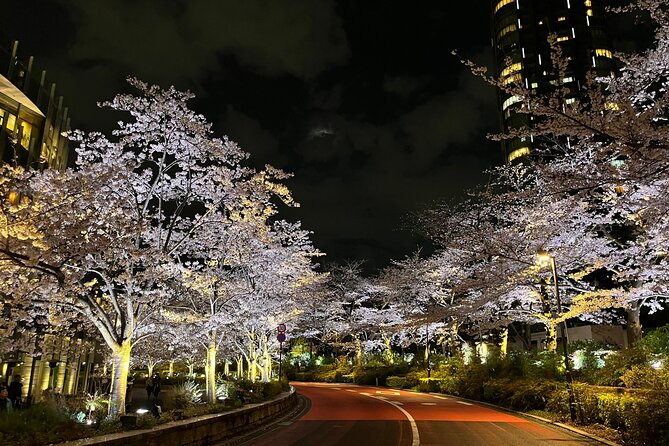
Omotesando brings architecture, shops, and a more polished urban feel. It is one of the best places on this route for seeing how Tokyo uses light, design, and wide streets to create a distinctive night atmosphere.
You will not have time to browse shops or stop for a meal here. Think of Omotesando as part of the moving view. The bicycle gives you a better sense of scale than a short walk near a station, but you must stay with the group and keep your attention on traffic.
This section suits anyone who wants more than a checklist of landmarks. The guide can point out streets and districts that you might otherwise pass without understanding. The route is designed to show how different parts of Tokyo connect, not just to drop you beside the most famous sign.
Roppongi Keyakizaka Dori adds polished night scenery
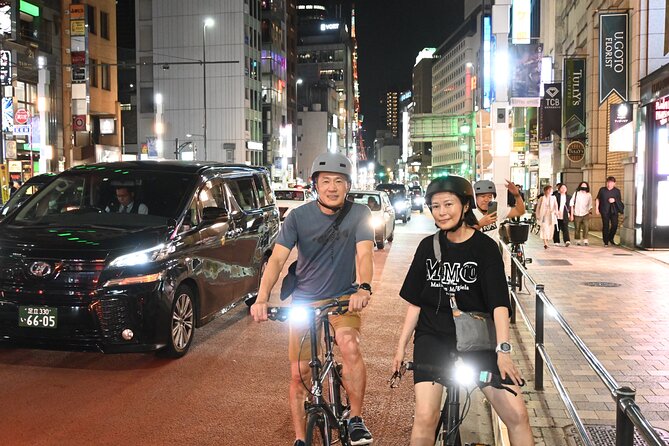
Keyakizaka Dori in Roppongi is one of the ride’s most photogenic sections. The street is known for its elegant lighting and city views, and it gives you a sharper look at Tokyo’s evening style than a dark residential lane would.
Roppongi is also a useful place to understand the city’s nightlife districts. Bars, restaurants, hotels, galleries, and offices sit close together, creating a neighborhood that changes tone from block to block. The guide’s local knowledge is valuable here because a bicycle ride can reveal more than a quick visit to one restaurant or club.
You should remember that the tour does not include dinner. Roppongi may tempt you with food, but there is no meal stop built into the two-hour ride. Eat before you arrive or carry a small snack that will not interfere with cycling.
Azabujuban gives you a neighborhood view
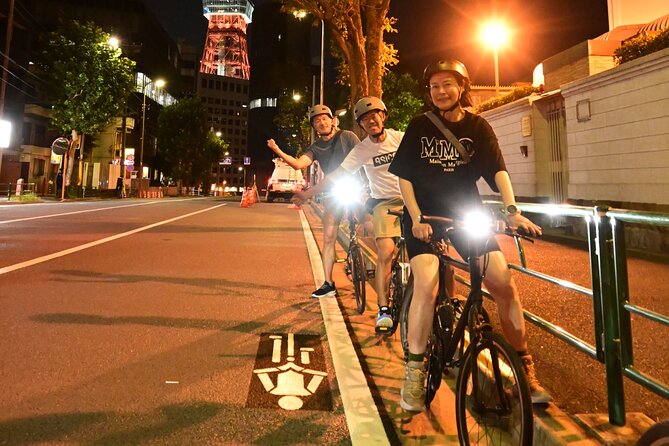
Azabujuban is a chance to see a more local-feeling part of central Tokyo. It is not presented as a major landmark in the same way as Tokyo Tower, but that is part of its appeal. The ride lets you see a district rather than only a monument.
This is where the tour’s route design earns its price. A train can bring you close to major areas, but it cannot show you the short connections between them. Cycling through Azabujuban helps you understand how central Tokyo remains residential and lived-in alongside its offices, hotels, and nightlife.
The stop may feel less dramatic if you only want famous sights. If you prefer neighborhood texture, it is one of the more useful sections. The guide can add context as you pass, while you get a sense of the streets at night.
Aoyama Cemetery is the unexpected stop
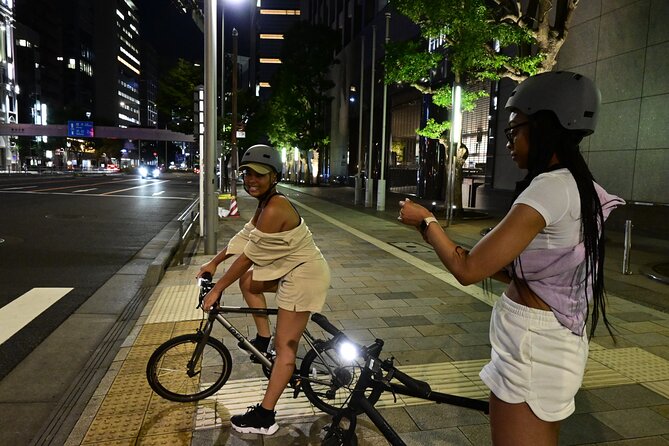
Aoyama Cemetery is perhaps the most unusual part of the route. At night, the cemetery offers a quiet contrast to Roppongi’s restaurants and illuminated streets. It is not a standard first-time Tokyo stop, which makes it memorable without requiring a long detour.
You should approach this section with the right expectations. It is a peaceful passage and a chance to see a different side of the city, not a theatrical ghost tour. The atmosphere may appeal to you if you enjoy unusual urban spaces, but it may not suit anyone who dislikes cycling through cemeteries after dark.
The cemetery also shows why a bicycle is useful here. You can reach it as part of a connected route, while public transport would leave you with additional walking and less control over the timing. The guide’s presence is important because the group stays together and avoids the confusion of navigating unfamiliar streets at night.
Nishiazabu and Roppongi complete the urban loop
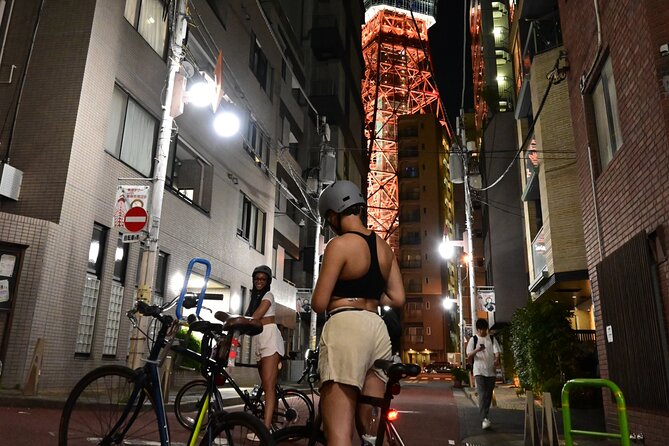
Nishiazabu adds another side of the Roppongi area, with streets that connect nightlife, dining, and quieter residential edges. It is the sort of section that can disappear if you only visit Tokyo by train. You get movement, changing street scenes, and a closer look at how the districts overlap.
The route then returns through Roppongi before heading back to the starting point. Across two hours, you cover a surprising amount of ground, but the pace remains active. You should be prepared to keep riding rather than expect long breaks at every stop.
Photo opportunities are part of the fun. One group specifically appreciated that Taichi took pictures at good locations. That is a useful extra for solo participants or anyone who wants a record of the ride without constantly stopping to manage a phone.
The cycling demands are worth taking seriously
The operator says the bicycles suit people between 155 and 185 centimeters tall. Helmets and bicycles are included, which keeps the planning easy. The more important requirement is cycling ability.
You should be able to:
- Ride confidently on pavements and city streets
- Cross traffic lights without hesitation
- Handle crowded or tight spaces
- Maintain about 15 kilometers per hour
- Follow the guide’s directions while watching your surroundings
The wording about pavements means you should be ready for a mix of cycling surfaces and urban conditions. You may encounter pedestrians, intersections, and narrow sections. The tour is suitable for most people who already cycle with confidence, but it is not designed as a beginner lesson.
The reviews place strong emphasis on feeling safe and organized. That points to good group control and clear guidance, not a traffic-free route. You remain responsible for your own riding. Wear comfortable clothes, choose secure shoes, and avoid bringing anything that can swing into the wheels.
Is $56.01 a fair price?
At $56.01 per person, the tour sits in a reasonable range for a two-hour guided activity that includes a bicycle, helmet, route planning, and a small group. You are paying for more than equipment. You are paying for the guide’s local knowledge and the ability to connect several districts without getting lost.
The value is strongest if you want an overview of Tokyo at night. In two hours, you reach Tokyo Tower, Meiji Jingu Gaien, Omotesando, Roppongi, Azabujuban, Aoyama Cemetery, and Nishiazabu. Seeing all of those places independently would require several train rides, walks, and decisions about where to turn.
The value is weaker if you want a slow, photo-heavy evening or a meal along the way. The ride keeps moving, and dinner is not included. You may also prefer a walking tour if cycling in traffic sounds stressful.
Group discounts are available, and groups of four or more are asked to contact the organizer directly. Since the maximum is six, a larger party should confirm arrangements before booking.
Weather, timing, and practical planning
The tour starts at 8 p.m. and runs for about two hours. That late start is useful in summer, when cycling after sunset can feel much cooler than sightseeing in the afternoon. It also gives you time to have dinner first, which you should do because the tour does not stop to eat.
The ride can proceed in light rain, but sudden weather changes may lead to cancellation. This activity requires good weather, so check your plans before setting aside the evening. If the operator cancels for poor weather, you will be offered another date or a full refund.
You can cancel for a full refund up to 24 hours before the start time. Changes or cancellations made less than 24 hours before the tour are not accepted for a refund. The cut-off follows Tokyo local time.
The meeting point is Umayamichi Park, 5-chome-24-11 Sendagaya, Shibuya, Tokyo 151-0051. It is near public transport, about one minute from Yoyogi Station and roughly ten minutes from Shinjuku Station. Confirmation is provided at booking, so keep the meeting details available on your phone.
Who should book this night ride?
I would choose this for an active first or second evening in Tokyo, especially if you want to see several central districts without spending the whole night underground. It suits couples, small families, solo riders, and friends who already feel comfortable on a bicycle.
It is also a good pick if you have seen Tokyo’s major sights by day and want a different angle. The cemetery, quiet avenues, and connections between neighborhoods give the ride more character than a simple landmark circuit.
I would skip it if you cannot maintain the required pace, dislike city cycling, need a dinner break, or want to enter Tokyo Tower. The route is guided and organized, but it remains a genuine urban bike ride.
Final call: a strong choice for confident cyclists
I recommend this tour if you want a compact, active look at Tokyo after dark. The combination of Tokyo Tower, Roppongi lighting, Omotesando, Aoyama Cemetery, and quieter neighborhood streets gives you more range than a standard evening walk.
The best reasons to book are the maximum six-person group, the guide’s personal explanations, and the chance to reach places that public transport does not connect neatly. Taichi’s friendly, safety-focused style is a major plus when he is your guide, and the ride has earned especially strong praise for clear organization, local insight, and good photo stops.
Just be honest about your cycling skills. If 15 kilometers per hour feels comfortable and you can handle traffic lights and tight streets, $56.01 buys a lively two-hour introduction to Tokyo’s night face. If not, choose a walking or food tour instead.
FAQ
Where does the Tokyo night bike tour start?
The tour starts at Umayamichi Park, 5-chome-24-11 Sendagaya, Shibuya, Tokyo 151-0051. The meeting point is about one minute from Yoyogi Station and roughly ten minutes from Shinjuku Station.
What time does the tour begin?
The start time is 8 p.m. The activity lasts approximately two hours and finishes back at the meeting point.
What does the price include?
The price includes use of a bicycle and helmet. Dinner is not included, and the tour does not stop for a meal.
How many people can join the tour?
The maximum group size is six travelers. Groups of four or more should contact the organizer directly.
What height range suits the bicycles?
The bicycles are suitable for people between 155 and 185 centimeters tall.
Do I need strong cycling skills?
You should already be confident cycling on pavements, crossing traffic lights, and riding through crowded or tight spaces. The group travels at about 15 kilometers per hour.
What happens if the weather is poor?
The tour can proceed in light rain, but sudden weather changes may cause cancellation. If the operator cancels because of poor weather, you can choose another date or receive a full refund.
Just added around Tokyo
- Tokyo Non-Touristy Local Private E-bike Cycling Tour from Asakusa★ 5.0 · 2 reviews
- Little Adventure with Cycling in Tokyo No. 1 Crystal Clear River★ 5.0 · 6 reviews
- 2.5 Hour-Guided Cycle Tour in the Central Tokyo★ 5.0 · 25 reviews
- Tokyo’s hidden nature cycling tour – Okutama Historical Road Tour★ 5.0 · 6 reviews
- MTB, Hybrid or Gravel Road Bike Rental in Okutama, Tokyo★ 5.0 · 2 reviews
- Tokyo: Private Cycling Tour with cute E-bike★ 5.0 · 11 reviews
- Tokyo: Super Local Private E-bike Cycling Tour from Asakusa★ 5.0 · 4 reviews
- Tokyo: 3h Private E-bike Tours, Starting at Your Hotel★ 5.0 · 25 reviews
Cycling Tours, compared.
Ninh Binh Day Trip: Hoa Lu-Trang An/Tam Coc-Mua Cave-Cycling-Boat
Read our review →
Cai Be Mekong Delta Tour: Cooking Class, Cycling & Craft Villages
Read our review →

Countryside Bike Tour from Amsterdam: Cheese, Clogs & a Windmill
Read our review →
Electric Cycling Tour of Ubud with Free Hotel Transfer and Lunch
Read our review →

Browse the lists this tour appears in