
Review · TOKYO
Little Adventure with Cycling in Tokyo No. 1 Crystal Clear River
Tokyo’s Akigawa Valley feels like another world, yet it is only about an hour by train from the city. You’ll ride an electric bicycle along the river, pass a thatched temple gate and old bridges, then put on waterproof gear for a walk through the water to a waterfall. The day ends with a hot-spring footbath, not a rushed race back to Tokyo.
I like the small group size, capped at six, and the way the outing mixes gentle cycling with a real bit of adventure. I also like that the route shows everyday rural Japan, from Kotokuji Temple to quiet riverside spots, instead of keeping you inside a standard sightseeing circuit. The main drawback is that you need good weather, and the river trek may not suit anyone who dislikes wet shoes, uneven ground, or outdoor activity.
Key points at a glance
- A rural side of Tokyo: Reach the forested upper Tama and Akigawa River area in roughly an hour by train from central Tokyo.
- Electric bicycles do the hard work: The bikes make the valley route manageable while still giving you the pleasure of moving through it at ground level.
- Water trekking to a waterfall: Waterproof gear lets you walk through the river to a secluded waterfall.
- A small, personal outing: The group limit is six, allowing the guide to keep an eye on the route and adjust plans when needed.
- Lunch beside the river: A special Cuba sandwich lunchbox is eaten outdoors in a quiet riverside setting.
- A gentle finish: After a suspension bridge and more cycling, you can warm your feet in a hot spring.
Why this six-hour outing feels unlike Tokyo sightseeing
Most first visits to Tokyo stay within the central wards, where trains, neon, department stores, shrines, and dense crowds fill the day. This experience takes you to Akiruno, in western Tokyo Prefecture, where the Akigawa Valley cuts through wooded hills and clear river water.
That contrast is the point. The area is tied to the older economy of Edo-era Tokyo through forestry and charcoal burning. You are not just looking at trees and water. You are seeing the rural setting that helped supply the historic city.
I like the scale of the day. Six hours is long enough to reach several different settings, but short enough to fit into a wider Tokyo visit. You get a temple, an e-bike ride, local food, a river walk, a waterfall, a bridge, and a hot spring without needing an overnight stay.
The price is $143.34 per person. That is not a cheap train-side excursion, but the fee covers a guide, electric-bike use, the planned activities, lunch, and a carefully arranged route in a place that can be awkward to explore efficiently on your own. The value is strongest if you want help finding quiet river access and combining several rural stops in one day.
A few more rides around Tokyo worth a look
- Tokyo Great Cycling Tour
★ 5.0 · 811 reviews - Tokyo Top Highlights 3h Guided E-bike Tour
★ 5.0 · 714 reviews - Tokyo West-Side Cycling & Food Tour
★ 5.0 · 214 reviews
Meeting the guide at Tokyo Urayama Base
The day begins at 10:00 a.m. at Tokyo Urayama Base, 219-7 Tateya, Akiruno, Tokyo 190-0163. The meeting point is near public transportation, which matters because the experience is designed as an easy escape from central Tokyo rather than a long private transfer.
The operator is Tokyo Urayama Base, and the guide named in the tour information is Kenji. Communication with Kenji is described as easy and accommodating, including when rain forced changes to the plan. That flexibility matters here because the river portion depends on safe conditions.
The group maximum is six people. That is a useful limit for a bicycle outing. You are less likely to feel lost in a large line of bikes, and the guide can explain the route, watch the group, and make small adjustments if weather or water conditions change.
You should arrive ready for active time outdoors. The tour includes cycling and a river walk, so practical clothing matters more than city style. The exact equipment details are not specified, but waterproof gear is provided or arranged for the river section.
Kotokuji Temple and the old valley story
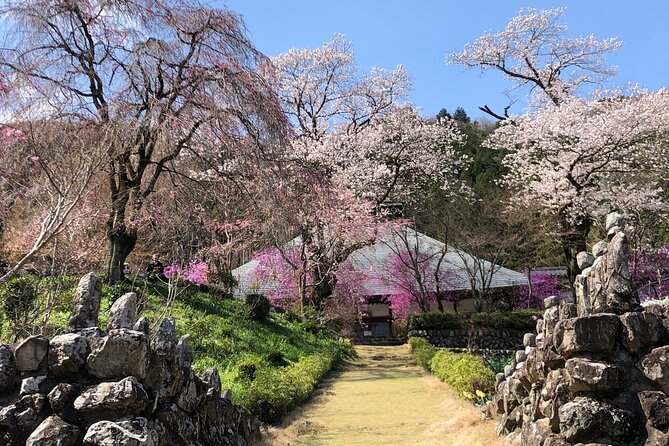
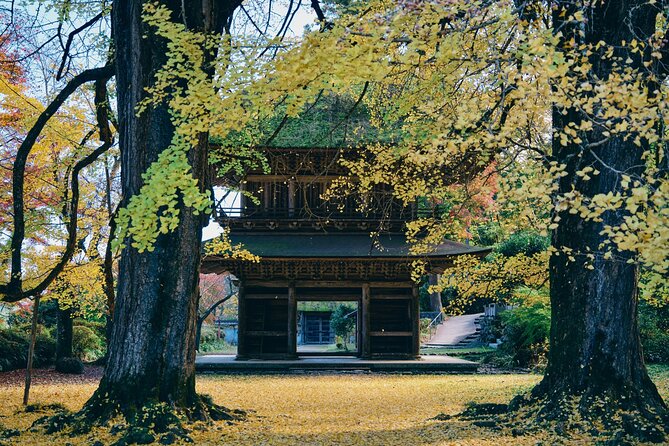
The first stop is Kotokuji Temple, reached through a handsome thatched gate. A giant ginkgo tree gives the entrance a strong seasonal character, and the guide explains the temple’s past during a visit of about 30 minutes.
This is a good opening stop because it slows the pace before the bicycles come out. You can look closely at the gate and tree, hear about the local setting, and begin to understand that Akigawa is not simply a recreation area. Its villages, forests, temples, and river routes connect to the older life of western Tokyo.
The temple visit is free, as are the listed stops. Do not expect a large temple complex filled with major national treasures. The appeal is its setting and the chance to see a quieter place of worship that sits within the valley route.
The giant ginkgo may look different depending on the season. In autumn, its leaves can give the grounds a golden appearance. At other times of year, the tree still provides a memorable marker beneath the thatched gate.
E-biking past bridges, gardens, and valley cafes
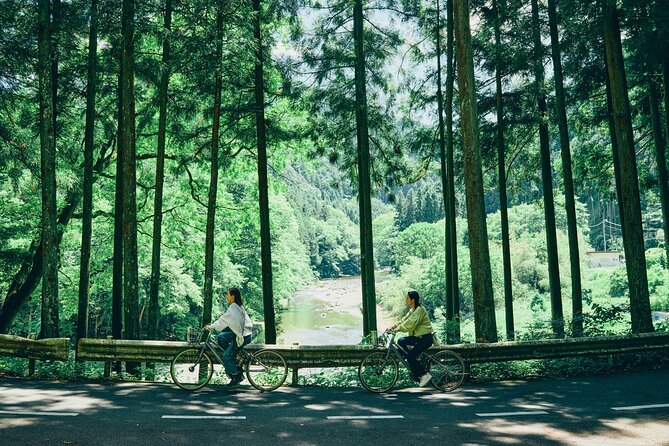
At Kurochaya, you prepare to ride an electric bicycle with the guide. The first cycling section includes scenic bridges, old temples, Japanese gardens, and cafes with terraces looking over the valley.
The e-bike is an important part of the experience. You cover more ground than you would on foot, but you are still close to the river, trees, houses, and small roads. Electric assistance also makes the route more approachable for people who are comfortable on a bicycle but do not want a full day of strenuous pedaling.
I like this middle speed. A train window shows you the countryside in passing. A walking tour gives you detail but limits your range. A bicycle lets you move between small sights while stopping often enough to notice the place.
The route is not presented as a race. You stop at scenic points and cultural sites, so you should expect an active but unhurried ride. The first cycling section lasts about an hour, including the preparation and stops.
There is one practical point to keep in mind: the information confirms electric-bike riding but does not give specific details about rider height, bicycle models, or route gradients. If you have concerns about cycling, ask the operator before booking. Most people can participate, but you should be comfortable riding a bicycle.
Same roads, a different day in the saddle:
- Small Group Cycling Tour in Tokyo
★ 5.0 · 184 reviews - 3-Hour Tokyo Private E-Bike Tour Starting from Your Hotel
★ 5.0 · 117 reviews - Tokyo Bike Tour: Shibuya & Hidden Tokyo
★ 5.0 · 53 reviews - Tokyo: West-Side Cycling and Food Tour with Guide
★ 5.0 · 37 reviews
Lunch beside the Akigawa River
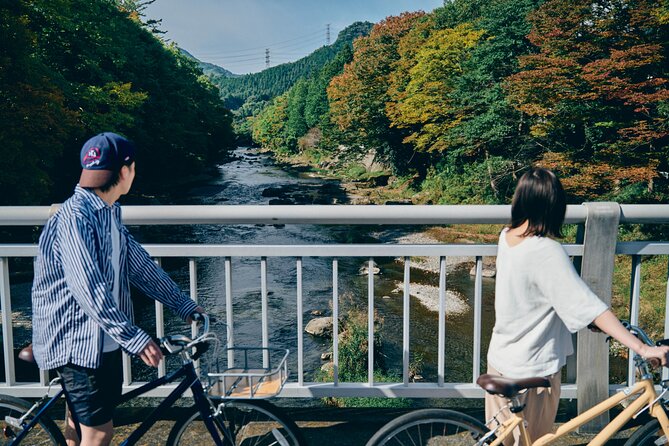
From noon to 1:00 p.m., the group sets up outdoor chairs at a special riverside spot for lunch. The meal is a Cuba sandwich lunchbox.
This is one of the day’s best ideas. Instead of stopping at a crowded restaurant and losing the sense of place, you eat close to the water. The setting gives you time to rest after the first ride and enjoy the valley without a timetable of indoor attractions.
The lunch is simple rather than elaborate. That is part of the charm, but it also means you should not book this tour expecting a formal Japanese meal or a long restaurant experience. The supplied information does not list the sandwich ingredients or drink arrangements, so check directly if you have allergies or dietary needs.
A riverside meal also depends on conditions. If rain arrives, the plan may change. One autumn outing had to be adjusted because of rain, yet the mountain village atmosphere remained part of the experience. That tells you something useful about this tour: the day is built around the outdoors, but the guide can adapt when the weather does not cooperate.
River trekking to the waterfall
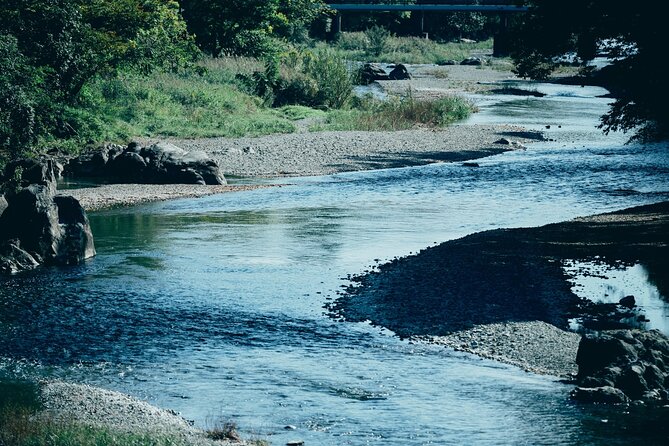
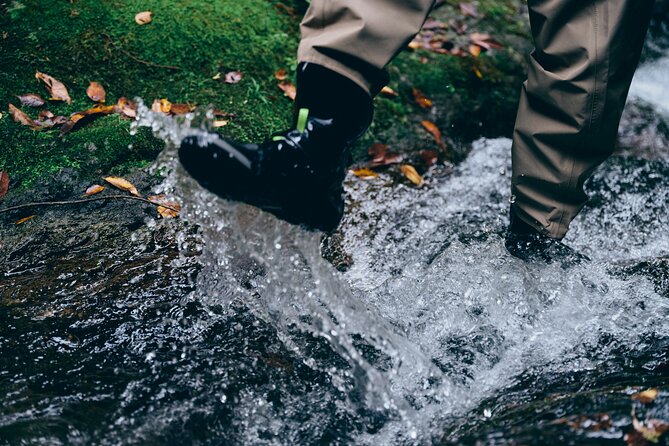
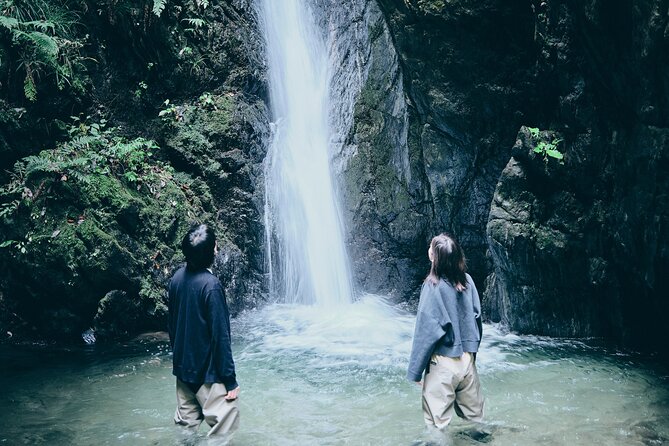
After lunch comes the most unusual part of the day: a river trekking tour from 1:00 to 2:00 p.m. You put on waterproof gear and walk through the river toward a secluded waterfall.
This is not a sightseeing walk along a paved riverbank. You should expect water, slippery surfaces, and a need to follow the guide’s instructions. The reward is a closer look at the river itself and a waterfall that would be easy to miss from the road.
The river walk is the reason this experience feels different from an ordinary countryside bicycle ride. It puts you in the setting rather than keeping you at its edge. The combination of mountain views, forest, and moving water gives the afternoon a real sense of adventure without requiring a full-day hike.
Still, this section is not for everyone. If you want a dry, polished excursion, choose another outing. Good weather is required, and the activity can be changed or canceled if conditions are poor. You should also be prepared for the possibility that water levels or safety concerns affect the exact route.
The available information does not state the distance to the waterfall, water depth, or the kind of footwear supplied. Those are sensible questions to ask before you reserve, especially if you have mobility concerns or dislike uneven footing.
The second bike ride and a hot-spring footbath
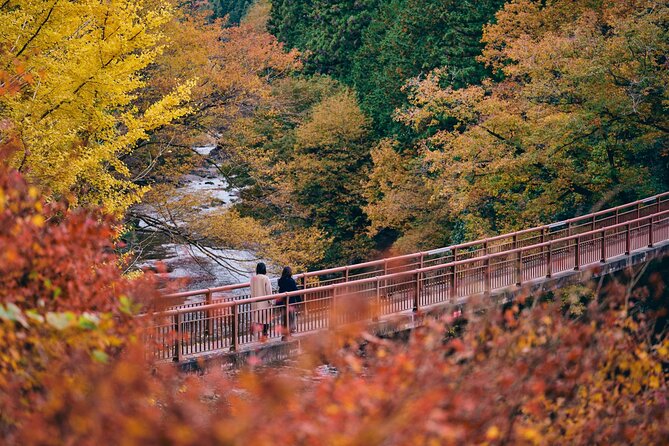
After the river activity, you cycle for another 40 minutes toward Seoto-no-Yu, the Akigawa Valley hot spring. This is a useful transition. You get back on the e-bike while the day’s most active section is still fresh, then finish with a slower stop.
The route includes crossing a suspension bridge. That adds a small burst of excitement without turning the outing into a major physical challenge. From the bridge, you get another angle on the river and valley, a fitting final view before the hot spring.
At Seoto-no-Yu, the plan includes a footbath and time for souvenir shopping. A footbath is a smart finish after cycling and river trekking. You can warm and rest your feet without the time or preparation needed for a full bathing session.
Do not assume the tour includes a full hot-spring bath. The stated activity is a footbath, so pack and plan accordingly. Souvenir shopping gives you a chance to browse local items, but the tour information does not specify what shops or products will be available.
The experience ends back at the meeting point. The listed timing suggests the final stop runs into the mid-afternoon, though the overall duration is approximately six hours. Allow extra time around the edges of the schedule, since outdoor conditions and group pace can affect the day.
Who will get the most from this experience
I would choose this outing if you have already seen the major central Tokyo sights and want something quieter, greener, and more physical. It also suits a repeat visitor who wants a side of Tokyo that does not feel designed around international tourism.
You are a good match if you:
- Enjoy easy-to-moderate outdoor activity
- Are comfortable riding an electric bicycle
- Like small groups and direct contact with a guide
- Want local scenery more than major monuments
- Are happy to eat a casual outdoor lunch
- Find a river walk and waterfall more appealing than another museum
- Appreciate a hot-spring footbath after an active afternoon
I would hesitate if you need a fully indoor plan, dislike getting wet, or want a food-centered tour. The experience also may not suit anyone who expects precise weather-proof scheduling. Rain can change the program, and poor weather can lead to a new date or a full refund.
The tour is listed as suitable for most people, but that should not be read as a promise that every part is easy for every body. Cycling, river walking, and a suspension bridge are all part of the day. Ask about the current river conditions and equipment if you have a physical limitation.
Price, timing, and booking advice
At $143.34, this is a premium half-day outing. You are paying for more than transportation. The price brings together a guide, bike access, a small group, a riverside lunch, river equipment, and visits that would take planning to combine independently.
The value depends on what you would otherwise do. If you prefer to take local trains, rent a bicycle, search for safe river access, find a waterfall, and locate the right footbath on your own, you may spend less money but more time and effort. If you have only one free day and want the valley handled for you, the price is easier to justify.
This experience is often booked 46 days ahead on average. That suggests you should not leave it until the last minute if your Tokyo schedule is fixed, especially since the group limit is six.
You receive confirmation at booking, and the ticket is mobile. Cancellation is free up to 24 hours before the 10:00 a.m. start for a full refund. Changes or cancellations inside that window are not accepted for a refund. If the operator cancels because of poor weather or because the minimum group size is not reached, you are offered another date or experience, or a full refund.
Should you book the Akigawa Valley day?
Book it if you want to trade Tokyo’s central streets for a river, forest, temple gate, and a little wet-footed fun. The strongest parts are the small group, easy e-bikes, quiet rural route, and unusual river trek to a waterfall.
Skip it if your ideal day is entirely urban, dry, and predictable. Also think twice if you are not comfortable cycling or walking in moving water.
For the right visitor, this is a smart way to see that Tokyo is more than its dense center. You get a real change of pace, a useful introduction to the Akigawa Valley, and a memorable finish with warm feet at the hot spring.
FAQ
Where does the tour start?
It starts at Tokyo Urayama Base, 219-7 Tateya, Akiruno, Tokyo 190-0163, Japan.
What time does the tour begin?
The start time is 10:00 a.m.
How long does the experience last?
The tour lasts approximately six hours.
How large is the group?
The activity has a maximum of six participants.
Is the tour suitable for most people?
The tour information says most people can participate. You should still be comfortable with electric-bike riding, river walking, outdoor conditions, and crossing a suspension bridge.
What kind of bicycle is used?
The tour uses electric bicycles.
Is lunch included?
The schedule includes a special Cuba sandwich lunchbox eaten outdoors beside the river.
Does the tour include a hot-spring bath?
It includes a footbath at Akigawa Valley Seoto-no-Yu, along with time for souvenir shopping.
What happens if the weather is poor?
The experience requires good weather. If it is canceled because of poor weather, you can choose another date or receive a full refund.
Just added around Tokyo
- Tokyo Non-Touristy Local Private E-bike Cycling Tour from Asakusa★ 5.0 · 2 reviews
- Tokyo Night Bike Tour: From Shibuya to Tokyo Tower via Roppongi★ 5.0 · 29 reviews
- 2.5 Hour-Guided Cycle Tour in the Central Tokyo★ 5.0 · 25 reviews
- Tokyo’s hidden nature cycling tour – Okutama Historical Road Tour★ 5.0 · 6 reviews
- MTB, Hybrid or Gravel Road Bike Rental in Okutama, Tokyo★ 5.0 · 2 reviews
- Tokyo: Private Cycling Tour with cute E-bike★ 5.0 · 11 reviews
- Tokyo: Super Local Private E-bike Cycling Tour from Asakusa★ 5.0 · 4 reviews
- Tokyo: 3h Private E-bike Tours, Starting at Your Hotel★ 5.0 · 25 reviews
Cycling Tours, compared.
Ninh Binh Day Trip: Hoa Lu-Trang An/Tam Coc-Mua Cave-Cycling-Boat
Read our review →
Cai Be Mekong Delta Tour: Cooking Class, Cycling & Craft Villages
Read our review →
Countryside Bike Tour from Amsterdam: Cheese, Clogs & a Windmill
Read our review →
Electric Cycling Tour of Ubud with Free Hotel Transfer and Lunch
Read our review →
Browse the lists this tour appears in