
Review · HIROSHIMA
Hiroshima: Peace Cycling Tour with Local Guide
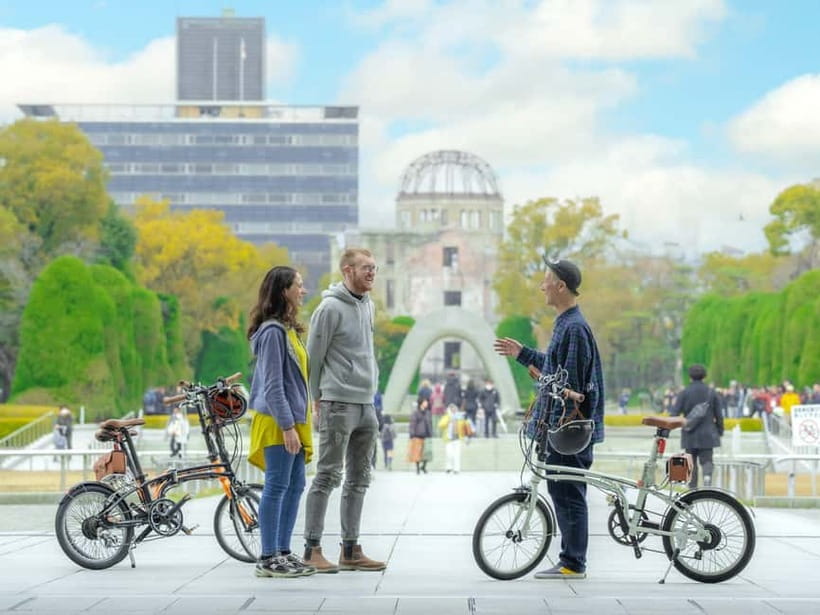
Hiroshima’s story reaches far beyond the Atomic Bomb Dome. This small-group electric-bike tour takes you from Peace Memorial Park into ordinary streets, parks, bridges, and suburbs connected to the bombing. Guides such as Shin, Kana, Moe, and Mai explain what happened and how the city rebuilt, often adding family stories passed down through the generations.
I like two things right away: you cover more ground than on foot, and the route includes places you could easily miss on your own, such as a surviving streetcar and the weeping willow tree. The main consideration is that this remains a shared ride, so the pace may slow if children or less confident cyclists are in the group.
Key points to know before booking
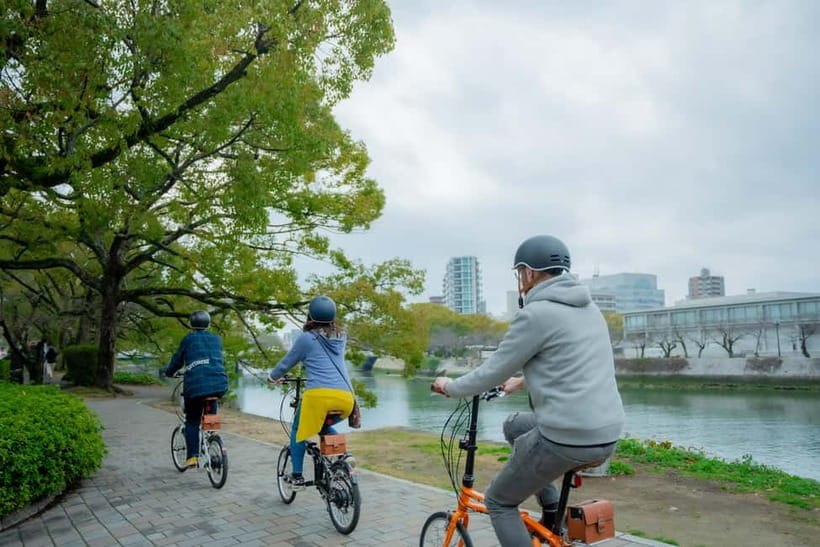
- A moving route beyond Peace Park: Visit the Atomic Bomb Dome, bridges, parks, hospitals, streetcars, and less-touristed neighborhoods tied to Hiroshima’s past.
- Comfortable electric bicycles: The motor makes the route manageable, but you still need to know how to ride a bicycle.
- Personal local storytelling: Guides including Shin and Kana have shared family connections to the bombing and its lasting effects.
- Two route lengths: Choose a roughly two-hour route or a three-hour route with more stops and a wider circuit.
- Small group size: Tours are limited to 10 people and conducted in English.
- Useful value at $52: Bikes, guide service, and bicycle accident insurance are included, making this a practical way to see several sites in one morning or afternoon.
Why cycling gives Hiroshima a clearer shape
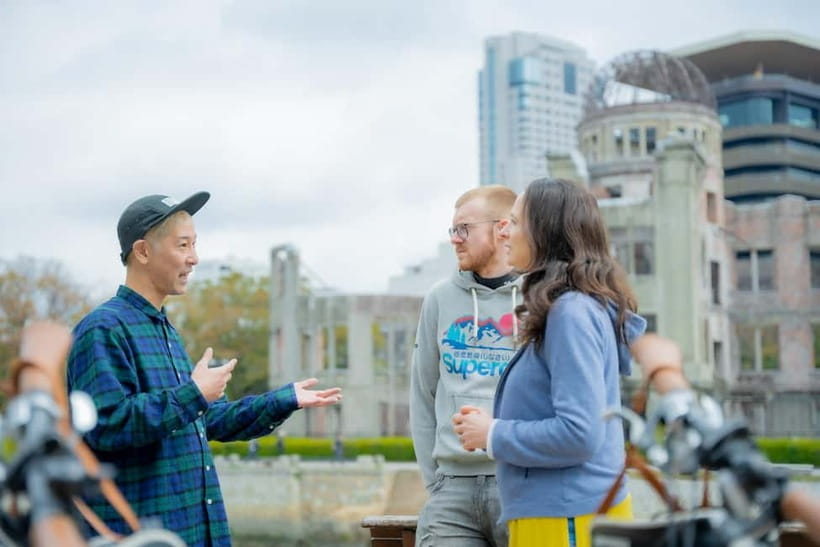
The Peace Memorial Park is essential, but it can also create a narrow picture of Hiroshima. You see the dome, monuments, river, and museum area, then it is easy to assume the story ends there.
It does not. The atomic bomb caused severe destruction within roughly 2.5 kilometers of the hypocenter. This ride helps you connect the famous memorials with the wider city, showing how the destruction reached streets and buildings away from the central park.
I like the contrast. One moment you are beside a solemn monument, and soon you are riding through a green city with active rail lines, bridges, parks, and everyday neighborhoods. That change is not a distraction from the history. It helps you understand the scale of the damage and the work of rebuilding.
The tone is serious, but the tour is not designed to leave you in despair. Guides explain the bombing, its human effects, and Hiroshima’s message of peace, while also showing a city that recovered and continues to live normally.
A few more rides around Japan worth a look
- Hiroshima in a Nutshell: Morning Bike Adventure
★ 5.0 · 524 reviews - Hiroshima 2hr Peace Cycling Tour with Local Guide
★ 5.0 · 321 reviews - Hiroshima and Miyajima by Bike and Boat
★ 5.0 · 172 reviews
Starting at the Peace Park Rest House
The meeting point is the Rest House of Hiroshima Peace Park. From Hiroshima Station, take the Hiroshima Electric Railway to Atomic Bomb Dome Station. The ride takes about 20 minutes, followed by a walk of roughly five minutes.
Arrive early. If you are late without contacting the operator, the tour can be cancelled with a same-day, non-refundable charge. That is especially important for the morning departures, since the group leaves on schedule.
The bicycles are electric, and the supplied information describes them as comfortable and easy to operate. That does not mean the tour is suitable for someone who cannot ride. You will cycle through city streets and need basic control of the bike.
The group can include up to 10 people. That is small enough for questions and conversation, but it is not a private tour. The guide may adjust the pace to suit children or people who are less used to cycling.
The two-hour route: a focused introduction
The shorter route begins at 11:00 or 15:00 and finishes around two hours later. It works well if you have only part of a day in Hiroshima or want to combine this activity with the Peace Memorial Museum, meals, or another sightseeing plan.
The first hour is spent around Peace Memorial Park. The guide explains what the park means, how its monuments fit together, and what happened in Hiroshima decades ago. You will also see the Atomic Bomb Dome, the city’s best-known symbol of the bombing.
This section is valuable because the monuments are not always self-explanatory. A guide can connect the dome, memorials, riverbanks, and surrounding spaces instead of leaving you to read each site in isolation.
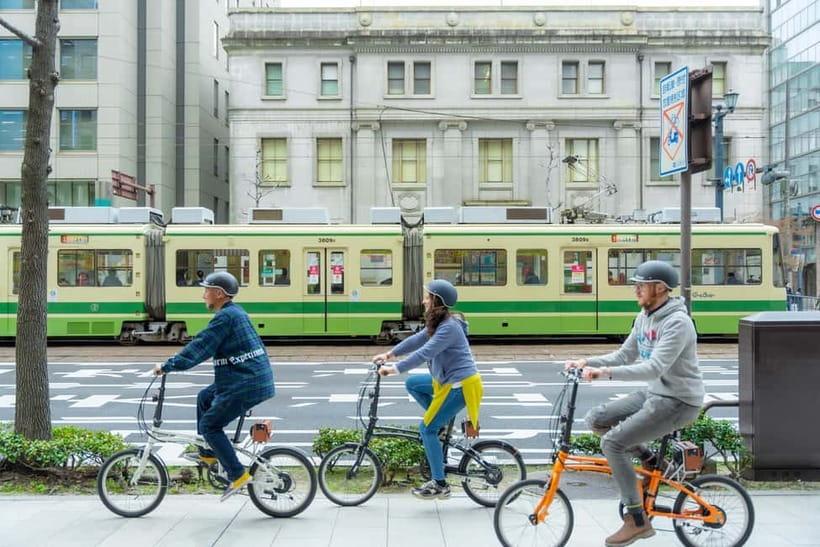
After the central park, the ride moves toward the suburbs. The guide points out the A-bombed streetcars, working trains that survived the bombing and still run today. That detail gives the past a direct link to present-day Hiroshima. You are not only looking at a preserved ruin. You are seeing how a city continues to use and live with what survived.
The shorter route then visits additional A-bomb heritage sites and town streets away from the busiest sightseeing area. This is one of the strongest reasons to choose the tour. You can see greenery, rebuilt neighborhoods, and ordinary city life while hearing how Hiroshima changed after the destruction.
The route finishes at the original meeting point at 13:00 or 17:00. Since the itinerary is compact, the guide may not spend as long at each stop as a private walking tour. In exchange, you see more of the city without committing half a day.
The three-hour route: a fuller circuit of memory
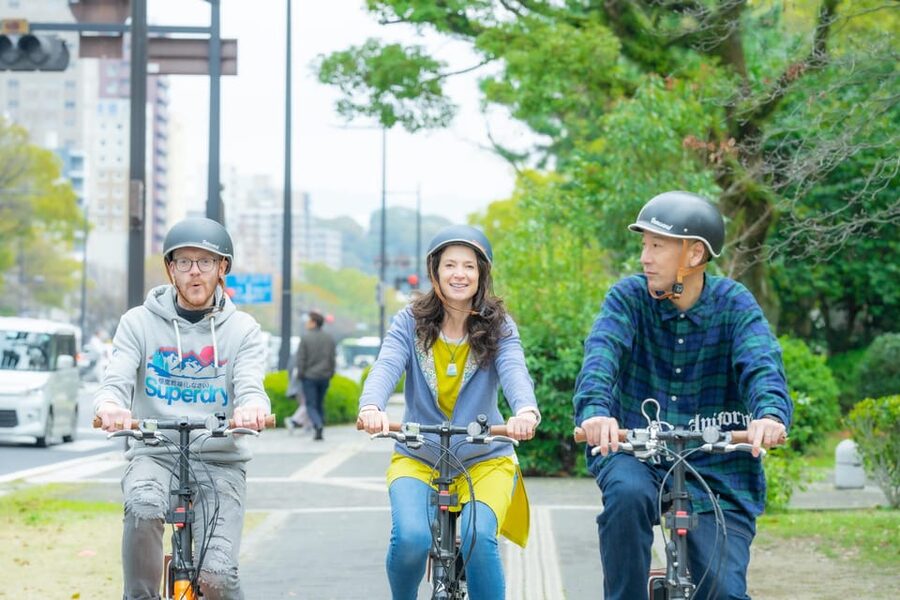
The three-hour route begins at 10:00 or 14:00 and covers a longer list of stops. It is the better choice if Hiroshima is a major focus of your day and you want a broader connection between the city center and sites farther out.
The route starts at Hiroshima Castle, followed by Hiroshima Gokoku Shrine and its shrine gate. These opening stops provide a wider setting for understanding the city before the route turns toward the atomic bombing. You then pass through Hiroshima Central Park and reach Aioi Bridge.
Aioi Bridge is especially important because of its connection to the bombing target area. From there, the ride continues to the Atomic Bomb Dome. The sequence works well: you move through the modern city, arrive at a major historic crossing, and then reach the building most closely associated with Hiroshima’s destruction.
Next come the Motoyasu River and the Peace Bridge. Rivers and bridges are not just pleasant cycling routes here. They help you see how Hiroshima is arranged and how water, transport, and neighborhoods shaped the city before and after the bombing.
The route then moves to Higashisenda Park and the Hiroshima Red Cross Hospital. Sites such as the hospital show a different side of the story from the monuments in Peace Park. They connect the bombing to medical care, injury, and the practical struggle to help survivors.
Around 12:20 or 16:20, you visit Hiroshima Railway and see the story of the surviving rail system. Depending on the day and exact route conditions, this may include the historic streetcar often identified as car 653. Seeing a vehicle that survived the atomic bombing can be one of the tour’s most memorable details, especially because streetcars remain part of Hiroshima’s working transport system.
The ride continues to Miyuki Bridge and the Kobayashi River, then to a surviving weeping willow tree. Natural survivors can be powerful. The tree is not a large museum display, yet it gives you a quiet, physical reminder that life returned and continued in places that had been devastated.
The final stops include Peace Boulevard before the tour returns to the meeting point at 13:00 or 17:00. At three hours, the ride is still manageable, but it gives you more context and more time outside the central tourist zone.
Same roads, a different day in the saddle:
- Tokyo Great Cycling Tour
★ 5.0 · 811 reviews - Tokyo Top Highlights 3h Guided E-bike Tour
★ 5.0 · 714 reviews - One-Day Osaka Bike Adventure: 5–6 Hours
★ 5.0 · 246 reviews - Eat, Drink & Cycle: Osaka Foodie Bike Tour
★ 5.0 · 224 reviews
What the local guides add
The quality of this experience depends heavily on the guide. The tour has used several English-speaking guides, including Shin, Kana, Moe, Mai, Bella, and others, so you cannot book a specific personality unless the operator confirms it.
Shin has been especially associated with personal family stories connected to the bombing. His storytelling combines the wider causes and effects of the attack with memories passed from grandparents and parents. That kind of connection can make the subject feel immediate without turning the tour into a lecture.
Kana has been praised for balancing facts, personal stories, and a message of hope. She has also been described as warm and energetic, which matters on a ride that covers emotionally heavy material. Moe and Mai have likewise been noted for thoughtful explanations and careful attention to group comfort.
You should not expect every guide to tell the same stories. That is part of the local character of the tour, but it also means the experience can vary slightly by guide. The consistent promise is an English-language introduction to Hiroshima from people who grew up in or around the city.
The best guides do more than recite dates. They explain how the bombing is remembered locally, how the city’s people rebuilt, and why peace remains central to Hiroshima’s public identity. They also leave room for questions, which several participants have found useful after hearing the main story.
Riding conditions, comfort, and family details
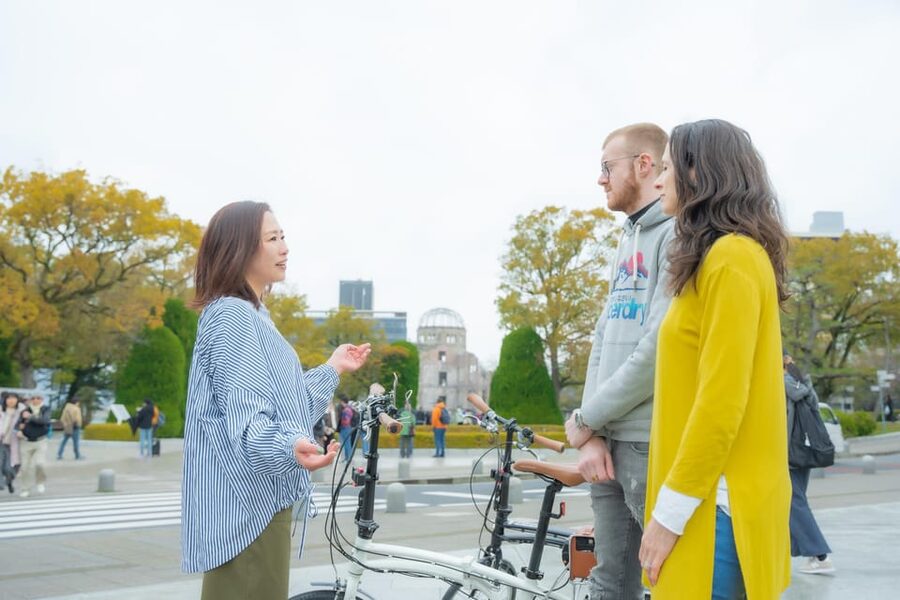
The electric bicycles reduce the physical effort. You still pedal and steer, but the motor helps make the route accessible to people who are not strong cyclists. The ride covers small city distances rather than a long countryside excursion.
You should wear comfortable clothing and shoes, bring a towel, and carry drinks. High heels are not allowed. Summer heat can be a real concern, and some guides have carried cold towels, salt candies, wet wipes, ice packs, or similar comfort items for the group. Those extras are not listed as guaranteed inclusions, so bring your own water and sun protection.
The bicycles have clear height limits. Adult electric bikes are for people at least 145 centimeters tall. Children between 110 and 145 centimeters may use one of the limited children’s bicycles, while child seats are available for children under 22 kilograms and under 115 centimeters.
Children aged one and older can be booked onto the activity, but infant seats and children’s bicycles are limited. Contact the operator before reserving if you need either one. Children under 15 pay the child rate and may use an adult bicycle or a children’s bicycle if their height is suitable.
One practical caution: a tall rider may find the bike frame small. A rider around 6 feet 1 inch has specifically noted this issue. If you are tall, ask about bike fit before booking rather than assuming every bicycle will suit you.
How much value you get for $52
At $52 per person, the tour is reasonably priced for a two to three-hour guided activity in Hiroshima. The fee includes the electric bicycle, an English-speaking guide, and bicycle accident insurance.
The real value is not simply the rental bike. You are paying for an organized route that links sites spread across the city, plus explanations at places you might otherwise pass without understanding. A walking tour may focus more deeply on Peace Park, while public transport can get you around but will not point out the smaller A-bomb sites along the way.
Food and drinks are not included. That is no problem for most schedules, since the tour lasts only two or three hours, but you should eat beforehand or plan a meal afterward. The morning and afternoon departures leave the rest of your day open.
Free cancellation is available up to 24 hours before the start time, and you can reserve while postponing payment. The strict late-arrival rule is the main booking detail to remember.
Who should choose this tour
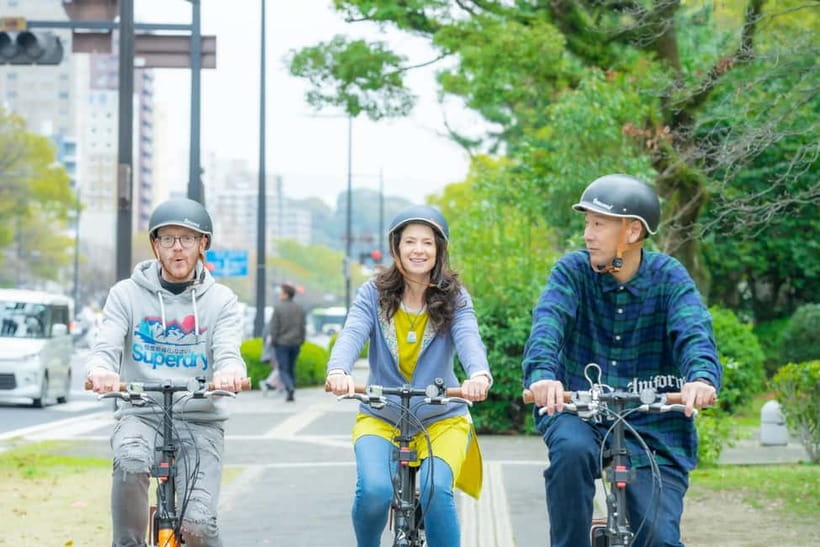
I would choose this ride if you want a quick but thoughtful introduction to Hiroshima and prefer seeing a city in motion rather than walking from monument to monument. It suits solo visitors, couples, and families with older children who can manage a bicycle.
It is also useful if you have only one day in Hiroshima. The route concentrates on the city center and sites directly linked to the atomic bombing, so you can cover a large portion of the historic core without spending the entire day on foot.
You may prefer a museum-focused visit if you want long, quiet time with exhibits and written testimony. This tour provides context in the open air, with short stops and continuous movement. It is not a substitute for the Peace Memorial Museum.
You should also reconsider if you cannot ride a bicycle, are below 145 centimeters without a suitable child bike, or dislike shared tours. The pace may change depending on the group, and the timetable can shift with conditions on the day.
Should you book the Hiroshima Peace Cycling Tour?
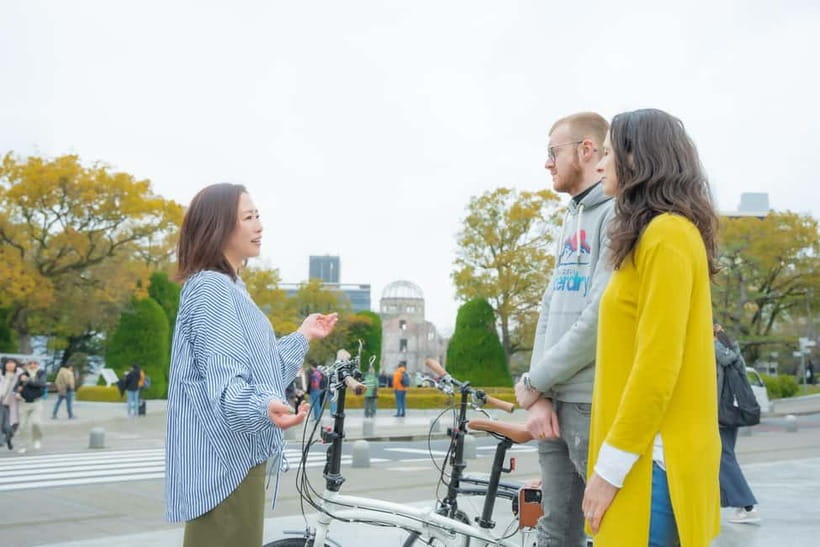
Book it if you want Hiroshima’s story to include more than the Atomic Bomb Dome. The electric bikes make it easy to reach surviving streetcars, bridges, parks, hospitals, trees, and suburban streets, while a local English-speaking guide explains why each place matters.
The tour is especially worthwhile for a first visit, a short stay, or a family that wants history mixed with active sightseeing. Choose the three-hour route for the fullest circuit. Choose the two-hour option if you want a focused introduction and more flexibility afterward.
My main advice is simple: arrive early, bring water, wear practical clothes, and ask about bike size if you are tall. If you can ride comfortably and are prepared for a serious subject, this is a thoughtful, efficient way to see how Hiroshima remembers the past while living fully in the present.
FAQ
Where does the Hiroshima Peace Cycling Tour begin?
The meeting point is the Rest House of Hiroshima Peace Park. From Hiroshima Station, take the Hiroshima Electric Railway to Atomic Bomb Dome Station, which takes about 20 minutes, then walk about five minutes.
How long does the tour last?
There are two route options. The shorter route lasts about two hours, and the longer route lasts about three hours.
What time does the tour start?
The two-hour route starts at 11:00 or 15:00. The three-hour route starts at 10:00 or 14:00. The schedule can change depending on conditions on the day.
Is the tour conducted in English?
Yes. The tour has a live English-speaking guide.
How many people can join?
It is a shared small-group tour for up to 10 participants.
Are electric bicycles included?
Yes. Rental bicycles are included, along with bicycle accident insurance.
What sites are included on the longer route?
The three-hour route includes Hiroshima Castle, Hiroshima Gokoku Shrine, Hiroshima Central Park, Aioi Bridge, the Atomic Bomb Dome, the Motoyasu River, the Peace Bridge, Higashisenda Park, Hiroshima Red Cross Hospital, Hiroshima Railway, Miyuki Bridge, the Kobayashi River, a surviving weeping willow tree, and Peace Boulevard.
Can children join the tour?
Yes. Children aged one and older can be booked. Adult electric bicycles are for people at least 145 centimeters tall. Limited children’s bicycles and child seats are available, so contact the operator before booking if you need one.
What should I bring?
Bring comfortable shoes, comfortable clothes, a towel, and drinks. High-heeled shoes are not allowed.
Just added around Japan
- Slow Cycling Tour at Uji’s Matcha Green Tea Fields and Heritage★ 5.0 · 25 reviews
- Tokyo Non-Touristy Local Private E-bike Cycling Tour from Asakusa★ 5.0 · 2 reviews
- Little Adventure with Cycling in Tokyo No. 1 Crystal Clear River★ 5.0 · 6 reviews
- Tokyo Night Bike Tour: From Shibuya to Tokyo Tower via Roppongi★ 5.0 · 29 reviews
- 2.5 Hour-Guided Cycle Tour in the Central Tokyo★ 5.0 · 25 reviews
- Tokushima & Mt. Bizan BROMPTON Slow Cycling Tour★ 5.0 · 5 reviews
- Tokyo’s hidden nature cycling tour – Okutama Historical Road Tour★ 5.0 · 6 reviews
- Wakimachi BROMPTON Slow Cycling Tour★ 5.0 · 5 reviews
Cycling Tours, compared.
Ninh Binh Day Trip: Hoa Lu-Trang An/Tam Coc-Mua Cave-Cycling-Boat
Read our review →
Cai Be Mekong Delta Tour: Cooking Class, Cycling & Craft Villages
Read our review →
Countryside Bike Tour from Amsterdam: Cheese, Clogs & a Windmill
Read our review →
Electric Cycling Tour of Ubud with Free Hotel Transfer and Lunch
Read our review →

Browse the lists this tour appears in