
Review · JAPAN
Tsuwano Cycling Tour with Local Guide
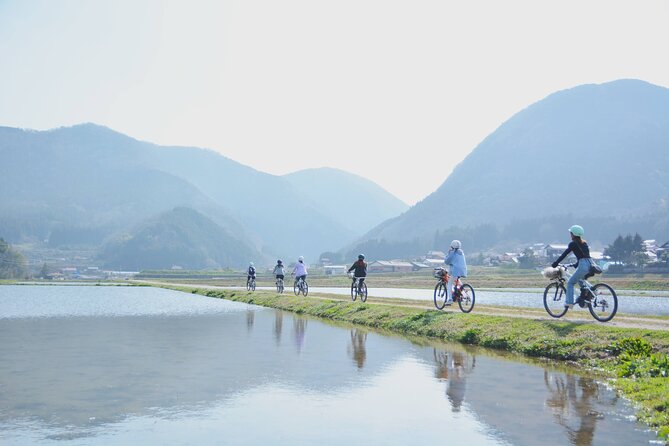
Tsuwano’s best stories are easier to see from a bicycle. This three-hour ride connects its old main street with quiet shrines, a waterfall, rural roads, and views that can be compared with Tsuwano Hyakkeizu, the set of 100 scenes painted about 160 years ago.
I like the electric bicycles, which make the route manageable even if you are unsure about your fitness. I also like the guides, including Yui and Ale, who explain local customs in a friendly, clear way. The main consideration is the weather: this is an outdoor activity, and poor conditions can lead to a rescheduled tour or refund.
Key points to know before booking
- The Hyakkeizu gives the ride a purpose: You compare old paintings with the streets and scenery in front of you.
- The electric bike keeps the pace comfortable: You can cover more ground than on foot without turning the outing into a workout.
- The group is capped at six people: That allows plenty of room for questions and personal attention.
- The route mixes famous sights with quieter stops: Tonomachi Street, three shrines, a waterfall, a horse track, and a giant cedar all appear.
- The guide matters here: Yui and Ale are named in the tour material, and their stories are central to understanding Tsuwano.
- The tour starts and ends at Tsuwano Station: You do not need to arrange a separate return ride.
Why the Tsuwano Hyakkeizu makes this ride different
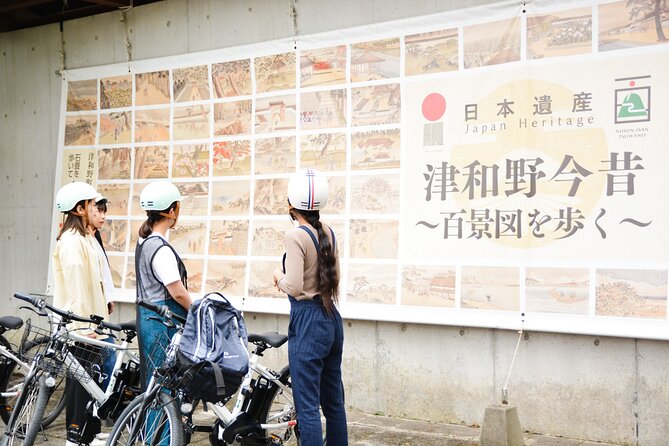
Many town cycling tours are simply a string of stops. This one has a useful visual thread: the Tsuwano Hyakkeizu. These 100 paintings show the Tsuwano domain near the end of the Edo period, roughly 160 years ago, and the tour uses them to compare the old town with what you see today.
That comparison changes your attention. A street may look quiet at first, but an old image can point out its former role or show how a building line, shrine approach, or mountain view has endured. You are not only sightseeing. You are looking for traces.
The paintings also help explain why Tsuwano feels different from a large Japanese city. The town has retained traditional streets, shrines, waterways, and open countryside. The experience is less about rushing through a long list of attractions and more about noticing how a small domain town continues to resemble its earlier self.
The guide’s storytelling is important. Ale has been praised for explaining the town in a way that makes the old castle town easier to imagine, while Yui has led riders through the local scenery and culture with a warm, personal approach. Guide availability may vary, but the format depends on this local interpretation rather than on signs alone.
A few more rides around Japan worth a look
- Tokyo Great Cycling Tour
★ 5.0 · 811 reviews - Tokyo Top Highlights 3h Guided E-bike Tour
★ 5.0 · 714 reviews - Hiroshima in a Nutshell: Morning Bike Adventure
★ 5.0 · 524 reviews
Starting at Tonomachi Street
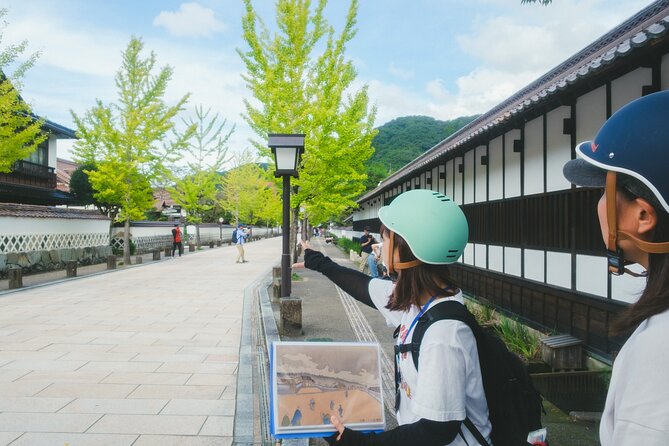
The ride begins at Tsuwano Station, making the meeting point easy to reach by local train or other public transportation. From there, you cycle toward Tonomachi Street, the town’s main street, for about 30 minutes.
This is a sensible opening. Tonomachi gives you your first feel for Tsuwano’s traditional character before the route heads farther out. With a guide beside you, you can begin linking the modern street to scenes shown in the Hyakkeizu.
The stop is not built around an admission ticket or a single monument. Its value is the setting and the explanation. You get your bearings, learn how the old town was arranged, and start seeing the road as part of a larger story.
An electric bicycle is especially helpful here because the tour does not remain in the central streets. You can enjoy the ride without needing to save all your energy for the later shrines and rural sections.
Yasaka Shrine and the stories behind old scenes
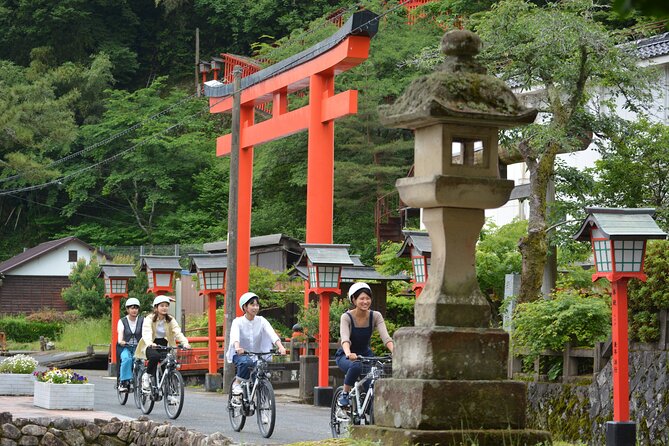
The next 30-minute stop is Yasaka Shrine. Here, the guide explains the shrine’s background and shares lesser-known stories connected to the Tsuwano Hyakkeizu.
This is one of the strongest parts of the tour for anyone who likes context. A shrine can be beautiful but hard to understand when you visit alone. The guide gives you a reason to look at its place in the town and its connection to older scenes.
The stop also shows why the tour works better in a small group. With a maximum of six people, you can ask about a detail in one of the paintings, clarify a custom, or pause for an explanation without being lost in a crowd.
Do not expect a long temple-style visit with a large complex of buildings. The appeal is the combination of place and story. Yasaka Shrine becomes a point of contact between present-day Tsuwano and the town recorded in the old images.
Narutaki Shrine and a quiet waterfall pause
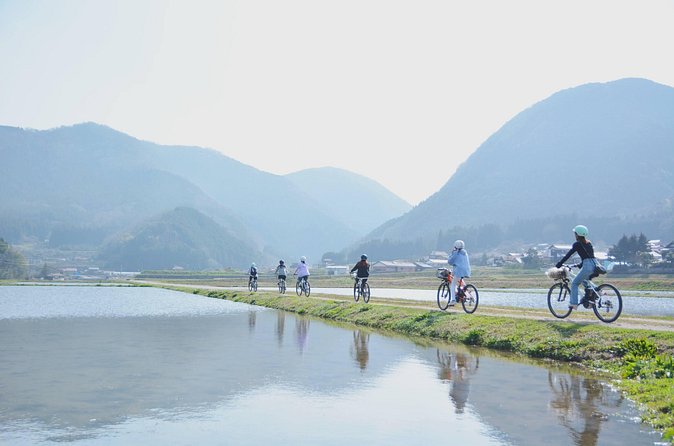
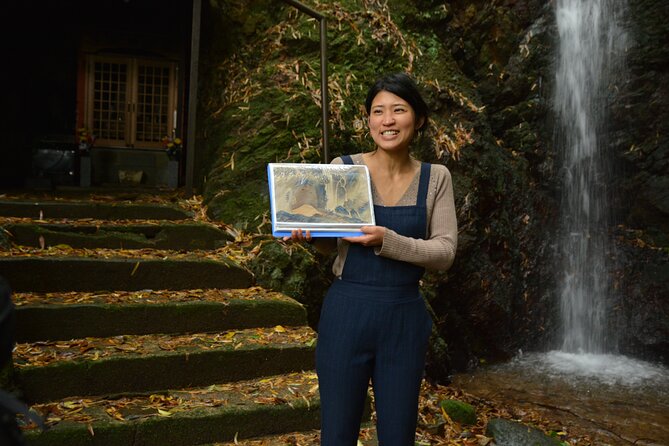
Narutaki Shrine brings a change of mood. The 30-minute visit includes a waterfall spot, more local history, and a short period of simple meditation.
This is a welcome break from ordinary sightseeing. The sound of water and the quieter setting give the tour a slower rhythm, while the meditation offers a small chance to stop taking photographs and simply pay attention to the place.
The meditation is described as simple, so you do not need special experience or religious knowledge. It is best understood as a short introduction to stillness in a setting connected with local tradition.
For me, this kind of stop is one reason to choose a guided bicycle tour instead of seeing Tsuwano only from the main street. You reach a place that could be easy to overlook, then learn why it matters. The drawback is that the route includes several different settings in a fixed three-hour window, so the time at each stop is limited.
Same roads, a different day in the saddle:
- Hiroshima 2hr Peace Cycling Tour with Local Guide
★ 5.0 · 321 reviews - Hiroshima: Peace Cycling Tour with Local Guide
★ 4.8 · 286 reviews - One-Day Osaka Bike Adventure: 5–6 Hours
★ 5.0 · 246 reviews - Eat, Drink & Cycle: Osaka Foodie Bike Tour
★ 5.0 · 224 reviews
Washibara Hachiman Shrine and horseback archery
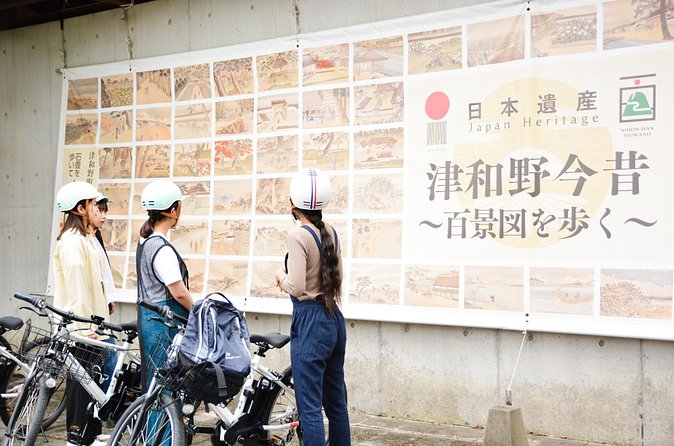
At Washibara Hachiman Shrine, the guide explains the large joyato, or stone lantern, and the baba, the horse track used for the Yabusame horseback archery ritual.
This stop adds ceremonial history to the ride. The horse track is not just an open strip of ground. It is tied to a traditional ritual that helps explain the importance of the shrine and the customs once supported by the Tsuwano domain.
The guide’s explanation gives the setting more meaning than a quick photograph would. You learn what the track is for and why the stone lantern deserves attention. If you are interested in Japanese festivals, martial traditions, or shrine culture, this should be one of the more memorable sections.
The tour does not state that a Yabusame performance takes place during the ride, so you should not book it expecting a live demonstration. You are visiting the site and learning its story. The provider has also suggested returning during the Horseback Archery Festival, which indicates that the festival itself is a separate seasonal occasion.
Tsuwano Shrine and the open countryside
The route continues to Tsuwano Shrine, where you ride through rural surroundings and hear stories about former lords of the Tsuwano domain. This is where the tour moves beyond the compact town center.
The open views help explain Tsuwano’s character. You see a small community set among fields and hills rather than a dense urban area. The ride gives you a better sense of how the old domain related to the countryside around it.
The stories of past lords add a political and personal layer. Instead of treating Tsuwano as a collection of pretty streets, the guide connects the scenery with the people who governed the domain and shaped its institutions.
This section is also where the electric bicycle earns its keep. The route covers more distance than a walking tour, but the motor assistance lets the guide maintain a relaxed pace. One of the tour’s strongest practical features is that you can enjoy the setting even if cycling is not normally a major part of your trip.
The 1,000-year-old cedar at the end
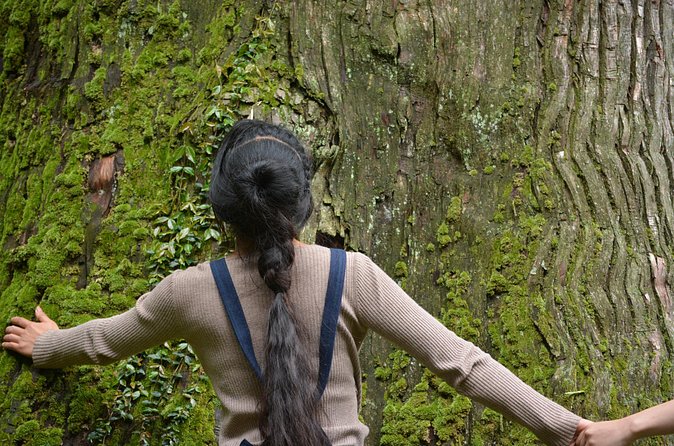
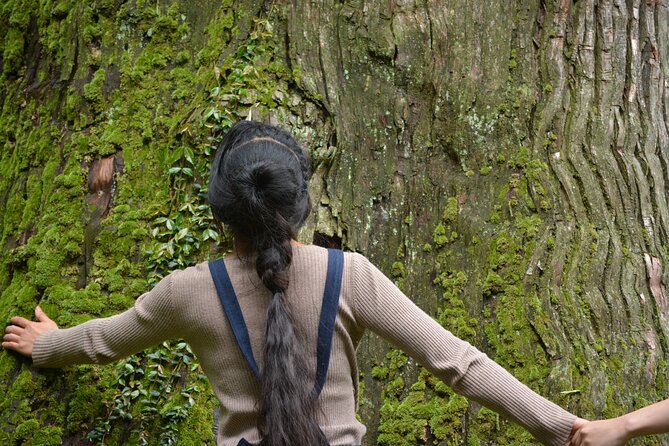
The final stop returns to Washibara Hachiman Shrine, this time to see a giant cedar said to have watched over Tsuwano for more than 1,000 years.
Ending with the cedar gives the tour a strong sense of time. The Hyakkeizu takes you back about 160 years, while the tree reaches much farther into the past. After the streets, shrines, and rural roads, this is a quiet final image of continuity.
The return to the meeting point is useful. You finish where you started at Tsuwano Station, so you do not need to solve a transport problem after the ride. The listed schedule allows about 30 minutes for each of six sections, although actual timing can shift with the group and the guide’s explanations.
What the $99 price gets you
At $99, this is not the cheapest way to see Tsuwano. The price includes the electric bicycle and a local guide, but not snacks. There are no separate admission charges listed for the stops, so most of what you are paying for is the equipment, the small group, and the interpretation.
That value makes more sense if you are visiting Tsuwano for the first time. On your own, you could walk or cycle along the main streets, but you might miss the meaning of the old paintings, the role of the Yabusame track, or the stories linked to the shrines.
The maximum group size of six is another part of the value. This is not a large bus excursion where the guide has to repeat every point to a crowd. You get a more personal pace and a better chance to ask questions.
I would not choose it simply for transportation. The ride is short, about three hours, and the bicycles are a tool for reaching the sights. Choose it for the connection between old images, local stories, and present-day scenery.
Who will enjoy this tour most
I would recommend it to first-time visitors who want a clear introduction to Tsuwano without spending an entire day on a long route. It also suits anyone who likes history presented through places rather than through a lecture.
The tour is a good fit if you:
- Want to see more than Tonomachi Street
- Prefer a small group limited to six people
- Like local guides and personal stories
- Are curious about Edo-period town life
- Want bicycle access without committing to a hard physical ride
- Enjoy shrines, rural views, traditional customs, and quiet pauses
You should think twice if you want a fast, independent ride with lots of free time at each location. The fixed route and six planned sections leave little room for wandering off on your own.
The electric bicycle helps with fitness, and the pace is described as careful and comfortable. Still, this remains a three-hour outdoor cycling activity. Good weather is required, and the tour can be moved or refunded if conditions are poor.
Practical details that matter
The meeting point is in front of Tsuwano Station at Tsuwano Eki mae, Ushiroda, Tsuwano, Kanoashi District, Shimane 699-5605. The activity ends back at the same point.
Your booking confirmation is issued at the time of booking, and a mobile ticket is available. The tour is near public transportation, which makes it practical for a day visit or a longer stay in the area.
The price does not include snacks. Since the ride lasts about three hours, plan accordingly, especially if you prefer to have something small before or after the activity.
Free cancellation is available up to 24 hours before the start time for a full refund. Changes or cancellations inside that 24-hour window are not accepted for a refund, and the cut-off follows local time.
Should you book the Tsuwano Cycling Tour?
Book it if you want Tsuwano explained rather than simply photographed. The strongest reason to go is the Hyakkeizu comparison, which turns streets, shrines, and countryside into clues from an earlier town.
The electric bicycle, small group, and guides such as Yui and Ale make the route approachable. You get a broad introduction in three hours, with enough variety to include a main street, shrine stories, a waterfall, a ceremonial horse track, rural views, and an ancient cedar.
Skip it if you want a completely self-guided outing or a long, leisurely stay at one shrine. For most first visits, though, the $99 price is reasonable because it combines transport, local interpretation, and access to parts of Tsuwano you might not connect on your own.
FAQ
How long does the Tsuwano Cycling Tour last?
The tour lasts approximately three hours.
Where does the tour start and finish?
It starts at Tsuwano Station, at Tsuwano Eki mae in Ushiroda, Tsuwano. The activity ends back at the meeting point.
What is included in the price?
The price includes use of a bicycle and a guide. Snacks are not included.
How many people can join the tour?
The tour has a maximum of six participants.
Do I need to buy admission tickets for the stops?
The listed stops have no admission ticket charge.
What happens if the weather is poor?
Because the activity requires good weather, it may be canceled in poor conditions. You will be offered another date or a full refund.
Just added around Japan
- Slow Cycling Tour at Uji’s Matcha Green Tea Fields and Heritage★ 5.0 · 25 reviews
- Tokyo Non-Touristy Local Private E-bike Cycling Tour from Asakusa★ 5.0 · 2 reviews
- Little Adventure with Cycling in Tokyo No. 1 Crystal Clear River★ 5.0 · 6 reviews
- Tokyo Night Bike Tour: From Shibuya to Tokyo Tower via Roppongi★ 5.0 · 29 reviews
- 2.5 Hour-Guided Cycle Tour in the Central Tokyo★ 5.0 · 25 reviews
- Tokushima & Mt. Bizan BROMPTON Slow Cycling Tour★ 5.0 · 5 reviews
- Tokyo’s hidden nature cycling tour – Okutama Historical Road Tour★ 5.0 · 6 reviews
- Wakimachi BROMPTON Slow Cycling Tour★ 5.0 · 5 reviews
Cycling Tours, compared.
Ninh Binh Day Trip: Hoa Lu-Trang An/Tam Coc-Mua Cave-Cycling-Boat
Read our review →
Cai Be Mekong Delta Tour: Cooking Class, Cycling & Craft Villages
Read our review →

Countryside Bike Tour from Amsterdam: Cheese, Clogs & a Windmill
Read our review →
Electric Cycling Tour of Ubud with Free Hotel Transfer and Lunch
Read our review →

Browse the lists this tour appears in