
Review · JAPAN
Okinawa: Afternoon Cycling Tour with Local Guide
Okinawa’s best city moments are often found between the headline sights. This small-group e-bike tour rolls from central Naha through pottery workshops, quiet local lanes, old Shuri streets, and a hilltop viewpoint where the city opens below you. It gives you a useful mix of culture, exercise, and everyday Okinawan life.
I like the route through Tsuboya’s historic pottery quarter, and I like the electric assistance on the climb toward Shuri. Guides such as Jojo, Aki, Tony, and Reiji are praised for clear English, patience, and strong local knowledge. The main consideration is simple: you need to be comfortable riding a bicycle on city streets, and some riders may find the late afternoon air cooler than expected.
Key points to know before booking
- Tsuboya pottery lanes: Ride through the historic area known for Okinawan ceramics and narrow roads that larger tours cannot use.
- Electric help for Shuri: The e-bikes make the uphill sections far easier, especially on the way to the viewpoint and castle town.
- A genuinely small group: With no more than five participants, your guide can give careful road instructions and adjust the pace.
- Local life beyond the main strip: See traditional houses, neighborhood roads, Asato Shotengai, and parts of Naha that are easy to miss on foot.
- History with a personal touch: English and Japanese guides explain the Ryukyu Kingdom, religious sites, pottery, and modern Okinawan life.
- Plan for the afternoon: The tour lasts about three to three and a half hours and may run toward sunset, so bring a light warm layer.
Why this bicycle route works so well in Naha
Naha is compact enough to explore by bicycle, but its hills and busy roads can make ordinary cycling tiring. An electric-assisted bicycle changes the equation. You still pedal, but the motor takes the sting out of the climbs, letting you focus on the streets, temples, stonework, and views.
The tour starts near Makishi Monorail Station, next to Makishi Post Office. That location is handy if you are staying around Kokusai-dori or arriving by monorail. The shop is only about a one-minute walk from the station, so you do not need a long transfer across town before the ride begins.
After collecting your bicycle and helmet, you receive a short safety briefing. The included intercom system lets you hear the guide while riding, which matters on city streets. You can keep your eyes on the road instead of trying to ride beside the guide and catch every explanation.
The maximum group size is five. That is one of the best features here. A guide can give more direct help at junctions, check that everyone is comfortable, and answer questions without stopping a large procession every few minutes.
A few more rides around Japan worth a look
- Tokyo Great Cycling Tour
★ 5.0 · 811 reviews - Tokyo Top Highlights 3h Guided E-bike Tour
★ 5.0 · 714 reviews - Hiroshima in a Nutshell: Morning Bike Adventure
★ 5.0 · 524 reviews
Tsuboya, where Naha’s pottery story begins
The route passes through Tsuboya, the area known in Okinawan as Yachimun, meaning pottery. Around 300 years ago, the Ryukyu Kingdom gathered pottery kilns from different parts of the islands and brought them together here. That decision shaped Tsuboya into a lasting center for ceramics.
You ride past historic pottery workshops and into small lanes with an older feel. This is not the sort of area you fully appreciate from a tour bus. A bicycle lets you slow down, pass through narrow streets, and notice how the pottery district connects with the surrounding neighborhood.
The route includes a pass by 1-chōme-8-1 Tsuboya rather than promising a long workshop visit or a pottery class. Keep that distinction in mind. The value is in seeing the district as part of Naha’s living fabric, not in shopping for ceramics or taking part in a hands-on craft session.
I would treat this section as a gentle introduction to Okinawa’s past. The guide can explain why the district developed where it did and how pottery remains tied to local identity. If you want to buy ceramics, you can return later with more time and less concern about keeping up with the group.
Quiet lanes and old houses in local Naha
The ride then leaves the most obvious tourist areas and enters smaller roads. You pass through parts of Naha where a few traditional houses remain, giving you a look at the city beyond its shops and major attractions.
This part is valuable because it shows ordinary surroundings rather than only prepared sights. You may notice how quickly Naha changes from commercial streets to quieter residential lanes. The bicycle helps here: you can cover more ground than walking, but you still move slowly enough to see the details.
The route is not presented as a hard cycling challenge. Still, you are riding on public roads, so you should be able to manage turns, stops, and changes in pace. If you have never cycled in a city, tell the guide at the start. Aki, for example, is praised for giving clear instructions and patiently helping riders who were new to city cycling.
The small group also helps families. Children from ages one to five can ride in a child seat attached to a parent’s bicycle, but you need to consult the staff about that arrangement before booking. Older children must be able to ride safely on their own bicycle.
Shuri’s stone streets and Ryukyu Kingdom setting
The tour continues toward Shuri, the former capital of the Ryukyu Kingdom. This is where the route shifts from pottery and local neighborhoods to royal history, sacred places, temples, and stone-paved streets.
Shuri is not just a castle photo opportunity. Its importance comes from the wider setting. The streets, shrines, temples, and old stonework help explain how the former kingdom functioned and how religious beliefs shaped Okinawan life.
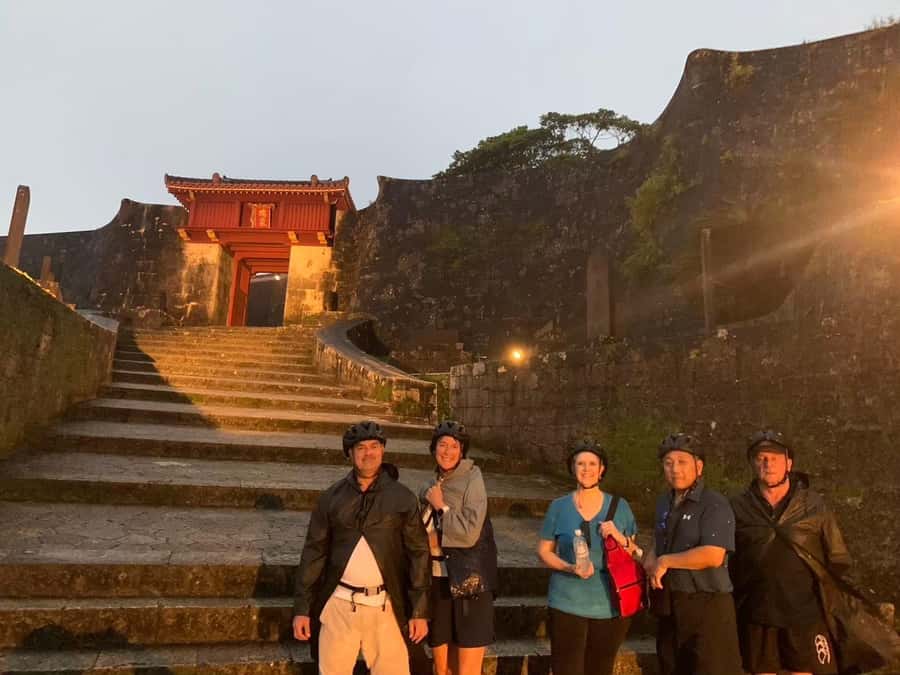
One itinerary stop is near 3-chōme-21-8 Shurikinjōchō, where you have time for photographs. The guide can add context that a quick independent visit might miss. Guides have used printed pictures to help explain the area, which is useful when modern streets make the older story difficult to picture.
The electric bicycle is especially helpful here. Shuri has uphill sections, and the motor means you can reach the high ground without arriving exhausted. You still get the satisfaction of riding, but you are less likely to spend the final part of the tour worrying about your legs.
Same roads, a different day in the saddle:
- Hiroshima 2hr Peace Cycling Tour with Local Guide
★ 5.0 · 321 reviews - Hiroshima: Peace Cycling Tour with Local Guide
★ 4.8 · 286 reviews - One-Day Osaka Bike Adventure: 5–6 Hours
★ 5.0 · 246 reviews - Eat, Drink & Cycle: Osaka Foodie Bike Tour
★ 5.0 · 224 reviews
The hilltop viewpoint is the route’s reward
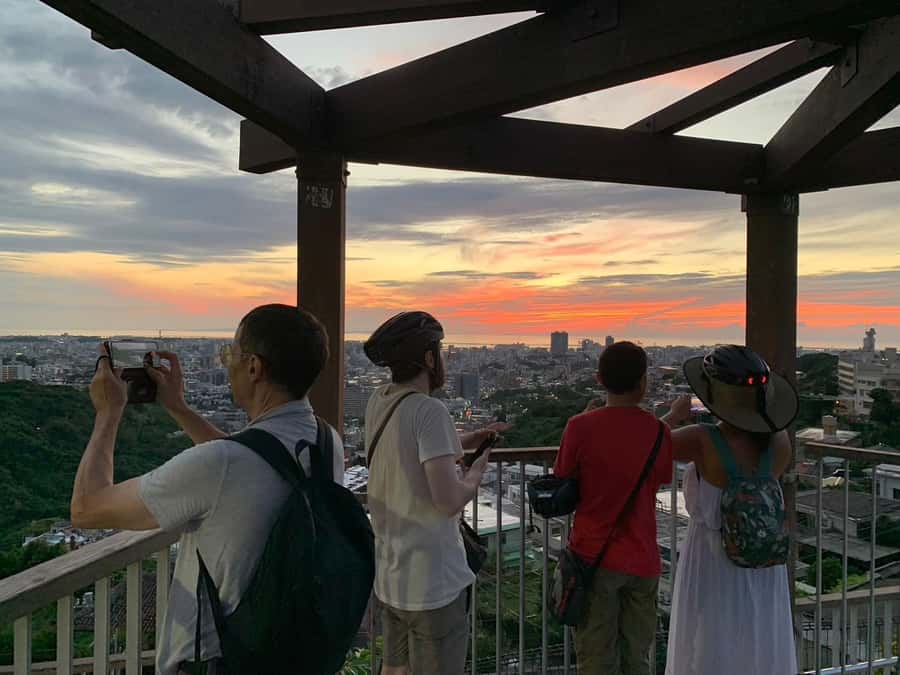
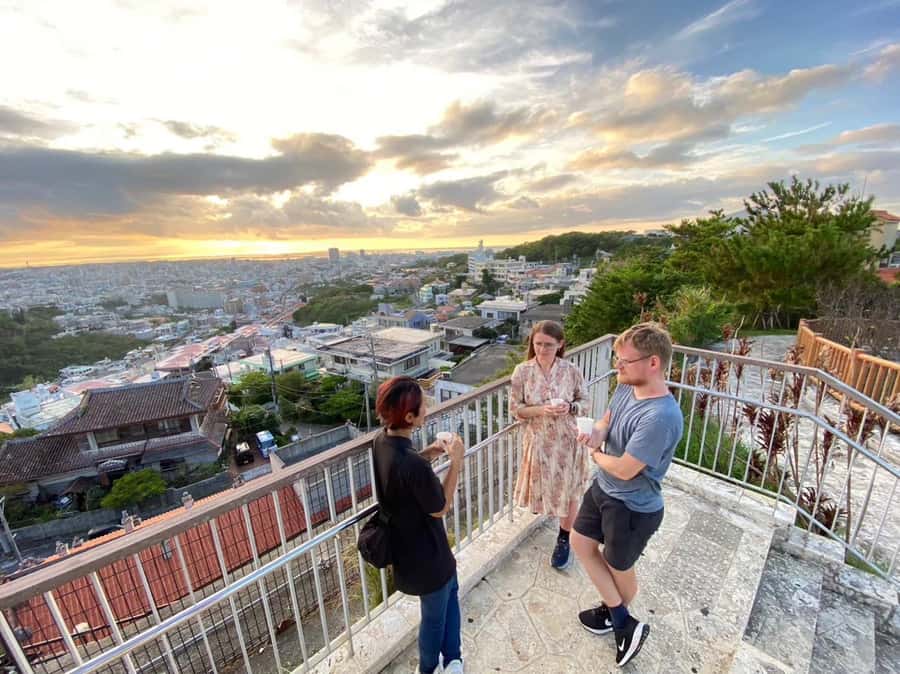
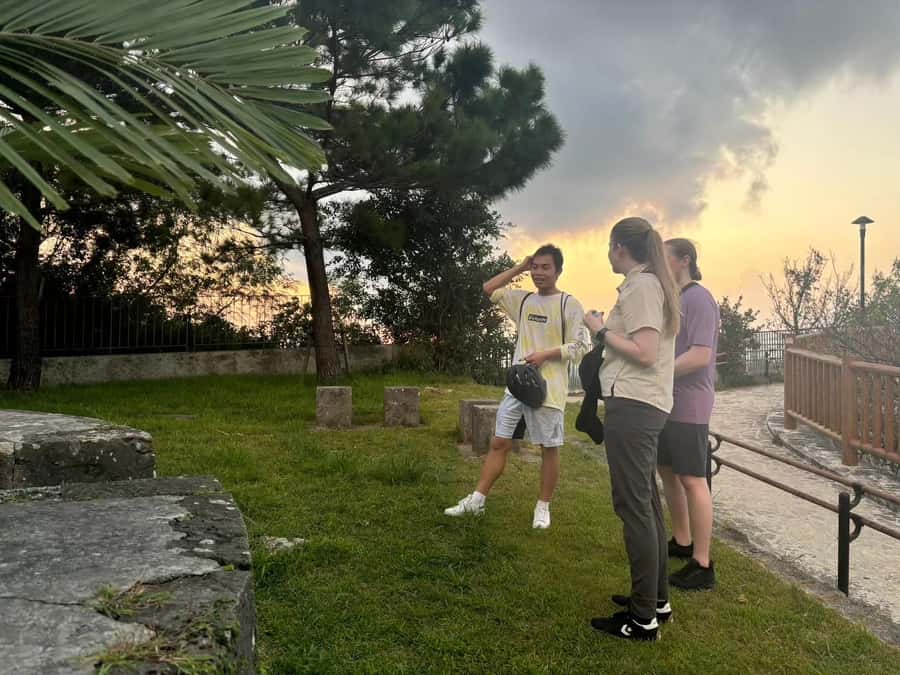
The viewpoint is the natural high point of the afternoon. You stop for a break and photographs while looking over Naha. Depending on the season and timing, the stop may approach sunset, giving the city a softer afternoon light.
This is more than a quick roadside pause. It gives you a chance to understand Naha’s shape after moving through its streets. From ground level, the city can feel like a series of separate neighborhoods. From above, the route connects: central Naha, the older Shuri area, and the city spreading below.
Allow yourself to enjoy this stop without rushing. The tour is scheduled for about 210 minutes, though the full outing may take three to three and a half hours. The viewpoint break is one reason the timing can vary.
Bring a light warm layer, even if the afternoon begins pleasantly. The tour can continue into the evening, and the hilltop stop may feel cooler. Comfortable shoes or sports shoes are also important because you will be pedaling and making several stops.
Shuri Castle Park and the Shureimon Gate
The route passes through the calm grounds of Shuri Castle Park. The itinerary includes a photo stop at Shurijo Castle, but the supplied details do not promise admission to the castle buildings. You should think of this as an exterior and surrounding-area visit rather than a full castle tour.
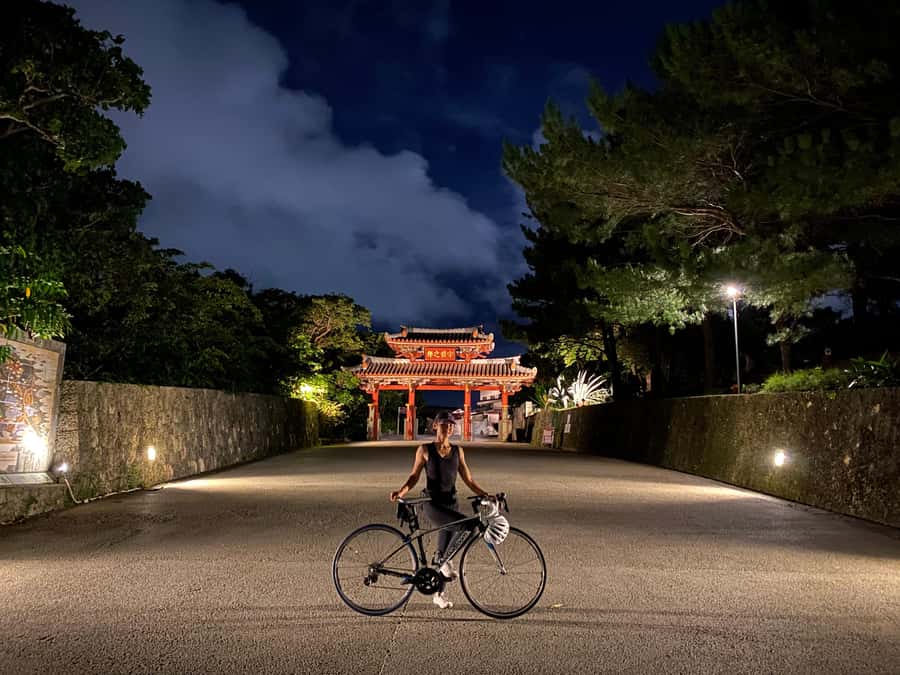
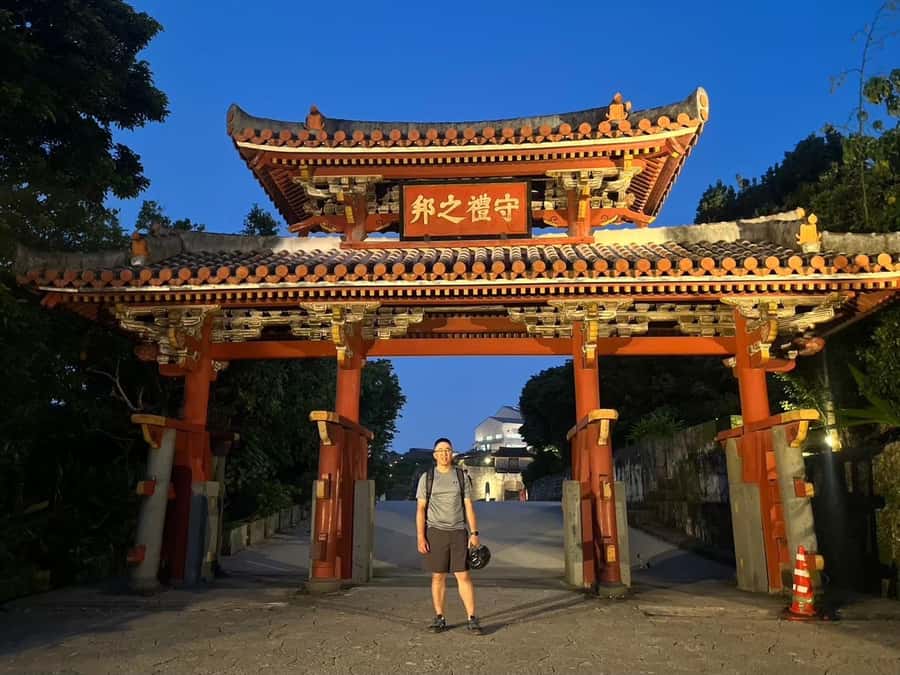
The park adds a quieter stretch to the ride. Plants change with the seasons, and the stone walls give the area a strong sense of place. The Shureimon gate is particularly photogenic, with its Okinawan design and carefully framed approach.
The illuminated stone walls and gate can be especially attractive later in the day. Since this is an afternoon tour, the light may change as you move through the park. That timing gives the route a different mood from a midday sightseeing stop.
If visiting the interior of Shurijo Castle is a priority, set aside separate time for it. This bicycle tour is designed to connect several parts of Naha and Shuri, not to spend hours at one major attraction.
Asato Shotengai and a useful dinner idea

Near the end, the route passes by Asato Shotengai. This area was once associated with Naha’s red-light district and now becomes livelier in the evening with izakayas and other places to eat.
The tour does not turn this into a food crawl, so do not book it expecting tastings or dinner. Instead, treat the stop as a helpful orientation. You can return after the bicycles are dropped off and explore the area on foot for a meal or drink.
That makes the finish practical. You end back at the shop near Makishi, close to central Naha and within easy reach of the evening activity around Kokusai-dori and Asato. The guide can point out the area, but your post-tour plans are your own.
The guides make a real difference

A route like this depends on more than scenery. You are moving through roads, hills, historic areas, and photo stops in a limited amount of time. The guide needs to manage safety while explaining why each place matters.
Jojo is described as energetic, fun, and clear in English. Aki is praised for patience and careful cycling instructions, especially with a family group that had not tried city cycling before. Tony is noted for explaining local history, while Reiji is remembered for taking good care of a less confident rider.
Yuri is also described as explaining Okinawan history well in English. These details matter because the tour’s quality can vary with the guide’s ability to balance movement and storytelling. Here, the strongest pattern is not a single attraction but the guides’ personal attention and local explanations.
The included intercom is another practical advantage. You do not have to choose between listening and riding safely. That said, you should still expect occasional pauses, street noise, and the normal interruptions of cycling in a city.
Is $87 a fair price?
At $87 per person, this is not the cheapest way to see Naha. You are paying for a three-and-a-half-hour guided outing, an electric-assisted bicycle, helmet, intercom, and a route that links central Naha with Tsuboya, Shuri, the viewpoint, and Asato.
The value improves if you want context and active sightseeing in the same afternoon. Renting a bicycle alone may cost less, but you would need to plan the route, deal with the climbs, and learn the meaning of the places as you go. You would also lose the local guidance through smaller roads.
The price is less compelling if you only want to visit Shuri Castle or spend time shopping on Kokusai-dori. Those plans are easy to arrange independently. This experience earns its price by combining several districts and by showing you parts of Naha that are hard to connect on your own.
The small group helps justify the cost. With only five participants, the tour feels more personal than a large city ride. Solo visitors and couples may get especially good value if they want company without joining a big crowd.
Who should book this ride?
I would choose this tour if you enjoy seeing a city through its side streets rather than checking off only its major sights. It suits visitors who want Okinawan history, local neighborhoods, light exercise, and good views in one outing.
Families can consider it, particularly because young children may use a parent-mounted child seat. The adults and older children should be ready for road cycling, though, and the family should ask the staff about the child-seat setup before booking.
This is not suitable for anyone who cannot ride a bicycle. It is also not suitable for wheelchair users. Camera mounts and mobile phone holders are not included, so bring your phone in a secure pocket or use your own approved mount if needed.
Weather may affect the plan. If the chance of rain rises above 70 percent or severe weather is expected, the operator may change the schedule and will contact you the day before. Flexible cancellation up to 24 hours before the tour and reserve-now, pay-later booking make it easier to fit the ride into a changing Okinawa itinerary.
Final verdict: a smart first afternoon in Naha
You should book this tour if you want to understand Naha as more than a base for beach trips. The pottery lanes, old houses, Shuri’s sacred sites, hilltop view, and evening food district form a well-balanced route.
I would not book it for a full castle interior visit, a pottery workshop, or a food tour. I would book it for the combination of electric-bike access, small-group attention, and local storytelling. For many visitors, it is an efficient and enjoyable way to get their bearings while seeing corners of Naha that a standard walking route can miss.
FAQ
Where does the Okinawa cycling tour begin?
The tour starts at イーチャリティ那覇国際通り本店, near Makishi Monorail Station. The shop is next to Makishi Post Office and about a one-minute walk from the station.
How long does the tour last?
The stated duration is 210 minutes. The outing is scheduled to take about three to three and a half hours.
What languages are available?
The tour is offered in English and Japanese. Guides named in the tour information include Jojo, Aki, Tony, Reiji, and Yuri.
What equipment is included?
The tour includes an electric-assisted bicycle, helmet, guide, and intercom system. Camera mounts and mobile phone holders are not included.
Can children join the tour?
Children aged one to five may use a child seat attached to a parent’s bicycle. You should consult the staff for details before booking.
What should I wear or bring?
Wear comfortable shoes or sports shoes. Bring warm clothing in case the temperature drops later in the afternoon or evening.
Is the tour suitable for people who cannot ride a bike?
No. The tour is not suitable for people who cannot ride a bicycle or for wheelchair users.
What happens if the weather is bad?
If the precipitation probability exceeds 70 percent or severe weather is expected, the operator may change the plan. You will be contacted the day before.
Just added around Japan
- Slow Cycling Tour at Uji’s Matcha Green Tea Fields and Heritage★ 5.0 · 25 reviews
- Tokyo Non-Touristy Local Private E-bike Cycling Tour from Asakusa★ 5.0 · 2 reviews
- Little Adventure with Cycling in Tokyo No. 1 Crystal Clear River★ 5.0 · 6 reviews
- Tokyo Night Bike Tour: From Shibuya to Tokyo Tower via Roppongi★ 5.0 · 29 reviews
- 2.5 Hour-Guided Cycle Tour in the Central Tokyo★ 5.0 · 25 reviews
- Tokushima & Mt. Bizan BROMPTON Slow Cycling Tour★ 5.0 · 5 reviews
- Tokyo’s hidden nature cycling tour – Okutama Historical Road Tour★ 5.0 · 6 reviews
- Wakimachi BROMPTON Slow Cycling Tour★ 5.0 · 5 reviews
Cycling Tours, compared.
Ninh Binh Day Trip: Hoa Lu-Trang An/Tam Coc-Mua Cave-Cycling-Boat
Read our review →
Cai Be Mekong Delta Tour: Cooking Class, Cycling & Craft Villages
Read our review →

Countryside Bike Tour from Amsterdam: Cheese, Clogs & a Windmill
Read our review →
Electric Cycling Tour of Ubud with Free Hotel Transfer and Lunch
Read our review →

Browse the lists this tour appears in