
Review · KYOTO
Kyoto Shogun Cycling Tour
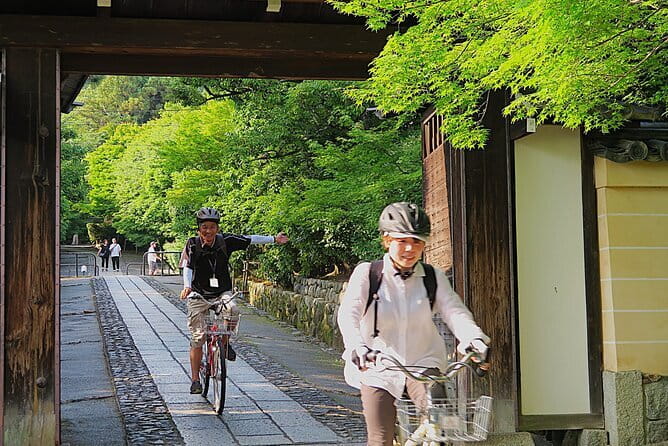
Kyoto’s Shogun Cycling Tour links three major sights with a pleasant ride from the city’s northwest toward central Kyoto. You begin near Wara Tenjin, visit the gold-covered Kinkakuji, pause at quiet Toji-in, then finish at Nijo Castle, where the Tokugawa rulers held court in Kyoto.
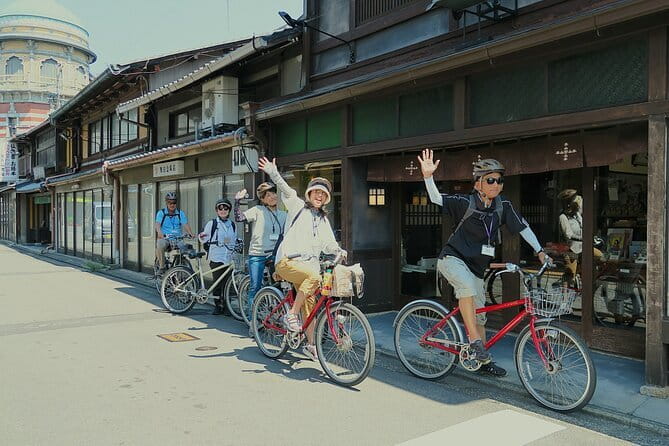
I like the small private-group format, limited to two to six people per guide, and the fact that admission to all three main sights is included. I also like the easy downhill setup, which makes this a practical way to cover ground without turning your morning into a workout.
The main caution is the price: at $153.50 per person, this is not a bargain bicycle rental. You are paying for a guide, entrance fees, a planned route, and a private experience, so it makes the most sense if you value context and personal attention.
Key points at a glance
- Three major Kyoto sights in one ride: Kinkakuji, Toji-in Temple, and Nijo Castle form a clear route through Shogun-era Kyoto.
- An easy downhill course: The ride is designed for general ability, though you must still be able to cycle safely on city roads.
- Small groups only: Two to six people are accepted per guide, with an extra guide arranged for groups of seven to twelve.
- Strong guide reports: Seiya, Makoto, Nozomi, Yasunobu Yagyu, Yutaka Kaneda, Kaz, and JJ are among the guides praised for clear English, humor, and local knowledge.
- Rain is not an automatic deal breaker: You can continue by bicycle with a free poncho or switch to a walking tour using public transport.
- A one-way finish: You start in northwest Kyoto and finish near Kyoto Station, which is handy for continuing your day.
Why this route works for seeing Kyoto
Kyoto is spread across a wide area, and its famous temples are not all close together. Walking between Kinkakuji, Toji-in, and Nijo Castle would take time and leave you with less energy for the places themselves. A bicycle gives you a useful middle ground: more freedom than a bus, less effort than covering the city on foot.
The route begins in the Kinugasa area, near Wara Tenjin, then heads toward central Kyoto. The tour is described as an easy downhill ride, so the direction matters. You are not repeatedly climbing across the city to reach each temple.
The bicycle also lets your guide point out parts of Kyoto between the headline sights. Past tours with the same cycling operation have included quiet streets, shrine areas, the Imperial Palace, river sections, Gion, and other districts. Your confirmed route here focuses on three principal stops, but a private guide can add local explanation as you ride.
The group size is one of the strongest features. Two to six people per guide means you are not trying to hear a guide across a large pack of cyclists. It also leaves room for questions and for a guide to adjust the pace within reason.
Solo visitors should note one important rule: one-person bookings are not accepted. A group of two or more is required. Larger parties of seven to twelve can be accommodated with an additional guide.
A few more rides around Kyoto worth a look
- Explore Hidden Alleyway with a Local Expert (Morning tour)
★ 5.0 · 61 reviews - KIYOTO’s Kyoto Private E-Cycling Tour: Highlights & Hidden Gems
★ 5.0 · 48 reviews - Cycle Kyoto’s Hidden Gems & Gion Stroll
★ 5.0 · 29 reviews
Kinkakuji: Kyoto’s gold-covered opening scene
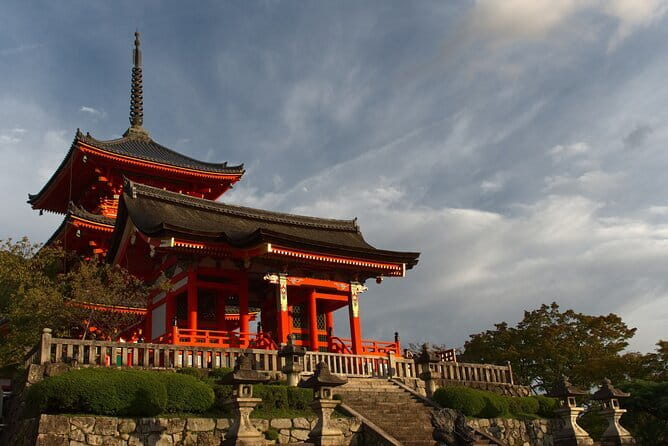
The first stop is Kinkakuji, better known as the Golden Pavilion. The temple building is famous for its gold exterior, but the visit is more than a quick photo stop. Your admission includes the garden route around the pavilion, and the planned visit lasts about an hour.
The pavilion’s Shogun-era connection gives the tour its theme. It was tied to the Ashikaga Shoguns and once served as a center of government. Your guide can help place the dazzling building within Kyoto’s political and religious story instead of leaving you with only a famous image.
The practical drawback is that Kinkakuji is one of Kyoto’s best-known sights. It can feel busy, and the experience is structured around a set garden path rather than open wandering. Your guide cannot remove the crowds, but a clear explanation can make the stop more rewarding than arriving alone, taking one photograph, and moving on.
Plan for a walking visit inside the grounds, even though the tour itself is on bicycles. Comfortable shoes matter. The one-hour timing gives you enough space to see the pavilion and its garden without allowing the first stop to swallow the whole morning.
This is also the point where the tour delivers its most instantly recognizable image. If you have never seen Kinkakuji, it is a strong opening. If you have already visited, the value depends more on the guide’s historical framing and on how much you enjoy seeing Kyoto by bicycle between major sights.
Toji-in Temple and the quieter side of Kyoto
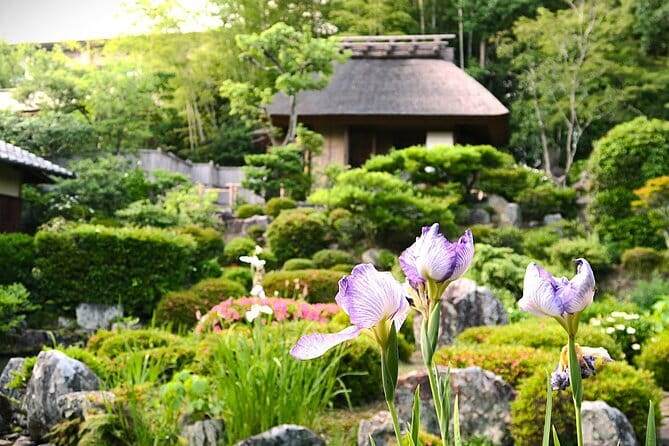
After Kinkakuji, the tour continues to Toji-in Temple. The pace changes here. Instead of a landmark known around the world, you get a calmer temple visit with attention to interiors, garden design, and a small tea house.
The scheduled visit lasts about an hour. Your guide takes you through the temple interior and explains the garden, where the Japanese ideal of wabi-sabi is central. In simple terms, this is an appreciation of restraint, age, simplicity, and imperfect beauty. The setting gives you a better chance to pause than the more famous Golden Pavilion.
Toji-in is especially useful for anyone who wants more than a checklist of Kyoto sights. The temple hall and garden invite quiet observation. You can look at the arrangement of plants, buildings, and paths while your guide explains how Zen ideas shaped the setting.
The included admission matters here. A guided visit to a lesser-known temple can be easy to skip when planning on your own, even though it may offer a more reflective experience than the major photo stops. The drawback is that visitors expecting a large complex or a dramatic landmark may find Toji-in modest. Its appeal is its calm atmosphere and design, not spectacle.
The tea house is part of the visual character of the temple, but matcha service is not included. You should treat it as something to view rather than part of the basic package. If a matcha experience is important to you, ask the operator what may be available on your date and what extra cost applies.
Nijo Castle and the end of the Shogun era
The final major stop is Nijo Castle, with about an hour and a half set aside for the visit. That longer time is sensible. The castle grounds include grand buildings, ornamental carvings, and enough historical detail to reward a slower look.
Nijo Castle was the Kyoto residence of the final Shoguns of the Tokugawa government. It is also linked to the political changes that brought the Shogun era to an end. That gives the tour a strong narrative arc: Kinkakuji introduces the Ashikaga period, Toji-in shows the quieter cultural side of Kyoto, and Nijo Castle brings the story to its closing chapter.
Your guide leads you through the grounds rather than leaving you to work out the significance of each building alone. This is where a good guide can make a real difference. Several guides associated with the cycling operation have been praised for clear English and for explaining temples, shrines, Gion, and the Imperial Palace in an accessible way.
Nijo Castle is also the most substantial stop by time. If you prefer a fast ride with only brief photo breaks, the 90-minute visit may feel long. I see it as a benefit for anyone interested in architecture and political history, but less so for someone who mainly wants a scenic bicycle ride.
The finish near Kyoto Station is practical. You do not need to cycle back to the starting point, and you can continue to another part of the city after the tour. The end point is the Kyoto Cycling Tour Project terminal at 552-13 Higashiaburanokoji-cho, in Shimogyo Ward.
Same roads, a different day in the saddle:
- Kyoto Satoyama Cycling with Lunch and English Guide
★ 5.0 · 19 reviews - Explore Hidden Alleyway with a Local Expert (Afternoon Tour)
★ 5.0 · 17 reviews - Kyoto: Higashiyama Slow Cycling Tour along the quiet waterfront
★ 5.0 · 10 reviews - Cycling Tour at Uji’s Matcha Green Tea Fields and Heritage
★ 5.0 · 10 reviews
Guides who make the difference
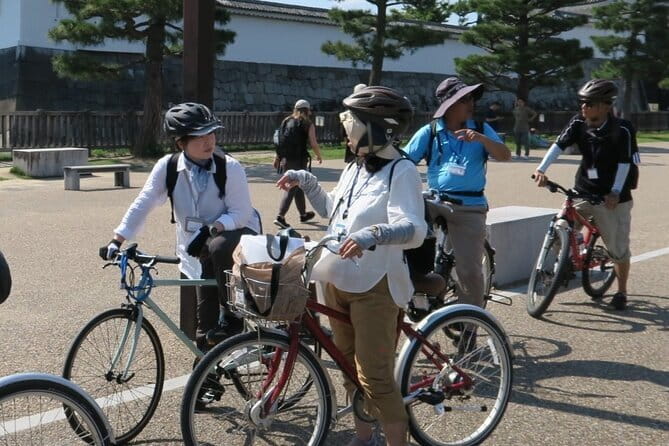
The guide is central to the value of this experience. The named guides associated with similar tours include Seiya, Yanai-san, Makoto, Nozomi, Yasunobu Yagyu, Yutaka Kaneda, Kaz, and JJ.
Seiya has been praised for clear English, strong knowledge of Kyoto, and the ability to keep a 12-year-old engaged. Makoto is described as personable and willing to add extra time when a local festival affected the route. Nozomi has led tours through temples, shrines, Gion, and the Imperial Palace, with a professional approach and useful explanations.
Yasunobu Yagyu has been noted for local insight and for helping visitors see Kyoto’s people and culture in a new way. Kaz and JJ have guided larger groups together, using humor and keeping the ride enjoyable. These details suggest that the operator has a broad guide team rather than a single fixed leader, so you should not book on the assumption that one particular guide is guaranteed.
The consistent pattern is clear English, historical explanation, and a friendly manner. That matters on a cycling tour because the ride itself is only half the experience. The guide controls the pace, handles the route, explains what you are seeing, and helps you feel comfortable on the road.
Bikes, weather, and physical demands
The tour includes a bicycle, helmet, and rainwear. You do not need to arrange a separate rental, and rain ponchos are provided at no extra charge if the tour continues by bicycle.
Rain does not automatically cancel the outing. You can choose to ride with the poncho or change to a walking tour using buses or the metro, with public transport included in the tour fee. That flexibility is useful in Kyoto, where a wet forecast can change the feel of a bicycle ride quickly.
The route is described as easy and downhill, but this is still a road-cycling activity. Children must be at least 10 years old, at least 145 centimeters tall, and able to ride safely on the road without help. The same standard is a useful guide for adults: you should be comfortable steering, braking, and riding around other road users.
The tour is not designed for someone who cannot cycle independently. It also may not suit anyone looking for a hard workout, since the main appeal is moving between cultural sites rather than athletic riding.
Is $153.50 a fair price?
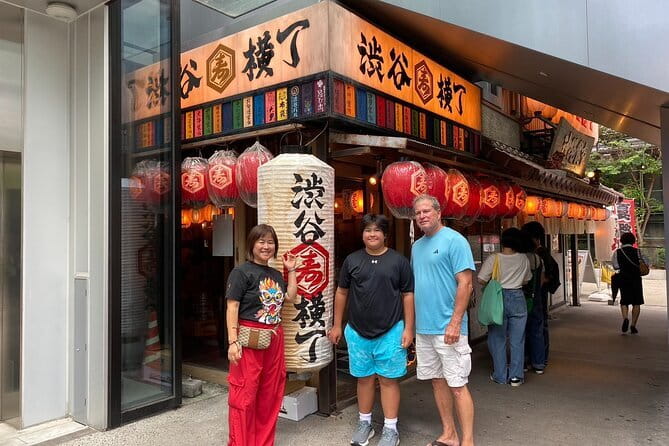
At $153.50 per person, the cost is high compared with renting a bicycle and visiting temples alone. The comparison is not quite equal, though. Your fee covers the bike, helmet, rainwear, guide, and admission to Kinkakuji, Toji-in, and Nijo Castle.
You are also paying for a private activity. With two to six people per guide, the experience is more personal than a large coach tour. The one-way route saves you from returning the bicycle to the starting neighborhood, and the guide handles the structure of the day.
I think the price is reasonable for a pair or small group that wants historical context and does not want to manage Kyoto’s transport between these sights. It is harder to justify if you already know the temples well, prefer independent travel, or mainly want a bicycle for casual exploration.
The price also makes the included admissions important. Check that you understand exactly what is covered before booking, especially if you are interested in the optional matcha service, which is not part of the stated fee.
Timing, meeting points, and booking details
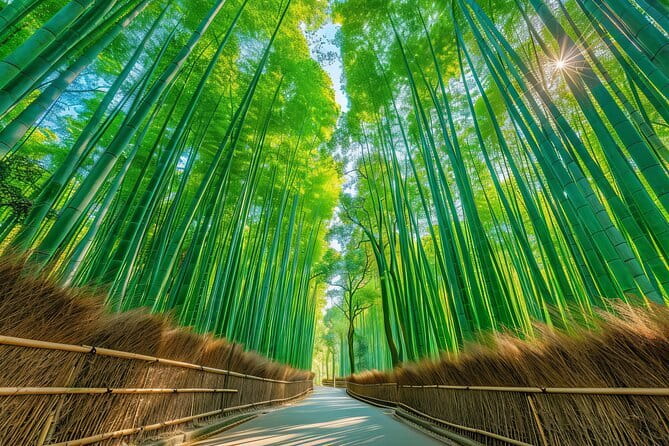
The tour lasts about three and a half hours. The listed schedule gives roughly one hour at Kinkakuji, one hour at Toji-in, and 90 minutes at Nijo Castle. That is enough time for a focused morning or afternoon without using your entire day.
You meet at Wara Tenjin mae, Kinugasa Oharaicho, Kita Ward, Kyoto, 603-8351. The tour ends at the Kyoto Cycling Tour Project Kyoto Station Cycle Terminal, 552-13 Higashiaburanokoji-cho, Shimogyo Ward, Kyoto, 600-8235.
Both points are near public transport, but they are not the same location. Allow time to reach the northwest starting point, and remember that the finish is closer to Kyoto Station. A mobile ticket is provided, which keeps the booking information available on your phone.
Confirmation is sent within 48 hours of booking, subject to availability. The supplied cancellation information is inconsistent: one section says you may receive a refund if you notify the operator at least three days before the date by 6 p.m. Japan time, while another says the experience is non-refundable and cannot be changed. Confirm the current cancellation terms before paying, especially because the tour also requires a minimum number of participants.
Who should book this cycling tour?
I would choose this tour if you have limited time in Kyoto and want a guide-led route that connects major sights without spending the day changing buses. It works particularly well for couples, families with older children, and small groups who enjoy temples but want some movement between visits.
It is also a good fit if you want historical context. The route is not just three unrelated stops. It connects Shogun-era power, Zen temple culture, and the final Tokugawa residence in a way that gives your day a clear theme.
Families should check the age, height, and cycling rules carefully. Children need to be at least 10 years old and 145 centimeters tall, and must ride independently on the road.
I would look elsewhere if you want a relaxed bicycle rental with no fixed schedule, if your group has only one person, or if you dislike visiting famous sights at set times. I would also think twice if rain would ruin your day, even though the operator offers both ponchos and a public-transport walking option.
Should you book the Kyoto Shogun Cycling Tour?
Book it if you want a small, guided cultural tour with a gentle bicycle route, included admissions, and a convenient finish near Kyoto Station. The best parts are the thoughtful progression from Kinkakuji to Toji-in to Nijo Castle, the strong guide presence, and the chance to see more of Kyoto than you could comfortably cover on foot.
Skip it if the $153.50 price feels too steep for a three-and-a-half-hour outing or if you would rather set your own temple schedule. Before booking, confirm the guide language, cancellation terms, weather plan, and the exact meeting instructions. For the right small group, this is a polished way to connect Kyoto’s Shogun-era sights without rushing from one bus stop to the next.
FAQ
How long does the Kyoto Shogun Cycling Tour last?
The tour lasts approximately three hours and 30 minutes.
Which places does the tour visit?
The route includes Kinkakuji Temple, Toji-in Temple, and Nijo Castle.
Are entrance fees included?
Yes. Admission is included for Kinkakuji Temple, Toji-in Temple, and Nijo Castle.
Is the bicycle provided?
Yes. Bicycle use, a helmet, and rainwear are included.
What happens if it rains?
The tour operates in rain. You can continue by bicycle with a free rain poncho or switch to a walking tour using public transportation, including buses or the metro.
Can children join the tour?
Children must be at least 10 years old, at least 145 centimeters tall, and able to ride a bicycle safely on the road without assistance.
How many people can join?
A guide accepts a minimum of two and a maximum of six people. Groups of seven to twelve can join if an additional guide is arranged. One-person bookings are not accepted.
Just added around Kyoto
- Kyoto: Higashiyama Slow Cycling Tour along the quiet waterfront★ 5.0 · 10 reviews
- City cycle (no gear change)★ 3.5 · 5 reviews
- Rent a Road Bike to Explore Kyoto and Beyond★ 5.0 · 2 reviews
- Explore Hidden Alleyway with a Local Expert (Afternoon Tour)★ 5.0 · 17 reviews
- Cycle Kyoto’s Hidden Gems & Gion Stroll★ 5.0 · 8 reviews
- Ine Funaya e-BIKE Cycling Tour★ 4.0 · 2 reviews
- Kyoto Satoyama Cycling with Lunch and English guide★ 5.0 · 4 reviews
- Kyoto: North Kyoto Guided Cycling Tour with Lunch★ 5.0 · 5 reviews
Cycling Tours, compared.
Ninh Binh Day Trip: Hoa Lu-Trang An/Tam Coc-Mua Cave-Cycling-Boat
Read our review →
Cai Be Mekong Delta Tour: Cooking Class, Cycling & Craft Villages
Read our review →

Countryside Bike Tour from Amsterdam: Cheese, Clogs & a Windmill
Read our review →
Electric Cycling Tour of Ubud with Free Hotel Transfer and Lunch
Read our review →

Browse the lists this tour appears in