
Review · KYOTO
Cycle Kyoto’s Hidden Gems & Gion Stroll
Kyoto is easier to understand from a bicycle seat. This four-hour outing links the Kamogawa riverside, Imperial Palace, Shimogamo Shrine, quiet neighborhoods, and Gion without forcing you onto busy main roads. You also get Japanese tea, a sweet snack, and a short evening walk through Kyoto’s famous entertainment quarter.
I like the efficient route and the chance to reach places that are awkward to connect on foot. I also like the small-group format and the practical local guidance, including help with restaurant and bar choices in Gion. The main consideration is that you need to ride a bicycle comfortably, and the cycling may feel a little short if you want a full-day bike excursion.
Key things to know before you book
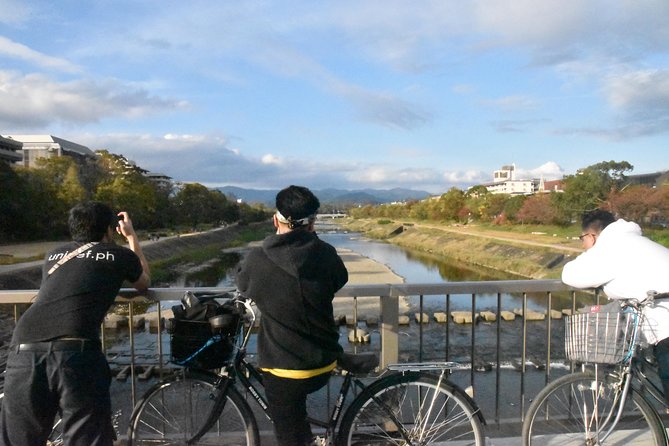
- The route favors quiet riverside paths: You spend much of the ride beside the Kamogawa River rather than on heavy-traffic streets.
- Shimogamo Shrine is the main cultural stop: Its old forest and Shinto buildings offer a calmer experience than Kyoto’s busiest temple grounds.
- You get two experiences in one outing: The bike route lasts about three hours, followed by a 30-minute Gion walk.
- Honoka may guide your group: The guide explains shrine customs and the culture and working system of maiko and geisha.
- Tea and sweets are included: A stop near Sanjo Bridge adds a traditional Japanese snack shop to the day.
- The group is small, but the stated limit varies: The tour description says up to eight people, while the additional details list a maximum of five.
Why a bicycle works so well in central Kyoto
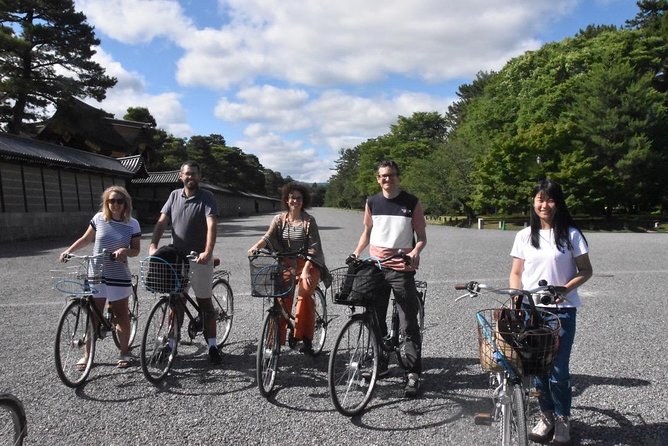
Kyoto’s famous sights are spread out. Walking between them can take much of your day, while buses often move slowly on crowded streets. A bicycle gives you a better middle ground. You cover useful distance, yet you can still notice the river, residential lanes, university grounds, and small shrines along the way.
This is not a race or a road-cycling challenge. The bikes are described as comfortable three to five-speed models, and the route is set at a sightseeing pace. You should still be confident enough to ride for several hours, follow the guide, and handle ordinary city cycling.
The best part is the change in mood. One moment you are near central Kyoto, and the next you are riding beside open water and trees. That shift gives you a clearer sense of the city beyond its postcard sights.
The meeting point is by the Statue of Takayama Hikokurō in Ōhashichō, Higashiyama Ward, near Sanjo. The tour returns to this same point, which makes the plan fairly simple if you are staying near central Kyoto or using nearby public transportation.
A few more rides around Kyoto worth a look
- Explore Hidden Alleyway with a Local Expert (Morning tour)
★ 5.0 · 61 reviews - KIYOTO’s Kyoto Private E-Cycling Tour: Highlights & Hidden Gems
★ 5.0 · 48 reviews - Cycle Kyoto’s Hidden Gems & Gion Stroll
★ 5.0 · 29 reviews
Kamogawa River: a gentle start with room to breathe
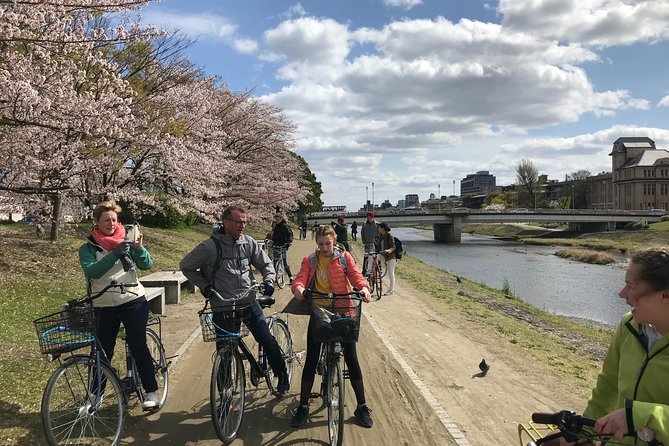
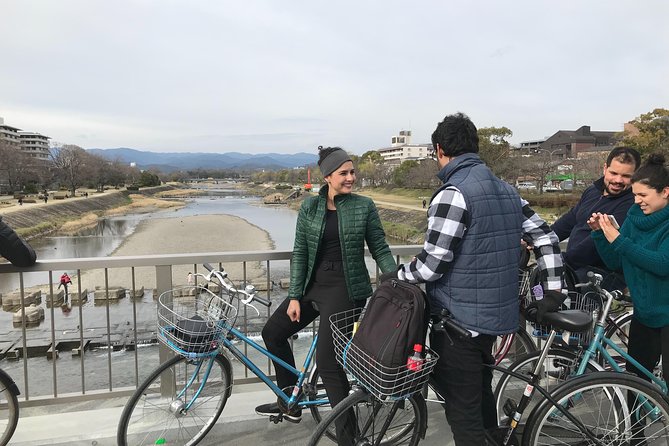
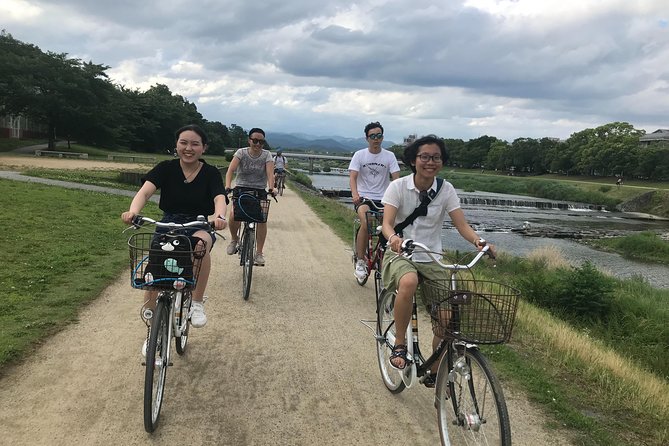
The cycling begins along the Kamogawa River. This is a smart opening because the riverside route lets you get used to the bicycle before the sightseeing becomes more involved. You can enjoy the open sky, flowing water, and a quieter rhythm than you will find on Kyoto’s main shopping streets.
The route includes riverside cycling roads and illuminated stretches of the river later in the outing. These paths are one of the strongest reasons to choose this experience. You are not simply checking off monuments. You are seeing how Kyoto’s public spaces work, with water, walking paths, stepping stones, and daily life all close together.
One particularly appealing detail is the stop at a small shrine where you can try natural spring water. The tour also explains how to make a proper Shinto offering. That kind of practical instruction adds value because shrine visits can otherwise feel like a quick photo stop. You learn what to do, then have a chance to do it yourself.
The route can include a river junction point where two waterways meet. It is a modest sight, but it gives the ride a sense of discovery. You are seeing a physical feature of Kyoto that most visitors would probably pass without noticing.
Imperial Palace and a Zen temple without the usual rush
The ride continues through the large Imperial Palace grounds and onward to a famous Zen temple. The Imperial Palace is a major Kyoto landmark, but your experience here depends on timing and access. One especially useful point is that the palace is only open on certain days during the year. If your visit lines up with one of those periods, the opportunity can be a major bonus.
Autumn may be especially rewarding around the palace. The changing leaves can turn the broad grounds into one of the more memorable parts of the ride. The tour does not promise a particular seasonal display, of course, but fall is a sensible time to consider this route if foliage is high on your list.
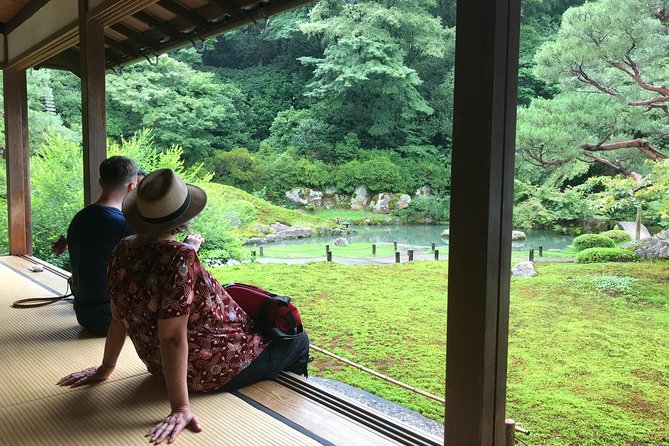
The Zen-temple visit adds a different style of Kyoto. Instead of only seeing bright shrine gates or tourist-heavy viewpoints, you get a look at the restrained lines and quiet spaces associated with Zen Buddhism. Admission is included for temples or shrines used as an alternative plan in rainy weather, though the exact rainy-day route can change.
Do not expect a long temple lecture or an extended indoor visit. The strength of this outing is the combination of short cultural stops and movement through the city. If you want detailed art history at every site, a specialist temple tour would be a better match.
Shimogamo Shrine and its old forest
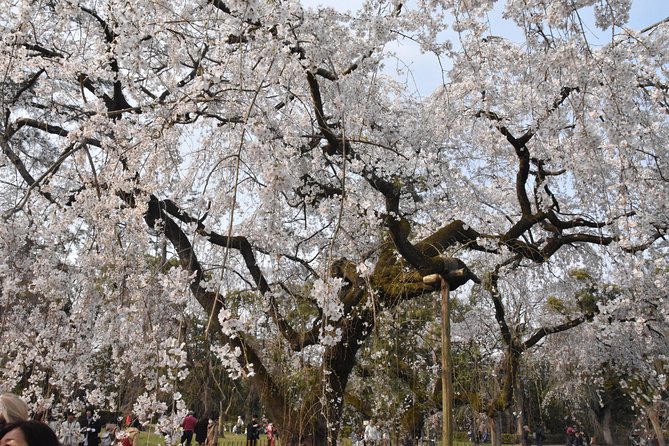
Shimogamo Shrine is one of the most important stops on the route. It is a UNESCO World Heritage site, and the setting helps explain why it belongs on a Kyoto sightseeing plan. The shrine sits within a primitive forest, giving the visit a more natural feel than many central attractions.
The buildings provide the formal side of the stop, while the forest gives you shade and a sense of age. You can take in the contrast between carefully maintained Shinto architecture and the less controlled feel of the surrounding trees.
This is also where the guide’s cultural explanation can matter. You may learn how to make an offering, what to notice at the shrine, and how the site fits into Kyoto’s religious traditions. Those details are small, but they help you move beyond simply photographing a gate or roof.
The shrine is reached by bicycle, which changes the visit in a useful way. You do not arrive after a long wait on a crowded bus. You approach through residential areas and quieter routes, so the shrine feels connected to the city rather than isolated from it.
Same roads, a different day in the saddle:
- Kyoto Satoyama Cycling with Lunch and English Guide
★ 5.0 · 19 reviews - Explore Hidden Alleyway with a Local Expert (Afternoon Tour)
★ 5.0 · 17 reviews - Kyoto Shogun Cycling Tour
★ 5.0 · 13 reviews - Kyoto: Higashiyama Slow Cycling Tour along the quiet waterfront
★ 5.0 · 10 reviews
A look at everyday Kyoto between the sights
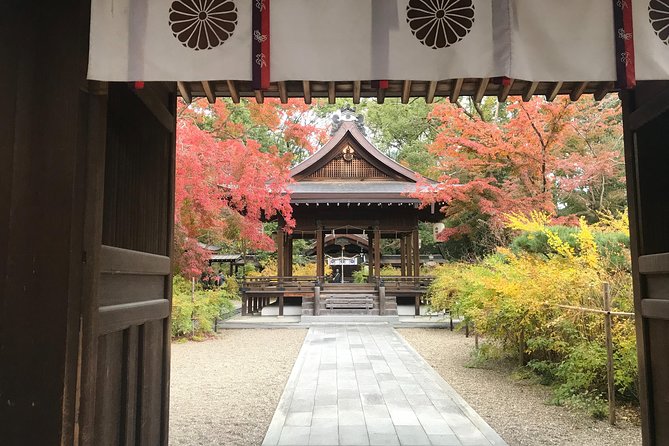
The route passes university campuses and peaceful residential neighborhoods. These sections may not sound as dramatic as the palace or shrine, but I consider them important. They show you Kyoto as a lived-in city rather than a string of famous places.
Cycling through these areas also breaks up the sightseeing. You get a chance to breathe, look around, and notice how quickly central Kyoto becomes quiet. The guide can point out details that are easy to miss when you are moving by taxi or bus.
The tour is especially suitable for someone who has already seen a few major Kyoto attractions and wants a different angle. It also works early in a Kyoto visit because it helps you understand the layout of the river, central districts, and northern shrine area.
The pace is described as efficient, but the ride is not positioned as a long-distance adventure. One previous outing included some interest in riding for longer, so keep your expectations in check. You receive about three hours of cycling within the four-hour experience, but part of that time includes stops, instructions, and sightseeing.
The Gion walk: culture, atmosphere, and useful evening advice
After the bicycle portion, you return the bikes and begin a 30-minute walk through Gion. This is a short stroll, not an extensive evening tour. Its value comes from the guide’s explanation of Gion’s entertainment culture and the working system of maiko and geisha.
Guide Honoka’s university research focused on this subject, which gives the walk a clear purpose. You are not just wandering through a pretty district. You can ask questions about the customs and structure behind Gion’s public image.
You might see a geisha or maiko, but this is not guaranteed. That uncertainty is part of the point. Gion is a working district, not a stage arranged for visitors. Keep your camera and behavior respectful, and treat any sighting as a possibility rather than the goal of the walk.
The Gion portion also gives you practical help with food and drink. If you ask, the guide can suggest restaurants and bars in the area. This is useful because choosing where to eat in Gion or nearby Pontocho can be difficult when you have limited time. The advice is based on your requests, so be ready to explain what kind of meal or evening you want.
The tour also showcases the Pontocho District and Sanjo Bridge. Pontocho is best appreciated on foot, when you can see how narrow lanes and traditional facades create a very different mood from the open riverbank.
Tea and Japanese sweets near Sanjo Bridge
A short stop at a traditional snack shop near Sanjo Bridge is included. You receive Japanese tea and a Japanese sweet, with no extra admission charge. It is a modest addition, but it gives the outing a pleasant closing note.
This stop may appeal most if you like food customs and small local rituals. It is not a full meal, so plan lunch or dinner separately. The guide can help you choose a restaurant or bar during the walking portion, which is useful if you are staying in the area after the tour.
The location also ties together several parts of the experience. You have followed the river by bicycle, seen the city’s religious sites, walked through Gion, and now pause near one of central Kyoto’s best-known bridges.
What the $65 price includes
At $65, this tour offers solid value if you want several small experiences in one booking. The fee covers bicycle use, the guide, the shrine and city route, the Gion walk, and tea and sweets at the traditional snack shop. You are paying for local orientation as much as for transport.
Bike rental alone would add a separate task to your day. Here, the bicycle is arranged for you, and the route is planned around quieter roads and riverside paths. That saves time and removes some of the guesswork involved in building your own cycling route.
The price is less compelling if you mainly want a long bicycle ride. You may prefer to rent a bike independently for the whole day and set your own pace. The same applies if you have already arranged a detailed Gion food tour or do not care about shrine customs.
An electric bicycle costs an extra 1,000 yen, payable on the spot if requested. You should ask for this only if you need the assistance, since the standard bicycle is the included option. The tour data does not specify how many electric bikes are available, so request one when booking or as early as possible.
Group size, timing, and practical limits
The experience lasts about four hours. The cycling section takes roughly three hours, the Gion walk about 30 minutes, and the tea and sweet stop about 10 minutes, with the remaining time used for transitions and sightseeing.
The group is intended to be small. One part of the tour information gives a limit of eight people, while another lists a maximum of five. Because those figures differ, check the confirmed group size when you book if this matters to you. Either way, the format is designed to be more personal than a large coach tour.
A mobile ticket is provided, and booking confirmation arrives at the time of booking. The meeting point is near public transportation, and the tour finishes where it begins. You must be able to ride a bicycle, and most people who meet that basic requirement can participate.
Weather is important. This is an outdoor bicycle experience, and poor conditions can lead to a different date or a full refund. You can cancel for a full refund up to 24 hours before the start time. Cancellations or changes inside that 24-hour window are not refunded or accepted.
Who should book this Kyoto bike tour
I would choose this tour if you want to cover several central Kyoto areas without spending the day on crowded buses. It suits active visitors who enjoy switching between scenery, small cultural lessons, and informal local advice.
It is a good fit for:
- First-time visitors who want an overview beyond the main tourist streets
- Repeat visitors looking for quieter routes and less familiar stops
- People who enjoy rivers, forests, shrines, and neighborhood cycling
- Anyone interested in Gion’s maiko and geisha culture
- Visitors who want restaurant advice for Gion or Pontocho
- Small groups who prefer a guide they can speak with directly
I would think twice if you dislike bicycles, need a completely flat and effortless outing, or want a long-distance ride. The tour also may not satisfy you if your priority is spending hours inside temples or touring the Imperial Palace in depth.
Should you book Cycle Kyoto’s Hidden Gems and Gion Stroll?
Book it if you want an active, well-paced introduction to Kyoto that mixes major sites with quieter streets. The strongest parts are the Kamogawa cycling, Shimogamo Shrine, the Imperial Palace route, and the cultural explanation in Gion. Tea and sweets are a nice extra, while the restaurant advice can help shape the rest of your evening.
Skip it if you want complete control over timing or a serious full-day bike trip. For most visitors who can ride comfortably, though, $65 is a fair price for bicycle rental, guiding, several distinct areas, and a Gion walk in one compact outing.
FAQ
How long does the experience last?
It lasts approximately four hours. The bicycle portion takes about three hours, followed by a 30-minute Gion walk and a short tea and Japanese sweet stop.
Where does the tour start?
It starts at the Statue of Takayama Hikokurō in Ōhashichō, Higashiyama Ward, Kyoto, near Sanjo.
Where does the tour end?
The activity returns to the original meeting point.
Is bicycle rental included?
Yes. Use of the bicycle is included. An electric bike costs an additional 1,000 yen, payable on the spot if requested.
Do I need to know how to ride a bicycle?
Yes. You are required to be able to ride a bicycle. The standard bikes have three to five gears.
Is the Gion walk included?
Yes. The 30-minute Gion walk is part of the experience, and the guide explains Gion, maiko, and geisha culture. The walk is free of an additional admission charge.
Just added around Kyoto
- Kyoto: Higashiyama Slow Cycling Tour along the quiet waterfront★ 5.0 · 10 reviews
- City cycle (no gear change)★ 3.5 · 5 reviews
- Rent a Road Bike to Explore Kyoto and Beyond★ 5.0 · 2 reviews
- Explore Hidden Alleyway with a Local Expert (Afternoon Tour)★ 5.0 · 17 reviews
- Kyoto Shogun Cycling Tour★ 5.0 · 13 reviews
- Ine Funaya e-BIKE Cycling Tour★ 4.0 · 2 reviews
- Kyoto Satoyama Cycling with Lunch and English guide★ 5.0 · 4 reviews
- Kyoto: North Kyoto Guided Cycling Tour with Lunch★ 5.0 · 5 reviews
Cycling Tours, compared.
Ninh Binh Day Trip: Hoa Lu-Trang An/Tam Coc-Mua Cave-Cycling-Boat
Read our review →
Cai Be Mekong Delta Tour: Cooking Class, Cycling & Craft Villages
Read our review →

Countryside Bike Tour from Amsterdam: Cheese, Clogs & a Windmill
Read our review →
Electric Cycling Tour of Ubud with Free Hotel Transfer and Lunch
Read our review →

Browse the lists this tour appears in