
Review · KYOTO
Kyoto: Higashiyama Slow Cycling Tour along the quiet waterfront
Kyoto’s best moments are often found away from its main streets. This four-hour ride follows the Kamo River, quiet waterways, temple grounds, and tree-lined paths on a stylish Brompton bicycle, covering about 12 kilometers at an unhurried pace.
I like two things right away. You get a local navigator who can steer you toward calm lanes and places that are awkward to reach on foot, and the small group limit of six keeps the outing personal. The route also mixes major sights with peaceful spaces, rather than treating Kyoto like a checklist.
The main consideration is that this is still a cycling tour. You need moderate physical fitness, and the tour depends on good weather. The 500-yen insurance fee is also separate from the $129 price, and food or snacks are not included.
Key points to know before you book
- About 12 kilometers at a gentle pace: The ride is designed for slow cycling, not a demanding workout.
- A maximum of six people: The small group makes it easier to ask questions and request route changes.
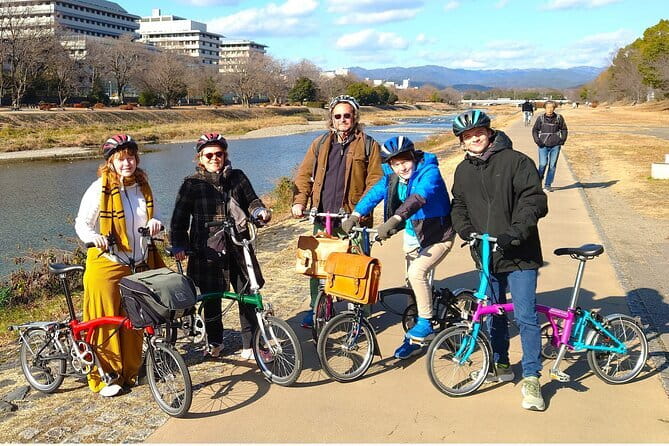
- Brompton bicycles and riding equipment included: Bikes, helmets, and wheeled transport bags are provided.
- Seven Kyoto stops in about four hours: The route includes rivers, shrines, temples, canal works, and Kyoto Gyoen National Garden.
- The course can be adjusted: You can discuss your interests and ask the navigator to arrange the ride around your wishes.
- Food advice is available, but food is not included: The navigator can suggest lunch or speciality shops during the outing.
Why a slow bicycle ride works so well in Kyoto
Kyoto can be difficult to read from a car or standard sightseeing bus. The major roads are busy, yet the city is threaded with small lanes, river paths, canal routes, and quiet temple approaches. A bicycle lets you cover more ground than walking while still moving slowly enough to notice the details.
That balance is the real point of this experience. You are not racing between attractions. You are moving through the city’s waterways and older neighborhoods with time to stop, listen, take photographs, and ask why a place matters.
The Brompton bicycle is a useful choice for this type of outing. These compact folding bikes are easier to manage than a bulky city bike, and their distinctive shape adds a little fun to photographs. You do not need to arrange a rental on your own, since the bicycle, helmet, and other riding equipment are supplied.
The route covers roughly 12 kilometers. That sounds substantial, but the tour is described as slow cycling, and the four-hour schedule includes several stops. You should still be comfortable riding for much of the morning, but this is aimed at people who want a manageable outing rather than a hard physical challenge.
A few more rides around Kyoto worth a look
- Explore Hidden Alleyway with a Local Expert (Morning tour)
★ 5.0 · 61 reviews - KIYOTO’s Kyoto Private E-Cycling Tour: Highlights & Hidden Gems
★ 5.0 · 48 reviews - Cycle Kyoto’s Hidden Gems & Gion Stroll
★ 5.0 · 29 reviews
Starting at Demachiyanagi Station
The tour begins at Demachiyanagi Station at 10:00 a.m. This is a practical starting point because the station sits near the meeting of the Kamo River and Takano River, close to the first part of the route.
The opening stop is the Kamo River, where you can see how closely Kyoto’s daily life is tied to water. The river runs through the center of the city, yet its banks offer a welcome break from traffic and crowds. Allow about 15 minutes here.
This is a short stop, so do not expect a long riverside ride before moving on. Its value is orientation. You begin by seeing the water system that helps explain several later stops, especially the canals near Nanzenji and the Philosopher’s Walk.
Shimogamo Shrine and the shade of Tadasunomori
From the river, the ride continues to Shimogamo Shrine, one of Kyoto’s major Shinto sites and a UNESCO World Heritage Site. The shrine lies near the Kamo River delta, making it a natural fit for a tour centered on Kyoto’s waterways.
The planned stop lasts about 45 minutes. That gives you time to see the shrine grounds and spend a little time in Tadasunomori, the forest surrounding the approach. The tree cover changes the mood quickly. Even though you are close to the city, the filtered light and quiet paths can feel far removed from Kyoto’s busier sightseeing streets.
This is a good place to ask your navigator about the difference between a Shinto shrine and a Buddhist temple, since the tour later visits both. The route does not simply collect famous names. It gives you a chance to compare the atmosphere of a shrine forest with the formal gates, gardens, and canal structures farther east.
The Philosopher’s Walk beside the Lake Biwa Canal
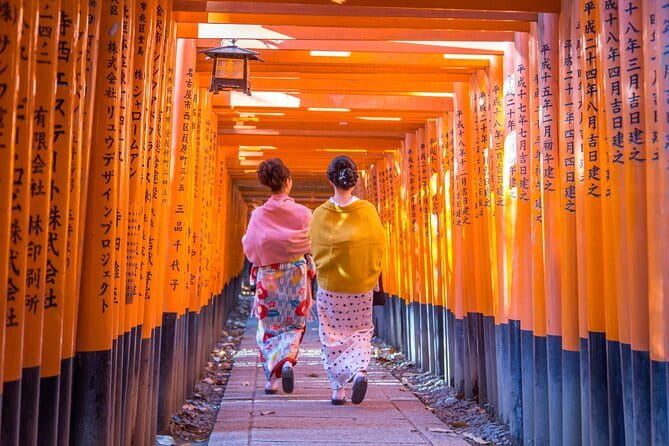
The Philosopher’s Walk follows the Lake Biwa Canal at the foot of the Higashiyama area. It is named for the philosophers who walked here while thinking and talking, though you do not need to treat it as a solemn pilgrimage.
The path is best appreciated at a measured pace. Water runs beside the route, trees line the walkway, and the narrow setting encourages you to pay attention to the canal and surrounding homes rather than simply pressing toward the next landmark.
The planned visit is about 30 minutes. Since this is a popular walking route, bicycles may not be equally convenient at every point. Your navigator can help manage the transition between riding and walking, but you should expect that the tour is not a continuous bicycle sprint from one stop to another.
That is part of the appeal. The experience uses the bicycle to connect places, then slows down when the setting deserves a closer look.
Same roads, a different day in the saddle:
- Kyoto Satoyama Cycling with Lunch and English Guide
★ 5.0 · 19 reviews - Explore Hidden Alleyway with a Local Expert (Afternoon Tour)
★ 5.0 · 17 reviews - Kyoto Shogun Cycling Tour
★ 5.0 · 13 reviews - Cycling Tour at Uji’s Matcha Green Tea Fields and Heritage
★ 5.0 · 10 reviews
Nanzenji, one of Kyoto’s major temple complexes
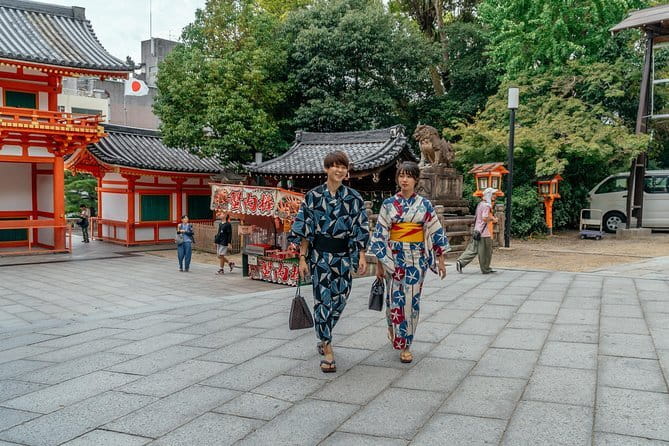
Nanzenji is scheduled for another 30-minute stop. It is one of the most important Rinzai Zen temples in Japan, known for its large Sanmon Gate and garden.
The temple visit gives the tour a strong cultural center. The Sanmon Gate is especially notable for its connection with Kabuki plays, while the garden offers a quieter contrast to the scale of the entrance. The grounds are free to enter, but admission to certain parts of Nanzenji is not included, so you should be prepared for a separate charge if you want access to paid areas.
Thirty minutes is enough for a focused look, but not a full study of every temple building or garden. If Nanzenji is a top priority for you, tell the navigator at the start. The route can be arranged around your wishes, though the time available still limits how much you can see.
The advantage of visiting by bicycle is the easy connection to the next stops. You do not have to work out how to move between the temple, aqueduct, and canal infrastructure on your own.
The Suirokaku aqueduct and Kyoto’s modern water story
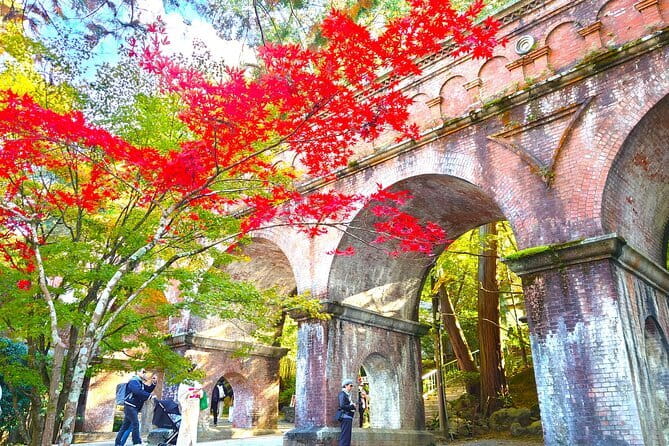
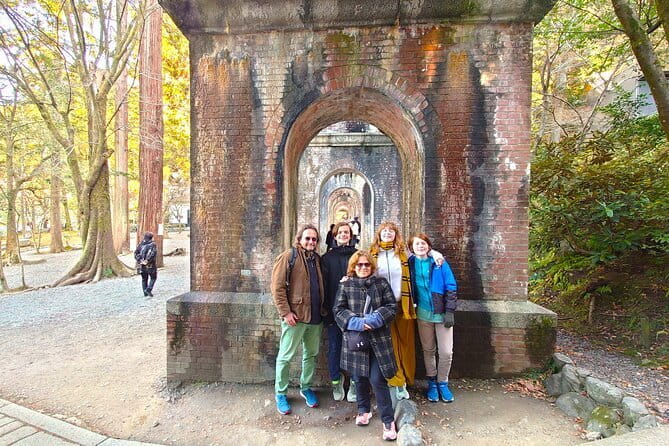
Inside the Nanzenji grounds, the brick Suirokaku aqueduct carries the Lake Biwa Canal. Its red brick arches look different from the traditional temple architecture nearby, and that contrast is exactly what makes the stop worthwhile.
The aqueduct helped bring water and transport links to Kyoto during the Meiji era, a period when the city was adapting to a changing Japan. It remains in use today. You can see, in one compact area, how old religious institutions and newer public works became part of the same city.
The stop is planned for about 30 minutes and admission is free. This is one of the strongest reasons to take the route with a navigator. The aqueduct is visually striking, but its importance is easier to grasp when someone explains why it was built and how the canal affected Kyoto.
Keage Incline and the Lake Biwa Canal route
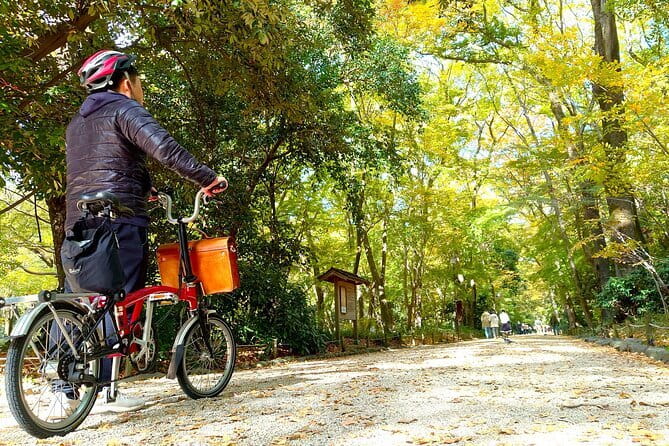
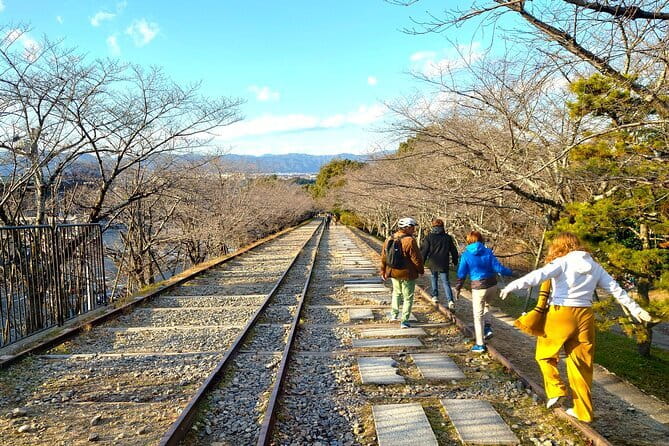
The Keage Incline is another piece of the canal system. It was part of a boat transport route, using an incline railway to move boats between different water levels. The old industrial site has been preserved and is now known for its cherry trees as well as its engineering.
You have about 30 minutes here. The stop may be especially appealing if you like the less obvious side of Kyoto, where transport systems and public works tell as much about the city as temples do.
The route also gives you a useful change of pace. After the shrine and temple grounds, the incline and canal works show Kyoto as a working city shaped by practical needs. The experience is not limited to traditional architecture. It also points to the infrastructure that supported Kyoto’s growth.
Cherry blossoms are a seasonal feature, not something you should assume will be present on every departure. Even without them, the preserved incline and canal setting provide a clear reason to stop.
Finishing at Kyoto Gyoen National Garden
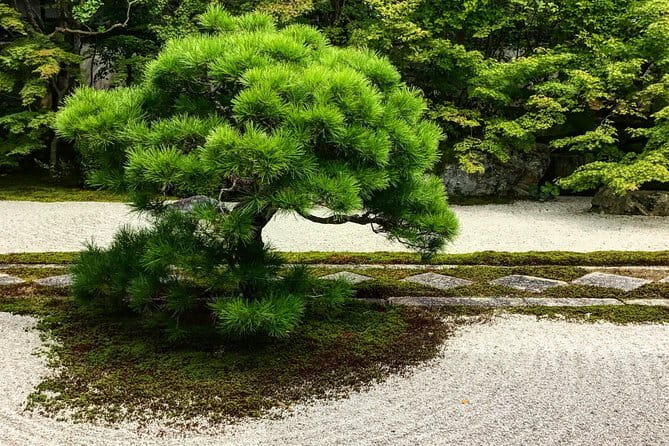
The final major stop is Kyoto Gyoen National Garden, with about an hour scheduled here. The garden surrounds the Kyoto Imperial Palace, which served as the emperor’s residence until the middle of the 19th century.
An hour gives this stop more breathing room than several of the earlier visits. You can ride through or around the broad garden setting, pause for photographs, and discuss the imperial history of Kyoto. The open grounds also make a pleasant finish after the narrower paths beside the canal and Philosopher’s Walk.
The tour ends back at the original meeting point. That matters when you are planning the rest of your day. You are not left at a distant temple with a bicycle rental to return, and you can continue from Demachiyanagi Station once the ride is over.
What the $129 price includes
At $129 per person, this is not the cheapest way to rent a bicycle in Kyoto. The value comes from the service around the bike.
Your fee includes the Brompton bicycle rental, an exclusive navigator, a helmet, and bags for wheeled transport and other riding equipment. You are also paying for a route that links several sites without requiring you to plan the streets, canal paths, and temple connections yourself.
The small maximum of six is important. A large cycling group can become awkward on narrow lanes and make questions difficult. With only a few people, the navigator can respond to your interests and may be able to adjust the course.
You should add the 500-yen insurance fee to your budget. Snacks and meals are not included, though the navigator can suggest restaurants for lunch based on what you want to eat. That arrangement is useful if you would rather choose a local speciality than accept a fixed meal.
The tour offers group discounts, but the amount is not provided here. If you are booking for several people, check the current total before you pay.
Who will enjoy this Kyoto cycling tour most
I would choose this outing if you have already seen some of Kyoto’s headline sights and want a quieter way to understand the city. It also suits a first visit if you prefer waterways, temple grounds, and local routes over a packed schedule of major attractions.
You will get the most from it if you enjoy asking questions and letting the route breathe. The navigator’s local knowledge is central to the experience, especially when the group wants to find calm alternatives to crowded streets or reach small lanes that are inconvenient on foot.
The tour can also work for people who are not especially confident about fitness, since it is built around slow cycling. Still, you must be able to ride for a moderate amount of time and handle the physical demands of a four-hour activity.
I would hesitate to recommend it if you dislike bicycles, want a fully indoor activity, or need a guaranteed route in poor weather. The tour requires good conditions and may be canceled if the weather is unsuitable.
Practical details that affect your day
The activity lasts about four hours and begins at 10:00 a.m. Plan your morning around the start time at Demachiyanagi Station, rather than assuming you can join from a hotel or another Kyoto landmark.
Confirmation is sent within 48 hours of booking, subject to availability. The group maximum is six, and the experience also requires a minimum number of participants, so keep that in mind if your schedule is tight.
You receive the bicycle and riding equipment, so you do not need to bring a helmet or arrange a separate rental. Comfortable clothing suitable for cycling is sensible, though the provided information does not specify a dress code.
Free cancellation is available up to 24 hours before the start time. A cancellation inside that period is not refundable, and changes are not accepted then. If poor weather or an insufficient number of participants causes the operator to cancel, you are offered another date or a full refund.
My verdict: book it for a quieter side of Kyoto
Book this tour if you want to see Kyoto through its water system, back streets, temple grounds, and public works rather than only through its most famous gates. The combination of a Brompton bicycle, a six-person limit, and a flexible local-led route gives the morning a personal feel.
The $129 cost is fair when you value equipment, route planning, and one-on-one guidance. It is less compelling if you only want a basic bicycle rental or prefer to spend several hours inside one large temple complex.
For most people, the best reason to choose it is simple: you cover a useful stretch of eastern and northern Kyoto without rushing. Just budget for the 500-yen insurance fee, bring an appetite for a possible food stop, and keep a backup plan in case the weather turns.
FAQ
How long does the Kyoto slow cycling tour last?
The tour lasts approximately four hours.
How far do you cycle?
The route covers about 12 kilometers.
Where does the tour begin?
It begins at Demachiyanagi Station, at 32-1 Tanaka Kamiyanagicho, Sakyo Ward, Kyoto.
What time does the tour start?
The scheduled start time is 10:00 a.m.
Where does the tour end?
The tour ends back at the original meeting point.
How many people can join?
The activity has a maximum of six participants.
Is bicycle rental included?
Yes. The bicycle rental fee is included, along with a helmet and other bicycle equipment.
Is insurance included in the price?
No. A 500-yen insurance fee is separate.
Are meals and snacks included?
No. Snacks are not included, but the navigator can suggest restaurants for lunch according to your preferences.
Can the route be changed?
Yes. The course can be arranged according to your wishes, subject to the available time and route conditions.
What happens if the weather is poor?
If the tour is canceled because of poor weather, you are offered a different date or a full refund.
Just added around Kyoto
- City cycle (no gear change)★ 3.5 · 5 reviews
- Rent a Road Bike to Explore Kyoto and Beyond★ 5.0 · 2 reviews
- Explore Hidden Alleyway with a Local Expert (Afternoon Tour)★ 5.0 · 17 reviews
- Kyoto Shogun Cycling Tour★ 5.0 · 13 reviews
- Cycle Kyoto’s Hidden Gems & Gion Stroll★ 5.0 · 8 reviews
- Ine Funaya e-BIKE Cycling Tour★ 4.0 · 2 reviews
- Kyoto Satoyama Cycling with Lunch and English guide★ 5.0 · 4 reviews
- Kyoto: North Kyoto Guided Cycling Tour with Lunch★ 5.0 · 5 reviews
Cycling Tours, compared.
Ninh Binh Day Trip: Hoa Lu-Trang An/Tam Coc-Mua Cave-Cycling-Boat
Read our review →
Cai Be Mekong Delta Tour: Cooking Class, Cycling & Craft Villages
Read our review →

Countryside Bike Tour from Amsterdam: Cheese, Clogs & a Windmill
Read our review →
Electric Cycling Tour of Ubud with Free Hotel Transfer and Lunch
Read our review →

Browse the lists this tour appears in