
Review · KYOTO
Explore Hidden Alleyway with a Local Expert (Afternoon Tour)
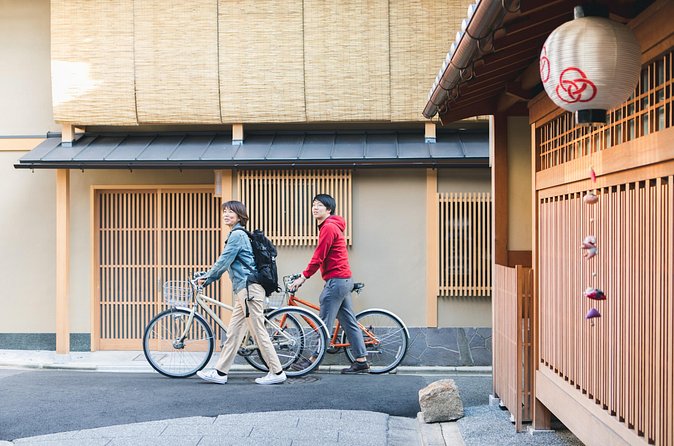
Kyoto reveals itself best when you leave the main sightseeing roads. This three-hour afternoon bike tour threads through narrow lanes, old wooden houses, geisha districts, riverside paths, and the grounds around the Imperial Palace. You get a moving look at ordinary Kyoto, not just the famous postcard views.
I like the small private groups, limited to six people per guide, and the route’s mix of quiet residential lanes and major cultural sights. I also like the practical rain plan: you can continue by bicycle with a free poncho or switch to a walking tour using public transportation. The main consideration is the price, $102.47 per person, which is a serious outlay for three hours, especially if you are comfortable cycling around a city on your own.
Key Points at a Glance
- Quiet Kyoto comes first: Ride through narrow backstreets and traditional wooden-house lanes before reaching the better-known sights.
- Five contrasting stops: The route includes Miyagawacho, Gion, Tatsumi Bridge, Kyoto Imperial Palace, and Kashiwayacho by the Kamo River.
- A genuinely small group: Two to six people join each guide, making it easier to ask questions and keep a steady pace.
- A helpful afternoon schedule: The 2:00 p.m. start works well after a morning temple visit or a slow lunch.
- Guide quality matters here: Yuichi is praised for being personable, funny, and informative, though a particular guide cannot be guaranteed.
- Rain does not automatically cancel the outing: You can ride with a free rain poncho or use buses and the metro on a walking version of the route.
Why a Bicycle Shows You More of Kyoto
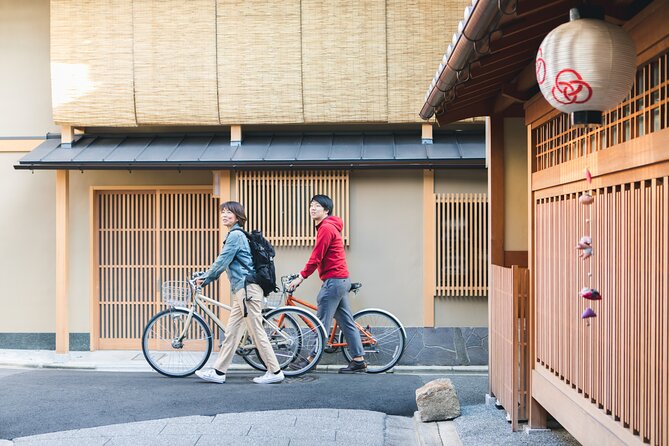
A bicycle gives you a useful middle ground in Kyoto. Walking lets you notice shop fronts and small details, but it limits how much ground you can cover. A taxi gets you from one famous sight to another, but it skips the in-between streets where the city feels most local.
Here, the route moves from tight alleyways to busy main streets and back again. That change is part of the appeal. One moment you are passing old wooden homes in a quiet lane; shortly after, you are back among the traffic and shops of central Kyoto.
The guides receive formal training in Kyoto culture, traffic safety, group cycling, and local etiquette. That matters in a city where roads can be narrow and cycling requires attention. You are not simply handed a bicycle and pointed toward Gion. The guide leads the group and helps keep the ride orderly.
The tour is private to your group, but it is not a one-person booking. At least two people are required, and each guide accepts two to six people. For a group of seven to twelve, an additional guide can be arranged. This setup suits families and couples who want company without joining a large procession.
A few more rides around Kyoto worth a look
- Explore Hidden Alleyway with a Local Expert (Morning tour)
★ 5.0 · 61 reviews - KIYOTO’s Kyoto Private E-Cycling Tour: Highlights & Hidden Gems
★ 5.0 · 48 reviews - Cycle Kyoto’s Hidden Gems & Gion Stroll
★ 5.0 · 29 reviews
Starting at 2:00 p.m. in Central Kyoto
The meeting point is at 552-13 Higashiaburanokōjichō in Shimogyo Ward. The tour starts at 2:00 p.m. and returns to that same location after about three hours.
That timing is worth considering. You can spend the morning at a temple or market, have lunch, then see another side of Kyoto by bike. You also avoid committing your first hours in the city to a fixed cycling schedule.
The tradeoff is that the tour occupies much of the afternoon. If you want to visit several major interiors that day, check their closing times before booking. The route shows you the outside setting and atmosphere of several important places, but it is not designed as a series of long indoor visits.
An afternoon start also means the light and mood can change as you ride. Kyoto’s lanes feel different from one stop to the next, and the tour’s strength is the contrast between them rather than a single grand monument.
Miyagawacho and Its Wooden Houses
The first listed stop is Miyagawacho Kaburenjo, in Miyagawacho, one of Kyoto’s five geisha districts and the second largest among them.
The stop lasts about 15 minutes, with no admission charge. The important thing here is not entering a paid attraction. It is the street itself. Traditional wooden houses line both sides of the lane, giving you a close look at the architecture and quiet mood associated with old Kyoto.
This is a good place for the guide to explain the setting and local customs while you take in the details at street level. The narrow road and old houses create a clear contrast with Kyoto’s modern traffic corridors.
You should keep your expectations realistic. A short stop in a geisha district does not mean a performance or an arranged meeting with geiko or maiko. It is a chance to see the district respectfully from public streets. The guide’s reminder about local etiquette is especially useful in areas where residents and working professionals share the same lanes.
Gion, Kyoto’s Best-Known Geisha District
The ride continues to Gion, perhaps the name most associated with Kyoto’s geiko and maiko traditions. Gion developed as a major entertainment district, and its older atmosphere remains visible in the streets and buildings.
The visit lasts around 15 minutes and is free. That makes it a quick orientation stop rather than a full district tour. You will see the setting, hear about its role in Kyoto culture, and then continue by bicycle.
I like the way Gion fits into this route. If you visit only the well-known streets, it is easy to think of the district as a picture-taking area. Arriving through quieter lanes gives you a better sense of how Gion connects to the surrounding city.
The drawback is timing. Fifteen minutes is enough for an introduction, but not enough to explore every lane or linger over architecture. If Gion is high on your personal list, return later on foot and give it more time. The bike tour gives you a first look, not the final word.
Same roads, a different day in the saddle:
- Kyoto Satoyama Cycling with Lunch and English Guide
★ 5.0 · 19 reviews - Kyoto Shogun Cycling Tour
★ 5.0 · 13 reviews - Kyoto: Higashiyama Slow Cycling Tour along the quiet waterfront
★ 5.0 · 10 reviews - Cycling Tour at Uji’s Matcha Green Tea Fields and Heritage
★ 5.0 · 10 reviews
Tatsumi Bridge and the Willow-Lined Stream
Tatsumi Bridge brings a change of pace. The route follows a stream, with willows moving in the breeze and a calmer atmosphere than the nearby main roads.
The stop lasts about 15 minutes and has no admission fee. This is the kind of place where a bicycle tour earns its keep. You can reach the bridge and waterside path without spending the whole afternoon walking between separate areas.
The setting also gives the tour a needed pause. Kyoto is often presented through temples and shrines, but its canals, streams, bridges, and planted paths help explain the city’s visual character. Tatsumi Bridge is a short stop, yet it adds a quiet, almost graceful interval between the geisha districts and the Imperial Palace.
Again, do not expect an extended riverside break. The itinerary keeps moving, and the tour is built around several short visits. If you prefer long periods for photography or sitting by the water, the pace may feel brisk.
Cycling the Grounds of Kyoto Imperial Palace
Kyoto Imperial Palace is the largest stop on the route, with about 20 minutes allocated to the area. The palace once served as the residence of Japan’s Imperial Family and is now open to the public as a national garden with seasonal flowers.
The group cycles along gravel paths there. That detail matters. This is not a long palace tour on foot, and the experience focuses on the surrounding grounds rather than a detailed visit to every building.
The palace area gives you a broader view of Kyoto. After the close lanes of Miyagawacho and Gion, the open garden space provides room to breathe. Seasonal flowers add another reason the stop may look different depending on the time of year.
The gravel paths may require a little more care than smooth pavement, especially if you are not used to riding in a group. The guide’s cycling instruction and traffic training are useful here, but you should still be comfortable controlling a bicycle and following directions.
If the palace is one of your main Kyoto priorities, plan a separate visit if you want more time. The bike stop is valuable as part of the route, but 20 minutes is a short introduction to such a large site.
Kashiwayacho and the Kamo River
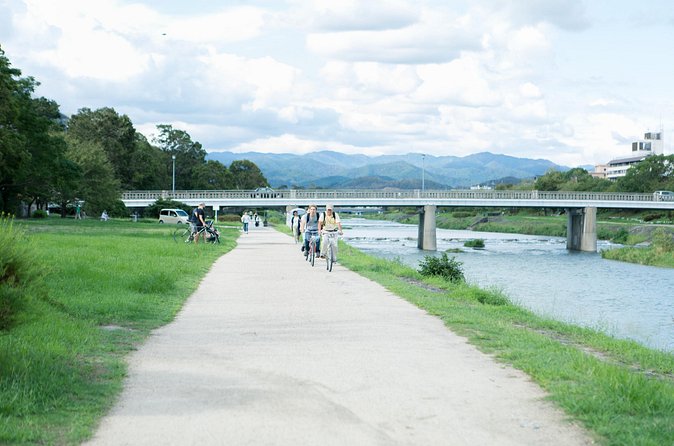
The final listed stop is Kashiwayacho, where you can relax beside the Kamo River, a favorite place for local residents. The stop lasts about 20 minutes and admission is included.
This is a smart way to finish the sightseeing portion of the ride. The river provides space after the tighter streets and gives you time to settle into Kyoto’s everyday rhythm. It is less about checking off a monument and more about seeing where people go to sit, stroll, and take a break.
The Kamo River also gives the route a strong sense of place. Kyoto is not only its temples and old districts. The river is part of daily life, and the stop helps connect the historic areas you have seen with the city people live in now.
After this stop, you return by bicycle to the original meeting point. Since the activity ends where it begins, you do not need to arrange a separate ride back from an unfamiliar neighborhood.
What the Small Group and Guide Add
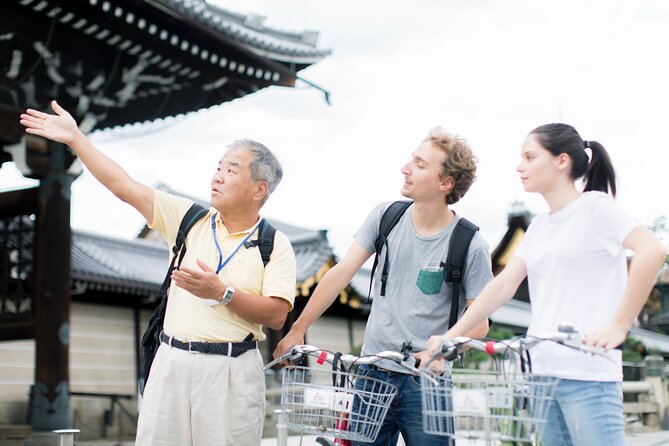
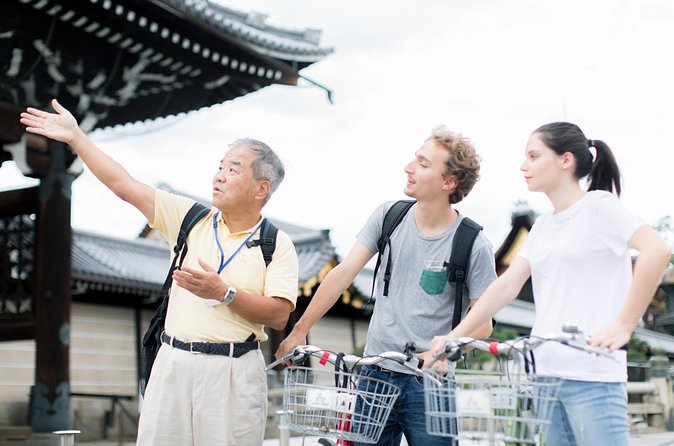
The most praised part of this experience is the guide. One especially positive account names Yuichi as personable, informative, and funny. That combination is important on a three-hour tour. You want useful context, but you also want a guide who can keep the ride relaxed and enjoyable.
No specific guide is promised, so you should not book solely on the expectation that Yuichi will lead your group. Still, the training program is a reassuring feature. Guides are trained in local culture, road safety, group riding, and etiquette.
A maximum of six people per guide makes a real difference. The guide can give directions without shouting across a large crowd, and you have a better chance to ask about a lane, building, or custom that catches your eye. Families benefit too, since the group can stay together more easily.
One family found the format useful for seeing several parts of the city while short on time. That is exactly where this tour makes sense. You cover more ground than you would on foot, but you do not spend the afternoon being driven from one isolated sight to another.
E-Bikes, Fitness, and Family Rules
A review of the experience specifically praises the e-bikes and calls them the way to go. The provided details do not clearly state whether an electric bicycle is guaranteed for every booking, so confirm the bicycle type before paying if that feature matters to you.
The tour is not limited to serious cyclists. Most people can participate, but children must be at least 10 years old, at least 145 centimeters tall, and able to ride safely on the road without help.
You should be comfortable cycling in traffic and following a guide through narrow streets. The group is trained and managed, but this is still a bicycle tour, not a sightseeing bus. If you are nervous on roads or have not ridden for years, ask about the bicycle type and route conditions before booking.
Rain Planning and What to Bring
The tour operates in rain. You have two choices: continue by bicycle with a free rain poncho, or change to a walking tour using public transportation. Bus and metro costs are included in the tour fee for that alternative.
That flexibility makes the booking less weather-sensitive than many outdoor activities. Still, rain may change the feel of the route. Wet roads, reduced visibility, and slippery gravel can make cycling less comfortable, even with a poncho.
Wear clothing that lets you pedal and shoes suitable for riding. Bring anything you personally need for wet weather, but do not assume you must buy a rain jacket in advance, since a poncho is supplied if you continue by bike.
Is $102.47 a Fair Price?
At $102.47 per person, this is not the cheapest way to see Kyoto. The value depends on what you want from the afternoon.
You are paying for a private experience, a small group, a local guide, bicycle use, route planning, and the ability to cover several districts in three hours. If you have only a short stay in Kyoto, that can be useful. The tour gives you a guided overview of areas that would take longer to connect on foot.
The price is harder to justify if you already know Kyoto well, cycle confidently, and are happy to plan your own route. You can visit Gion, the Kamo River, and the Imperial Palace without a tour fee. The added value comes from the backstreet route, the guide’s local explanations, and the convenience of moving between areas.
I would see this as a time-saving orientation tour rather than a bargain attraction. It makes the most sense early in your Kyoto visit, when you want to understand how the districts fit together and decide where to return on your own.
Booking, Changes, and the Fine Print
Confirmation is sent within 48 hours, subject to availability. The tour usually attracts bookings about 13 days ahead, so booking early is sensible if your Kyoto dates are fixed.
The cancellation information supplied with the experience is inconsistent. One section says you can request a refund by 6:00 p.m. Japan time at least three days before the tour, while another says the experience is non-refundable and cannot be changed. I would ask KCTP to confirm the exact rule before booking, rather than relying on an assumption.
Rescheduling also requires notice by 6:00 p.m. Japan time at least three days before the date. After that point, a change requires cancellation and a new reservation. If the minimum number of participants is not met and the tour is canceled, you are offered another date or experience, or a full refund.
Who Should Book This Kyoto Bike Tour?
I would recommend it to a couple, family, or small private group that wants to see several sides of Kyoto without spending the whole afternoon walking. It is especially useful if you have limited time and want a guide to handle the route.
It suits people who care about local streets and atmosphere as much as famous landmarks. The strongest moments are not all major attractions. They include the old wooden houses in Miyagawacho, the stream beside Tatsumi Bridge, and the Kamo River at the end.
I would hesitate if you dislike cycling in city traffic, need long visits at each sight, or want detailed palace and geisha-district tours. The stops are short, and the tour keeps moving.
Should You Book It?
Book this tour if you want an efficient, small-group introduction to Kyoto by bicycle, with a route that reaches beyond the usual main roads. The combination of quiet lanes, Gion, riverside paths, and the Imperial Palace gives you a useful sense of the city’s variety.
Skip it if $102.47 feels high for a three-hour overview or if you prefer setting your own pace. For the right group, though, the private format and a strong guide such as Yuichi can make the cost worthwhile. Confirm the bicycle type and cancellation terms first, then use this ride to choose which parts of Kyoto deserve a longer visit.
FAQ
How long is the Kyoto bicycle tour?
The tour lasts approximately three hours.
What time does the tour begin?
The tour starts at 2:00 p.m.
Where does the tour start and finish?
It starts at 552-13 Higashiaburanokōjichō in Kyoto’s Shimogyo Ward and ends back at the same meeting point.
How many people can join each guide?
Each guide accepts a minimum of two and a maximum of six people. Groups of seven to twelve can arrange an additional guide.
What places does the route visit?
The route includes Miyagawacho Kaburenjo, Gion, Tatsumi Bridge, Kyoto Imperial Palace, and Kashiwayacho by the Kamo River.
Can children join the tour?
Children must be at least 10 years old, at least 145 centimeters tall, and able to ride a bicycle safely on the road without assistance.
What happens if it rains?
The tour operates in rain. You can continue by bicycle with a free rain poncho or switch to a walking tour using buses or the metro, with those transportation costs included.
Is the tour private?
Yes. Only your group participates in the activity.
Just added around Kyoto
- Kyoto: Higashiyama Slow Cycling Tour along the quiet waterfront★ 5.0 · 10 reviews
- City cycle (no gear change)★ 3.5 · 5 reviews
- Rent a Road Bike to Explore Kyoto and Beyond★ 5.0 · 2 reviews
- Kyoto Shogun Cycling Tour★ 5.0 · 13 reviews
- Cycle Kyoto’s Hidden Gems & Gion Stroll★ 5.0 · 8 reviews
- Ine Funaya e-BIKE Cycling Tour★ 4.0 · 2 reviews
- Kyoto Satoyama Cycling with Lunch and English guide★ 5.0 · 4 reviews
- Kyoto: North Kyoto Guided Cycling Tour with Lunch★ 5.0 · 5 reviews
Kyoto Cycling Tours, compared.
Explore Hidden Alleyway with a Local Expert (Morning tour)
Read our review →
KIYOTO’s Kyoto Private E-Cycling Tour: Highlights & Hidden Gems
Read our review →
Kyoto Satoyama Cycling with Lunch and English Guide
Read our review →
Cycling Tour at Uji’s Matcha Green Tea Fields and Heritage
Read our review →
Higashiyama Slow Cycling Tour along the quiet waterfront
Read our review →Browse the lists this tour appears in