
Review · KYOTO
Kyoto Satoyama Cycling with Lunch and English Guide
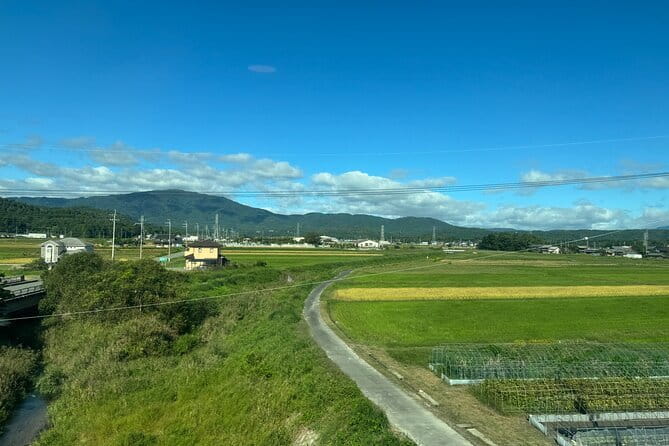
Sonobe gives you a side of Kyoto that temple crowds never will. You ride an e-bike past rice fields, wooden homes, shrines, mountains, and a clear-running river, with local guides such as Maki, her husband, and Yasu explaining the town in English. The fresh soba-making class and lunch are the heart of the day.
I like the tour’s personal scale: it is a private outing for your group, not a large cycling pack. I also like the choice of extra activities, from a kimono photo to playing the koto or exploring Mt. Komugi, which the tour identifies as the birthplace of Super Mario. The main caution is timing. The standard visit lasts about four to five hours, but added activities can push the finish beyond 2 PM.
Key points to know before you book
- Sonobe is only about 30 minutes from Kyoto City by train, yet the setting feels rural and quiet.
- The private format keeps the pace flexible, with only your own group taking part.
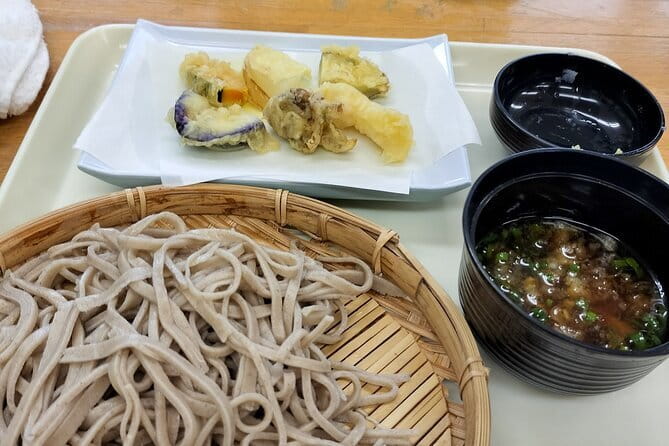
- Course A includes local soba-making, followed by freshly boiled noodles, tempura, and rice balls.
- Course B offers a local-produce meal in a traditional Japanese house, including the option of Kaeyuno Oyado restaurant.
- You can choose two or three included extras, such as a kimono photo, koto playing, shrine worship, castle viewing, or Mt. Komugi exploration.
- The tour is weather-sensitive, but poor-weather cancellations offer a new date, car transportation, or a full refund.
Why Sonobe makes a good change from central Kyoto
Kyoto City is famous for temples, gardens, and packed lanes. Sonobe, in Nantan, Kyoto Prefecture, gives you open space and ordinary local life instead. You hear birds and the river as you cycle, rather than bus engines and camera shutters.
The tour begins at Mizobe-6-21 Sonobechō Oyama Higashimachi, Nantan, Kyoto 622-0041, at 10 AM. From there, the e-bike does the work on the gently rolling roads between stops. The stated riding time between points is about 10 to 20 minutes, so you get a real cycling experience without spending the entire day in the saddle.
I would choose this outing if you want to add a rural day to a first Kyoto visit, or if you have already seen the major city sights. It gives you a look at farming country, local shrines, old buildings, and food traditions that are hard to fit into a standard Kyoto sightseeing route.
The English-speaking guides are a major part of the experience. Maki is named as one of the local hosts, and her husband and Yasu also guide groups. Their connection to Sonobe matters because the tour is not simply a bike rental with a map. You have people who grew up in the town, can explain the local setting, and can adjust the day to your interests.
A few more rides around Kyoto worth a look
- Explore Hidden Alleyway with a Local Expert (Morning tour)
★ 5.0 · 61 reviews - KIYOTO’s Kyoto Private E-Cycling Tour: Highlights & Hidden Gems
★ 5.0 · 48 reviews - Cycle Kyoto’s Hidden Gems & Gion Stroll
★ 5.0 · 29 reviews
E-biking past Ikimi Tenmangu Shrine
The first stop is Ikimi Tenmangu Shrine, described as the oldest Tenmangu Shrine in Japan. It is dedicated to Sugawara no Michizane, a figure associated with learning, so people come here to pray for success in exams.
You have about 10 minutes at the shrine. That is enough for a quick visit and a short explanation, but not a long architectural study. If you enjoy quiet religious sites and local customs, this is a useful opening stop. If you want a detailed shrine history or extended time for photography, the short visit may feel brief.
The value is in the setting and the context. In central Kyoto, you may see famous shrines surrounded by crowds and souvenir shops. Here, the focus is simpler: ride in, learn what the shrine means to the community, and continue through the countryside.
The e-bike is especially useful on this route. You can enjoy the views without treating every incline as a test of fitness. The tour is aimed at most participants, but you should still be comfortable riding a bicycle and following a guide on public roads.
Sonobe Castle, school gates, and a piece of modern history
Next comes the ruins of Sonobe Castle, with about 20 minutes to look around. The remaining features include the main gate, castle walls, turrets, and a guardhouse. The striking detail is that the main gate is now used by Sonobe High School.
The tour describes this as the last castle built in Japan. That gives the stop an unusual place in the country’s castle story. You are not entering a preserved feudal fortress with broad grounds. Instead, you are seeing surviving castle structures in an active community setting.
That contrast is part of the appeal. A castle gate beside a school feels more connected to daily life than a polished historic reconstruction. You can see how old structures remain part of the town rather than being separated from it behind a ticket booth.
The schedule says the exact visit can depend on timing. If you select a castle visit as one of your included extras, confirm with the guide at the start how much time is available. The short stop works well for a general introduction, but it is not designed for a lengthy castle-focused tour.
Making soba in a former elementary school
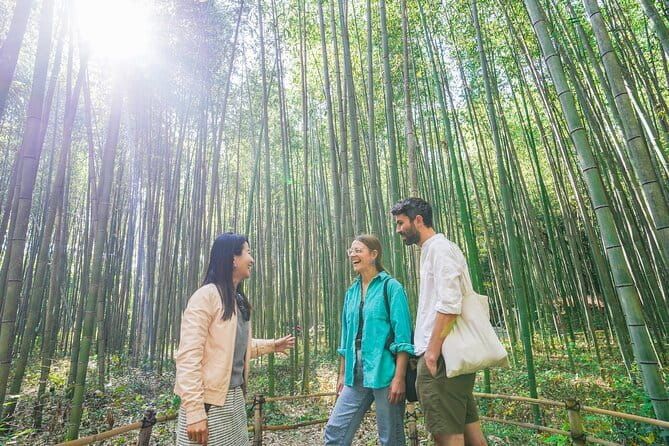
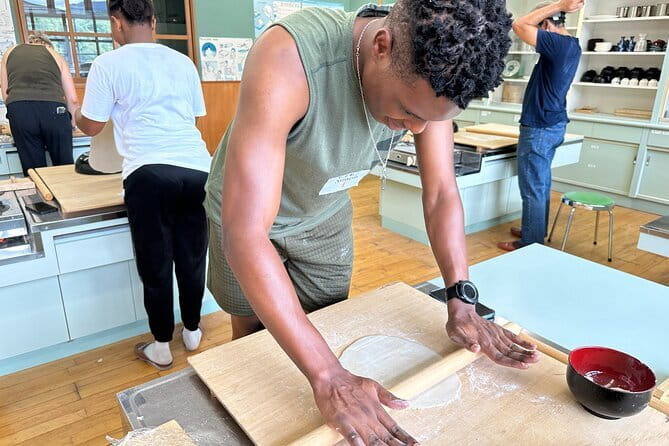
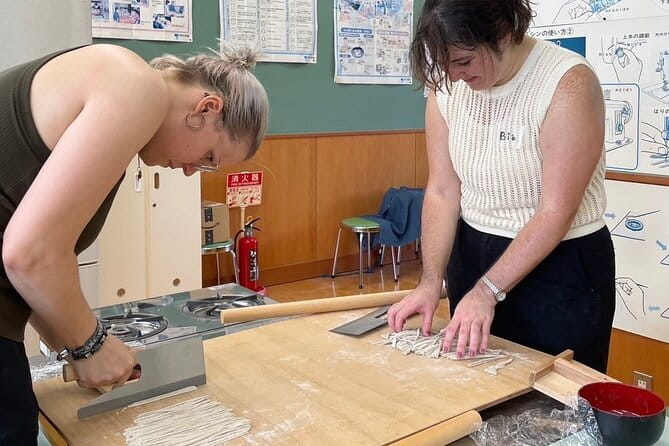
The longest scheduled stop is at the former Maki Elementary School, where you can make soba noodles with buckwheat flour grown locally. The activity and meal take about one hour and 50 minutes, making this the main event of the tour.
This is more than a lunch break. You handle the noodle-making process, then eat soba that has been freshly boiled. Tempura and rice balls are also served, giving you a generous local meal rather than a small tasting portion.
I like this part because it connects the meal to the area around you. You are cycling through farming country, then working with buckwheat from the same broad region. The food is not just something placed in front of you. You get a sense of how a local staple is made and why regional produce matters.
The former school setting adds character. Instead of attending a cooking class in a modern commercial kitchen, you use a repurposed local building. That makes the activity feel tied to Sonobe’s community rather than designed only for visitors.
The pace should suit families, school groups, and first-time cooks. Still, the class takes up nearly two hours, so anyone hoping for nonstop cycling should know what they are choosing. The tour is best understood as a food and culture outing with cycling between stops, not a long-distance bike ride.
If you choose the alternate course, you can have local produce at a restaurant in a traditional Japanese house. One restaurant specifically recommended by the guide is Kaeyuno Oyado. This option may be better if you want a relaxed meal and conversation rather than hands-on noodle-making.
Ask about your meal preference when booking or at the start. Vegan, vegetarian, and allergy-friendly meals are available if requested in advance. That detail can make the tour much easier for people with dietary restrictions, but you should not wait until the meal is being served.
Same roads, a different day in the saddle:
- Explore Hidden Alleyway with a Local Expert (Afternoon Tour)
★ 5.0 · 17 reviews - Kyoto Shogun Cycling Tour
★ 5.0 · 13 reviews - Kyoto: Higashiyama Slow Cycling Tour along the quiet waterfront
★ 5.0 · 10 reviews - Cycling Tour at Uji’s Matcha Green Tea Fields and Heritage
★ 5.0 · 10 reviews
Make Shrine and the farming traditions of Tamba
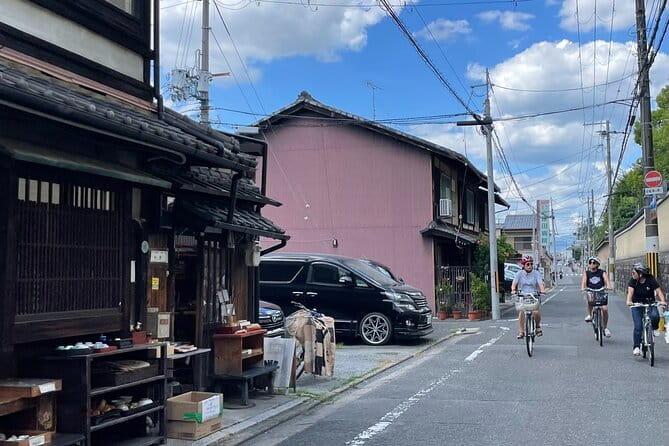
The final scheduled stop is Make Shrine, where the main hall has a traditional thatched roof. The shrine honors the agricultural deity of the Tamba region, an area that historically helped supply food to Kyoto.
This stop ties together the ride, the meal, and the surrounding countryside. You have seen fields and rural homes, eaten local ingredients, and now visit a shrine connected to farming. The experience works because the pieces relate to one another.
You get about 30 minutes here. That leaves time to learn how to worship properly at a Shinto shrine, a detail the tour specifically offers. Your guide can show you the appropriate steps, which is useful if you want to take part respectfully rather than simply photograph the entrance.
The thatched roof is the visual highlight. It gives the shrine a strong rural character and helps explain why this area feels different from Kyoto’s urban temples. As with the other stops, this is a local visit rather than a major tourist complex, so do not expect extensive displays or a large museum.
Add-ons that make the private format worthwhile
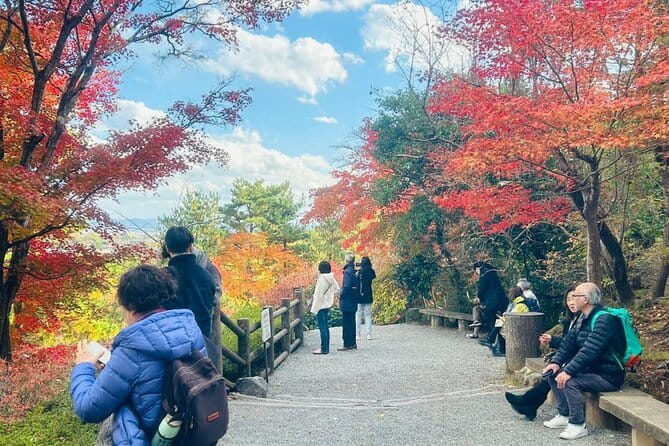
The tour includes two or three extra activities, depending on what you choose. You can select from:
- Visiting the castle
- Worshipping at Shinto shrines
- Drinking spring water after a short climb over a small mountain
- Taking a photograph in a kimono
- Playing the koto, a traditional Japanese instrument
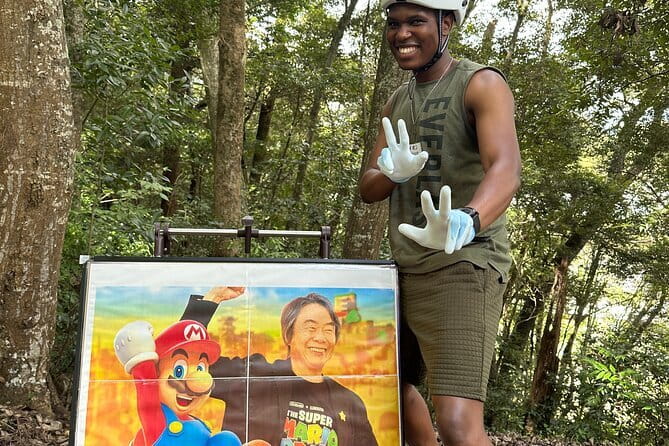
- Exploring Mt. Komugi, connected by the tour to the birthplace of Mario
These choices let you shape the day. A family might prefer the kimono photo and koto. Someone interested in Japanese religion may choose the shrine visit and spring water. A group of students might enjoy the castle and Mt. Komugi.
The extras are included in the tour price, but they are not all equally quick. Mt. Komugi in particular can extend the outing beyond 2 PM. Since the basic start time is 10 AM and the normal duration is four to five hours, you should treat the finish time as flexible if you add several activities.
The Mario connection is a fun, unusual detail, but keep your expectations sensible. The supplied information identifies Mt. Komugi as the birthplace of Super Mario, yet it does not describe a theme park, museum, or large character display. Think of it as a local exploration tied to a playful piece of pop-culture lore.
What the private tour feels like in practice
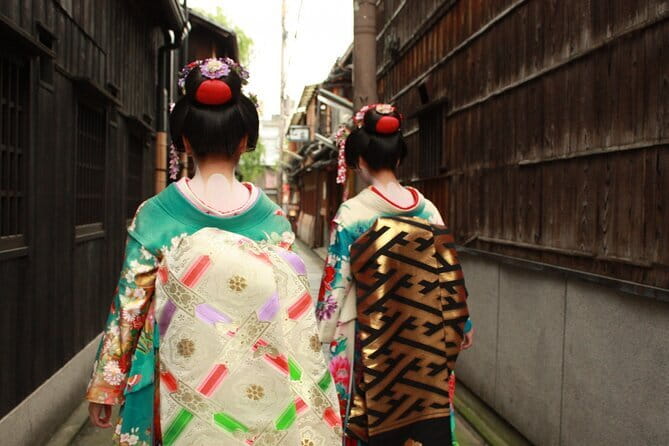
The private setup is one of the strongest reasons to book this experience. Only your group participates, so you are not trying to match the pace of a large cycling party. You can ask questions, spend a little more time at a shrine, or tell the guide which optional activities appeal to you.
It also makes the tour suitable for a range of groups. A school group of 16 people has taken part, including high school students, adults, and children. Families, solo participants, and larger groups are all listed as suitable, with group discounts available.
The guides put attention into practical comfort. One group received advice on what to wear based on the forecast, along with safety equipment. On a colder day, the team has supplied disposable hand warmers and neck warmers. You should still dress for the weather, since the tour requires outdoor cycling and is canceled in poor conditions.
You will want comfortable clothing and shoes that work for riding and walking. The exact bicycle details are not supplied, but the tour is built around e-bikes, which should reduce the effort needed on the route. Most people can participate, but you need to be able to ride a bike and manage the outdoor portions of the day.
The activity ends back at the starting point. That is helpful because you do not need to arrange a separate pickup from a distant village. Since the meeting point is near public transportation and Sonobe is about 30 minutes from Kyoto City by train, the outing can work as a half-day trip from Kyoto.
Is the 15,000-yen price good value?
The participation fee is listed as 15,000 yen per person, while the supplied booking price is about $78.83. The dollar amount can change with exchange rates, so check the current total before paying.
For that price, you receive an English-speaking private guide, an e-bike tour, the planned visits, lunch, the soba-making option or alternate meal course, and two or three included extra activities. That is a fair package if you value personal guiding and food experiences.
The value is strongest for a group that will actually use the private format. If you are traveling alone, the cost may feel higher than a basic self-guided bike rental, but you gain local explanations, food arrangements, and help with the route. For families or larger groups, the group format and possible discounts can make the price more attractive.
The tour is not the best choice if your only goal is to cover a large distance by bicycle. Much of the time goes to shrines, history, food, and cultural activities. You are paying for a connected Sonobe experience, not simply for hours on an e-bike.
Timing, weather, and practical planning
Plan on four to five hours for the standard version, starting at 10 AM. The listed total includes cycling time, with roughly 10 to 20 minutes between each point. Extra activities may add time, and Mt. Komugi can take the outing past 2 PM.
Bad weather is the main scheduling risk. If conditions look poor, the operator says reservation holders will be notified by 5 PM the day before. You may then choose car transportation, move to another date, or cancel without a fee.
For ordinary cancellations, you can receive a full refund if you cancel at least 24 hours before the start time. Cancellations or changes inside that window are not accepted for a refund. Cutoff times follow local time in Japan.
The tour has a mobile ticket and booking confirmation is provided at the time of reservation. If you need vegan, vegetarian, or allergy-friendly food, request it ahead of time. Also tell the guide at the start which two or three extras you want, so the schedule can be set properly.
Who should book this Sonobe day?
I would recommend it to you if you want rural Kyoto, local food, and a guide-led experience rather than another city sightseeing loop. It is especially well suited to families, school groups, couples, and groups of friends who like to mix gentle activity with cultural stops.
It is also a good choice for repeat visitors to Kyoto. Sonobe shows how close the countryside is to the city, yet the mood changes quickly from urban sightseeing to fields, river sounds, shrines, and wooden homes.
You may want to skip it if you dislike cycling, need a strictly timed afternoon, or want a major castle, museum, or long athletic ride. The short shrine visits may also feel too brief for serious architecture enthusiasts.
Should you book the Kyoto Satoyama Cycling tour?
Book it if you want a personal introduction to Sonobe, especially if the idea of making soba in a former school appeals to you. The combination of e-bike riding, local lunch, shrine visits, castle remains, and optional kimono or koto experiences gives you plenty to do without rushing from one famous sight to another.
My practical choice would be Course A for the hands-on noodle-making and Course B if you prefer a slower restaurant meal in a traditional house. Leave room in your schedule for the extras, confirm dietary needs early, and accept that weather may change the plan.
At about $78.83, or 15,000 yen, this is best value when you want the guide, the meal, and the private group experience together. For an easygoing, food-focused day in a quieter corner of Kyoto Prefecture, it earns a place on your shortlist.
FAQ
How long does the Kyoto Satoyama Cycling tour last?
The standard tour lasts approximately four to five hours and begins at 10 AM. Extra activities, especially Mt. Komugi exploration, may extend the finish beyond 2 PM.
Where does the tour start and end?
The meeting point is Mizobe-6-21 Sonobechō Oyama Higashimachi, Nantan, Kyoto 622-0041, Japan. The activity ends back at the same meeting point.
Is the tour private?
Yes. Only your group participates in the activity. Group discounts are available.
What lunch choices are available?
You can choose Course A, which includes soba-making with locally harvested buckwheat, freshly boiled soba, tempura, and rice balls. Course B features local produce at a restaurant in a traditional Japanese house. Vegan, vegetarian, and allergy-friendly meals are available upon request.
What extra activities can I choose?
You can select two or three included options from castle viewing, Shinto shrine worship, drinking spring water after a short mountain walk, taking a kimono photo, playing the koto, and exploring Mt. Komugi.
What happens if bad weather cancels the tour?
You may choose transportation by car, reschedule for another date, or cancel for a full refund if the tour is canceled because of poor weather. The operator says reservation holders will be notified by 5 PM the day before.
Just added around Kyoto
- Kyoto: Higashiyama Slow Cycling Tour along the quiet waterfront★ 5.0 · 10 reviews
- City cycle (no gear change)★ 3.5 · 5 reviews
- Rent a Road Bike to Explore Kyoto and Beyond★ 5.0 · 2 reviews
- Explore Hidden Alleyway with a Local Expert (Afternoon Tour)★ 5.0 · 17 reviews
- Kyoto Shogun Cycling Tour★ 5.0 · 13 reviews
- Cycle Kyoto’s Hidden Gems & Gion Stroll★ 5.0 · 8 reviews
- Ine Funaya e-BIKE Cycling Tour★ 4.0 · 2 reviews
- Kyoto Satoyama Cycling with Lunch and English guide★ 5.0 · 4 reviews
Cycling Tours, compared.
Ninh Binh Day Trip: Hoa Lu-Trang An/Tam Coc-Mua Cave-Cycling-Boat
Read our review →
Cai Be Mekong Delta Tour: Cooking Class, Cycling & Craft Villages
Read our review →
Countryside Bike Tour from Amsterdam: Cheese, Clogs & a Windmill
Read our review →
Electric Cycling Tour of Ubud with Free Hotel Transfer and Lunch
Read our review →

Browse the lists this tour appears in