
Review · KYOTO
Kyoto Satoyama Cycling with Lunch and English guide
Kyoto’s quiet Satoyama countryside begins sooner than you may expect. On this private five-hour ride, you leave the city feel behind for river views, hill roads, a temple with 108 bells, a traditional lunch, and a stop connected with Japanese sweets. The mix feels more personal than a standard city sightseeing loop.
I like the electric-assist bicycle, especially because the route includes hills and first-time riders may feel unsure at first. I also like the guide setup: Maki, a local who grew up in the area, can speak to you through a microphone built into the helmet while you ride. The main consideration is physical effort. You need moderate fitness, and even an electric bicycle still requires pedaling and confidence on roads.
Key points
- Ring 108 bells at Kyoto Taishakuten Temple while climbing the mountain path and offering a prayer with each sound.
- Ride an electric-assist bicycle with a helmet and built-in microphone for easy conversation with guide Maki.
- Eat homemade Japanese food at Kaeru no Oyado, a renovated old folk house restaurant using local ingredients.
- Enjoy a private tour, with only your own group taking part.
- Choose a wagashi activity or souvenir stop at the Yatsuhashi Honpo Shinkōetsu Village store.
- Best for first-time riders and families who want countryside, food, and culture in one half-day outing.
Why this five-hour ride feels different from Kyoto sightseeing
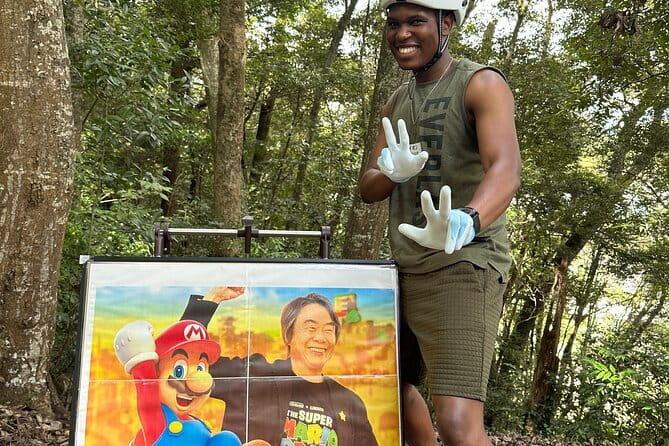
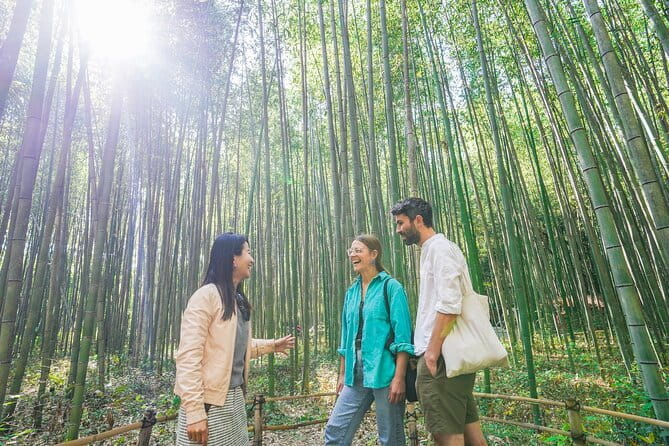
Most Kyoto visits keep you near famous temples, crowded streets, and carefully planned bus routes. This outing takes you into Nantan, in Kyoto Prefecture, where the pace is slower and the focus shifts to local roads, hills, food, and conversation.
The route is not only about cycling. You get several distinct parts in one morning or afternoon: a spiritual stop, a meal in an old house, and a Japanese sweets or shopping stop. That variety helps the five hours pass naturally.
You also ride with a guide rather than simply renting a bicycle. Maki was born and raised in the area, and the ride includes conversation through a helmet microphone. That small feature matters. You can keep moving while hearing explanations instead of stopping every few minutes to gather around a guide.
The tour is private, so your group sets the social tone. A family can stay together, and a couple or small group does not need to match the pace of strangers. At the same time, a private outing usually feels most worthwhile when everyone in your party genuinely wants to cycle.
A few more rides around Kyoto worth a look
- Explore Hidden Alleyway with a Local Expert (Morning tour)
★ 5.0 · 61 reviews - KIYOTO’s Kyoto Private E-Cycling Tour: Highlights & Hidden Gems
★ 5.0 · 48 reviews - Cycle Kyoto’s Hidden Gems & Gion Stroll
★ 5.0 · 29 reviews
Riding the hills with an electric-assist bicycle

The bicycles are electric-assist models, not fully automatic machines. You still pedal, steer, watch the road, and manage your speed. The motor helps on uphill sections, making the route more approachable for people who are new to cycling or new to electric bicycles.
Several comments from the experience point to the same practical strength: first-time riders were able to get started after a clear explanation from Maki. Another especially useful detail is the smart helmet with a built-in microphone. You can hear the guide and talk while riding, which keeps the tour friendly rather than silent.
You should still arrive ready for moderate physical activity. The tour includes hills and lasts about five hours, with time spent off the bicycle at the temple, restaurant, and final stop. You do not need to be an athlete, but this is not a purely relaxed e-bike cruise.
The route is especially appealing in spring, when cherry blossoms may be in bloom, and in the green season or autumn color season. The tour operates in changing weather conditions, so the countryside can look quite different from one season to another. Wear clothing suited to cycling and shoes that are comfortable for walking at the temple.
Kyoto Taishakuten and the 108 bells
The first major stop is Kyoto Taishakuten, a temple in the hills outside Kyoto City. The approach includes a mountain path, so this is where the ride’s gentle exercise and spiritual atmosphere meet.
The unusual feature is the set of 108 bells. You strike them one by one, with a prayer connected to each sound. In Buddhist tradition, the number 108 is associated with human worldly desires, so the bell ritual gives the visit a clear purpose rather than making it a quick photo stop.
Before reaching the temple, you also pass through a large ring for purification. It is a simple action, but it gives the stop a memorable structure: enter, walk upward, ring the bells, and pause for prayer.
The temple portion takes about two hours, making it the longest stop. That timing tells you something important about the tour. You are not racing through the site for ten minutes before jumping back on the bicycle. You have time to handle the bell ritual and take in the setting.
The admission ticket is included at no extra charge. The route up the hill and the amount of time spent walking mean you should be comfortable with uneven or sloping paths. The supplied information does not specify the exact surface or accessibility arrangements, so anyone with mobility concerns should ask the operator before booking.
Lunch at Kaeru no Oyado
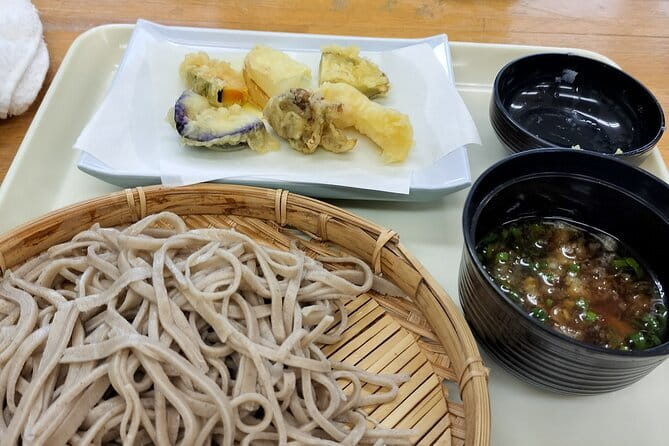
After the temple, the tour moves to the old folk house restaurant Kaeru no Oyado. The building has been renovated into a fusion-style restaurant while keeping its traditional-house character.
Lunch is made with local ingredients and is described as homemade Japanese cuisine. This is one of the tour’s strongest features for anyone who wants food connected to the place they are visiting. You are not simply stopping at an anonymous chain restaurant between attractions.
The meal is included, along with drinks and bottled mineral water. That improves the value of the $97.55 price, since you do not need to budget separately for the main meal or basic refreshments.
The stop lasts about 90 minutes. That is long enough for a proper break after the ride and temple visit. You can eat at a normal pace instead of treating lunch as a quick refueling stop.
The restaurant setting may be less predictable than a city café. A renovated folk house has atmosphere, but it may not suit someone who wants a modern dining room or a wide choice of menu items. The supplied details do not give a fixed menu, so tell the operator in advance about any dietary needs rather than assuming substitutions will be available.
Same roads, a different day in the saddle:
- Kyoto Satoyama Cycling with Lunch and English Guide
★ 5.0 · 19 reviews - Explore Hidden Alleyway with a Local Expert (Afternoon Tour)
★ 5.0 · 17 reviews - Kyoto Shogun Cycling Tour
★ 5.0 · 13 reviews - Kyoto: Higashiyama Slow Cycling Tour along the quiet waterfront
★ 5.0 · 10 reviews
Wagashi, local shopping, and the final stop
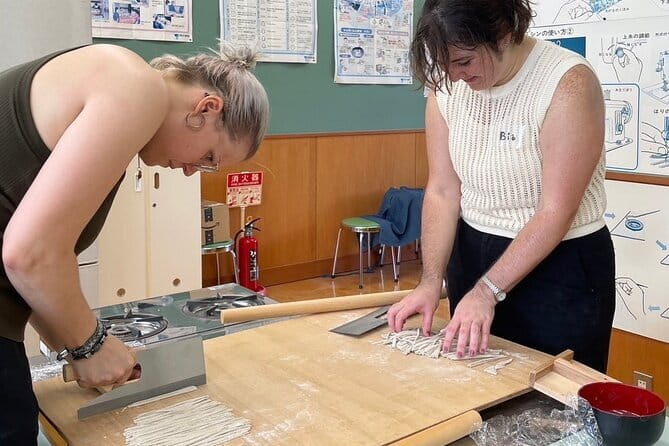
The last part of the outing takes place at Sonobe Park, with a visit to the Yatsuhashi Honpo Shinkōetsu Village store. This is a factory connected with traditional Japanese sweets.
Depending on your preference, you can take part in making wagashi or buy sweets as souvenirs. That choice makes the stop useful for two different kinds of visitors. If you like hands-on activities, the making experience adds something to the day. If you are ready to relax after several hours on a bicycle, shopping gives you an easier finish.
The broader tour description also mentions shopping at a Michino-eki store. In practical terms, expect a final local-products stop where you can look for food gifts and regional items. The exact balance between wagashi making and shopping may depend on your preference and the day’s schedule, so ask the guide what is planned when you meet.
The final stop also gives children and families a concrete activity. Temple rituals can be quiet and unfamiliar, while sweets are easy to understand and enjoy. For adults, it adds a food tradition to a day that already covers religion, rural scenery, and home cooking.
What the $97.55 price includes
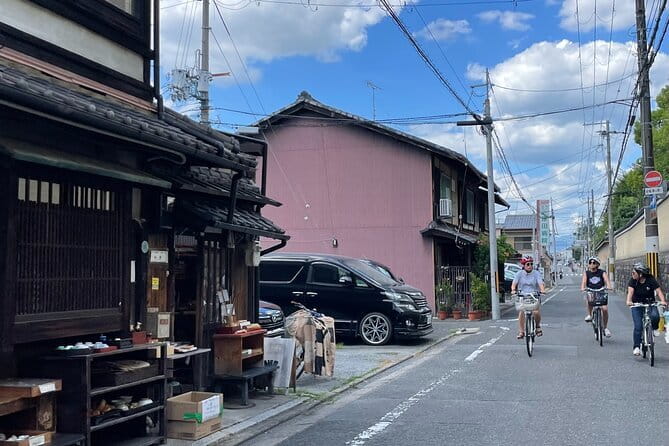
At $97.55 per person, this is not the cheapest way to see rural Kyoto. But the price covers several separate costs and services:
- Use of a bicycle
- Lunch
- Bottled mineral water
- Drinks at lunchtime
- English guidance
- A private outing for your group
- The planned temple and countryside route
The private format is the biggest value question. If you are traveling alone, the price may feel high compared with joining a larger cycling group. If you are traveling with family or friends, the cost buys a more controlled pace and a guide focused only on your party.
The electric-assist bicycle also matters. A basic bicycle rental may cost less, but it does not give you the same route support, local explanations, included meal, or help with hills. You are paying for a half-day program rather than wheels alone.
Admission at Kyoto Taishakuten is listed as free, and personal expenses are not included. Set aside extra money if you want additional sweets, souvenirs, or other purchases at the final stop.
Who will enjoy this private Kyoto outing
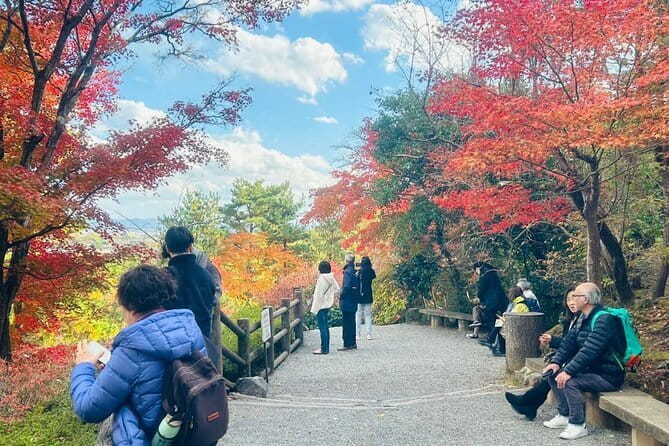
I would recommend this tour to you if you want to see a quieter side of Kyoto and enjoy several kinds of activity in one day. It suits:
- Families looking for a private outing
- First-time cyclists who want an electric-assist bicycle
- Couples who prefer countryside to crowded central streets
- Visitors interested in local food and Japanese sweets
- Active adults who can manage a five-hour program
- People who want to speak with a guide while riding
The private format is helpful for families because the group does not need to match another party’s speed or interests. The guide’s microphone makes it easier to keep children or less experienced riders involved in the conversation.
This may not suit you if you want a completely flat ride, a short bicycle session, or a flexible day with no fixed stops. It is also not the best choice for someone who dislikes hills, temple paths, or long half-day activities.
The tour is listed for Monday through Sunday from 10 a.m. to 3 p.m. It starts and ends at Sonobecho Oyama Higashimachi in Nantan, Kyoto. The meeting point is near public transportation, but the provided details do not identify a specific station or explain the transfer from central Kyoto. Check the route carefully before booking, especially if you are planning a tight same-day connection.
Weather, cancellation, and planning details
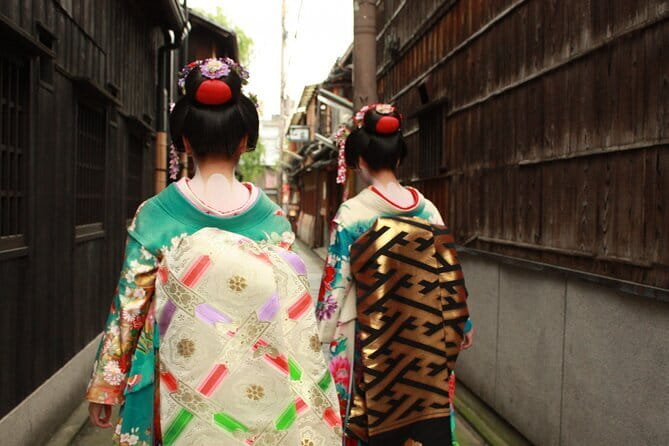
Cycling depends on the weather, and this tour requires good conditions. If poor weather causes cancellation, you can choose another date or receive a full refund.
You can cancel for a full refund up to 24 hours before the start time. Changes or cancellations inside that 24-hour window are not accepted for a refund, and the cut-off uses local time.
Confirmation is sent when you book, and the experience is offered as a mobile ticket. Keep the confirmation easy to access on your phone.
The tour runs for approximately five hours, but the listed stops already fill that period: about two hours at Kyoto Taishakuten, about 90 minutes for the restaurant stop, and about 90 minutes at the final stop. Do not plan another major attraction immediately afterward.
My booking advice for families and first-time riders
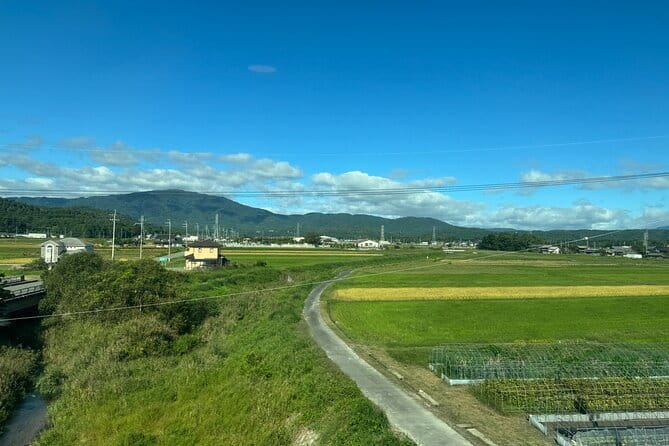
The strongest reason to book is the combination of local guiding and electric cycling. You get help with the route, explanations while riding, and a bicycle that makes the hills less intimidating. The 108-bell ritual and the old-house lunch give the day more character than a simple scenic ride.
I also like that the outing has a clear rhythm. The temple provides quiet reflection, lunch gives you a substantial pause, and the sweets stop ends the day with something practical and fun.
The main caution is location and effort. Nantan is outside the central Kyoto sightseeing zone, the starting point requires planning, and the ride still calls for moderate fitness. If your group is happy to spend half a day outdoors and can reach the meeting point without stress, the $97.55 price is reasonable for a private, guided program with bicycle use, lunch, drinks, and several activities.
Book it if you want Kyoto’s rural edge, personal guidance, and a day that mixes movement with food and culture. Skip it if your priority is central Kyoto temples, a flat route, or the lowest possible cost.
FAQ
How long does the Kyoto Satoyama Cycling tour last?
The tour lasts approximately five hours, from 10 a.m. to 3 p.m.
Where does the tour start and finish?
It starts and ends at Sonobecho Oyama Higashimachi, Nantan, Kyoto 622-0041, Japan.
Is lunch included?
Yes. Lunch is included, along with bottled mineral water and drinks for lunchtime.
Is the bicycle included?
Yes. Use of the bicycle is included in the tour price.
Is this a private tour?
Yes. Only your group participates in the activity.
What happens if bad weather cancels the tour?
You can choose a different date or receive a full refund if the activity is canceled because of poor weather.
Just added around Kyoto
- Kyoto: Higashiyama Slow Cycling Tour along the quiet waterfront★ 5.0 · 10 reviews
- City cycle (no gear change)★ 3.5 · 5 reviews
- Rent a Road Bike to Explore Kyoto and Beyond★ 5.0 · 2 reviews
- Explore Hidden Alleyway with a Local Expert (Afternoon Tour)★ 5.0 · 17 reviews
- Kyoto Shogun Cycling Tour★ 5.0 · 13 reviews
- Cycle Kyoto’s Hidden Gems & Gion Stroll★ 5.0 · 8 reviews
- Ine Funaya e-BIKE Cycling Tour★ 4.0 · 2 reviews
- Kyoto: North Kyoto Guided Cycling Tour with Lunch★ 5.0 · 5 reviews
Cycling Tours, compared.
Ninh Binh Day Trip: Hoa Lu-Trang An/Tam Coc-Mua Cave-Cycling-Boat
Read our review →
Cai Be Mekong Delta Tour: Cooking Class, Cycling & Craft Villages
Read our review →

Countryside Bike Tour from Amsterdam: Cheese, Clogs & a Windmill
Read our review →
Electric Cycling Tour of Ubud with Free Hotel Transfer and Lunch
Read our review →

Browse the lists this tour appears in