
Review · HIROSHIMA
Hiroshima in a Nutshell: Morning Bike Adventure
Hiroshima’s key sights are spread across the city, and a bicycle lets you connect them without waiting for buses or walking long blocks. This small-group ride covers Peace Memorial Park, the Atomic Bomb Dome, Hiroshima Castle, and Shukkei-en in about three to four hours, with time for history, photographs, and quiet reflection.
I like the way the tour joins Hiroshima’s difficult past with its living city. I also like the practical setup: bikes, helmets, and bottled water are included, and the route is mostly flat. The main drawback is that the tour is not ideal for children 12 and under, riders under 140 centimeters, or anyone who has not been on a bicycle recently unless you arrange an e-bike for the extra fee.
Key points at a glance
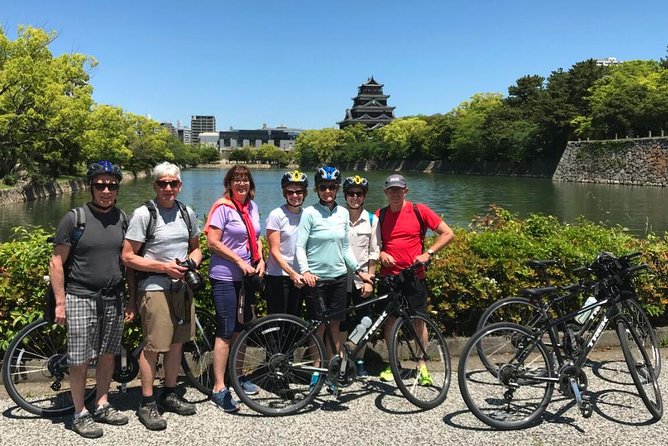
- A four-hour overview by bike: Cover four major Hiroshima sights faster than on foot and reach canal-side and backstreet areas that buses do not serve directly.
- A respectful Peace Park visit: Expect short commentary, old photographs, and quiet time around the monuments connected with the 1945 bombing.
- A small group of up to eight: The size allows the guide to adjust seats, check safety, answer questions, and keep the ride together.
- Mostly flat cycling: The route is manageable at a steady pace, though an e-bike costs an additional 2,000 yen and availability is limited.
- Several strong English-speaking guides: Awais, Melissa, James, Yuki, Amy, Levi, and Ihsan have led tours, with history and personal attention at the center of the experience.
- Useful for a short Hiroshima stay: The 10:00 a.m. start and return to the meeting point make this a practical first activity for a one- or two-day visit.
Why cycling works so well in Hiroshima
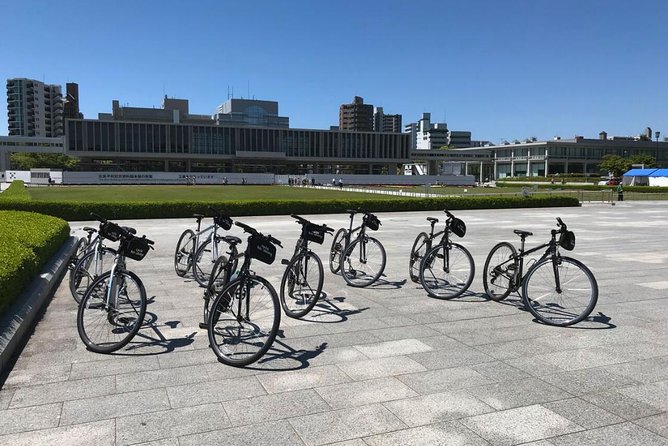
Hiroshima is easy to get around, but its main sights are not packed into one compact square. Peace Memorial Park and the Atomic Bomb Dome sit on the western side of the central city. Hiroshima Castle lies farther north, while Shukkei-en is east of the castle. On foot, that can mean a good deal of pavement between the places you came to see.
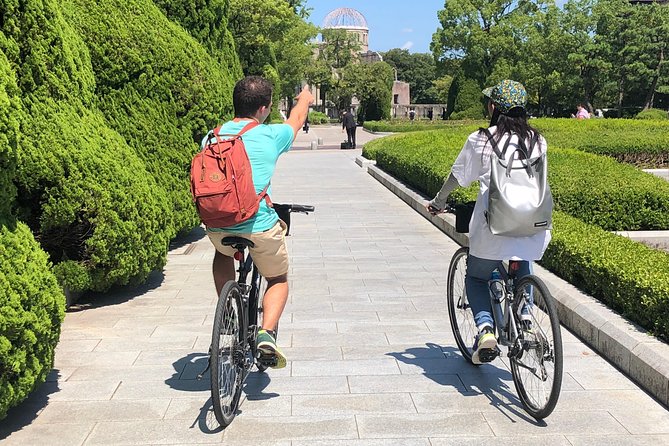
A bicycle connects these stops neatly. You can move through ordinary streets, ride beside canals, and see more of the city between the headline attractions. I like this because Hiroshima is not only a memorial destination. It is also a modern Japanese city with neighborhoods, gardens, waterways, and daily life continuing around its historic center.
The group is capped at eight people. That matters here. The guide can explain hand signals, test the bikes, adjust the seat height, and keep an eye on the group without treating everyone like part of a large procession. The route is also described as steady rather than rushed. One recorded ride covered about 6.81 miles over four hours, though your exact distance and pace may vary.
The tour begins at Cycle Hiroshima, 4-chōme-5-4 Ōtemachi, in Naka Ward, at 10:00 a.m. It ends back at the same meeting point. You receive a confirmation when booking, and the mobile ticket is convenient for a morning plan.
A few more rides around Japan worth a look
- Private-group Morning Cycling Tour in Hida-Furukawa
★ 5.0 · 105 reviews - Explore Hidden Alleyway with a Local Expert (Morning tour)
★ 5.0 · 61 reviews - Short Morning Cycling Tour in Hida
★ 5.0 · 17 reviews
Peace Memorial Park: a quiet start
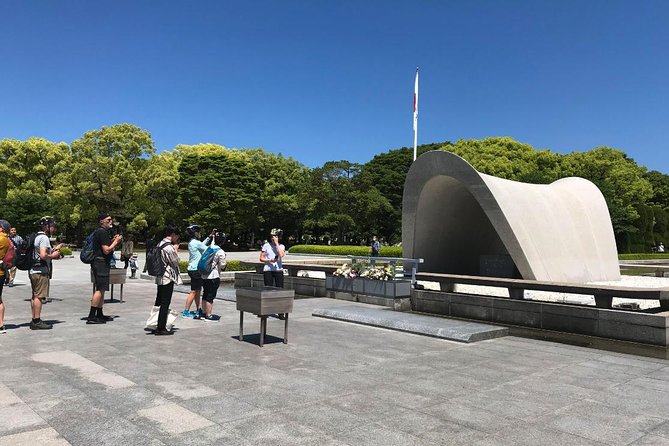
The first stop is Hiroshima Peace Memorial Park, where the ride slows down. The scheduled visit lasts about 20 minutes, with time for short commentary and old photographs showing the area before the Second World War.
This is not a stop to rush through with a camera raised. The park is designed for reflection, and the guide’s role is especially important here. A good explanation can help you understand what you are seeing without turning the visit into a string of dates and names. Guides such as Awais, Amy, Levi, and Ihsan have been praised for presenting the subject with care, detail, and a sense of balance.
The tour does not include admission to the Hiroshima Peace Memorial Museum. That is both a limitation and a useful feature. You get an introduction to the park and the history around it, then you can decide if you want to return to the museum later with more time. If the museum is a priority, do not expect this morning ride to replace a separate museum visit.
Some groups have also made origami cranes for the Children’s Peace Monument. This is not clearly promised as part of every departure, so treat it as a possible extra rather than a guaranteed activity. Still, it reflects the kind of gentle, human detail that can make a history tour feel less mechanical.
The Atomic Bomb Dome: time to pause
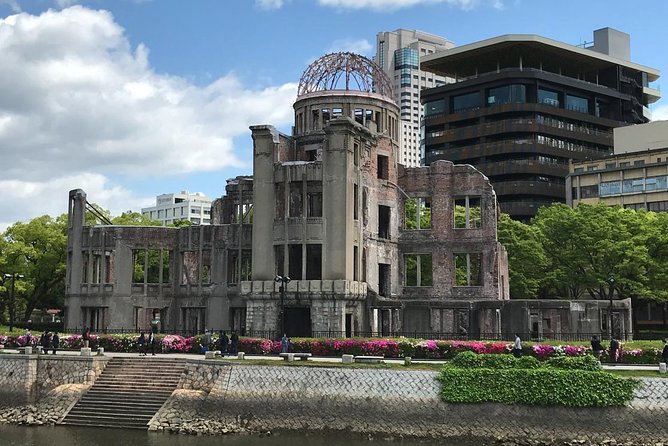
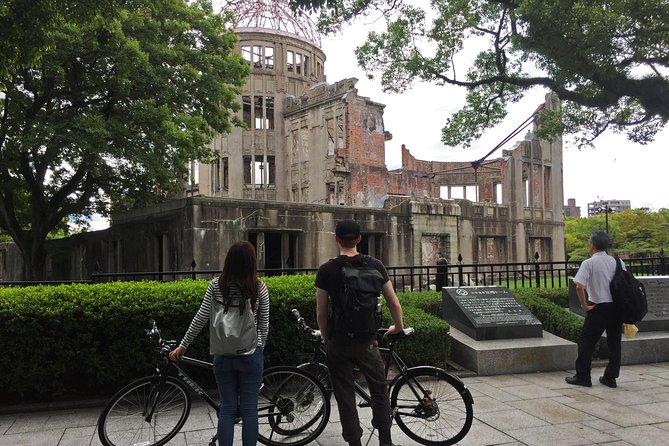
The ride continues to the Atomic Bomb Dome, with about 10 minutes at the site. This is a short stop, mainly for photographs and reflection, but its location beside the river makes it one of Hiroshima’s most direct reminders of what happened in 1945.
The guide adds context about the building and the surrounding events. You should expect the subject to be emotional. Several guides have been praised for explaining the bombing and its aftermath respectfully, while one account found some political discussion uncomfortable. That is worth knowing in advance. The tour aims to give a broad account, but any serious history of Hiroshima can touch on national responsibility, war, and conflicting memories.
The short time here is one of the tour’s trade-offs. Ten minutes is enough to see the exterior and hear an introduction. It is not enough for extended contemplation or a detailed study of the structure. If the Dome is one of your main reasons for visiting Hiroshima, you can easily return after the ride, since the tour finishes centrally.
Hiroshima Castle: gardens and a different side of the city
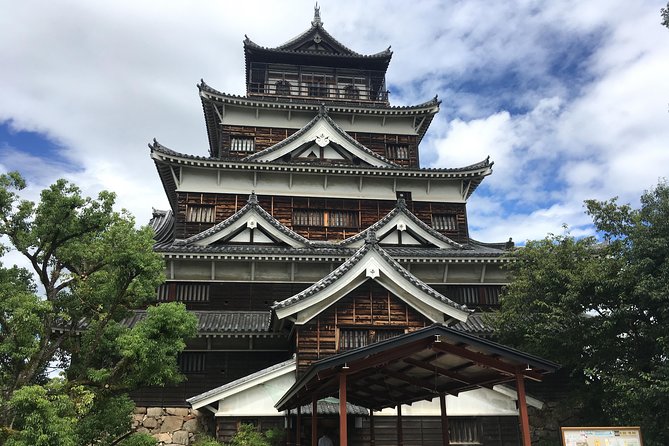
From the Peace Park area, the bicycle makes reaching Hiroshima Castle simple. The planned stop lasts around 25 minutes. You ride through the surrounding gardens, get close to the castle, and hear about its place in Hiroshima’s past.
This stop changes the tone of the morning. The Peace Park and Atomic Bomb Dome focus on the twentieth century and its destruction. The castle points you toward earlier Japanese history and the city’s roots before the war. Hiroshima Castle was destroyed in the atomic bombing and later rebuilt, so it also connects the older city with the one you see today.
The castle grounds are well suited to a bike tour because you can approach them without spending much time on transport. You should not expect a long interior visit during this schedule. The emphasis is on the grounds, views, photographs, and an introduction from the guide. If you want to study the castle museum at length, plan to return separately.
I like this part because it prevents the tour from becoming only a memorial route. You see Hiroshima as a place with layers, not just as the location of one terrible event. The gardens also offer a welcome change after the concentrated atmosphere of Peace Memorial Park.
Same roads, a different day in the saddle:
- Tokyo Great Cycling Tour
★ 5.0 · 811 reviews - Tokyo Top Highlights 3h Guided E-bike Tour
★ 5.0 · 714 reviews - Hiroshima 2hr Peace Cycling Tour with Local Guide
★ 5.0 · 321 reviews - Hiroshima: Peace Cycling Tour with Local Guide
★ 4.8 · 286 reviews
Shukkei-en: a peaceful final stop
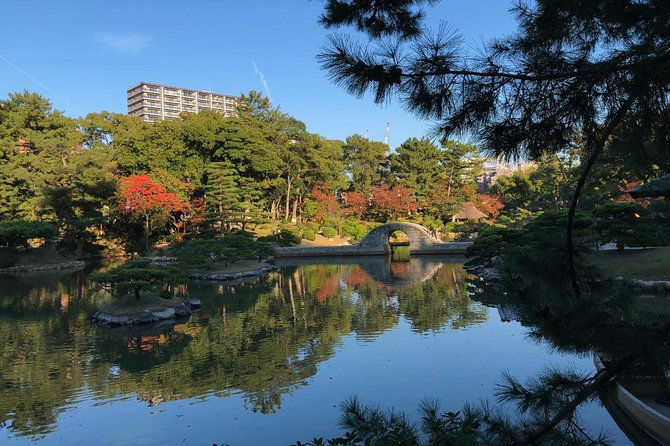
The final listed stop is Shukkei-en, a traditional Japanese garden with about 25 minutes inside. Admission is included, so you do not need to budget an extra entrance fee here.
The garden gives you a slower finish. You can look at the arrangement of water, plants, paths, and small scenic views while the guide explains how Japanese gardens use balance and carefully planned composition. The stop is brief, so you will not have time to wander every path at leisure, but it gives you a clear introduction to the garden’s design.
This is one of the tour’s most useful contrasts. Hiroshima’s history is heavy, and the garden does not erase that. It gives you a quiet place to process the morning while seeing another part of Japanese culture. If you enjoy gardens, you may want to return later for a longer visit.
The guides make the difference
The experience depends heavily on the person leading it. The guides named in the tour feedback include Awais, Melissa, James, Yuki, Amy, Levi, and Ihsan. You may not receive a particular guide, but the repeated praise points to the qualities you should expect: clear English, strong knowledge of local history, careful cycling instruction, and a friendly manner.
Awais has been described as especially generous with explanations and photographs. James has been praised for setting out safety signals, checking the bicycles, and helping a rider who was worried about making a train after a delay. Melissa has been noted for energy, warmth, and keeping a family engaged. Levi reportedly began with a history lesson before the group set off, while Yuki received praise for taking time at the main sites.
These individual styles can vary. One guide may offer constant explanation, while another may leave more room for questions and quiet observation. If you want a tour packed with historical detail, this appears to be a good match. If you prefer a silent scenic ride with only occasional commentary, it may feel talk-heavy.
The guides also seem willing to adapt the pace. The route is not presented as a race, and one group had its tour extended because the guide wanted to finish the explanations properly. That is a plus, though you should avoid scheduling a tight onward connection immediately afterward.
Bike quality, safety, and physical effort
The standard bicycle and helmet are included. The bikes have been described as being in good condition, and guides help with seat adjustments and basic setup before the ride. Safety hand signals are explained at the beginning, which is important when a small group is moving through city streets.
The route is mostly flat. You do not need to be a serious cyclist, but you should be comfortable riding for several hours with repeated stops and starts. The tour includes riding between sights, not just a short spin around one park.
An e-bike is available for an extra 2,000 yen, but the number of e-bikes is limited. Arrange this before the tour rather than assuming one will be waiting. I would consider it if you have not ridden a standard bicycle for a long time, are concerned about the heat, or simply want to conserve energy for the history stops.
The activity is not recommended for children 12 and under, and it is not possible for riders under 140 centimeters. Most people can participate, but the height and age limits are firm practical points. Bottled water is supplied, though you should still dress for the weather and bring anything else you need for a warm morning.
Rain can change the plan. The official policy allows the operator to cancel for poor weather, offering another date or a full refund. A past departure continued as a walking tour in rainy conditions, but you should not count on that happening. The experience is weather-dependent, and cycling in wet conditions may not be offered.
Is $72.96 a fair price?
At $72.96 per person, this is not the cheapest way to move around Hiroshima. You could visit the public spaces independently for much less, especially if you are happy to use public transport and research the history yourself.
The value comes from combining several services in one morning: a bicycle, helmet, bottled water, an English-speaking guide, entry to Shukkei-en, safety support, and a planned route connecting sights that are spread across the city. For a first visit, that can save time and reduce the work of figuring out how to link the Peace Park, castle, and garden.
The price makes the most sense if you have only one or two days in Hiroshima, arrive by cruise ship for the day, or want a clear introduction before exploring independently. It is less compelling if you already know the city, plan to spend a full day at the Peace Memorial Museum, or dislike guided commentary.
With a 4.9 rating from 524 reviews and a 98 percent recommendation rate, the experience has a strong record. Those figures do not remove the need to choose carefully. Your enjoyment will depend on your comfort with bicycles, the weather, and how much historical explanation you want.
Who should book this morning ride?
I would choose this tour for a first visit, particularly if you want to see Hiroshima’s main sights before deciding where to spend more time. It suits solo visitors, couples, families with older children, and people arriving with a limited schedule.
It is also a good choice for anyone who finds walking tours too slow but still wants close contact with the city. The bike lets you cover ground without sealing you inside a vehicle. You can see canals, streets, gardens, and the spaces between monuments.
I would think twice if you have balance problems, do not normally cycle, are under the height requirement, or need a guaranteed finish by a precise time. I would also avoid booking it as your only Hiroshima experience if you want a full museum visit. Use the ride as an introduction, then return to the places that deserve more time.
Practical details before you reserve
The tour starts at 10:00 a.m. at Cycle Hiroshima and returns to that meeting point. Hotel pickup and drop-off are not included, so allow time to reach the start.
Alcoholic drinks are not included, though that is unlikely to matter during a morning cycling activity. The mobile ticket makes the booking simple, and confirmation is provided at the time of booking.
Free cancellation is available up to 24 hours before the start time for a full refund. Changes or cancellations inside that 24-hour window are not accepted for a refund. The operator may also cancel if weather is poor or the minimum number of participants is not met, in which case you can choose another date or receive a full refund.
Should you book it?
Book this tour if you want a fast, thoughtful introduction to Hiroshima and are comfortable on a bicycle. The route covers the city’s most important memorial sites, adds Hiroshima Castle and Shukkei-en, and gives you useful historical context without requiring a full day.
Skip it if you want unhurried museum time, cannot ride comfortably, or need a fixed end time for a train or flight. For everyone else, the combination of a mostly flat route, a small group, careful guides, and included equipment makes $72.96 reasonable, especially during a short stay.
FAQ
How long does the Hiroshima bike tour last?
The activity lasts approximately three to four hours. The stated start time is 10:00 a.m., and the tour returns to the meeting point.
Where does the tour begin and end?
It begins and ends at Cycle Hiroshima, 4-chōme-5-4 Ōtemachi, Naka Ward, Hiroshima, 730-0051, Japan.
What sights are included?
The route includes Hiroshima Peace Memorial Park, the Atomic Bomb Dome, Hiroshima Castle, and Shukkei-en Garden.
Are bicycles and helmets provided?
Yes. Bike rental and a helmet are included, along with bottled water.
Is admission to Shukkei-en included?
Yes. Admission to Shukkei-en Garden is included in the tour price.
Can children join the tour?
The activity is not recommended for children aged 12 and under. Riders under 140 centimeters cannot participate.
Are e-bikes available?
E-bikes may be available for an additional 2,000 yen. Options are limited, so you should arrange one in advance.
What happens if the weather is bad?
The activity may be canceled because of poor weather. You will then be offered an alternative date or a full refund.
Just added around Japan
- Slow Cycling Tour at Uji’s Matcha Green Tea Fields and Heritage★ 5.0 · 25 reviews
- Tokyo Non-Touristy Local Private E-bike Cycling Tour from Asakusa★ 5.0 · 2 reviews
- Little Adventure with Cycling in Tokyo No. 1 Crystal Clear River★ 5.0 · 6 reviews
- Tokyo Night Bike Tour: From Shibuya to Tokyo Tower via Roppongi★ 5.0 · 29 reviews
- 2.5 Hour-Guided Cycle Tour in the Central Tokyo★ 5.0 · 25 reviews
- Tokushima & Mt. Bizan BROMPTON Slow Cycling Tour★ 5.0 · 5 reviews
- Tokyo’s hidden nature cycling tour – Okutama Historical Road Tour★ 5.0 · 6 reviews
- Wakimachi BROMPTON Slow Cycling Tour★ 5.0 · 5 reviews
Cycling Tours, compared.
Ninh Binh Day Trip: Hoa Lu-Trang An/Tam Coc-Mua Cave-Cycling-Boat
Read our review →
Cai Be Mekong Delta Tour: Cooking Class, Cycling & Craft Villages
Read our review →
Countryside Bike Tour from Amsterdam: Cheese, Clogs & a Windmill
Read our review →
Electric Cycling Tour of Ubud with Free Hotel Transfer and Lunch
Read our review →

Browse the lists this tour appears in