
Review · JAPAN
Bike Tour in Fukuoka City【Bike is Life】Fukuoka ” Hakata ” Ride
Fukuoka makes the most sense from a bicycle seat. This tour connects the city’s two old identities: Hakata, the merchant port, and Fukuoka, the castle town built across the Naka River. You ride through places a car cannot reach easily, including castle walls, park paths, and narrow local lanes.
I like the chance to see Fukuoka Castle Remains and Ohori Park in one outing, and I like that the pace can be adjusted. Guide Haruka has been praised for keeping older riders comfortable, with regular pauses and clear safety guidance. The main drawback is distance: a reported route of about 17 kilometers is manageable at a relaxed pace, but it is still a serious afternoon ride.
Key points to know before booking
- Two sides of Fukuoka in one ride: Visit the old port town of Hakata and the castle district of Fukuoka.
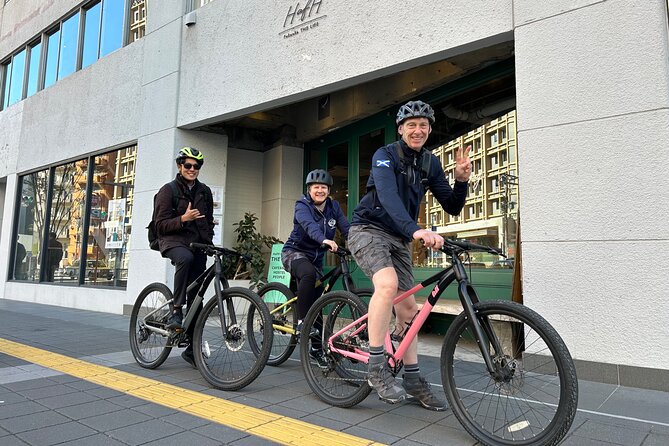
- About 17 kilometers on two wheels: The ride lasts around three and a half hours, with stops and breaks.
- Haruka and Haru guide the route: English support is available, and an interpreter may join the tour.
- The best scenery comes at the castle ruins and Ohori Park: These are the most rewarding sections for many riders.
- Small groups keep things personal: The maximum group size is 10 people, and the tour may run even with only one booking.
- The price includes the basics: Bicycle rental, insurance, drinks, and snacks are covered in the $72.26 cost.
Why a bicycle is a smart way to see Fukuoka
Fukuoka is large enough that walking between its historic districts can eat up much of your day, but compact enough for a bicycle to link them neatly. This tour uses that advantage well. Instead of seeing one temple or one park in isolation, you get a sense of how Hakata and Fukuoka grew as separate communities.
Hakata developed as one of Japan’s oldest international ports. It was a center for trade and diplomacy, and Japanese envoys once departed from this area for Sui and Tang China. Across the Naka River, Fukuoka grew around the castle built by Kuroda Nagamasa, a warlord of the Sengoku period, with help from his father Josui.
That contrast gives the ride a useful story. Hakata is tied to merchants, religious sites, and overseas contact. Fukuoka is tied to military power, moats, stone walls, and a planned castle town. You are not simply checking off attractions. You are seeing why the modern city has two names and two historical personalities.
The tour runs from 1:00 to 4:30 p.m., a practical time if you want a relaxed morning before riding. The route is active but not presented as a race. The guide sets the pace, keeps the group together, and builds in rest stops. That matters on city streets, where comfort and awareness are more important than speed.
A few more rides around Japan worth a look
- Tokyo Great Cycling Tour
★ 5.0 · 811 reviews - Tokyo Top Highlights 3h Guided E-bike Tour
★ 5.0 · 714 reviews - Hiroshima in a Nutshell: Morning Bike Adventure
★ 5.0 · 524 reviews
Starting at Kushida Shrine Station
The meeting point is at Kushida Shrine Station, at 7 Gionmachi in Hakata Ward. The activity ends back at the same point, which makes the tour easy to fit into a day based in central Fukuoka.
You should allow time to find the meeting point. One rider had trouble locating it, though guide Haruka waited patiently. That is useful practical advice: do not cut it close, especially if you are unfamiliar with Hakata’s streets or the station area.
The tour is offered in Japanese and English. Haruka, also called Haru in some tour details, has been praised for his friendly manner, clear local explanations, and attention to road safety. English ability may vary depending on the guide and the use of an interpreter, so this is best viewed as an English-supported tour rather than a formal lecture in perfect English.
The group limit is 10 people. That is small enough for the guide to notice if someone is falling behind or needs a break. In some cases, the tour has gone ahead with only one person or one family booked, which is a real advantage if you prefer a personal experience.
Fukuoka Castle Remains, stone walls and old power
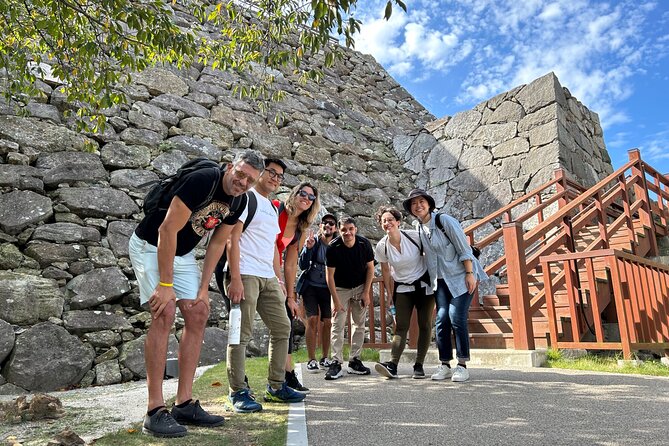
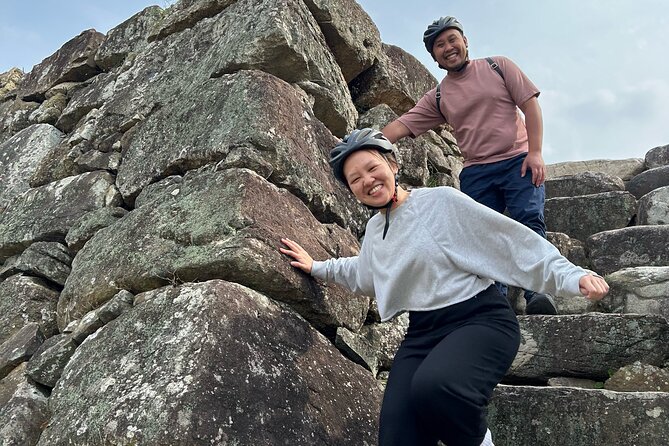
The first major stop is Fukuoka Castle Remains, beginning at Uenobashi Imperial Gate, once used as the main entrance to the castle. From there, you ride toward the castle tower area while viewing stone walls that extend for more than three kilometers in total.
There is no admission charge for this stop. The appeal is not a restored palace or a grand interior. It is the scale of the old fortification, the shape of the walls, and the chance to understand how the castle town was organized.
A bicycle works especially well here. You can cover more ground than on foot and view the stonework in sequence instead of seeing one isolated section. The route also gives your guide room to explain the connection between the castle, the city, and Kuroda Nagamasa’s role in Fukuoka’s development.
The castle ruins are one of the strongest parts of the tour. The cycling itself adds something, since you are not only stopping for a photograph. You move through the former castle area and get a better sense of its size.
The tradeoff is that ruins require imagination. If you want a fully reconstructed castle with furnished rooms, this will not provide it. You are coming for walls, gates, open space, and historical context.
Ohori Park, a moat turned into a city escape
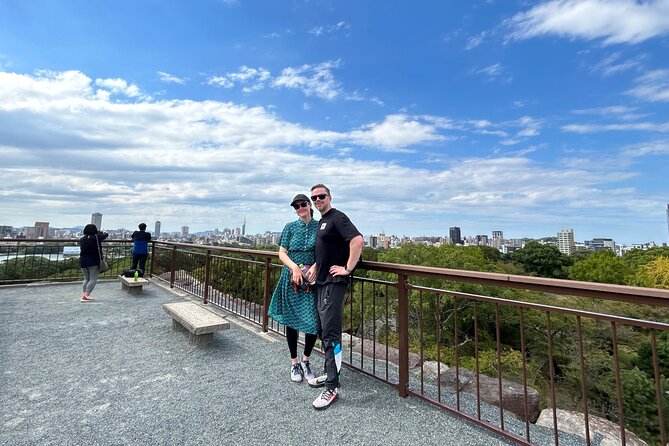
Next comes Ohori Park, once the outer moat of Fukuoka Castle. The tour includes cycling through the park and a short break of about 15 minutes.
This is likely the easiest section of the ride. The park gives you a change from city streets and a calmer place to pause. A café break with a sweet treat has been part of the experience, along with drinks and snacks included in the tour price. The exact food may vary, so do not book this as a full meal.
Ohori Park also shows how old defensive infrastructure can become part of daily city life. What once helped protect the castle now provides a pleasant public setting. The connection between moat and park is much clearer when your guide points it out while you are there.
Many riders pick this as a highlight, and I can see why. The castle ruins provide the historical weight, while Ohori Park gives the ride breathing room. If you are worried that 17 kilometers sounds too demanding, this rest stop helps break the afternoon into comfortable sections.
Still, the park break is short. You will not have time for a long café visit or a full circuit on foot. The point is to rest, take in the setting, and continue.
Same roads, a different day in the saddle:
- Hiroshima 2hr Peace Cycling Tour with Local Guide
★ 5.0 · 321 reviews - Hiroshima: Peace Cycling Tour with Local Guide
★ 4.8 · 286 reviews - One-Day Osaka Bike Adventure: 5–6 Hours
★ 5.0 · 246 reviews - Eat, Drink & Cycle: Osaka Foodie Bike Tour
★ 5.0 · 224 reviews
Shofuku-ji Temple and the story of Zen tea
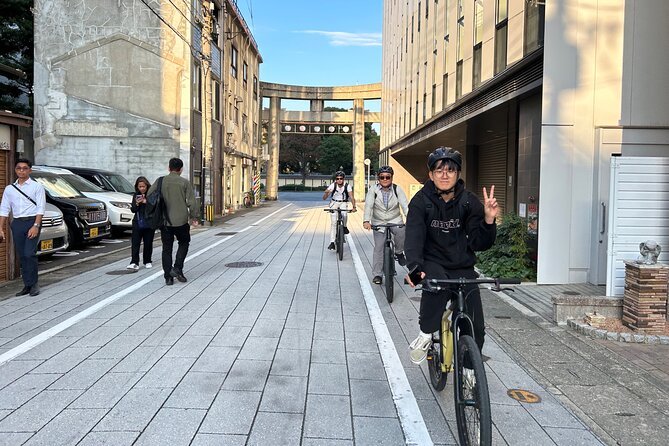
The route then crosses into another side of Fukuoka’s past at Shofuku-ji Temple, described as Japan’s first Zen temple and the birthplace of Japanese tea. The visit lasts about 15 minutes and has no separate admission charge.
This stop adds religious and cultural depth to the route. After the military story of the castle, Shofuku-ji shifts attention to Zen practice, temple life, and the cultural links that came through Hakata. It is a useful reminder that the port was not only a place for goods. Ideas, customs, and religious traditions also moved through it.
Fifteen minutes is enough for a focused visit and an explanation from the guide, but not for a long temple stay. You will want to listen closely because the stop is brief. The temple is best treated as one part of a larger story rather than a stand-alone sightseeing visit.
The bicycle also helps here. You can reach a historic religious site, spend a short period looking around, and then continue without losing a large part of the afternoon to transport or walking time.
Kushida Shrine, Hakata’s spiritual center
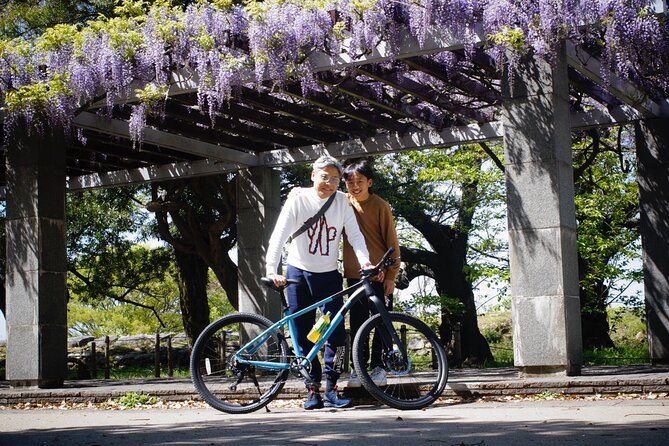
The final listed stop is Kushida Shrine, where you pause to pray for safety. The shrine is regarded as a major deity of Hakata and is linked with the city’s religious life.
The stop lasts about five minutes, so expect a quick visit rather than a long ceremonial experience. That short pause fits the rhythm of the tour: ride, learn, stop, and move on.
Because the tour begins and ends near Kushida Shrine Station, the shrine also gives the afternoon a tidy sense of completion. You finish where the old Hakata story began, after seeing how the port district connects with the castle town across the river.
For first-time visitors, this is a useful introduction to local customs. You are not expected to spend a long time at every site. Instead, you get a basic orientation and can return later if one place catches your interest.
What the cycling feels like on the route
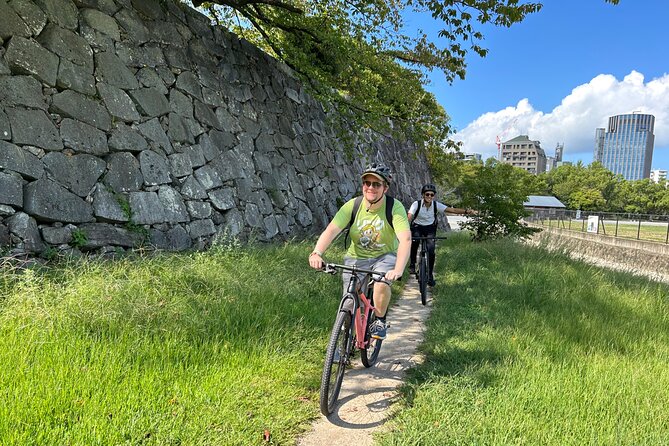
The published duration is about three hours and 30 minutes, while one account of the ride puts the total distance at approximately 17 kilometers. That is a good amount of ground for an urban bicycle outing.
The pace is described as relaxed, with breaks at the main sights. Haruka has adjusted the speed for senior riders and made sure the group felt safe on windy streets and narrow lanes. That suggests a tour built around control and sightseeing, not athletic performance.
You should still be comfortable riding a bicycle for several hours. The route includes city streets, paths, and areas where you need to pay attention to traffic and other road users. If you rarely cycle or feel nervous in an urban setting, tell the guide at the start so the pace and spacing can work for you.
The bicycles let you reach local paths and riverside areas that are awkward by car. You also get a more direct feel for the city’s air, changing seasons, and street-level details. In spring, for example, the route has included cherry blossoms, adding a seasonal touch that a bus ride would miss.
The tour supplies a bicycle, insurance, drinks, and snacks. That makes the price easier to assess, since you are not paying separately for a rental or basic refreshments. The $72.26 cost is not the cheapest way to see Fukuoka, but it is reasonable if you value a guide, a planned route, safety support, and access to several districts in one afternoon.
Guides, language, and group size
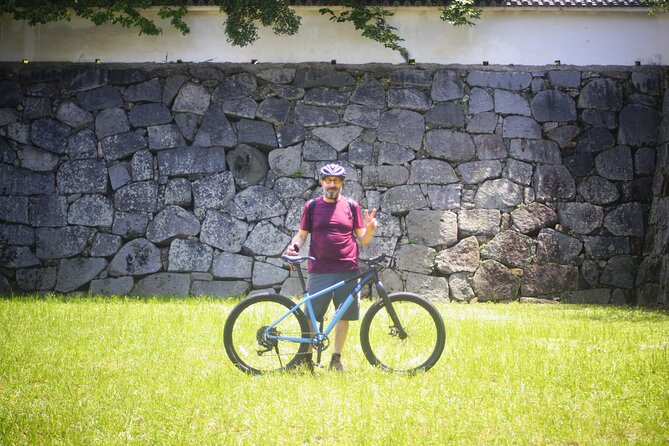
Guide Haruka is the name most closely associated with this experience. He has been described as patient with late arrivals, attentive to senior riders, funny, friendly, and careful about keeping the group together. Those are the traits I would care about most on a bicycle tour.
A separate interpreter may also take part. English support has been described as good enough for explanations, though not necessarily polished in every moment. The tour is officially offered in Japanese and English.
The maximum group size is 10. A small group makes it easier to ask questions and hear the guide at each stop. It also reduces the chance of a long delay when crossing streets or regrouping.
One unusual benefit is that the tour may still operate with just one person or one family booked. That can make the experience feel more like a private outing without a private-tour price. It is not guaranteed, but the operator has shown flexibility on this point.
Who should book this ride?
I would recommend it to you if you want an overview of Fukuoka before exploring the city on your own. The route gives you enough context to decide where to return later, especially around the castle ruins, Ohori Park, Shofuku-ji, and Kushida Shrine.
It also suits families with older teenagers, couples, solo riders, and active adults who prefer seeing a city in motion. The minimum age is 16, and the stated height requirement is over 145 centimeters. The booking information also asks if you are over 140 centimeters, so confirm the current requirement before paying if height is a concern.
This is less suitable if you want a slow walking tour with long visits inside each attraction. It is also not the right choice if you dislike city cycling, cannot ride comfortably for several hours, or want a food-focused tour. Ramen may appear in the wider experience of the city, but this is primarily a history and cycling outing.
The ride requires good weather. If poor weather cancels it, you are offered another date or a full refund. You can cancel for a full refund up to 24 hours before the start time, but changes or cancellations inside that window are not accepted.
Should you book the Fukuoka Hakata Ride?
Book this tour if you want to cover a lot of Fukuoka without spending the day underground or on foot. Its strongest combination is the castle ruins, Ohori Park, and a calm cycling pace, supported by a guide who pays attention to safety and comfort.
Skip it if 17 kilometers sounds tiring or if you prefer detailed visits at just one or two sites. For most reasonably active visitors, though, this is a useful first afternoon in Fukuoka. You get the merchant town, the castle town, a Zen temple, a major shrine, and a better sense of how the city fits together.
FAQ
Where does the Fukuoka bicycle tour begin?
The tour begins at Kushida Shrine Station, at 7 Gionmachi in Hakata Ward, Fukuoka.
Where does the tour finish?
The activity ends back at the meeting point near Kushida Shrine Station.
What time does the tour start?
The start time is 1:00 p.m., and the activity lasts approximately three hours and 30 minutes.
How far does the bicycle tour go?
The route is described as approximately 17 kilometers in one account of the experience.
What places does the tour visit?
The route includes Fukuoka Castle Remains, Ohori Park, Shofuku-ji Temple, and Kushida Shrine.
Is bicycle rental included?
Yes. The price includes bicycle rental, insurance, drinks, and snacks.
Is the tour offered in English?
Yes. The tour is offered in Japanese and English. An interpreter may also be part of the guiding team.
How many people can join the tour?
The maximum group size is 10 people.
What is the minimum age and height?
The stated requirement is 16 years of age or older and over 145 centimeters tall. The booking information also asks if you are over 140 centimeters, so confirm the current height rule if needed.
What happens if the weather is poor?
The experience requires good weather. If it is canceled because of poor weather, you can choose another date or receive a full refund.
Just added around Japan
- Slow Cycling Tour at Uji’s Matcha Green Tea Fields and Heritage★ 5.0 · 25 reviews
- Tokyo Non-Touristy Local Private E-bike Cycling Tour from Asakusa★ 5.0 · 2 reviews
- Little Adventure with Cycling in Tokyo No. 1 Crystal Clear River★ 5.0 · 6 reviews
- Tokyo Night Bike Tour: From Shibuya to Tokyo Tower via Roppongi★ 5.0 · 29 reviews
- 2.5 Hour-Guided Cycle Tour in the Central Tokyo★ 5.0 · 25 reviews
- Tokushima & Mt. Bizan BROMPTON Slow Cycling Tour★ 5.0 · 5 reviews
- Tokyo’s hidden nature cycling tour – Okutama Historical Road Tour★ 5.0 · 6 reviews
- Wakimachi BROMPTON Slow Cycling Tour★ 5.0 · 5 reviews
Cycling Tours, compared.
Ninh Binh Day Trip: Hoa Lu-Trang An/Tam Coc-Mua Cave-Cycling-Boat
Read our review →
Cai Be Mekong Delta Tour: Cooking Class, Cycling & Craft Villages
Read our review →

Countryside Bike Tour from Amsterdam: Cheese, Clogs & a Windmill
Read our review →
Electric Cycling Tour of Ubud with Free Hotel Transfer and Lunch
Read our review →

Browse the lists this tour appears in