
Review · TOKYO
2.5 Hour-Guided Cycle Tour in the Central Tokyo
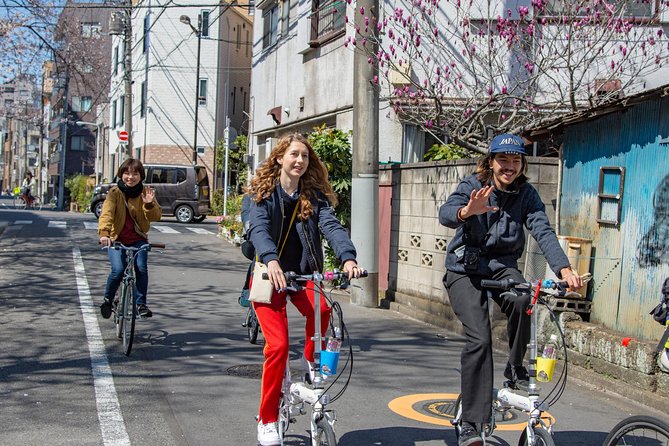
Tokyo’s best cycling here is not about racing between famous sights. It is about seeing the city at street level: quiet residential lanes, the Sumida River, small temples, neighborhood shops, and Tokyo Skytree appearing between buildings. Guide Takeshi leads a small private group from Hikifune Station, using folding bikes that suit riders from 140 to 180 centimeters tall.
I like the gentle pace, which leaves time to stop, look around, and take photos rather than simply count landmarks. I also like the mix of major sights and ordinary neighborhoods, from Senso-ji Temple to Kyojima Minami Park. The main consideration is that this is a compact bike tour, so you get a useful taste of eastern Tokyo rather than a complete city tour, and the folding bikes may feel small to taller riders.
Key points
- Quiet Tokyo by bicycle: Ride along the Sumida River and through residential streets away from the main tourist routes.
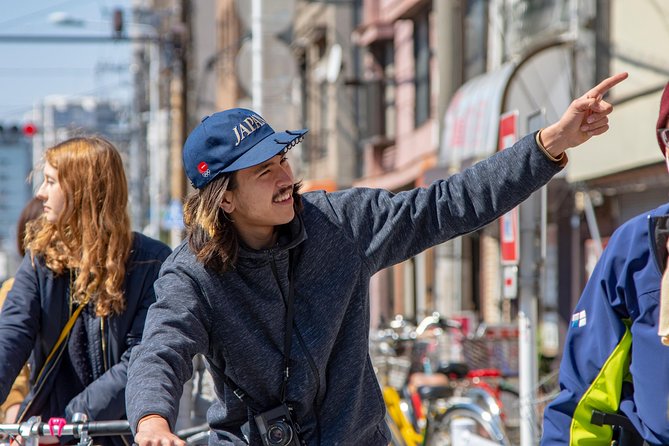
- Takeshi as your guide: Expect local explanations, safety-minded riding, and help with photos.
- A useful mix of sights: See Honryuin Matsuchiyama Shoden, Imado Shrine, Senso-ji, a candy-making shop, and Kyojima Minami Park.
- Easy, moderate outing: The ride lasts about 2.5 hours and is suited to recreational cyclists, including families with older children.
- Small private group: The maximum is six people, with group discounts available.
- Plan for the bike size: Folding bikes have 14 to 20 inch wheels and suit riders between 140 and 180 centimeters tall.
Starting at Hikifune Station in eastern Tokyo
The tour begins at the Tokyo Backstreets Bike Tour office near Hikifune Station in Sumida City. The meeting address is 2-chome 24-14 Higashimukojima, inside the Synapse shared office. Since the start point is near public transportation, you do not need to make your way to a major sightseeing district before riding.
This part of Tokyo is a useful starting point because it feels more residential than the central areas most first-time visitors see. You are already close to the Sumida River, Tokyo Skytree, Asakusa, and the neighborhood streets that give the ride its character.
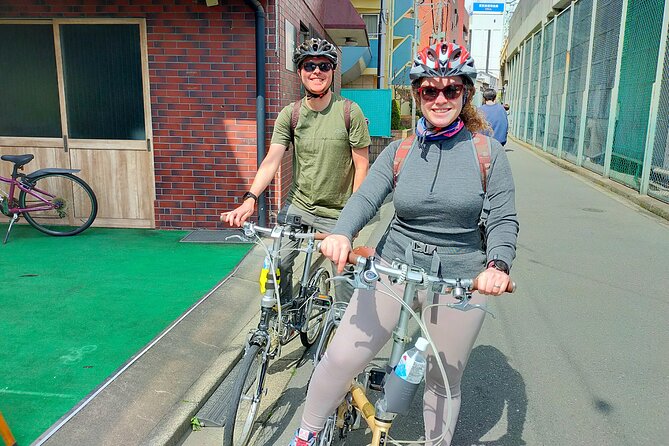
Takeshi provides a helmet, and the tour is designed for a small group of no more than six people. That size matters on city streets. You can usually hear instructions, stay closer together, and ask questions without interrupting a large tour.
The bikes are folding models with 14 to 20 inch wheels. They are intended for people between 140 and 180 centimeters tall. If you are taller than 180 centimeters, tell the operator in advance. A tandem bike can also be requested, but you need to ask at least three days before your chosen date.
A few more rides around Tokyo worth a look
- Tokyo Great Cycling Tour
★ 5.0 · 811 reviews - Tokyo Top Highlights 3h Guided E-bike Tour
★ 5.0 · 714 reviews - Tokyo West-Side Cycling & Food Tour
★ 5.0 · 214 reviews
Riding beside the Sumida River
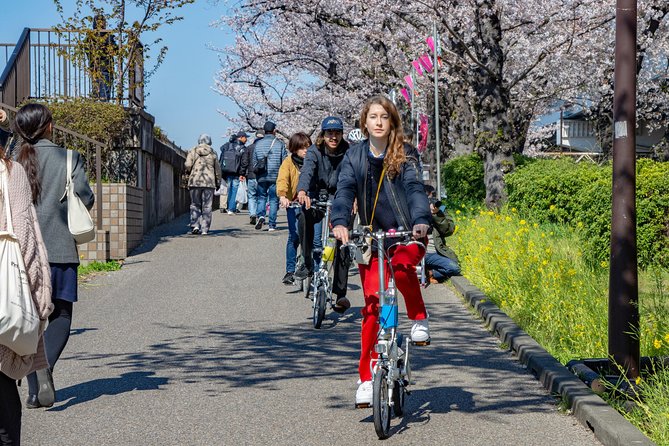
One of the first appealing sections is the ride along the Sumida River. The route is especially attractive in spring, when cherry trees flower along the riverbank. Even outside blossom season, the river offers a break from traffic and gives you a clear sense of how water shapes this part of Tokyo.
A bicycle is useful here because you can cover more ground than on foot while still moving slowly enough to notice the details. You are not sealed inside a train or moving through the city at car speed. The route lets you shift between river views, side streets, and temple grounds in a short period.
The ride is described as gentle rather than strenuous. That makes it a good fit if you want some activity but do not want an athletic excursion. Families have used it with children aged 13 and 16, and the short duration leaves the rest of your day open.
Still, this is a city ride, not a traffic-free park circuit. You should be comfortable riding a bicycle, following a guide, and stopping when instructed. A cautious rider can ask about the pace before setting out. Takeshi has been praised for keeping safety in mind, including during wet and cold conditions.
Honryuin Matsuchiyama Shoden and its unusual symbols
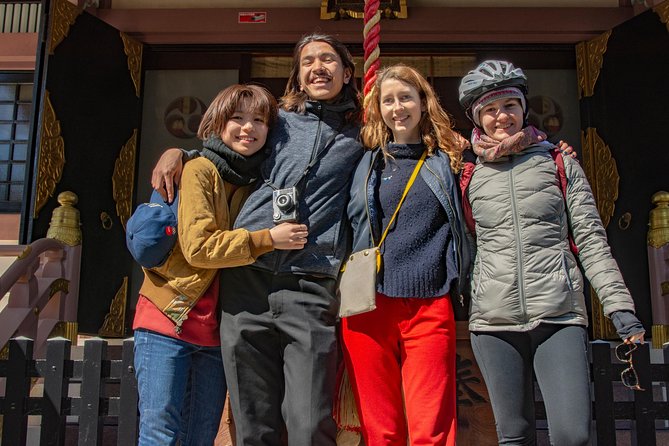
The first temple stop is Honryuin Matsuchiyama Shoden, a temple connected with Senso-ji and founded in 595. You have about 20 minutes here, with no admission charge.
This temple has an unusual visual detail: images of daikon, the Japanese radish, and small pouches appear around the grounds. The daikon represents the human mind caught in deep ignorance, while the pouch is associated with blessings and material well-being. You do not need to be an expert in Buddhist symbolism to enjoy the stop. The objects give Takeshi something specific to explain, and they make this temple feel distinct from a quick pass through a standard religious site.
The short visit also sets the tone for the ride. You are not being taken only to Tokyo’s biggest names. You are given time in quieter religious places, where the surroundings are more subdued and the visit feels less like a photo checklist.
Admission is free, but this does not mean the stop is empty of interest. It is the kind of place where a guide adds real value because a few symbols and details can otherwise pass unnoticed.
Imado Shrine, cats, and the search for good fortune
The ride continues to Imado Shrine, founded in 1063. The stop lasts about 15 minutes and is also free.
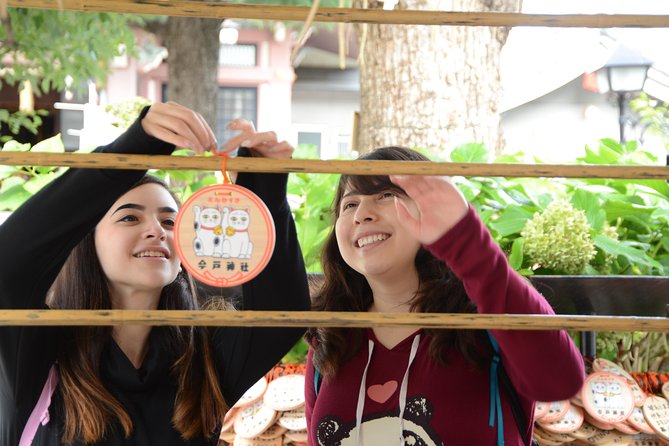
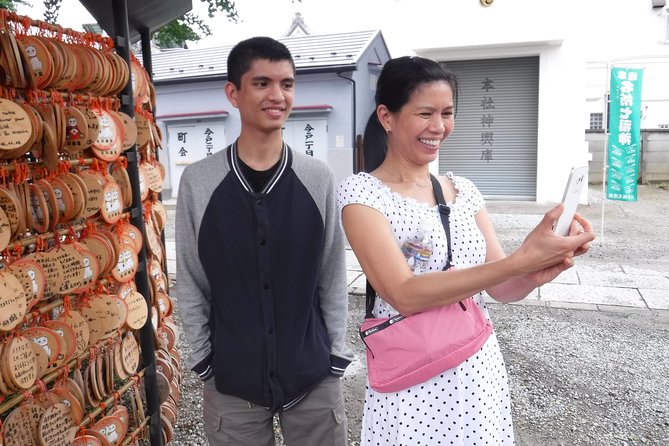
Imado is known as a power spot, a sacred place associated with wishes for love and marriage. That gives this visit a different mood from Honryuin Matsuchiyama. The first temple focuses on religious symbolism and reflection, while Imado connects more directly with personal hopes and good fortune.
The stop is brief, so you should think of it as a focused introduction rather than a long shrine visit. You will have enough time to look around and hear the reason people come here, but not an extended cultural lecture. That fits the overall rhythm of the tour, which alternates short stops with easy cycling.
I like this part of the route because it shows how religious places remain part of daily urban life. They are not isolated museum pieces. They sit among homes, roads, and local routines, and a bicycle makes that relationship easier to see.
Same roads, a different day in the saddle:
- Small Group Cycling Tour in Tokyo
★ 5.0 · 184 reviews - 3-Hour Tokyo Private E-Bike Tour Starting from Your Hotel
★ 5.0 · 117 reviews - Tokyo Bike Tour: Shibuya & Hidden Tokyo
★ 5.0 · 53 reviews - Tokyo: West-Side Cycling and Food Tour with Guide
★ 5.0 · 37 reviews
Senso-ji with time to park and walk
Senso-ji Temple is the major sight on the route. The bikes are parked nearby, and you spend about 30 minutes walking through the temple area. Admission is free.
Senso-ji can be one of Tokyo’s busiest attractions, so do not expect the same quiet feeling found at the smaller temple and shrine. Its value here is that you arrive by bicycle after seeing the less familiar side of Asakusa. The contrast helps you understand the district. You get the famous temple, but you also see how it fits into the surrounding streets.
Thirty minutes is enough for a first look, a few photographs, and some time around the grounds. It is not enough for every corner of the wider Asakusa area. If Senso-ji is your main priority, you may want to return later on foot for a longer visit.
The bike makes the stop practical. You do not have to spend the whole morning or afternoon walking between the river, temples, and Asakusa. You see the major landmark, then continue into areas that many short sightseeing routes skip.
Watching traditional candy take shape
The Asakusa Amezaiku Ameshin stop adds a hands-on craft element to the ride. This is a traditional Japanese candy shop where you can see candy being shaped into artistic forms. The visit lasts about 15 minutes and has no separate admission charge.
This is a small stop, but it breaks up the temple visits nicely. You are not only looking at old buildings and sacred objects. You are also seeing a living craft connected with Japanese sweets and presentation.
Because the visit is short, the exact demonstration or display may vary. The important point is the chance to see how the candy is made rather than simply buying a packaged snack. If you want to purchase street food or sweets during the ride, bring some spending money. The tour takes you to places where you can buy food, but the stated price does not include those purchases.
Crossing the Sumida River under Tokyo Skytree
After Asakusa, the route crosses the Sumida River. This section gives you a fresh view of the city, with bridges and open river space replacing the close lanes around the temples.
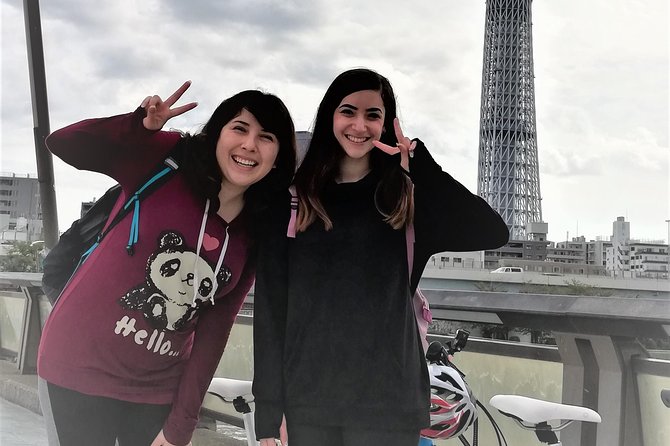
You also cycle under Tokyo Skytree. The tower appears from several angles during the ride, and that changing perspective is one of the route’s strongest visual features. From ground level, Skytree feels tied to the neighborhoods around it rather than floating as a distant landmark.
This is a good example of why a bicycle works better than a standard lookout visit for this particular experience. You are not simply viewing the tower from one platform. You are moving through the streets beneath it, seeing how its scale changes as the route turns.
Takeshi also takes photographs for riders. That can be especially useful for solo visitors who would otherwise have to rely on timed shots or ask strangers. You should still bring your own camera or phone, but the guide’s help makes group and individual photos easier.
Kyojima Minami Park and ordinary local life
The final main stop is Kyojima Minami Park, reached by cycling under Skytree and through the surrounding neighborhood. The area includes an old-fashioned shopping mall where you can see everyday Japanese life. You have about 20 minutes here, with no admission charge.
This is the kind of stop that gives the tour its purpose. Senso-ji and Skytree are easy to identify in a guidebook, but a local shopping area tells you more about how people live between the famous sights. The streets may feel less polished and less arranged for sightseeing, which is precisely why they are worth seeing.
Do not expect a large market or a major food hall. The appeal is the ordinary setting, the small shops, and the sense of a neighborhood continuing its routine around you. You might find street food or snacks to buy, so this is a sensible place to keep a little cash available.
The tour returns to the original meeting point after this stop. At roughly 2.5 hours, you can still schedule lunch, a museum, a longer Asakusa visit, or an evening activity afterward.
What the $50.08 price gets you
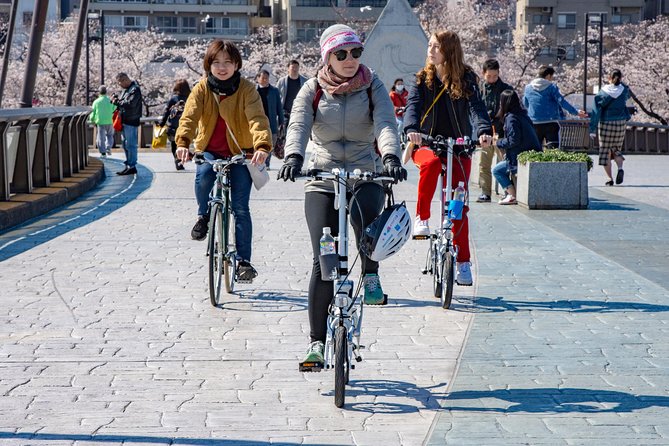
The listed price is $50.08 per person. Spread across 2.5 hours, that is about $20 per hour before considering the bike, helmet, guide, and small-group format.
That is a fair price if you want more than a rental. A rented bicycle gives you freedom, but it leaves you to plan a safe route, find the temples, understand the local details, and decide where to stop. Here, Takeshi handles the route and adds explanations at places that can be easy to miss.
The value is strongest for first-time visitors who want a broad introduction to eastern Tokyo in a short period. It also works well for families, couples, and small private groups that prefer a personal pace.
The price is less attractive if you already know Asakusa and Sumida well, or if you want a long-distance cycling day. This is a short orientation ride with sightseeing stops, not a full-day bike rental. Food purchases are extra, and the route does not include admission fees because the listed stops are free.
Group discounts may improve the value for a private party. Since the group maximum is six, you can also avoid the slower movement and limited interaction common on large coach-style tours.
Weather, comfort, and riding ability
The experience requires good weather. If poor weather cancels the tour, you are offered another date or a full refund. This is worth taking seriously because cycling in rain can make temple visits and river crossings much less pleasant.
Takeshi has adjusted plans when rain was forecast, and on a wet, cold outing he supplied raincoats and kept a close eye on safety. Even so, you should dress for the conditions and avoid treating the weather policy as a promise of a comfortable ride in every forecast.
The bikes fit riders from 140 to 180 centimeters. Smaller folding wheels can feel different from a standard full-size bicycle, especially if you are used to longer rides. The tour is described as gentle, and the strongest fit is a recreational cyclist who can manage city riding for a couple of hours.
Most people can take part, but the operator should know in advance about height outside the stated range or a request for a tandem bike. Ask about these details before the day of the ride rather than waiting until you arrive.
Who will get the most from this ride
I would choose this tour if you want to see a less familiar side of Tokyo without giving up the city’s major eastern landmarks. It is particularly good for:
- First-time visitors with one open morning or afternoon
- Families with older children who can ride comfortably
- Solo visitors who want a guide and help taking photos
- Couples who prefer neighborhoods and river views to a bus-only route
- Anyone curious about local temples, crafts, and daily shopping streets
I would choose something else if your priority is a hard physical workout, a long ride, or a detailed visit inside every major temple. The route is intentionally easy and sightseeing-focused.
The guide makes a difference. Takeshi’s approach combines local explanations with a steady concern for safety, and he has shown flexibility when rain threatens. His friendly manner and willingness to take photos are useful extras, especially for solo riders and families.
Should you book the Central Tokyo cycle tour?
Book it if you want a small-scale introduction to Sumida and Asakusa that combines famous sights with places you might not find on your own. The river ride, quiet religious sites, candy craft, Skytree views, and old shopping area create a varied half-day without exhausting your legs.
The best practical tip is to check your height against the 140 to 180 centimeter bike range before paying. Also leave enough time afterward for your own Asakusa visit if Senso-ji is important to you, since the guided stop lasts only about 30 minutes.
Free cancellation is available up to 24 hours before the start time. Last-minute changes are not accepted, and the tour may be canceled if the minimum number is not reached. For a fair price and a gentle pace, this is a smart choice for seeing Tokyo from the street rather than from behind a train window.
FAQ
Where does the bike tour start?
It starts near Hikifune Station at Tokyo Backstreets Bike Tour, 2-chome 24-14 Higashimukojima, Sumida City, inside the Synapse shared office.
Where does the tour finish?
The activity ends back at the original meeting point.
How long does the tour last?
The tour lasts approximately 2 hours and 30 minutes.
What size riders can use the rental bikes?
The folding bikes have 14 to 20 inch wheels and are suitable for people between 140 and 180 centimeters tall. Tell the operator in advance if you are over 180 centimeters.
Can I request a tandem bike?
Yes. You need to inform the operator at least three days before the booked date.
What happens if bad weather cancels the tour?
You will be offered a different date or a full refund. You can also cancel for a full refund if you cancel at least 24 hours before the experience start time.
Just added around Tokyo
- Tokyo Non-Touristy Local Private E-bike Cycling Tour from Asakusa★ 5.0 · 2 reviews
- Little Adventure with Cycling in Tokyo No. 1 Crystal Clear River★ 5.0 · 6 reviews
- Tokyo Night Bike Tour: From Shibuya to Tokyo Tower via Roppongi★ 5.0 · 29 reviews
- Tokyo’s hidden nature cycling tour – Okutama Historical Road Tour★ 5.0 · 6 reviews
- MTB, Hybrid or Gravel Road Bike Rental in Okutama, Tokyo★ 5.0 · 2 reviews
- Tokyo: Private Cycling Tour with cute E-bike★ 5.0 · 11 reviews
- Tokyo: Super Local Private E-bike Cycling Tour from Asakusa★ 5.0 · 4 reviews
- Tokyo: 3h Private E-bike Tours, Starting at Your Hotel★ 5.0 · 25 reviews
Cycling Tours, compared.
Ninh Binh Day Trip: Hoa Lu-Trang An/Tam Coc-Mua Cave-Cycling-Boat
Read our review →
Cai Be Mekong Delta Tour: Cooking Class, Cycling & Craft Villages
Read our review →
Countryside Bike Tour from Amsterdam: Cheese, Clogs & a Windmill
Read our review →
Electric Cycling Tour of Ubud with Free Hotel Transfer and Lunch
Read our review →
Browse the lists this tour appears in