
Review · TOKYO
Tokyo West-Side Cycling & Food Tour
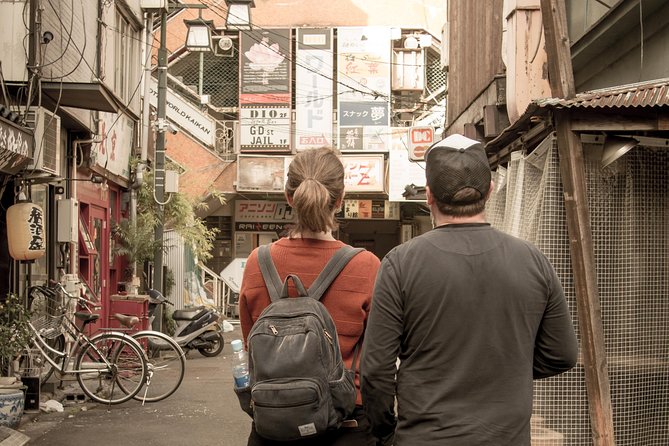
Tokyo reveals itself differently from a bicycle seat. On this small-group ride, Andy guides you through Nakano, Koenji, and Asagaya, where quiet lanes, local shops, riverside paths, and ordinary homes replace the big-name sights. You get a useful look at how Tokyo works day to day, not just how it looks on a postcard.
I like the maximum group size of eight, which keeps the ride social without turning it into a parade. I also like the food stops: local snacks and a Japanese-style lunch give the outing a real purpose beyond sightseeing. The main caution is simple: you need to ride confidently through narrow, crowded streets for roughly 12 to 15 kilometers.
Key points at a glance
- Ride a salvaged Japanese mamachari: These sturdy city bikes are Japanese-sized, equipped with front baskets, and maintained for urban riding.
- See three local neighborhoods: The route passes through Nakano, Koenji, and Asagaya, areas many first-time visitors skip.
- Follow the Zenpukuji River: The riverside path offers a calmer stretch between the tighter back streets.
- Eat along the way: Included snacks and a local-style lunch make this an active food outing, not just a cycling tour.
- Learn how Tokyo functions: Andy explains subjects such as housing, schooling, religion, bicycle parking, food, and daily routines.
- Plan for a real ride: The outing lasts about 3.5 to 4 hours and covers around 12 to 15 kilometers.
Why West Tokyo works so well by bicycle
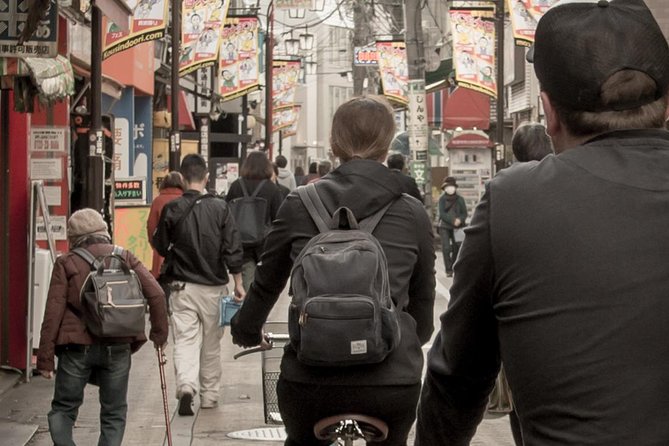
Central Tokyo can feel like a performance: giant crossings, department stores, neon signs, and crowds moving in every direction. West Tokyo offers a different rhythm. Nakano, Koenji, and Asagaya are still unmistakably Tokyo, but the experience is closer to daily life, with back streets, residential areas, local businesses, and people going about their routines.
A bicycle lets you connect these pockets faster than walking while still moving slowly enough to notice details. You may pass narrow lanes, small neighborhood attractions, ordinary houses, and riverside paths that would be easy to miss from a train or taxi.
That is the central value of this experience. It does not try to pack in major monuments. Instead, it gives you context for the city you are already visiting. Andy has lived in Japan for more than 20 years, and his explanations focus on how people live, work, eat, study, and get around.
The small size matters here. With no more than eight people, you can ask questions without interrupting a large tour. The format also makes it easier to pause, walk together, and fit into a small noodle counter or neighborhood eatery.
More food and market rides in Tokyo:
- Tokyo: West-Side Cycling and Food Tour with Guide
★ 5.0 · 37 reviews - Amsterdam: Cheese Tasting, Windmill & Countryside Bike Tour
★ 4.7 · 386 reviews - Niagara-on-the-Lake Cycle and Wine-Tasting Tour with Optional Lunch
★ 5.0 · 283 reviews
Starting at Koenji Station with a mamachari
The meeting point is outside Koenji Station at 4-chōme-48-2 Kōenjiminami, in Suginami City. Koenji is a useful starting point because it immediately puts you in the west-side setting the tour is designed to explore.
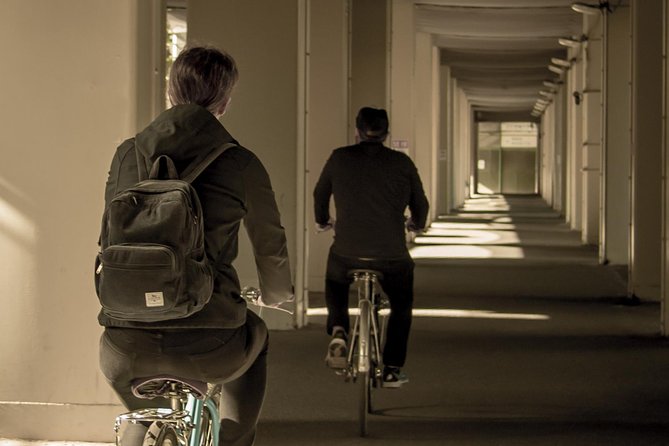
Your bicycle is a salvaged mamachari, the practical Japanese city bike often used for short local trips. These bikes are not sleek road machines, and that is part of the charm. They are sturdy, upright, and suited to stop-and-go riding. Each has a front basket that can hold a standard-sized backpack.
The bikes are Japanese-sized, so height matters. You should be over 140 centimeters, or about 4 feet 7 inches, to ride comfortably. Helmets can be supplied if you request one.
This is not a speed test. The route is mainly flat, with regular pauses, but you still need basic urban cycling ability. You will ride on narrow streets, uneven surfaces, and potentially crowded sections. If you are comfortable riding a bicycle in a city, the pace should feel manageable. If your cycling is rusty, this may not be the right activity for your first day back on a bike.
Back streets, bike parking, and ordinary Tokyo
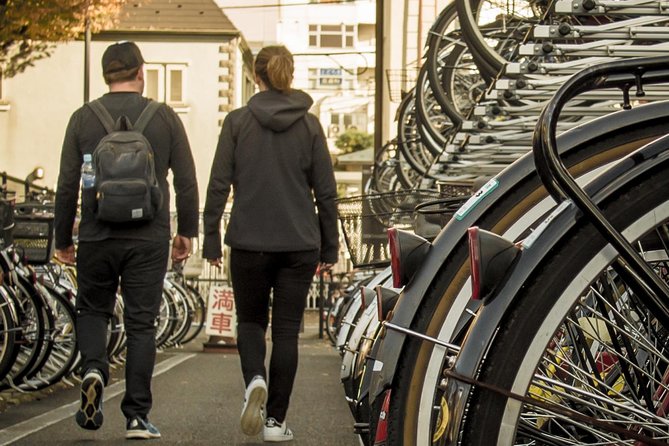
One of the strongest parts of the route is the way it treats small details as part of the sightseeing. Tokyo’s bicycle parking systems, for example, become a practical lesson in how the city manages limited space. You may even get to try the local bicycle parking process yourself.
That kind of moment is more useful than another quick photo stop. It shows you how people solve everyday problems in a crowded city. The same goes for the housing, schooling, religion, and neighborhood customs Andy discusses along the way.
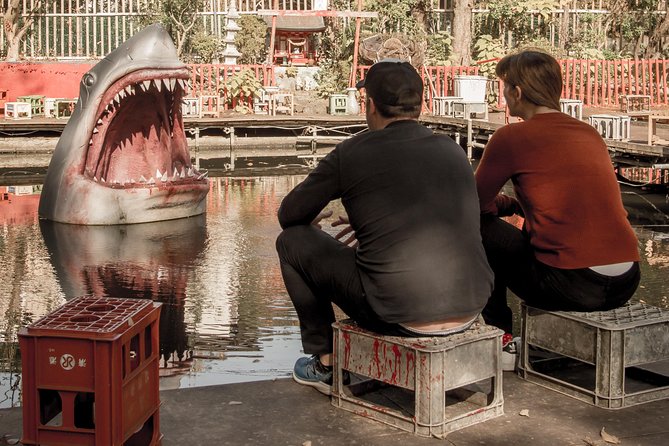
The route through Nakano, Koenji, and Asagaya is designed for local discovery rather than famous landmarks. You might see a quiet residential lane, a small commercial street, or a neighborhood attraction that would be difficult to locate on your own.
The tradeoff is that the ride does not include major sightseeing stops. If your priority is Tokyo Tower, the Imperial Palace, Shibuya Crossing, or a long list of famous landmarks, choose a different tour. This outing works best as a companion to those classic sights.
I would place it early in a Tokyo visit if you want practical orientation. Several people have used it as a first-day activity because Andy can answer questions about the city and offer suggestions for the rest of the trip. That makes the ride more useful than a simple three-hour diversion.
Along the Zenpukuji River
The Zenpukuji River provides a change of pace. After navigating tighter urban streets, you can coast along a more open riverside path and enjoy a quieter view of the city.
Do not expect a grand natural spectacle. This is still Tokyo, and the attraction is the contrast: a functioning urban river corridor, local paths, and a calmer setting tucked into the city. It gives your legs a break from repeated turns and lets the group ride together more comfortably.
This part also helps explain why the tour is manageable for people with basic cycling skills. The route is mainly flat, and the regular pauses keep the ride from becoming a long endurance session. Still, 12 to 15 kilometers is a meaningful distance, especially if you are not used to cycling.
The tour is described as all-season and all-weather, but weather can affect the plan. Basic ponchos are provided if rain arrives, and the ride generally continues. At the same time, poor weather can lead to cancellation, with a different date or full refund offered. Pack with an outdoor activity in mind rather than assuming this is a sheltered food walk.
More food and drink tours in Tokyo:
- Prague Cycle Boat – The Swimming Beer Bike
★ 5.0 · 179 reviews - Prague: Swimming Beer Bike on A Cycle Boat
★ 4.6 · 151 reviews - The Grape Escape! Cycling in Beautiful Scenery with Wine Tasting
★ 5.0 · 85 reviews - Guided Healdsburg Wine Country Bike and Wine Tasting Tour with lunch
★ 5.0 · 81 reviews
Local snacks and a Japanese-style lunch
Food is not an add-on here. Included snacks and lunch are part of the structure, giving you several reasons to stop and making the ride feel like a neighborhood food outing.
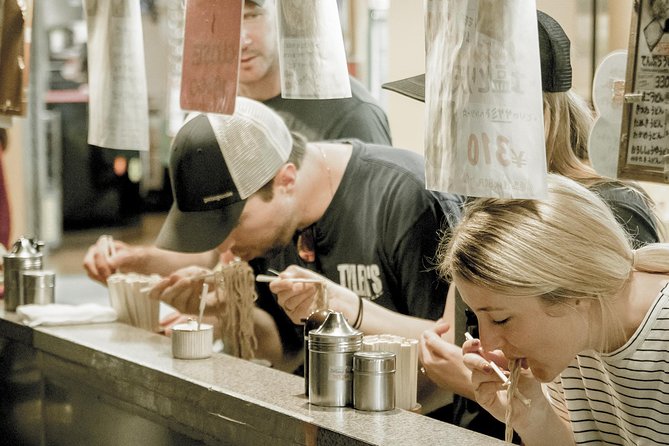
The snacks are selected from popular local choices, and the stops help you try items you might not recognize or feel ready to order alone. The tour may include noodles and other typical local foods, but the exact menu is not fixed in the information provided.
Lunch takes place at a local-style eatery rather than a polished fine-dining restaurant. You may need to share counter space with hungry office workers, often called salarymen, which is exactly the kind of ordinary setting this tour aims to show you.
That also means you should adjust your expectations. This is not a tasting menu, and the food stops are not built around luxury or careful presentation. The value is in trying familiar local dishes in the sort of places residents use.
Food restrictions require special attention. Japanese cooking often includes meat and seafood, and dashi, a common soup base, may contain those ingredients. The group visits typical local establishments, so it may be difficult to accommodate allergies, dietary rules, or strong dislikes. Ask before booking if food is a major concern.
Andy’s guiding style and the value of conversation
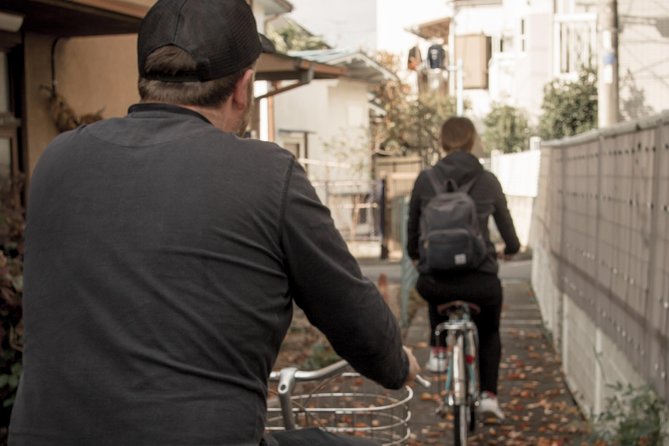
Andy is the named guide associated with the tour, and the strongest praise centers on his friendly, energetic way of leading the ride. He speaks fluent English and has lived in the area for more than 20 years.
His role is not limited to pointing out streets. He explains local customs and everyday systems, answers questions, and keeps the group moving safely through the route. The style is conversational, with history and cultural context mixed into the ride rather than delivered as long lectures.
That makes a difference in a neighborhood tour. Without local explanation, a quiet street can look like just another quiet street. With context, you begin to understand why the housing looks a certain way, how people use bicycles, or why a particular food stop matters.
Several distinctive touches add to the experience. Andy may send follow-up recommendations after the ride, including information about foods you tried and suggestions matched to your interests. That is helpful if you are still planning your Tokyo days.
You should also know that the social side is part of the design. The description calls this a no-fuss experience focused on socializing, exploration, and local discovery. If you prefer to ride silently at your own pace, this may feel too interactive. If you enjoy questions, conversation, and meeting a small group, it should suit you well.
Who gets the most from this 3.5-hour outing
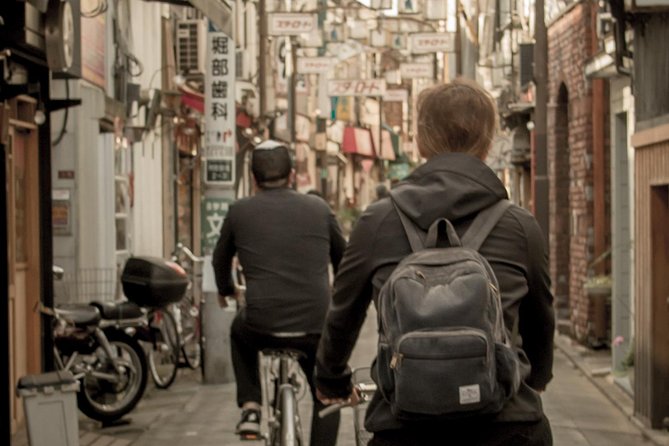
I would recommend this ride to people who want a second view of Tokyo after seeing the major sights. It is especially good for:
- First-time visitors who want to understand daily life quickly
- Repeat visitors looking for a part of the city they have not explored
- Families with older children who can ride comfortably
- People who enjoy food but do not need a formal restaurant experience
- Cyclists who like local neighborhoods more than monuments
- Visitors who want an English-speaking guide and a small group
Families have used the tour with an 11-year-old, but the height and cycling requirements still apply. Children need to manage urban riding, narrow streets, and a half-day outing.
It is less suitable if you want a strenuous cycling workout, a high-speed ride, famous landmarks, or guaranteed accommodation for complex dietary needs. It is also not ideal if you cannot ride confidently around pedestrians, cars, uneven surfaces, and other bicycles.
Is $99.49 a fair price?
At $99.49 per person, this is not the cheapest way to eat a few snacks or rent a bicycle in Tokyo. The price makes more sense when you count the whole package: a 3.5 to 4-hour guided outing, a small group capped at eight, bicycle use, local snacks, lunch, and cultural interpretation.
The guide is the main part of the value. You are paying for access to neighborhoods that can be hard to understand on your own, plus the confidence of having someone manage the route, food stops, and local etiquette.
Group discounts are available, although the exact discount depends on the booking. A group of friends or family members may find the cost easier to justify because the experience combines sightseeing, food, and conversation in one block of time.
I would not book it solely for the meal. The food is included, but this is not a fine-dining tour. Book it for the combination of cycling, local context, and access to ordinary west-side neighborhoods.
Practical details before you reserve
The outing begins and ends at Koenji Station. It is near public transportation, and the return to the meeting point makes it easier to plan the rest of your day.
Allow at least 3.5 hours, and keep some flexibility beyond that. Group size, weather, the pace of the ride, and how quickly everyone eats can push the finish closer to four hours.
Wear clothes suitable for cycling and prepare for changing outdoor conditions. A standard backpack fits in the front basket, but avoid bringing bulky luggage.
The cancellation policy allows a full refund if you cancel at least 24 hours before the start time. Changes or cancellations inside that window are not accepted for a refund. The operator can also cancel for poor weather or if the minimum number of participants is not reached, in which case you can choose another date or experience, or receive a full refund.
Cycling liability insurance is included for the cycling portion. You are still expected to carry comprehensive travel insurance for unexpected incidents.
Should you book the Tokyo West-Side Cycling and Food Tour?
Book it if you want Tokyo to feel like a place where people actually live, not just a collection of famous sights. The route is flat, the group is small, the food is included, and Andy’s long experience in the area adds useful context to streets you might otherwise pass without noticing.
Skip it if you dislike cycling in traffic, need a carefully controlled menu, or want a tour built around major landmarks. This is a social neighborhood ride with snacks, lunch, and a fair amount of pedaling.
For the right person, the $99.49 price buys more than transport between food stops. It gives you a practical introduction to west Tokyo, a chance to ask honest questions, and a memorable way to see Nakano, Koenji, and Asagaya at street level.
FAQ
Where does the Tokyo West-Side Cycling and Food Tour begin?
The tour begins at Koenji Station, at 4-chōme-48-2 Kōenjiminami, Suginami City, Tokyo 166-0003, Japan.
Where does the tour finish?
The activity ends back at the meeting point near Koenji Station.
How long does the tour last?
The scheduled duration is about 3 hours and 30 minutes. Depending on the group, weather, eating pace, and cycling speed, the outing may last roughly 3.5 to 4 hours.
How far do you cycle?
You should expect to ride approximately 12 to 15 kilometers, or 7.5 to 9.5 miles.
How many people can join the tour?
The maximum group size is eight participants.
What kind of bicycle is provided?
You ride a salvaged Japanese mamachari bicycle. The bikes are Japanese-sized, maintained for urban riding, and fitted with front baskets that can hold a standard-sized backpack.
Can helmets be provided?
Yes. Helmets can be provided for all participants if requested.
Is food included?
Yes. The tour includes local snacks and a Japanese-style lunch. Japanese cuisine commonly uses meat, seafood, and dashi, so personal dietary requirements and allergies may be difficult to accommodate at typical local eateries.
What happens if the weather is poor?
The tour may continue in light rain, and basic ponchos are provided. If poor weather causes the activity to be canceled, you will be offered another date or a full refund.
More Food in Tokyo
- Eat, Drink & Cycle: Osaka Foodie Bike Tour
★ 5.0 · 224 reviews - Bangkok by Night Cycling Tour with Street-food Meal
★ 4.9 · 57 reviews - Taste of Korcula by Bike Tour | Korcula Wine & Food Tasting
★ 5.0 · 33 reviews - Half-Day Food Tour with Cycle Rickshaw ride to Masterji Kee Haveli
★ 5.0 · 31 reviews
Just added around Tokyo
- Tokyo Non-Touristy Local Private E-bike Cycling Tour from Asakusa★ 5.0 · 2 reviews
- Little Adventure with Cycling in Tokyo No. 1 Crystal Clear River★ 5.0 · 6 reviews
- Tokyo Night Bike Tour: From Shibuya to Tokyo Tower via Roppongi★ 5.0 · 29 reviews
- 2.5 Hour-Guided Cycle Tour in the Central Tokyo★ 5.0 · 25 reviews
- Tokyo’s hidden nature cycling tour – Okutama Historical Road Tour★ 5.0 · 6 reviews
- MTB, Hybrid or Gravel Road Bike Rental in Okutama, Tokyo★ 5.0 · 2 reviews
- Tokyo: Private Cycling Tour with cute E-bike★ 5.0 · 11 reviews
- Tokyo: Super Local Private E-bike Cycling Tour from Asakusa★ 5.0 · 4 reviews
Food & Market Bike Tours, compared.

Cheese Tasting, Windmill & Countryside Bike Tour
Read our review →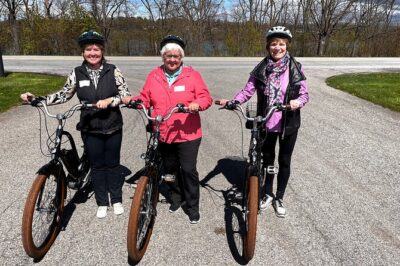
Niagara-on-the-Lake Cycle and Wine-Tasting Tour with Optional Lunch
Read our review →
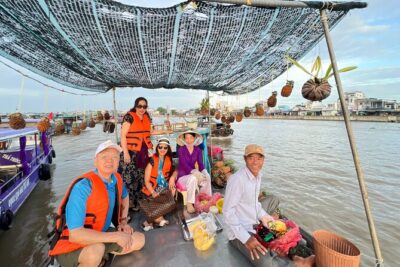
2-Day Mekong Delta Floating Market with Cooking & Bike Ride
Read our review →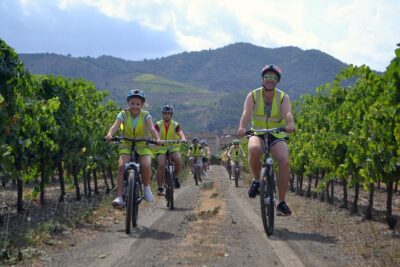
The Grape Escape! Cycling in Beautiful Scenery with Wine Tasting
Read our review →
Guided Healdsburg Wine Country Bike and Wine Tasting Tour with lunch
Read our review →
Korcula Bike & Wine Tour | Wine Tasting in Lumbarda
Read our review →
2-Day Mekong Floating Market with Cooking & Bike Ride
Read our review →Browse the lists this tour appears in