
Review · JAPAN
Kinosaki Onsen Cycling Tour Kinosaki & Riverside Experience
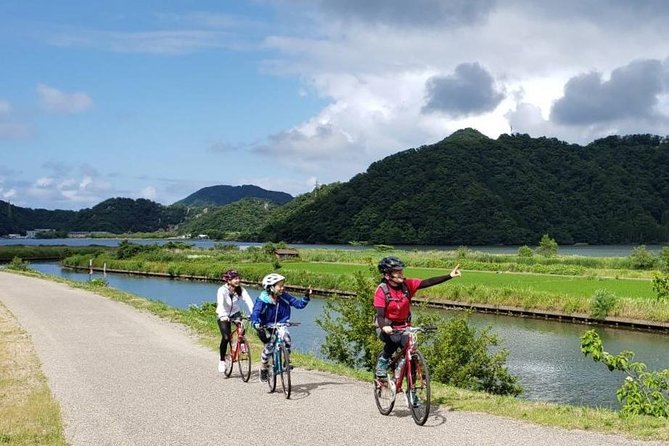
Kinosaki is easy to enjoy on foot, but a bicycle takes you beyond the familiar hot spring streets. This 15-kilometer loop follows the river through rice fields and the outskirts of town, then reaches a viewpoint toward the Sea of Japan. Along the way, you get local stories about hot springs, earthquakes, crafts, storks, and the earth beneath your wheels.
I like two things especially. First, the small group size of five or fewer should make it easier to ask questions and keep a relaxed pace. Second, the route is almost flat, so you can pay attention to the scenery instead of fighting hills. Guide Natsuko is described as patient and quick to laugh, a good match for an easygoing ride.
The main consideration is time and weather. Three hours is long enough for a proper outing but not long enough to linger everywhere, and the ride can be canceled in poor weather. You also need moderate fitness and must be at least 140 centimeters tall.
Key points at a glance
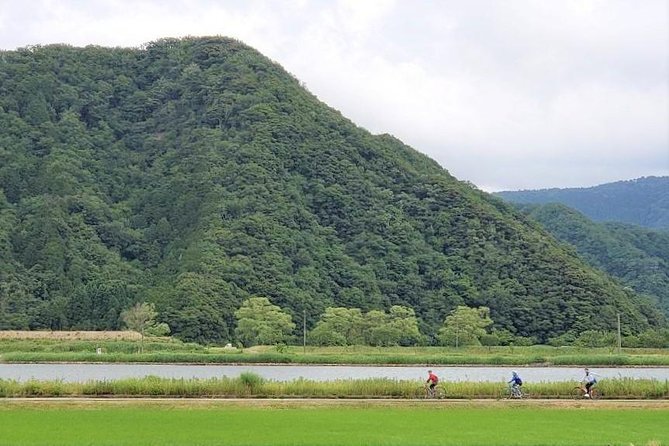
- A 15-kilometer route to the Sea of Japan: Ride from Kinosaki through the town, beside the river, past rice fields, and toward a sea viewpoint.
- A nearly flat course: The route is designed at a gentle pace and is suitable for people who prefer an easy ride rather than a strenuous cycling trip.
- More than a sightseeing loop: Hear about Kinosaki’s hot spring legend, earthquake history, traditional crafts, the San-in Coast Geopark, and local storks.
- A small group led by Natsuko: With no more than five people, the ride should feel personal and easy to follow.
- A taste of everyday Kinosaki: Cycling shows you the edges of the hot spring town, where river, farmland, and local life meet.
- Weather matters: Poor conditions can lead to a rescheduled tour or full refund.
Why cycling changes your view of Kinosaki
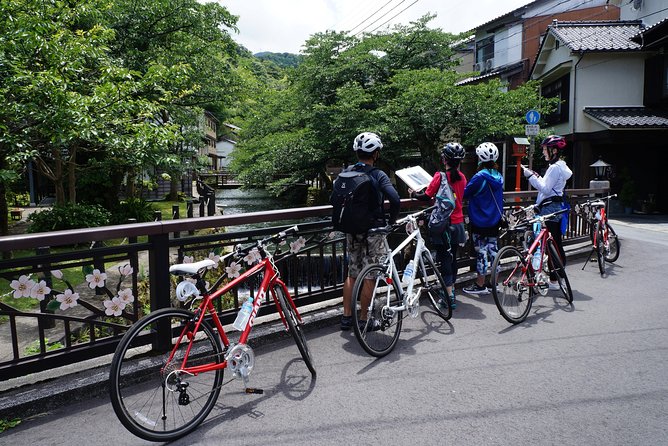
Kinosaki Onsen is famous for its old-fashioned hot spring town atmosphere. The main streets and public baths are pleasant to explore on foot, especially when you are dressed in a yukata and moving from bath to bath. But that pleasant center is only one piece of the town.
This ride lets you see how Kinosaki connects to its surroundings. You leave the central streets and follow the river, where the view opens toward fields and wider countryside. The route eventually points toward the Sea of Japan, giving you a stronger sense of the town’s place in northern Hyogo.
That change matters. From a bicycle, you notice the distance between the hot spring buildings and the farmland. You hear the river, watch the sky change, and pass scenery that is easy to miss from a car or train. The pace is slow, so the ride is less about covering ground and more about understanding how a small Japanese town fits into its natural setting.
The route is described as almost flat and progresses slowly. That makes it a practical choice for someone who enjoys cycling but does not want a demanding athletic outing. You still need moderate physical fitness, since 15 kilometers over three hours requires steady movement, but this is not presented as a race or a hill climb.
More hot spring stops in Japan:
- Mountain Bike Tour from Sapporo Including Hoheikyo Onsen and Lunch
★ 4.5 · 35 reviews - Mount Batur: Black Lava Cycling Tour w/ Natural Hot Spring
★ 3.8 · 63 reviews - Cycling to Amboni Caves & Sulphur Hot Springs-(Taste of Tanga)
★ 4.5 · 2 reviews
Starting on Kinosaki Onsen’s familiar streets
The meeting point is Koyado EnnJapan, at 219 Yushima, Kinosakicho, Toyooka, Hyogo 669-6101. The tour begins and ends there, which keeps the plan simple if you are staying in Kinosaki.
The first section takes place around the streets of Kinosaki Onsen. This is a useful starting point because your guide can connect the town you see with the stories that shaped it. The tour explains the legend of Kinosaki’s hot spring and discusses how the town’s past was recovered after an earthquake.
That combination gives the ride more substance than a basic bicycle rental. You are not only passing buildings and taking photographs. You are hearing why the hot spring town developed as it did and how its history was affected by natural forces. The focus on earthquakes is particularly fitting in Japan, where the relationship between towns and the earth is part of daily life.
The central streets may be the most familiar part of the outing, but they provide context for everything that follows. Once you cycle outward, you can better understand what makes Kinosaki different from a standard urban sightseeing stop.
Along the river, where town gives way to fields
After the town section, the route follows the river. This is where the experience shifts from cultural sightseeing to a closer look at the countryside.
The ride passes rice fields, and the river corridor gives you a clear view of the changing scenery. One of the strongest features of the route is its variety within a short distance. You begin among hot spring streets, move alongside water, pass through agricultural areas, and continue toward the coast.
I like this kind of route because it gives you a sense of place without requiring a full-day excursion. You do not need to choose between seeing Kinosaki and reaching the Sea of Japan. The ride links the two in one manageable outing.
Your guide also points out seasonal plants and the local sky. Those details may sound small, but they are part of what makes a slow bicycle ride worthwhile. A bus can show you the broad outline of a region. A bicycle lets you pause for a plant, a field, or a sudden change in the view.
The route is not described as a series of formal attractions with long stops. Instead, expect the guide to interpret what you are passing as the ride unfolds. That means the experience will appeal most to you if you enjoy observation and conversation rather than a packed checklist.
Learning about the San-in Coast Geopark
The tour places Kinosaki within the San-in Coast Geopark. The word geopark points to the area’s geological story, not just its scenic value. Here, the focus is on understanding the earth, the coastline, and the forces that shaped the region.
That theme ties neatly to the earthquake history discussed earlier. Kinosaki is not treated as a pretty hot spring town floating apart from nature. The tour shows how the town, river, fields, and sea belong to one connected setting.
This is also where the ride can offer something you are unlikely to get from a standard walk through the bathhouse district. The guide explains the broader area while you are physically moving through it. You see the countryside rather than only hearing about it.
The Sea of Japan viewpoint is a particular highlight. It does not sound like a long coastal trek or a major lookout with a full visitor center. Instead, it is a point along the route where the sea becomes part of the experience. That modest scale is part of the appeal. You get a coastal view without turning the outing into a strenuous expedition.
Keep your expectations sensible. The tour lasts about three hours, so the sea view is one part of a wider route rather than the sole destination. The value comes from the full sequence: town, river, fields, geopark, and coast.
A few more rides around Japan worth a look
- Tokyo Great Cycling Tour
★ 5.0 · 811 reviews - Tokyo Top Highlights 3h Guided E-bike Tour
★ 5.0 · 714 reviews - Hiroshima in a Nutshell: Morning Bike Adventure
★ 5.0 · 524 reviews - Hiroshima 2hr Peace Cycling Tour with Local Guide
★ 5.0 · 321 reviews
Storks, wetlands, and the wider natural setting
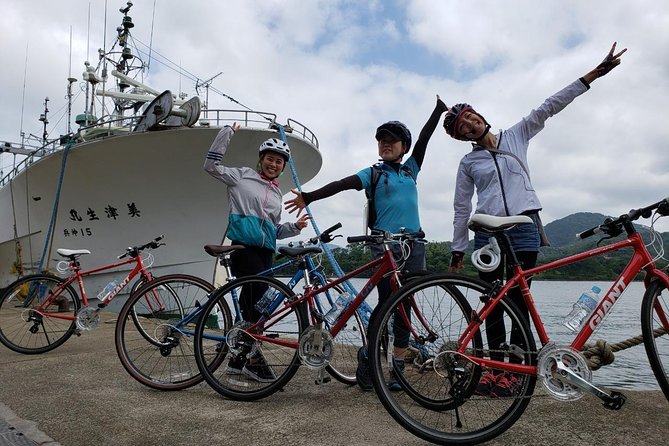
The route also introduces the Ramsar Wetland, an internationally important wetland for waterfowl. The area is home to storks, which are recognized as a natural monument.
This is an important detail for nature-minded visitors. The ride is not simply a scenic bicycle trip with generic countryside views. It connects the region to a protected wetland environment and explains why the area matters for birds and water.
You should not book this expecting a guaranteed wildlife sighting. No specific bird encounter is promised. The value is in seeing the setting and learning about the wetland’s role as part of the local ecosystem.
For me, this makes the ride more rewarding than a route that only points out attractive views. The countryside becomes part of a larger story involving water, farmland, birds, and the coast. You get a better idea of how local life depends on the same natural systems that make the area beautiful.
Traditional crafts and the Siebold connection
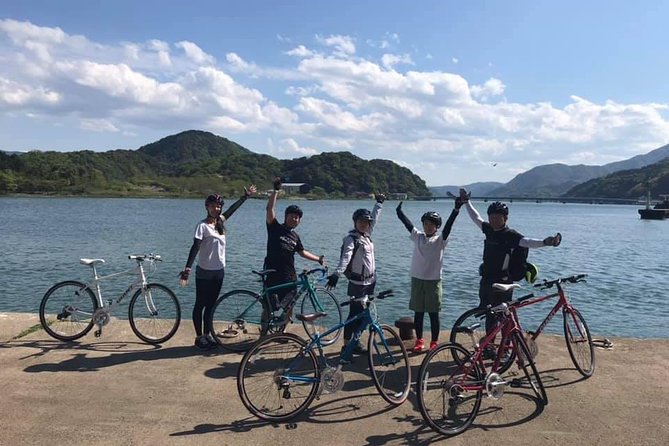
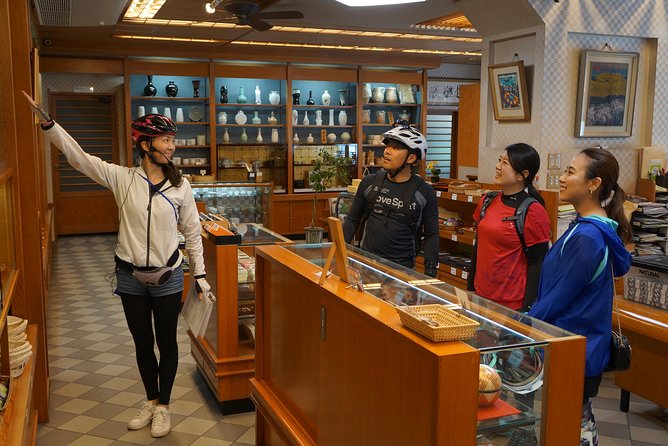
Kinosaki’s traditional craft is another part of the cultural story. The tour explains the craft and its connection to Siebold, who made a collection of it.
That detail adds an international link to a very local subject. You are learning about an object or practice rooted in Kinosaki, then seeing how it became important enough to be collected and carried beyond Japan.
The craft discussion also helps balance the nature sections. The ride is not only about rivers and birds, and it is not only about hot spring legends. It brings together local work, regional history, geology, and the daily life of a small town.
Because the tour is short, you should not expect a museum visit or a long craft demonstration unless specifically arranged. The information is part of the guided ride. Still, it gives you a useful lens for noticing that Kinosaki’s identity comes from more than bathing and traditional buildings.
What the three-hour pace feels like
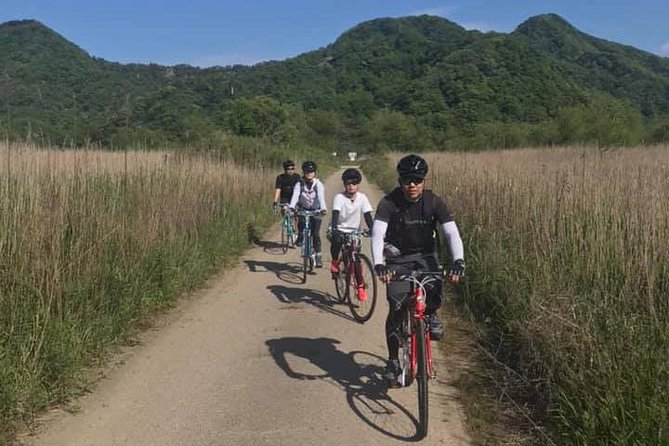
The tour covers about 15 kilometers in roughly three hours. That works out to a slow overall pace, allowing time for explanations, scenery, and stops along the way.
The route is almost flat, and the description specifically presents it as approachable for women. More broadly, I would see it as suitable for anyone who wants a low-pressure ride and has moderate fitness. You do not need to be an experienced cyclist, but you should be comfortable spending several hours on a bicycle.
The small group cap is a real advantage. With a maximum of five people, the guide can keep the group together without creating the feel of a large organized outing. You can also ask about the history, plants, river, wetland, or coastline as questions arise.
Natsuko is identified as a guide who knows the seasonal plants, sky, and local area, and who is patient and laughs easily. That style suits a route where the small observations matter. A hurried guide would weaken this kind of outing, while a relaxed guide can make the countryside easier to read.
The ride returns to the original meeting point. That removes the need to arrange a separate pickup from the coast or find your way back after the sea view.
Is the $110.76 price a fair value?
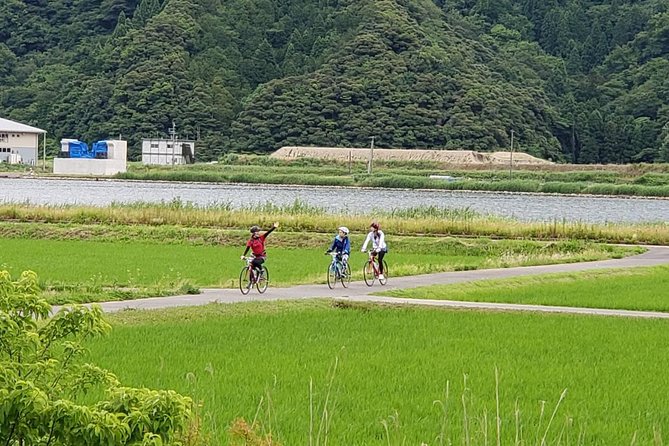
At $110.76 per person, this is not the cheapest way to spend three hours in Kinosaki. You can walk the central town without paying a tour fee, and independent cycling may cost less if bicycles are available through another arrangement.
The price makes more sense if you value the guide and the route. You are paying for a small-group experience that links several subjects: Kinosaki’s hot spring legend, earthquake history, traditional craft, the San-in Coast Geopark, the Ramsar Wetland, storks, the river, rice fields, and the Sea of Japan.
You also get a route that would be difficult to plan from a simple town map. The strongest reason to book is not transportation. It is access to local context and a carefully connected ride beyond the usual center.
The tour is booked an average of 81 days in advance, which suggests you should not leave it until the last minute if the date matters to you. Confirmation is provided at booking, and the mobile ticket makes the practical side straightforward.
Free cancellation is available up to 24 hours before the start time. Cancellations made less than 24 hours before departure are not refunded, and late changes are not accepted. Since the ride depends on good weather, a weather cancellation results in a different date or a full refund.
Who will enjoy this ride most?
I would choose this tour if you are spending time in Kinosaki and want more than the bathhouse district. It suits you particularly well if you enjoy local stories, rural scenery, gentle exercise, and small groups.
It is also a good fit for people who prefer an active activity without a steep physical challenge. The nearly flat course and slow pace make the ride accessible to many people, though the 140-centimeter height requirement and moderate fitness level still apply.
Families should check the height requirement for every participant. The tour is not described as a children’s program, so the best match is anyone who can comfortably handle a 15-kilometer ride and follow the group pace.
You may want to skip it if your visit is very short and your main goal is bathing, or if you dislike outdoor plans that depend on weather. You should also choose another activity if you want a hard workout, a long coastal ride, or guaranteed wildlife viewing.
Should you book the Kinosaki cycling tour?
Book it if you want to see how Kinosaki connects to its river, rice fields, wetland, and sea. The ride gives you a wider view of the area while keeping the pace gentle and the group small.
The strongest reasons to go are the unusual combination of local history and countryside, the Sea of Japan viewpoint, and the chance to have Natsuko explain details you might otherwise pass without noticing. I especially like that the route leaves the center but returns you there, with no complicated transport plan.
Skip it if you want to stay entirely in town, avoid cycling, or cannot commit to a three-hour outdoor activity. For the right person, though, $110.76 buys more than a ride. It buys a guided way to understand the small hot spring town and the wider piece of Japan around it.
FAQ
Where does the Kinosaki cycling tour begin and end?
The tour starts at Koyado EnnJapan, 219 Yushima, Kinosakicho, Toyooka, Hyogo 669-6101. It ends back at the same meeting point.
How long is the tour?
The experience lasts about three hours.
How far do you cycle?
The route covers approximately 15 kilometers.
Is the route difficult?
The course is almost flat and moves at a slow pace. Participants should have a moderate level of physical fitness.
Is there a minimum height requirement?
Yes. Participants must be at least 140 centimeters tall.
What happens if the weather is poor?
If bad weather causes the tour to be canceled, you can choose a different date or receive a full refund.
Just added around Japan
- Slow Cycling Tour at Uji’s Matcha Green Tea Fields and Heritage★ 5.0 · 25 reviews
- Tokyo Non-Touristy Local Private E-bike Cycling Tour from Asakusa★ 5.0 · 2 reviews
- Tokyo Night Bike Tour: From Shibuya to Tokyo Tower via Roppongi★ 5.0 · 29 reviews
- 2.5 Hour-Guided Cycle Tour in the Central Tokyo★ 5.0 · 25 reviews
- Little Adventure with Cycling in Tokyo No. 1 Crystal Clear River★ 5.0 · 6 reviews
- Tokushima & Mt. Bizan BROMPTON Slow Cycling Tour★ 5.0 · 5 reviews
- Tokyo’s hidden nature cycling tour – Okutama Historical Road Tour★ 5.0 · 6 reviews
- Wakimachi BROMPTON Slow Cycling Tour★ 5.0 · 5 reviews
Cycling Tours, compared.
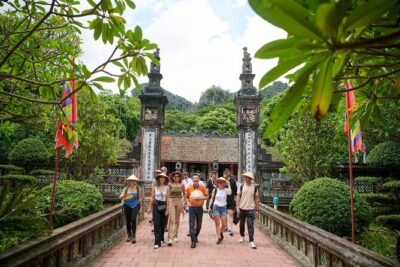
Ninh Binh Day Trip: Hoa Lu-Trang An/Tam Coc-Mua Cave-Cycling-Boat
Read our review →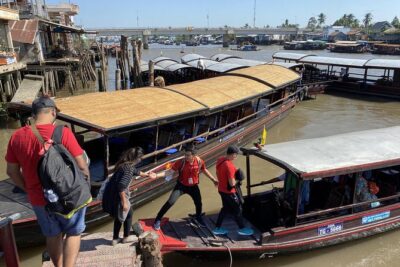
Cai Be Mekong Delta Tour: Cooking Class, Cycling & Craft Villages
Read our review →
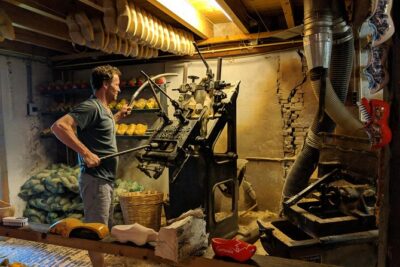
Countryside Bike Tour from Amsterdam: Cheese, Clogs & a Windmill
Read our review →
Electric Cycling Tour of Ubud with Free Hotel Transfer and Lunch
Read our review →
Browse the lists this tour appears in