

Review · HIROSHIMA
Okunoshima Rabbit Island Cycling Tour with Local Guide
Okunoshima is famous for rabbits, but its most important story is far darker. This two-hour bike tour takes you past wartime poison gas sites, a lighthouse, shrine, and cannon ruins while wild rabbits hop through the scenery. I especially like the small group size and the way guide Junko brings care and feeling to the island’s past.
I also like that the tour covers the island by bicycle, letting you see more than you would on foot in a short visit. The Seto Inland Sea views are a fine bonus. The main drawback is that several ruins cannot be entered, and the tour needs at least two participants plus good weather to run.
Key points to know before booking
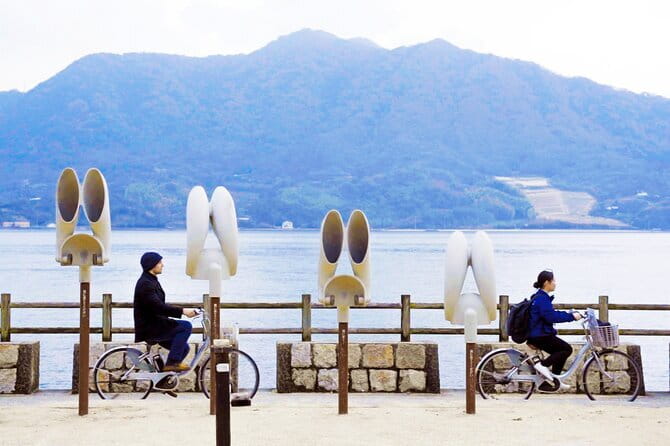
- Wild rabbits and wartime history share the same island: You get far more than a quick animal visit.
- A two-hour bicycle route covers six stops: The ride includes the lighthouse, shrine, poison gas storage ruins, power plant, and cannon remnants.
- The group is capped at five people: That gives the guide room to explain the island and answer questions.
- Guide Junko has earned special praise: Her warm, serious approach helps connect the rabbits with Okunoshima’s difficult past.
- The ferry costs extra: The ride from Tadanoumi to Okunoshima costs 360 yen and is not included.
- Weather matters: A rain forecast of 60 percent or more by noon the day before can cancel the tour without a fee.
Why Okunoshima is more than a rabbit stop
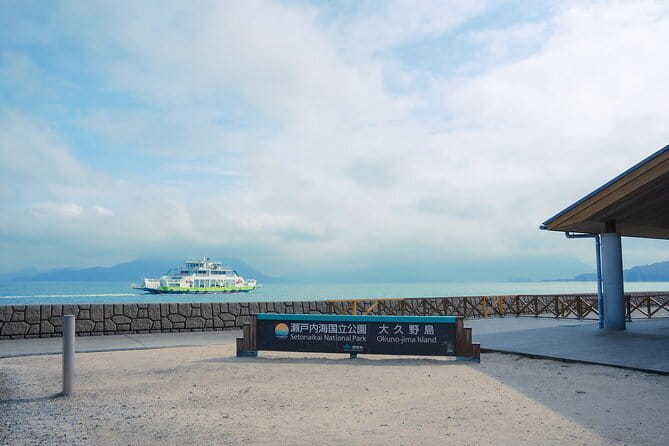
Okunoshima sits in the Seto Inland Sea, a small island surrounded by views of hundreds of other islands. Today, wild rabbits give it a gentle, almost playful mood. They are the first thing many people notice, and you will likely see them near the roads, shrine, and hotel area.
But the island also carries the memory of Japan’s wartime poison gas production. It was once left off maps, and several abandoned buildings point to that secret past. The contrast is what gives this tour its purpose. You are not simply riding from one rabbit gathering spot to another. You are seeing how a peaceful place can hold a painful story.
I like this balance. The rabbits make the visit approachable, especially for families and first-time visitors, while the guide helps you understand why the ruins matter. The experience does not treat the island as a cute animal attraction alone.
The current rating is 4.7 from 17 ratings, with 94 percent recommending the experience. That fits the tour’s strongest quality: the guide adds meaning that you would miss by cycling around alone.
More coastal bike tours in Japan:
- Shimanami Kaido, 1Day Relaxed Island Hopping Cycling Tour
★ 5.0 · 7 reviews - Art Island Naoshima BROMPTON Slow Cycling Tour
★ 5.0 · 6 reviews - Tokashiki Island Guided Cycling Tour for 3-hours Course
★ 5.0 · 5 reviews
Starting at Kyukamura Okunoshima
The tour begins and ends in front of Kyukamura Okunoshima, the island hotel. This is useful if you are staying there, and it gives you a clear place to meet without crossing the island to find the guide.
The experience is shared, not private, with a maximum of five people. That is a pleasant size for a route that includes serious historical discussion. A large group could make it harder to hear the guide or pause at the ruins. With up to five people, you should have a better chance to ask questions and keep the pace comfortable.
The tour includes use of a bicycle, taxes, and travel insurance. Food and drinks are not included, so plan those separately. The ferry is also extra. The listed ferry fare from Tadanoumi to Okunoshima is 360 yen, so add that cost to the tour price when working out your budget.
The tour costs $59.12 per person. That is not the cheapest way to see a small island, especially once you add the ferry. Still, the price includes a bicycle, a local guide, insurance, and a focused explanation of places that can be easy to overlook. If you want only a short rabbit visit, it may feel expensive. If you want context and a guided route, the value is stronger.
Cycling the four-kilometer island
Okunoshima has a circumference of about four kilometers, so the bicycle is a practical choice rather than a demanding athletic challenge. You cover the island efficiently, with stops built in for views and explanation.
The tour lasts about two hours. The listed stops add up to roughly one hour and 55 minutes, leaving little spare time. That tells you what kind of outing this is: a compact circuit with several short stops, not a slow day of wandering.
You should expect some riding between the sites, short visits at the ruins, and time to look around. The tour asks for a moderate level of physical fitness. You do not need to treat it like a race, but you should be comfortable riding a bicycle and getting on and off several times.
The route is also a good reason to book a guide rather than simply rent a bike. The island’s buildings can look like old concrete shells if you do not know what they were used for. The guide connects each site to the larger story.
Okunoshima Lighthouse and the Seto Inland Sea
The lighthouse is the first listed stop and takes about 10 minutes. You cannot enter it, so this is an exterior viewing stop rather than a climb.
That limitation is worth knowing. If you expect a lighthouse tower with an indoor visit or a long stay, you may be disappointed. The value comes from the setting and the view. From here, you can take in the sea and the surrounding islands, part of the broad Seto Inland Sea scene that gives Okunoshima much of its calm character.
I would treat this as a quick orientation stop. It helps you see the island as a small piece of a much larger chain of islands, and it gives the tour a scenic opening before the more difficult historical sites.
A few more rides around Japan worth a look
- Hiroshima in a Nutshell: Morning Bike Adventure
★ 5.0 · 524 reviews - Hiroshima 2hr Peace Cycling Tour with Local Guide
★ 5.0 · 321 reviews - Hiroshima: Peace Cycling Tour with Local Guide
★ 4.8 · 286 reviews - Hiroshima and Miyajima by Bike and Boat
★ 5.0 · 172 reviews
The main island circuit and its wild rabbits
The one-hour island section is the heart of the outing. You cycle through Okunoshima while looking for rabbits and taking in the island’s mix of natural beauty and abandoned wartime buildings.
The rabbits are wild. That makes the encounter less controlled than a zoo visit, which is part of the charm. You may see them near the roads or around the shrine, but the tour does not promise a fixed number or a staged animal encounter. The overview describes hundreds of rabbits on the island, so you have a good reason to expect them, but nature sets the schedule.
The rabbits also give the tour a lighter rhythm. After hearing about poison gas production, seeing a rabbit move through the grass can feel startlingly peaceful. That contrast is not a distraction from the history. It is one of the island’s central facts.
The surrounding sea adds another layer. Okunoshima is part of Seto Inland Sea National Park, and the views across the water help explain why the island feels restful today. You get scenery, but the guide keeps the visit from becoming only a pretty bicycle ride.
Okuno Shrine and the island’s gentler side

Okuno Shrine is the only shrine on the island. The stop lasts about 10 minutes, and rabbits now share the area.
This is a small stop, but it gives you a different mood from the industrial ruins. The shrine offers a quiet place to pause, while the rabbits bring the familiar Okunoshima experience close to hand. If your main reason for coming is wildlife, this may be one of the most enjoyable parts of the route.
At the same time, you should not expect a large religious complex or a long cultural visit. The shrine is included as one part of a wider circuit. Its importance comes from its setting and its connection to the island’s present-day identity.
Nagaura Poison Gas Storage Ruins
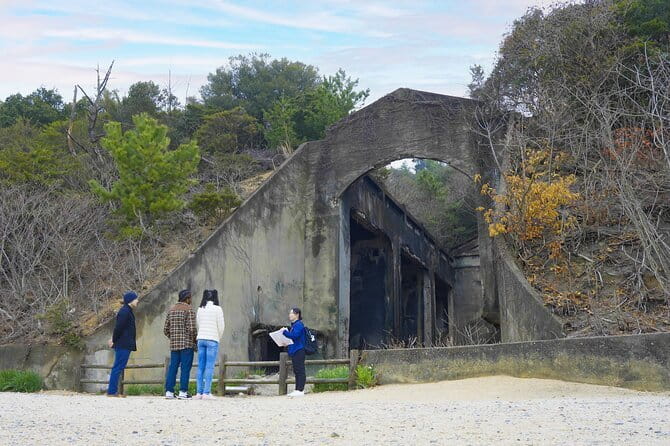
The Nagaura Poison Gas Storage Ruins are among the tour’s most significant stops. This facility stored tanks filled with poison gas, and the guide explains the role the site played in the island’s wartime past.
You cannot enter the building for safety reasons. You view it from a short distance, which may feel limiting if you want to inspect the interior. Yet the restricted access is also a reminder that these are not harmless decorative ruins. The site has real danger and weight behind it.
This is where a guide matters most. A bare ruin can be hard to understand, especially if you do not know why the island disappeared from maps. A local guide can provide the setting that turns a weathered structure into evidence of a secret military operation.
The stop lasts about 10 minutes. That is enough for an explanation and a close look, but not enough for an extended historical lecture. If you want a full museum-style treatment of the poison gas program, this tour may feel brief. If you want a clear introduction while seeing the actual sites, it works well.
Power Plant Ruins and the industrial story
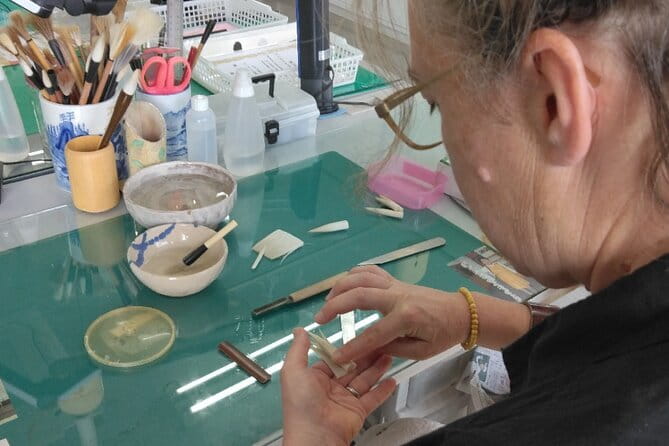
The power plant ruins take another 10 minutes. The plant was used when poison gas was secretly produced on Okunoshima.
Again, you view the building from outside because entry is prohibited for safety. The repeated restriction may sound disappointing on paper, but it also helps you understand the scale and seriousness of the old operation. These are not restored attractions designed for easy access.
The power plant adds an important piece to the story. The storage facility shows where dangerous material was kept. The power plant points to the infrastructure needed to make it. Together, the two stops show that the island was not simply home to one isolated building.
I would pay close attention here, even if the exterior looks plain. This is the sort of place where a few clear facts from the guide can make the visit far more meaningful.
Northern Cannon Battery Remnants
The final listed stop is the Northern Cannon Battery Remnants, with about 15 minutes to look around. Unlike the storage and power plant ruins, you can see this battery closely.
The cannon site broadens the story beyond poison gas. Okunoshima also had a defensive military role, and the battery remains show how the island fit into the wider wartime system of the Seto Inland Sea.
This is a good closing stop because you can examine the remains at close range rather than viewing them from behind a safety boundary. It gives you a more physical sense of the island’s military use.
The stop is still fairly short. Do not expect a long archaeological visit or a preserved museum interior. Think of it as a focused look at another piece of the island’s past, followed by the ride back to the hotel.
The guide makes the history easier to face
The guide is the main reason to choose this tour instead of cycling alone. Junko has been specifically praised for her kindness and passion for explaining Okunoshima. Her approach appears to combine warmth with respect for the island’s painful past.
That matters here. The rabbits make the island cheerful, but the poison gas sites require a serious tone. A good guide helps you hold both ideas at once without turning the tour into either a grim lecture or a shallow animal outing.
The group size helps too. With a maximum of five people, you should have a more personal exchange than on a large bus tour. The tour is shared, so you will not have the route entirely to yourself, but the small cap keeps the experience focused.
The available feedback is especially strong on this point. Junko’s ability to explain the history and show the island’s beauty is the most praised part of the experience. If you care about the human story behind a place, that is a meaningful reason to book.
Weather, timing, and the practical details
This tour needs good weather. If the Japan Meteorological Agency forecasts a 60 percent or higher chance of rain by noon the day before, the operator can cancel without a cancellation fee. A poor-weather cancellation offers you a different date or a full refund.
That policy makes sense for a bicycle tour on a small island, but it means you should avoid building an unchangeable schedule around this one activity. The tour also requires at least two participants to operate. If that minimum is not met, you can choose another date or experience, or receive a full refund.
You can cancel for free up to 24 hours before the start time. Cancellations or changes made inside that window are not accepted for a refund. The cut-off uses local time in Japan.
Confirmation is sent within 48 hours of booking, subject to availability. The meeting point is near public transportation, but the provided information does not include private transport. You need to arrange your own way to the ferry and account for the 360-yen crossing.
Who will get the most from this tour
I would choose this experience if you want three things in one outing: a bicycle ride, wild rabbits, and a clear introduction to Okunoshima’s wartime past. It suits people who prefer local explanation over simply taking photos and moving on.
It also works well for visitors with only a short amount of time on the island. Two hours is long enough to reach the main points without turning the visit into a full-day commitment. The compact schedule is useful, though it leaves little room for lingering.
Families may enjoy the rabbits and bicycles, but the historical subject is serious. Adults should be ready to explain the poison gas sites in an age-appropriate way to younger children. The moderate fitness requirement also matters for anyone who is not comfortable cycling.
I would be less likely to choose it if you want long interior visits, a private guide, or a relaxed schedule with plenty of time at each ruin. Several buildings are closed for safety, and the group is shared. You are paying for guidance and access to the story, not for restored interiors or an elaborate museum program.
Should you book the Okunoshima cycling tour?
Book it if you want to understand why Rabbit Island is more complicated than its nickname suggests. The bicycle makes the four-kilometer circuit easy to cover, the group is small, and the guide can connect the cheerful rabbits with the island’s difficult wartime record.
The $59.12 price is fair for a guided two-hour route with bicycle use, insurance, and taxes, though the extra ferry fare raises the total. My main advice is to plan around the weather and arrive ready for a serious subject as well as a pleasant ride.
If you only want to feed or photograph rabbits, you may not need this tour. If you want the story behind the rabbits, the ruins, and the island’s strange place in Japanese history, this is a worthwhile choice.
FAQ
How long does the Okunoshima cycling tour last?
The tour lasts approximately two hours.
Where does the tour begin and end?
It begins and ends in front of Kyukamura Okunoshima, at 5476-4 Tadanoumicho, Takehara, Hiroshima 729-2311, Japan.
Is the ferry included in the tour price?
No. The ferry from Tadanoumi to Okunoshima costs 360 yen and is paid separately.
How many people can join the tour?
The tour is shared and has a maximum of five participants. At least two participants are required for it to operate.
Can you enter the lighthouse and wartime ruins?
No. The lighthouse, Nagaura Poison Gas Storage Ruins, and Power Plant Ruins are currently closed to entry. You view those sites from outside, while the Northern Cannon Battery Remnants can be seen closely.
What happens if the weather is poor?
If the Japan Meteorological Agency forecasts a 60 percent or higher chance of rain by noon the day before, the tour may be canceled without a cancellation fee. You will be offered another date or a full refund.
Just added around Japan
- Slow Cycling Tour at Uji’s Matcha Green Tea Fields and Heritage★ 5.0 · 25 reviews
- Tokyo Non-Touristy Local Private E-bike Cycling Tour from Asakusa★ 5.0 · 2 reviews
- Little Adventure with Cycling in Tokyo No. 1 Crystal Clear River★ 5.0 · 6 reviews
- Tokyo Night Bike Tour: From Shibuya to Tokyo Tower via Roppongi★ 5.0 · 29 reviews
- 2.5 Hour-Guided Cycle Tour in the Central Tokyo★ 5.0 · 25 reviews
- Tokushima & Mt. Bizan BROMPTON Slow Cycling Tour★ 5.0 · 5 reviews
- Tokyo’s hidden nature cycling tour – Okutama Historical Road Tour★ 5.0 · 6 reviews
- Wakimachi BROMPTON Slow Cycling Tour★ 5.0 · 5 reviews
Coastal & Island Bike Tours, compared.

Nami Island, K-drama Garden & Rail Bike Day Tour
Read our review →

Phnom Penh Silk Island Bike Tour/ E-Bike or Tuk Tuk
Read our review →
Silk Island Cycling Adventure & lunch with locals
Read our review →
Barcelona Highlights Bike Tour: Cycle along the beach!
Read our review →
Browse the lists this tour appears in