
Review · JAPAN
Shuri+Naha: Cycling Tour Explore Water Heritage with E-Bike
Shuri’s best stories may be carried by water. This three-hour e-bike ride follows rivers, springs, and waterfalls from central Naha into the old Ryukyu capital, with quiet lanes, castle-town scenery, and a taste of sweets once made for the royal court.
I like the small group of no more than five because the guide can keep the pace personal and help you ride safely. I also like the mix of nature and daily life: one minute you are beside a spring where birds gather, and the next you are passing homes where old and new Okinawa sit side by side.
The main drawback is physical rather than cultural. You need to ride a bicycle confidently, manage some hills and slippery areas, and wear athletic shoes. The electric assist helps, but it does not turn the tour into a motorized sightseeing ride.
Key points at a glance
- Springs beneath the city: Follow rivers and reach quiet water sources with waterfalls, birdsong, and forest sounds.
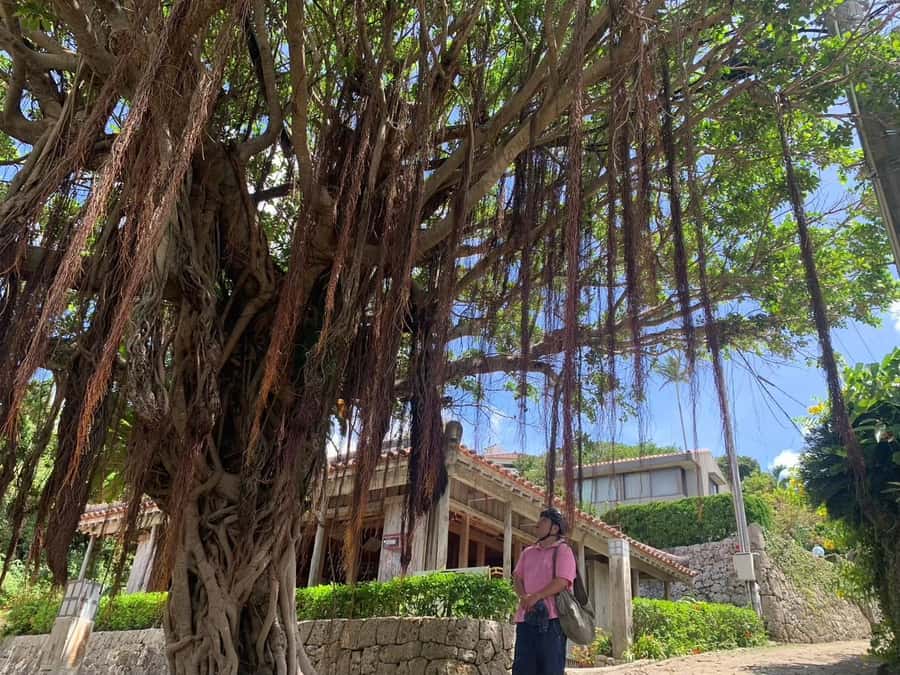
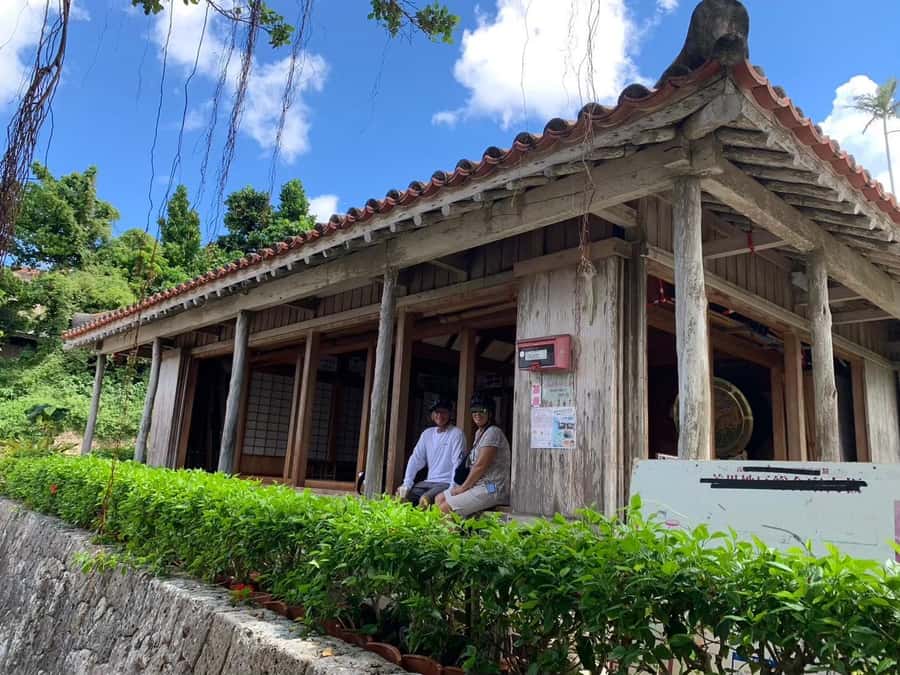
- A close look at Shuri: Ride through stone steps, old trees, red-roofed homes, sacred places, and castle-town streets.
- Handmade Ryukyu sweets: Stop at a confectionery that preserves recipes from the Ryukyu Kingdom era and taste its traditional treats.
- Electric bicycles with intercom helmets: The bikes reduce the strain of hills, while the helmet system helps you hear the guide.
- A genuinely small group: The limit of five participants makes road guidance and questions easier.
- Three hours for $87: A good fit if you want more than a bus tour but do not want to organize a full day of cycling.
Why this ride shows you a different side of Naha
Many people meet Naha through Kokusai Street, the market district, and the monorail. Those places have their uses, but this ride takes you a short distance away from the usual city rhythm. You see the water sources that helped shape local life, then follow the route uphill toward Shuri.
The point is not simply to cover ground. The bicycle lets you move slowly enough to notice small details, such as stone steps, old trees, guardian figures, red roofs, and narrow lanes. You also travel with a guide who can explain how water, religion, royal life, and ordinary homes fit into Okinawa’s past.
An electric bicycle is well suited to this route. Shuri sits above Naha, so the ride includes uphill sections. You still pedal, but the motor takes some pressure off your legs. On the return, the downhill run gives you a pleasant final stretch back toward the shop.
The tour is limited to five people, with English and Japanese guiding available. That matters on city streets. A guide can watch the group more closely than on a large bike outing, and you have a better chance to ask about a spring, shrine, or old house before moving on.
More E-Bike Tours in Japan
- Tokyo Top Highlights 3h Guided E-bike Tour
★ 5.0 · 714 reviews - 3-Hour Tokyo Private E-Bike Tour Starting from Your Hotel
★ 5.0 · 117 reviews - Tokyo: 3h Private E-bike Tours, Starting at Your Hotel
★ 5.0 · 25 reviews
Meeting at Makishi and getting ready to ride
You meet at the e-charity bike shop near Makishi Monorail Station, next to Makishi Post Office. The shop is a one-minute walk from the station, so arrival is simple if you are already moving around Naha by monorail.
The first part is a short safety briefing and bicycle handoff. You receive an electric-assisted bicycle and a helmet with an intercom system. The intercom is useful because it lets you hear the guide without needing to bunch tightly around the person speaking.
The operator lists the bicycles as being in good condition, and that is an important point for a short urban ride. Before setting off, use the briefing to check the brakes, seat height, and electric assist. You should also make sure your footwear feels secure. Sandals and high heels are not suitable, especially near wet or rocky ground.
A phone holder and camera mount are not included. If you want to record the ride, bring a secure way to carry your phone or camera. Do not count on mounting either device to the bicycle.
Riverside streets where old and new Okinawa meet
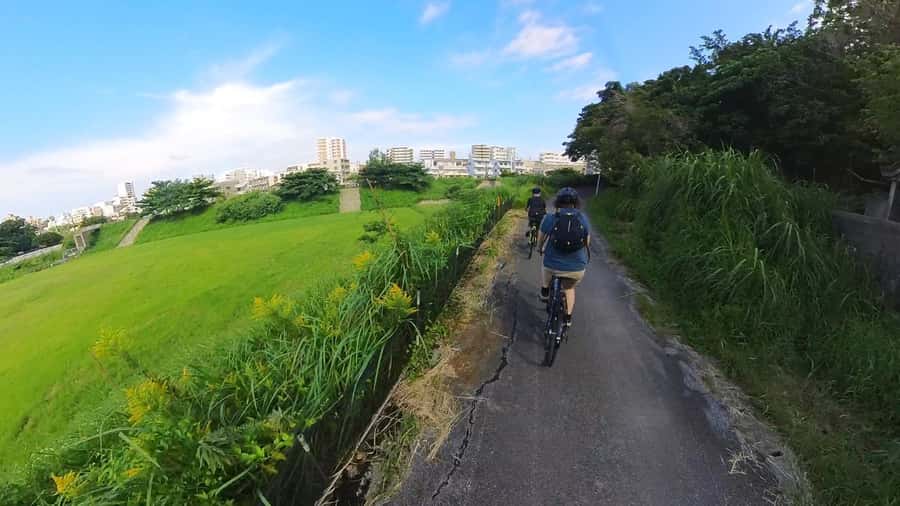
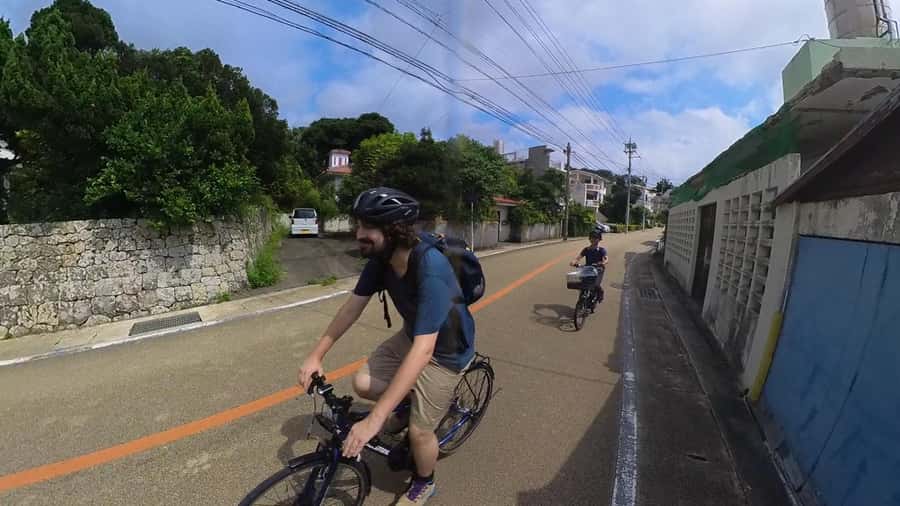
The route begins along the riverside, where traditional and modern homes share the same streets. This is one of the most appealing parts of the ride because it gives you a glimpse of ordinary Okinawan life rather than presenting only major monuments.
You may pass residents going about their day, and the guide encourages simple greetings. That small exchange helps you notice the human scale of the neighborhood. The experience is less about rushing from one famous stop to another and more about seeing how people live around the historic center.
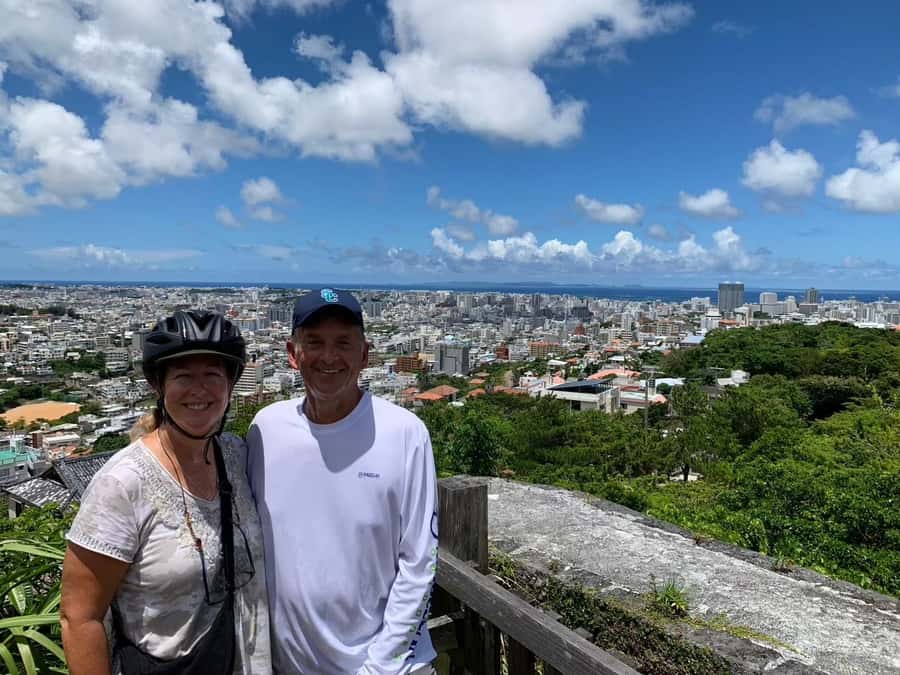
Riding also gives you a better sense of distance and shape. You feel the change from Naha’s commercial streets to quieter residential areas, then toward the higher ground of Shuri. By car, that transition can pass in a blur. On a bicycle, it becomes part of the story.
The route uses public streets, so conditions can change. You should expect to follow the guide’s instructions, watch for traffic, and keep your attention on the road. This is guided urban cycling, not a closed cycling path.
Sashikasa Hijya and the surprise of water in the city
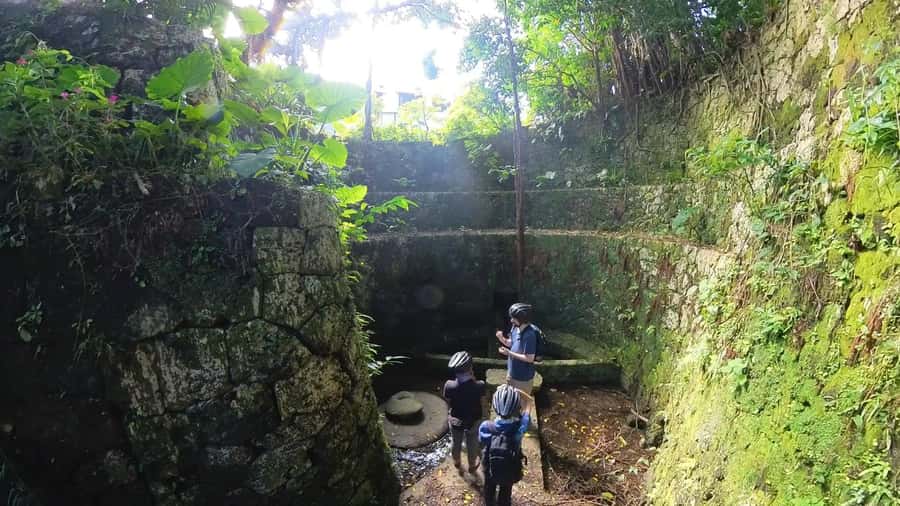
One of the most memorable stops is Sashikasa Hijya, a spring known in the itinerary as 指司笠樋川. You reach it by leaving the main street and moving toward old stone steps and ancient trees.
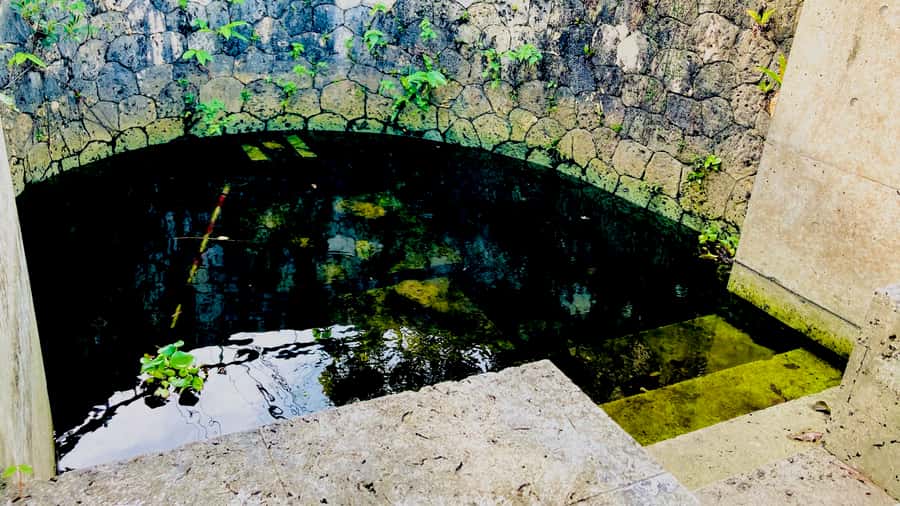
The setting is striking because it feels far removed from the city. A perennial spring and the gentle sound of a waterfall create a cool, quiet pause. The contrast is the real attraction: overhead, the monorail and city traffic belong to modern Naha, while below, water continues to run through a place shaped by much older customs.
This stop also gives the tour its central theme. Water here is not just scenery. Springs helped support homes, gardens, religious places, and community life. A guide can explain the connection between these sources and the people who lived around them.
Take care on the approach. The tour information warns that some places are close to water and rocky ground, and roads may be slippery. Athletic shoes are a must. If you are unsteady on steps or dislike wet stone, this is a point to consider before booking.
More heritage and temple rides in Japan:
- Slow Cycling Tour at Uji’s Matcha Green Tea Fields and Heritage
★ 5.0 · 25 reviews - Cycling Tour at Uji’s Matcha Green Tea Fields and Heritage
★ 5.0 · 10 reviews - Tokyo’s hidden nature cycling tour – Okutama Historical Road Tour
★ 5.0 · 6 reviews - Kurashiki History and Culture Guided Cycling Tour
★ 5.0 · 5 reviews
A second spring, forest sounds, and waterfowl
After passing through residential streets, the route reaches another spring. Here, waterfowl gather from the nearby forest, and the soundscape changes again.
This is not a grand attraction with a large entrance sign. Its value comes from the pause. You hear water and birds rather than the usual city noise, and the guide gives you time to notice the setting. The quiet can feel almost suspended, especially after riding through Naha’s denser streets.
I like this part because it shows why the tour uses bicycles instead of simply driving between historic sights. You can reach small places that would be easy to miss, stop without a long formal visit, and connect the natural features with the neighborhoods around them.
Do not expect a long nature walk or a wildlife excursion. The supplied details promise a spring, forest sounds, and waterfowl, but not a set number of birds or a particular viewing time. Think of it as a calm stop within a history and cycling tour.
Ryukyu sweets made by hand
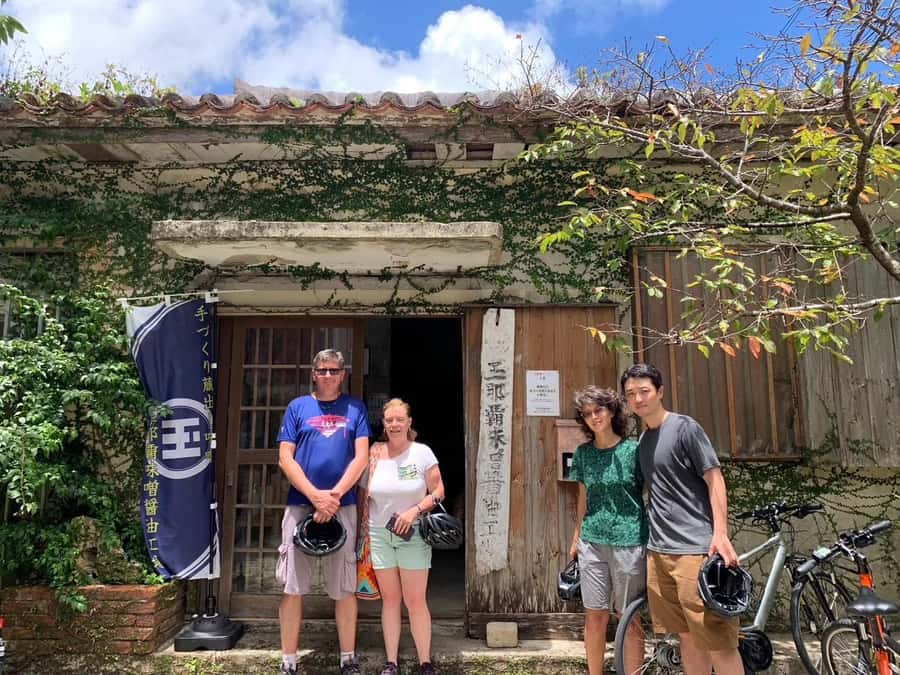
The confectionery stop brings the royal-court theme down to something you can taste. The shop preserves recipes passed down since the Ryukyu Kingdom era and makes each sweet by hand.
You can see the production process and sample the sweets. The stop is more than a quick snack because it connects food with hospitality. Traditional confectionery was part of the way important guests were welcomed, and the shop keeps that link alive through its recipes and careful preparation.
The sweets are described as small handmade treats, with a history stretching back more than 100 years at the shop highlighted by the tour. One review specifically calls the bakery stop a good idea and notes that the treats are prepared and packaged by hand. That gives you a useful expectation: this is a craft-based food visit, not a large tasting menu.
The timing of the stop also helps the ride. Three hours on a bicycle can feel more manageable when the route includes a cultural break. You get a chance to rest, taste something local, and ask questions before the climb toward Shuri.
The vermilion gate and the climb toward Shuri
The route then reaches the vermilion gate regarded as a symbol of Okinawa. Its balanced design and bright color make it a natural photo stop, and the tour gives you time to take commemorative pictures.
This is the point where the ride begins to feel more openly connected to the Ryukyu Kingdom. The gate is not just a colorful backdrop. It signals the royal and religious world of Shuri, where architecture, ceremony, and belief were closely linked.
From here, you slowly climb through the old castle-town area. The electric assist earns its keep on this section. You still need to pedal and steer, but the motor reduces the effort of the incline.
Look for red roofs, stone pillars, guardian figurines, and older streets. These details help you read the town as a historic place rather than just a route to the castle. The guide can point out features that might otherwise blend into the neighborhood.
The climb may be the hardest part for some riders. The assist does not remove every hill, and the route includes uneven or potentially slippery sections. If you are not comfortable cycling uphill, you should think carefully before reserving this experience.
Shuri Castle and the old capital
Shuri Castle served as the capital of the Ryukyu Kingdom, and the surrounding streets make that history feel local and physical. The tour takes you through the castle area, with cobblestones, temples, and sacred shrines along the way.
This section is valuable because it avoids treating Shuri Castle as an isolated monument. The royal center was connected to homes, religious sites, roads, and natural water sources. As you ride through the area, you see more of the setting that supported the old capital.
The supplied details do not list a castle admission ticket among the inclusions. The included items are the guided tour, helmet with intercom, and electric bicycle rental. You should therefore confirm what parts of the castle grounds or buildings are covered before booking if entering the main buildings is important to you.
Even without a formal interior visit, the castle-town streets offer plenty to notice. Cobblestones, shrines, stonework, and roof ornaments give you a sense of the Ryukyu period. The guide also helps connect Okinawan religious beliefs with the places you pass.
The downhill return to Makishi
After the Shuri portion, the return is mainly downhill. This is the fun reward for the earlier climb. You can coast with the wind, though you still need to control your speed and follow the guide through city streets.
The route ends back at the original bike shop. You return the bicycles and helmets, and the tour finishes there, leaving you free to continue around Naha on your own.
That ending is convenient. You are near Makishi and the central shopping and food areas, so you do not need to arrange a separate ride back from a distant suburb. It also makes the tour easy to fit into a larger Naha day, provided you allow time before and after the three-hour activity.
Is $87 a fair price?
At $87 per person, this is not the cheapest way to see Shuri. You could walk through parts of the area for little cost, and public transport can take you close to major sights.
The value comes from what the fee bundles together: a bicycle, electric assistance, safety equipment, a small group, a live English or Japanese guide, route planning, nature stops, local history, and a traditional sweet tasting. You are paying for access to a connected experience rather than a simple bicycle rental.
I consider the price reasonable for visitors who want active sightseeing but have limited time. Planning this route alone would mean finding the springs, working out the safest streets, managing the Shuri climb, and locating the confectionery stop. The guide removes that planning burden.
The value is weaker if you already know Naha well, dislike cycling, or mainly want to spend time inside Shuri Castle. In those cases, a self-guided visit may give you more freedom and a lower total cost.
Weather, clothing, and who should book
Okinawa weather can change quickly. If the precipitation chance rises above 70 percent or severe weather is expected, the operator may alter the plan. You may be contacted from three days before the tour through the day before if changes are needed.
Wear athletic shoes and comfortable clothing. Avoid high heels and sandals because of wet roads, rocks, and uneven surfaces. Bring only what you can carry securely, especially since a phone holder and camera mount are not provided.
The tour suits you best if you:
- Can ride a bicycle confidently in a city setting
- Want local history mixed with light exercise
- Like small groups and direct contact with a guide
- Are curious about springs, shrines, food traditions, and ordinary neighborhoods
- Have about three hours to spare in Naha
- Prefer an active outing to a standard bus tour
It is not suitable for someone who cannot ride a bicycle or uses a wheelchair. Children aged one to five may be able to ride in a child seat attached to a parent’s bicycle, but you need to consult the staff about that arrangement in advance.
The guide team has included Jo-Jo, Aki, Sally, and Maki. The strongest pattern is clear: the experience depends heavily on the guide’s road care, English ability, and skill at explaining Okinawa’s past. The feedback on these guides has been especially positive, with Aki noted for polite, experienced guidance and Sally for making nature and history easy to understand. Even poor weather has not necessarily ended the fun, but you should still dress for the forecast.
Should you book this Shuri e-bike tour?
Book it if you want to connect Naha’s water sources, neighborhood life, Ryukyu sweets, and Shuri Castle in one compact outing. The springs and waterfall are the most distinctive stops, while the e-bike makes the uphill route practical for many riders.
Skip it if you cannot ride, need a fully accessible experience, or want a slow, detailed visit inside the castle buildings. Also think twice if wet stone, city cycling, or hills make you uncomfortable.
For the right rider, $87 buys more than transport. It gives you a well-shaped introduction to Shuri, with enough history to add meaning to the sights and enough time on quiet streets to feel the city beyond its main attractions.
FAQ
Where does the tour begin?
It begins at the e-charity bike shop near Makishi Monorail Station, next to Makishi Post Office. The shop is about a one-minute walk from the station.
How long does the cycling tour last?
The activity lasts three hours, including the ride, guided stops, sweet tasting, and return to the bike shop.
What languages are available?
Live guiding is available in English and Japanese.
How many people can join the tour?
The tour is limited to five participants.
Is an electric bicycle included?
Yes. The tour includes an electric-assisted bicycle rental and a helmet with an intercom system.
Do I need to bring special footwear?
Yes. Athletic shoes or similar footwear are recommended. Avoid high heels and sandals because some roads and areas near the water may be slippery or rocky.
Can children join the tour?
Children aged one to five may have a child seat attached to a parent’s bicycle. You need to consult the staff for details.
Is the tour suitable for wheelchair users?
No. The activity is not suitable for wheelchair users or people who cannot ride a bicycle.
What happens if the weather is severe?
If the precipitation probability exceeds 70 percent or severe weather is expected, the operator may change the plan. Contact may come from three days before the activity through the day before.
More Heritage Tours in Japan
- Sukhothai: Historical Park & Countryside Cycling Tour
★ 5.0 · 276 reviews - Full Day Cycling tour to Sukhothai Historical Park
★ 5.0 · 163 reviews - Berlin Wall History Small Group Cycling Tour
★ 4.9 · 152 reviews - Discover Trang An Natural World Heritage, Bich Dong Pagoda, Cycling Day Tour
★ 5.0 · 82 reviews
More E-Bikes in Japan
- Tokyo: Private Cycling Tour with cute E-bike
★ 5.0 · 11 reviews - Half-Day Shimanami Kaido Private E-Bike Cycling Tour – 3 Routes
★ 5.0 · 4 reviews - Tokyo: Super Local Private E-bike Cycling Tour from Asakusa
★ 5.0 · 4 reviews - Tokyo Non-Touristy Local Private E-bike Cycling Tour from Asakusa
★ 5.0 · 2 reviews
Just added around Japan
- Slow Cycling Tour at Uji’s Matcha Green Tea Fields and Heritage★ 5.0 · 25 reviews
- Tokyo Non-Touristy Local Private E-bike Cycling Tour from Asakusa★ 5.0 · 2 reviews
- Little Adventure with Cycling in Tokyo No. 1 Crystal Clear River★ 5.0 · 6 reviews
- Tokyo Night Bike Tour: From Shibuya to Tokyo Tower via Roppongi★ 5.0 · 29 reviews
- 2.5 Hour-Guided Cycle Tour in the Central Tokyo★ 5.0 · 25 reviews
- Tokushima & Mt. Bizan BROMPTON Slow Cycling Tour★ 5.0 · 5 reviews
- Tokyo’s hidden nature cycling tour – Okutama Historical Road Tour★ 5.0 · 6 reviews
- Wakimachi BROMPTON Slow Cycling Tour★ 5.0 · 5 reviews
Heritage & Temple Bike Tours, compared.

Half-Day Ubud Electric Cycling Tour to Tirta Empul Water Temple
Read our review →

Full Day Cycling tour to Sukhothai Historical Park
Read our review →

Discover Trang An Natural World Heritage, Bich Dong Pagoda, Cycling Day Tour
Read our review →

Full-Day Historical Park Cycling Tour with Lunch
Read our review →
Full Day Cycling Amazing Chiangrai countryside and the White temple
Read our review →Browse the lists this tour appears in