
Review · JAPAN
Kurashiki History and Culture Guided Cycling Tour
Kurashiki’s best stories are not all on the postcard streets. This small-group tour begins in the Bikan Historical Quarter, then follows old waterways by bicycle toward Sakazu Reservoir, where former canals, vanished rivers, pottery, mills, and entertainment districts help explain how Kurashiki grew.
I like the way the tour connects visible streets with invisible waterways, and I like the visit to Sakazuyaki Kamamoto, a pottery workshop that gives the outing a personal local touch. The main consideration is physical: you will walk and cycle for nearly four hours, and lunch or café drinks are not included.
Key points to know before booking
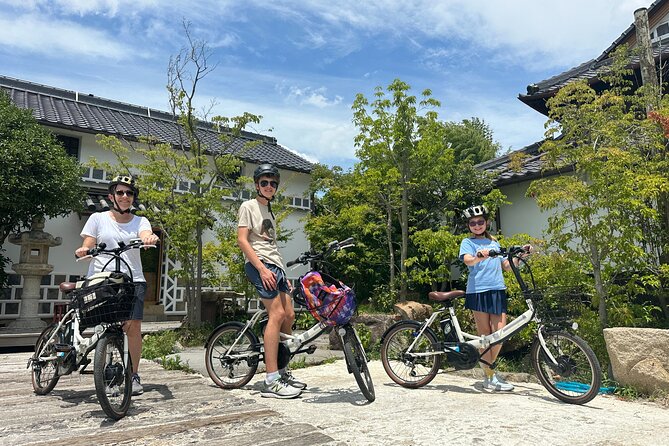
- A three-person maximum: This is a very small tour, so you can ask questions without competing with a busload of people.
- Shota Oura as your guide: His tours combine local stories with an easygoing, flexible approach.
- The Bikan Quarter is only the beginning: Much of the appeal comes after you leave the best-known streets.
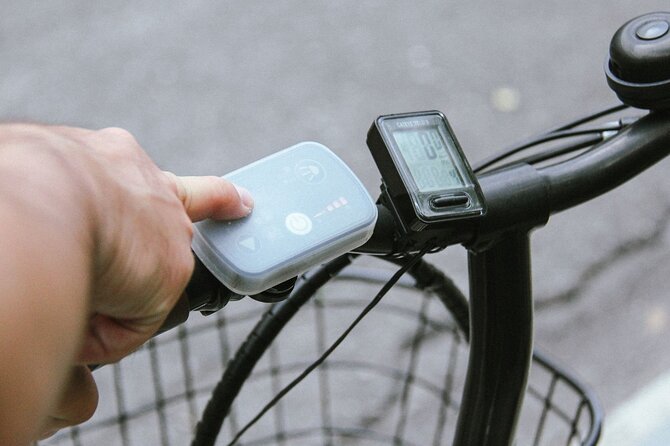
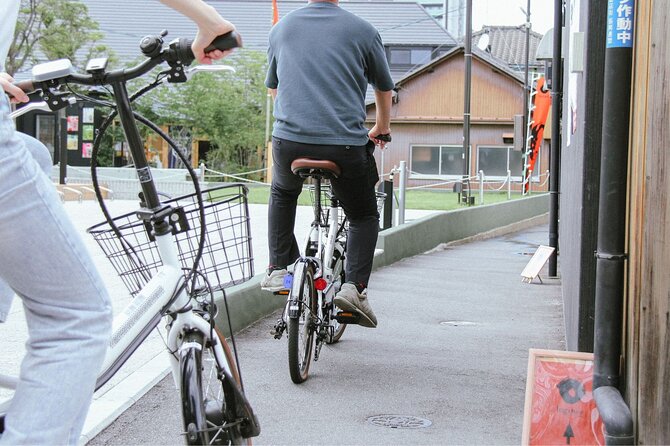
- E-bikes are used: They made the ride comfortable for families and helped in Japan’s summer heat.
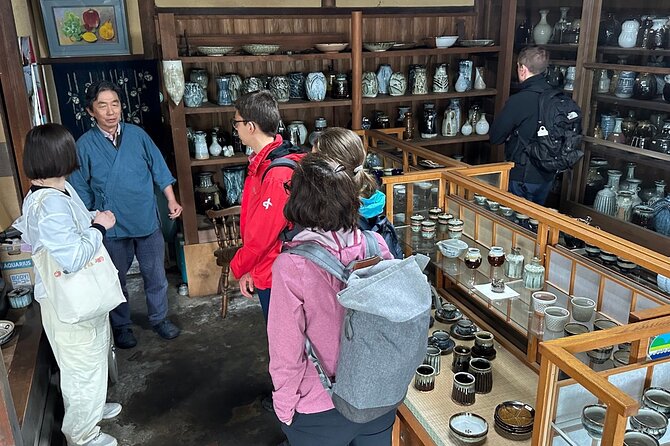
- A pottery workshop adds depth: Sakazuyaki Kamamoto offers a look at a local craft tradition rather than another standard sightseeing stop.
- The ride is best for moderately fit visitors: Children can join, but a height of about 140 centimeters or more is recommended.
Start in Kurashiki’s preserved canal district
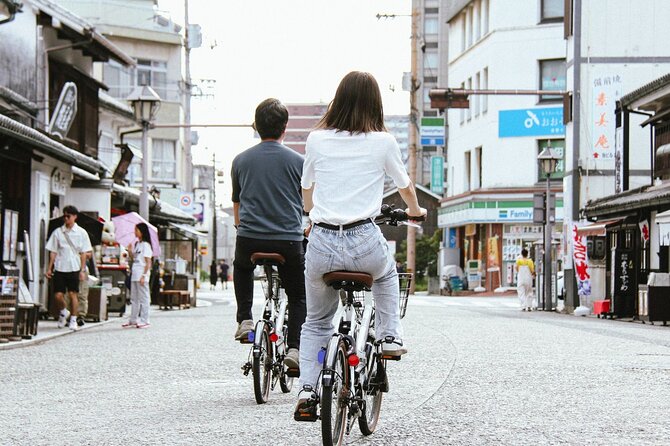
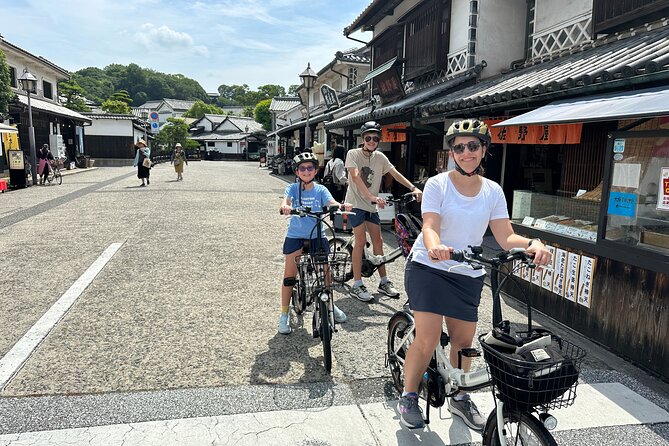
The tour begins at 2-chōme-6-1 Chūō, in the Kurashiki Bikan Historical Quarter. This is the part of town most people picture first: white-walled storehouses, dark timber, traditional façades, and the Kurashiki River running through the historic center.
The opening section lasts about 45 minutes and is done on foot. That matters because the district makes more sense when you learn what you are looking at before getting on a bicycle. The tour focuses on the idea of a river that is still part of Kurashiki’s story even where the water is no longer visible.
Four hundred years ago, Kurashiki’s waterways were tied to trade and transport. The river had a broad bed, and Takasebune boats moved goods along it. Some sections later disappeared underground into culverts called ankyo. Your guide uses that change to show how a historic water system can remain important even after its original form has vanished.
I like this approach better than a quick photo stop. You are not simply told that the quarter is old. You get a sense of how water, storage buildings, shipping, and commerce shaped the town.
The Bikan Quarter can be busy, especially around its most photographed lanes. This tour does not treat the district as a sealed museum. Instead, it uses the familiar streets as the starting point for a larger story about Kurashiki’s past and present.
More heritage and temple rides in Japan:
- Slow Cycling Tour at Uji’s Matcha Green Tea Fields and Heritage
★ 5.0 · 25 reviews - Shuri+Naha: Cycling Tour Explore Water Heritage with E-Bike
★ 4.9 · 22 reviews - Cycling Tour at Uji’s Matcha Green Tea Fields and Heritage
★ 5.0 · 10 reviews
Follow the old river route toward Sakazu Reservoir
After the walking portion, you switch to bicycles and head upstream along the Kurashiki River and nearby irrigation canals. Sakazu Reservoir is about three kilometers away, but the value of this section is not the distance. It is the sequence of clues along the route.
You pass places connected to Kurashiki’s former entertainment districts, its role as a transportation center, and the spinning mills that once operated in the area. These are the kinds of details that are easy to miss if you stay only in the Bikan Quarter.
The route also helps you compare the river as it exists now with the waterway of the past. Materials and surviving traces explain where boats once traveled and how later changes altered the route. You get both the physical ride and the historical explanation, which makes the countryside outside the center feel connected rather than random.
The bicycles are a practical advantage in Kurashiki. A three-kilometer destination may not sound far, but cycling lets you cover several points of interest without spending the whole afternoon walking between them. The e-bikes mentioned by participants are especially useful in hot weather. They also make the outing more approachable for families and for anyone who does not regularly cycle long distances.
Still, this is not a passive sightseeing tour. You need a moderate level of fitness, and you should be comfortable riding a bicycle. The tour recommends children be at least 140 centimeters tall. One family with children aged 14 and 11 found the biking manageable, but height and comfort matter more than age alone.
Sakazu Reservoir: a destination with a story
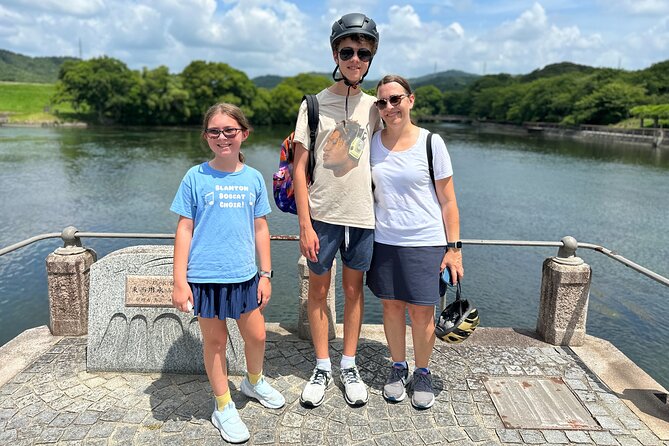
The Sakazu Reservoir is the main cycling destination. The stop itself is listed as about 15 minutes, so do not expect a long break built around resort-style views or an extended nature walk. Its importance comes from the historical route you have taken to reach it.
Here, the guide can tie together the river, irrigation channels, and changing use of the land. The water system was not simply scenery. It supported movement, farming, industry, and daily life.
This is one reason I would choose this experience over a standard bicycle rental. Renting a bike gives you freedom, but not the explanation that turns a canal, pond, or culvert into part of a larger story. With Shota Oura, the ride is designed around the meaning of the places you pass.
The short stop also keeps the tour moving. You still have time for the pottery workshop and the café portion without turning the day into a long-distance cycling trip.
Meet the potter at Sakazuyaki Kamamoto
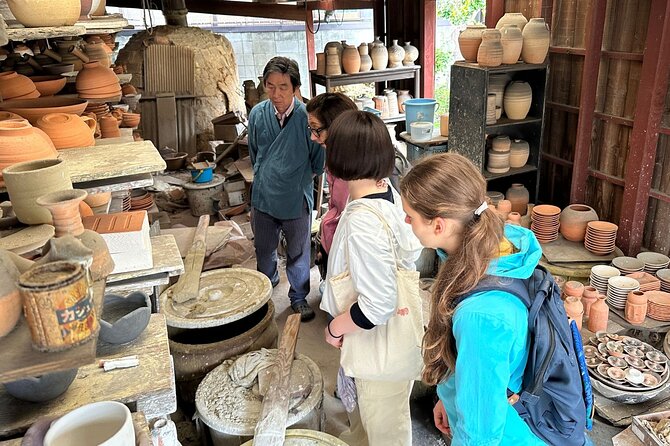
The most distinctive stop is Sakazuyaki Kamamoto, where you visit the workshop of potter Kensaku Okamoto. The listed visit lasts about 20 minutes, and it follows the discussion of the vanished Higashi Takahashi River and a transformed pond.
That combination is telling. The workshop is not inserted as a generic craft demonstration. It fits the tour’s wider theme: places change, waterways shift, industries disappear, and local traditions can continue in new forms.
I would give this stop special weight when deciding whether to book. The Bikan Historical Quarter is easy to find on your own, and Kurashiki’s central sights are well known. A working pottery studio outside the standard center gives you something less predictable.
You may not get a long hands-on lesson, since the scheduled visit is short. But you do get a direct connection to a local craft and to a person carrying that tradition forward. The pottery studio was the highlight for several people who took the tour, and that makes sense. It brings the history down to human scale.
The studio’s website is available only in Japanese, though a translation tool may help if you want to learn more afterward. That is a small practical point, but it also signals that this is a local place rather than a presentation built mainly for international tourism.
More heritage tours in Japan:
- Tokyo’s hidden nature cycling tour – Okutama Historical Road Tour
★ 5.0 · 6 reviews - Sukhothai: Historical Park & Countryside Cycling Tour
★ 5.0 · 276 reviews - Full Day Cycling tour to Sukhothai Historical Park
★ 5.0 · 163 reviews - Berlin Wall History Small Group Cycling Tour
★ 4.9 · 152 reviews
Lunch and café time are separate costs
The schedule refers to lunch at a café after the cycling portion, but food and drinks are not included in the tour price. Plan to pay separately.
This is worth keeping clear when comparing the cost with other half-day activities. At $53.65 per person, the fee covers the guide, rental bicycle, and insurance premium. Your actual spending will be higher if you buy lunch or drinks.
The café break gives the day a useful pause, especially in warm weather. It also keeps the outing from being an unbroken sequence of walking, riding, and listening. But you should not assume that the listed price includes a meal.
The exact food options, café menu, and dietary arrangements are not specified. If lunch is important to your schedule, ask the operator when booking.
Why the small group changes the experience
The maximum group size is three people. That is unusually intimate for a guided city-and-cycling tour, and it affects the whole rhythm.
You can stop to ask about a former mill, a canal, or a local custom without holding up a large group. The guide can also adjust explanations to your interests. Shota Oura is described as patient, friendly, and willing to arrange alternatives when needed.
That flexibility is especially helpful on a bicycle. Large groups often have to follow a fixed pace. Here, the tour can feel less like a procession and more like a conversation that happens to move through Kurashiki.
Small groups have one possible downside: availability may be limited. The experience is often booked about 24 days in advance, and confirmation depends on availability. If you want a particular date, especially during a busy travel period, reserve early.
The guide’s role is central
A good guide matters more on this tour than on a simple sightseeing walk. Much of what makes the route special is not immediately obvious. A former entertainment district may look ordinary. An underground waterway may leave little to see. A changed pond may seem like just another body of water.
Shota Oura’s role is to connect those details. He has been described as patient and informative, while still keeping the pace relaxed. The tour also received praise for covering many locations without feeling rushed.
That balance is important. A guide who talks nonstop can make a bicycle ride tiring. A guide who gives too little context leaves you wondering why a particular street or canal matters. This outing appears designed to keep the explanations tied to the places in front of you.
The guide also responded well to summer heat, with one account noting that the ride offered relief during a hot day. E-bikes help, but you should still dress for the weather and bring what you need for a moderate outdoor activity.
Price, timing, and practical details
The tour costs $53.65 per person and lasts about three hours and 45 minutes. The fee includes the rental bicycle and insurance premium. Food and drinks at the café are extra.
For the price, I see the value in three things: a private-feeling group of no more than three, a guide-led walk through the Bikan Quarter, and access to a less familiar route beyond the center. The pottery workshop adds another layer that a normal city walk may not provide.
The duration makes this a useful half-day plan. It is long enough to go beyond the central sights but short enough to leave room for a museum, dinner, or another Kurashiki activity later.
The tour starts at 2-chōme-6-1 Chūō and ends at TAKAHASHIGAWA TRAVEL in Achi, 2-chōme 209, Kurashiki. The end point is different from the start, so check the addresses before you set out. The activity is near public transportation.
You receive booking confirmation within 48 hours, subject to availability. Free cancellation is available up to 24 hours before the start time. Cancellations made less than 24 hours before the start time are not refunded, and late changes are not accepted.
Who should book this Kurashiki bike tour?
I would choose this tour if you have already decided to see Kurashiki’s famous historic quarter but want more than the usual central walk. It is particularly suitable if you enjoy local history, old transport routes, traditional crafts, and small-group guiding.
Families can also consider it. The e-bikes made the ride comfortable for one family with children aged 14 and 11, but the recommended height is about 140 centimeters or taller. Anyone nervous on a bicycle should think carefully before booking.
This is less suitable if you want a relaxed café crawl, a long pottery class, or a fully food-inclusive excursion. The cycling and walking are central to the experience, and the listed stop at the pottery studio is brief.
Should you book it?
Book this tour if you want to see how Kurashiki works beyond its prettiest streets. The Bikan Quarter gives you the classic setting, but the river route, Sakazu Reservoir, old industrial traces, and Sakazuyaki Kamamoto provide the real reason to go.
At $53.65, the price is fair for a guided outing with bicycle rental, insurance, and a group capped at three. Just budget extra for lunch and drinks, reserve ahead if your schedule is tight, and be ready for nearly four hours of walking and cycling.
FAQ
Where does the Kurashiki cycling tour start?
It starts at 2-chōme-6-1 Chūō, Kurashiki, Okayama 710-0046, Japan.
Where does the tour end?
The tour ends at TAKAHASHIGAWA TRAVEL, located in Achi, 2-chōme 209, Kurashiki, Okayama 710-0055, Japan.
How long does the experience last?
The tour lasts approximately three hours and 45 minutes.
What is included in the price?
The price includes a rental bicycle and an insurance premium.
Is lunch included?
No. Food and drinks at the café are not included.
How many people can join?
The tour has a maximum of three participants.
Are children allowed to participate?
Yes. Children are welcome, though a height of about 140 centimeters or taller is recommended.
Do participants use e-bikes?
E-bikes are used on the tour, according to participant details supplied for the experience.
How far is Sakazu Reservoir from the Bikan Historical Quarter?
Sakazu Reservoir is about three kilometers from the Kurashiki Bikan Historical Quarter.
Can I cancel for a full refund?
Yes, if you cancel at least 24 hours before the experience start time. Cancellations made less than 24 hours in advance are not refunded.
Just added around Japan
- Slow Cycling Tour at Uji’s Matcha Green Tea Fields and Heritage★ 5.0 · 25 reviews
- Tokyo Non-Touristy Local Private E-bike Cycling Tour from Asakusa★ 5.0 · 2 reviews
- Tokyo Night Bike Tour: From Shibuya to Tokyo Tower via Roppongi★ 5.0 · 29 reviews
- 2.5 Hour-Guided Cycle Tour in the Central Tokyo★ 5.0 · 25 reviews
- Little Adventure with Cycling in Tokyo No. 1 Crystal Clear River★ 5.0 · 6 reviews
- Tokushima & Mt. Bizan BROMPTON Slow Cycling Tour★ 5.0 · 5 reviews
- Tokyo’s hidden nature cycling tour – Okutama Historical Road Tour★ 5.0 · 6 reviews
- Wakimachi BROMPTON Slow Cycling Tour★ 5.0 · 5 reviews
Heritage & Temple Bike Tours, compared.
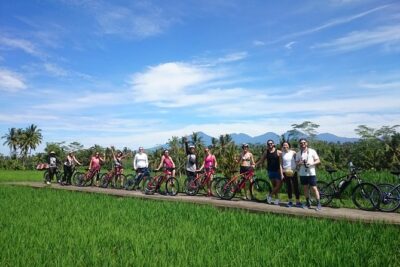
Half-Day Ubud Electric Cycling Tour to Tirta Empul Water Temple
Read our review →
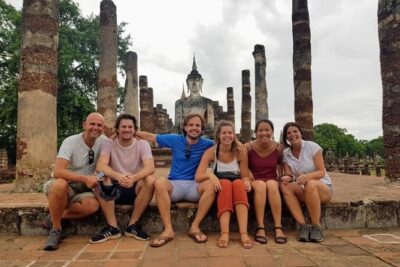
Full Day Cycling tour to Sukhothai Historical Park
Read our review →
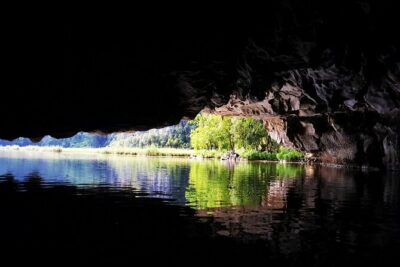
Discover Trang An Natural World Heritage, Bich Dong Pagoda, Cycling Day Tour
Read our review →
Full-Day Historical Park Cycling Tour with Lunch
Read our review →
Full Day Cycling Amazing Chiangrai countryside and the White temple
Read our review →Browse the lists this tour appears in