
Review · TOKYO
Tokyo: 3h Private E-bike Tours, Starting at Your Hotel
Tokyo reveals itself best between destinations, and this private e-bike tour gives you three hours to ride through that in-between city. You may pass from skyscrapers to narrow back streets, imperial avenues to old neighborhoods, and major sights to places you would likely miss underground on the train.
I like the hotel pickup and return, which removes a small but real Tokyo headache. I also like the electric bikes, since they make a 15 to 20 kilometer route manageable without turning your morning into a workout. The main drawback is the price, $154 per person, plus possible charges for major changes or extensions. It also is not suitable for children under 12, riders below 145 centimeters, or people over 100 kilograms.
Key points to know
- Hotel-to-hotel convenience: Meet your guide in your hotel lobby and finish back at your hotel, provided it is within the service area.
- A useful Tokyo range: Cover roughly 15 to 20 kilometers, with stops in districts such as Shinjuku, Shibuya, Ginza, Asakusa, or along the Sumida River.
- Electric assistance: The e-bike motor helps as you pedal, making hills and a long city route less tiring.
- Truly private routing: Your guide proposes a plan, but you can request certain sights, a different start time, or a longer ride for an added fee.
- Strong guide-led experience: Kazuma is frequently named as a friendly, patient, safety-conscious guide who explains neighborhoods clearly and adjusts bikes to fit.
- Bring practical clothing: Wear closed shoes and trousers or shorts. Sandals, flip-flops, high heels, skirts, smoking, and alcohol are not allowed.
Tokyo by bike instead of by train
Tokyo is easy to cross by rail, but trains show you very little of the city between stations. On a bike, you notice the change from a glass tower district to a quiet lane, from a formal shrine approach to a tiny shopping street.
That is the real value here. You are not simply checking off landmarks. You are moving through the city at street level, with time to stop, hear an explanation, take a photo, and continue when you are ready.
The ride usually covers 15 to 20 kilometers. That is a substantial distance for three hours, but the electric assistance changes the feel of it. You still pedal, yet the motor helps you keep moving, particularly on inclines. I would call this an active sightseeing tour, not a strenuous cycling excursion.
The private format matters in Tokyo. A group of strangers may need to follow a fixed route and pace. Here, your guide can slow down for a shrine, shorten a section, or spend more time in a district that interests you. You can also request a particular starting time, extra duration, or distant sight, though these changes may cost more.
More E-Bike Tours in Japan
- Tokyo Top Highlights 3h Guided E-bike Tour
★ 5.0 · 714 reviews - 3-Hour Tokyo Private E-Bike Tour Starting from Your Hotel
★ 5.0 · 117 reviews - Tokyo: Private Cycling Tour with cute E-bike
★ 5.0 · 11 reviews
Meeting your guide at the hotel
The tour begins in the hotel lobby, where you should look for a guide with a bike helmet about five minutes before the scheduled pickup. The service covers several central areas, including Roppongi, Shibuya, Toranomon, Ebisu, Ginza, Marunouchi, Shinbashi, Asakusa, Shibakoen, Nishishinjuku, Hatchobori, Suido, Hibiya Park, Nagatacho, and Shinagawa City.
Starting at your hotel is more useful than it may sound. Tokyo has many station exits, large underground passages, and meeting points that can be hard to explain to a taxi driver. You do not need to find a bike shop or get across town before the ride begins.
The same hotel convenience applies at the end. You can finish tired, warm, or pleasantly windblown without working out another route to your next stop. If your hotel is outside the service area, the operator can discuss another starting point, with an additional charge possible.
Before the ride, expect a safety briefing and bike fitting. Kazuma has been praised for adjusting each bike to the rider, and that is especially important for a mixed group with different heights or cycling confidence.
The route from skyscrapers to side streets
There is no single fixed sightseeing circuit. Your guide proposes a route based on your hotel, interests, weather, and available time. The following places are possible, not guaranteed stops, so tell the operator what matters most when you book.
Shinjuku and the west side
A Shinjuku-focused route can begin near the Tokyo Metropolitan Government Office, one of the area’s most recognizable civic buildings. From there, the ride may move toward Omoide Yokocho, also called Memory Lane, where tiny food alleys offer a sharp contrast to the surrounding towers.
Shinjuku is a good place to understand Tokyo’s contrasts quickly. You can see major offices and transport links, then turn into older, tighter streets within minutes. The drawback is traffic and crowds, especially around the busiest station areas. Your guide’s safety instructions and pace are important here.
More Private Cycling Tours in Japan
- Tokyo: Super Local Private E-bike Cycling Tour from Asakusa
★ 5.0 · 4 reviews - Tokyo Non-Touristy Local Private E-bike Cycling Tour from Asakusa
★ 5.0 · 2 reviews - Private Afternoon Cycling Tour in Hida-Furukawa
★ 5.0 · 109 reviews - Private-group Morning Cycling Tour in Hida-Furukawa
★ 5.0 · 105 reviews
Meiji-era avenues and Olympic sites
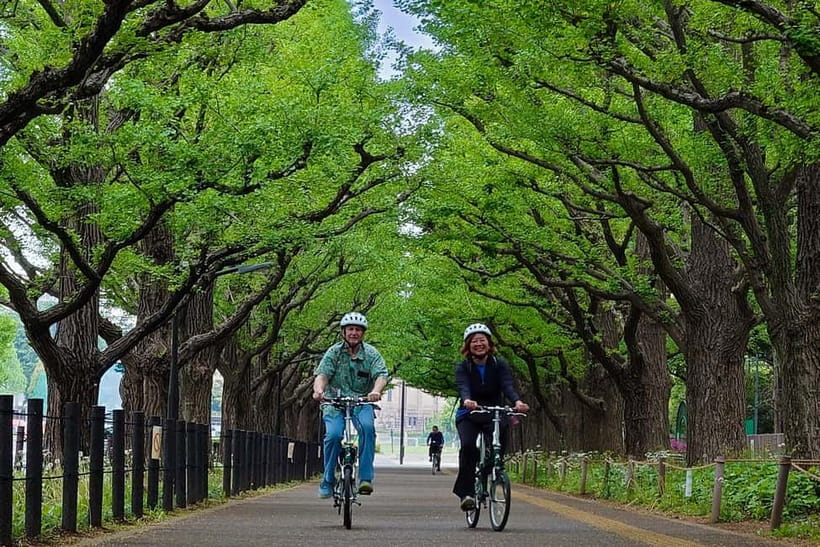
The route may continue toward Hatonomori Hachiman Shrine, the National Stadium, and Gaien Ginkgo Tree Avenue. The shrine provides a quieter pause, while the stadium and avenue place modern Tokyo alongside broad formal roads and public spaces.
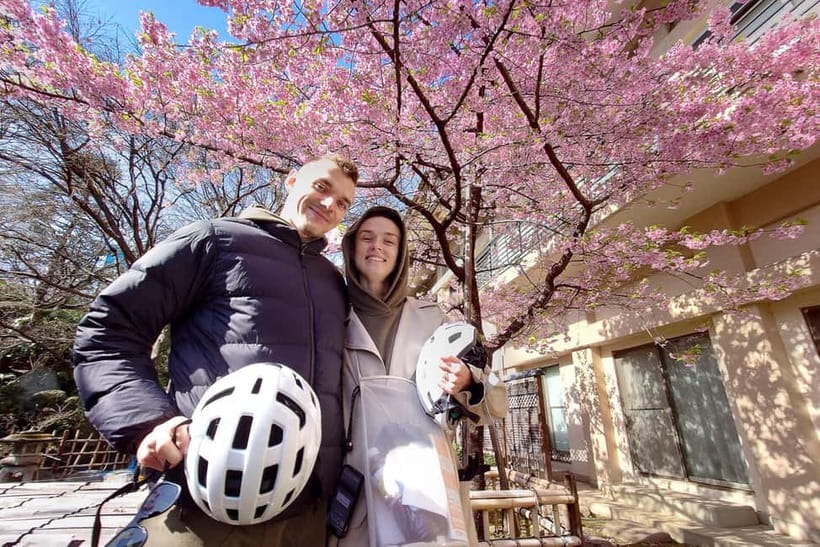
Aoyama Cemetery’s cherry blossom street is another possible stop. It can be particularly appealing during blossom season, but the tour does not promise seasonal flowers. You should also remember that cycling time is limited. A request for several distant sites may mean shorter stops at each one.
Shibuya and central Tokyo
Shibuya Crossing is one of the obvious requests, and seeing it by bike gives you a sense of how quickly the city changes around a major junction. The area can be crowded and hectic, so this is more of a brief viewing and photo stop than a relaxed cycling stretch.
From there, the route can shift east toward Hibiya Park, the Imperial Palace, Tokyo Station, and Nihonbashi Bridge. Hibiya Park is notable as Tokyo’s first western-style park, while the Imperial Palace area offers broad roads and a calmer feel than Shibuya. Tokyo Station brings grand architecture and a major transport hub into the route, and Nihonbashi connects the modern center with older commercial Tokyo.
I like this part of the possible itinerary because it links several important districts without requiring you to navigate Tokyo’s rail system. You get a useful orientation to the city center, though the number of stops depends on how much time you spend off the bikes.
Tsukuda Island and Tsukishima
A ride toward Tsukuda Island and Tsukishima offers a different side of Tokyo. The area includes older streets and the famous Monja Street, associated with monjayaki, a soft savory dish cooked on a hot plate.
Food is not included, so plan to eat before or after the tour rather than expecting a tasting stop. You may pause for a look or explanation, but the three-hour price covers the guide, bike, helmet, safety instruction, insurance, and tour itself, not meals or drinks.
Tokyo Tower and Zojo-ji Temple
Zojo-ji Temple and Tokyo Tower make a strong pairing. The temple gives you a traditional religious setting, while the tower is one of the city’s best-known modern symbols. Shibakoen and nearby central districts can fit naturally into a route starting around Roppongi, Toranomon, or Shinbashi.
This section may appeal to first-time visitors who want recognizable Tokyo sights without spending the entire tour in the busiest shopping zones. As always, ask for specific stops in advance if one landmark matters to you.
Asakusa, the Sumida River, and Tokyo Skytree
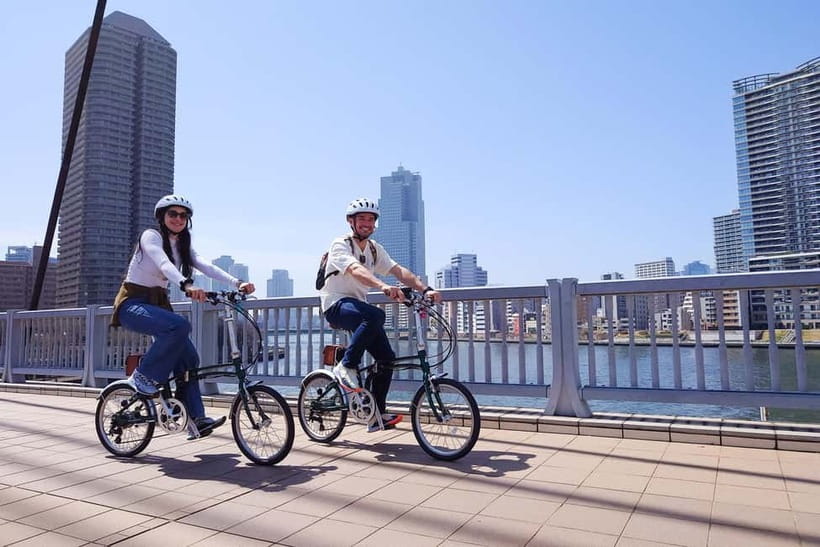
An eastern route can include Asakusa’s Kaminarimon Gate, the Sumida River, and Tokyo Skytree. Kaminarimon is a natural visual anchor, while the riverfront gives you room to see Tokyo from a more open angle.
The route may also reach Kitasenju, a local neighborhood with a more everyday feel, and the Arakawa Riverside. These areas are useful if you want more than postcard Tokyo. They also require careful planning because they are farther from some hotel pickup zones. A distant request can lead to an extra charge or less time at other stops.
What the electric bikes change
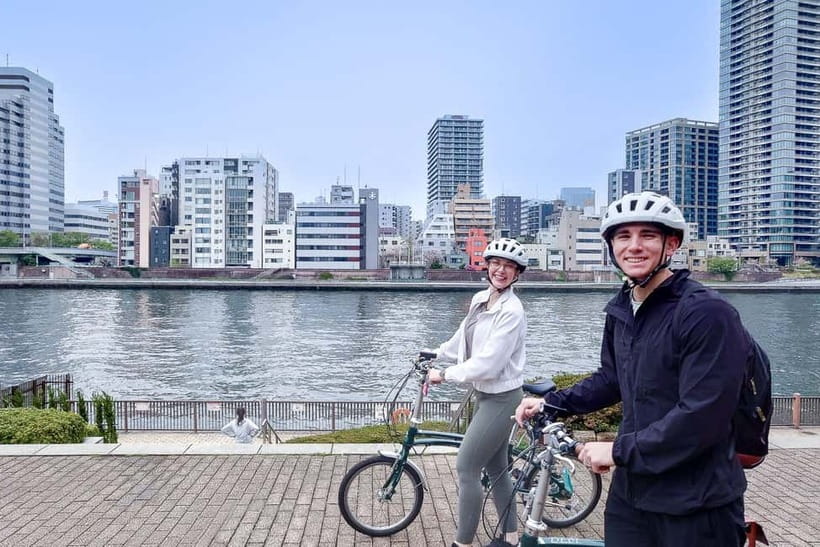
The e-bikes are not a minor add-on. They make the route possible for people who are comfortable riding but do not want to spend half a day battling hills, distance, and city heat.
You still need to pedal and pay attention. The motor does not remove the need for balance, braking, and awareness around traffic. The operator recommends the tour for people between 145 and 185 centimeters and says it is not suitable for anyone over 100 kilograms.
This is not the right activity if you dislike bikes or have no confidence riding in an urban setting. It may suit a novice cyclist who wants a careful pace, though you should be honest about your comfort level when booking. The guide provides safety instruction and insurance, but those features do not replace sensible riding.
Wear closed, secure shoes. High heels, sandals, and flip-flops are prohibited, as are skirts. Smoking, drugs, alcohol, and alcoholic drinks in the vehicle are also not allowed. You cannot take photos or video while cycling, so stop fully before using your phone.
The guide makes the difference
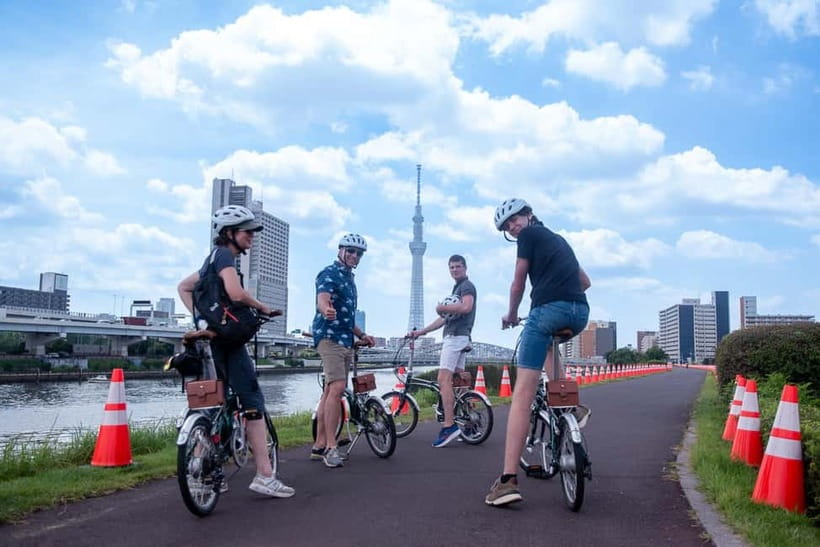
The strongest part of this experience is the personal guiding. Kazuma is the guide most often associated with these rides, and his approach is described as friendly, patient, careful, and thoughtful. He has also adjusted individual bikes, changed routes to suit interests, and taken group photos that he later sent to participants.
Those details matter because a bike tour can easily become a simple rental with directions. Here, the guide gives context at multiple short stops, watches the group, and helps you understand the areas you pass through.
English and Japanese are available. Communication before the tour takes place through WhatsApp, iMessage, or SMS, so make sure the operator has a working number and that your phone can receive messages while in Japan.
The private format also makes this a good choice for families with teenagers, couples, friends, or solo visitors who want a flexible morning. Children under 12 cannot join, and the height and weight limits narrow the audience further.
Is $154 per person a fair price?
At $154 per person, this is not a budget way to move around Tokyo. You can see many districts by train for far less, and independent cyclists can rent bikes without paying for a private guide.
The price makes more sense if you value three things: hotel pickup and return, a private itinerary, and a guide who handles navigation and explanations. You are paying for access to a tailored route rather than simply for three hours on an e-bike.
The value is best for a first or second day in Tokyo, when you want a quick sense of how the districts fit together. It can help you decide where to return later by train or on foot. It is less valuable if you already know Tokyo well, prefer slow museum visits, or want a food-focused outing.
Food and beverages cost extra. Custom start times, extended duration, and visits to sites far from the proposed route may also bring additional fees. Ask about those costs before confirming so the final price is clear.
Practical timing and cancellation advice
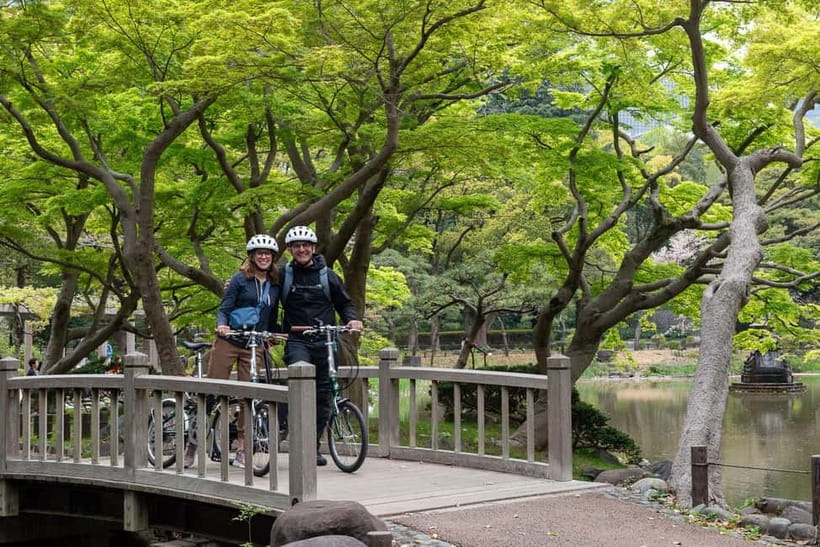
The tour lasts three hours, with starting times available when you check the booking calendar. Because the route is private, tell the operator your priorities when signing up rather than waiting until the guide arrives.
Free cancellation is available up to 24 hours before the scheduled start for a full refund. You can also reserve now and pay later, which helps if your Tokyo plans are still shifting.
Allow a little mental space after the tour. Even with electric assistance, you will have covered a fair distance and stopped several times. You may want lunch, a shower, or a quieter afternoon afterward.
Who should book this Tokyo e-bike tour?
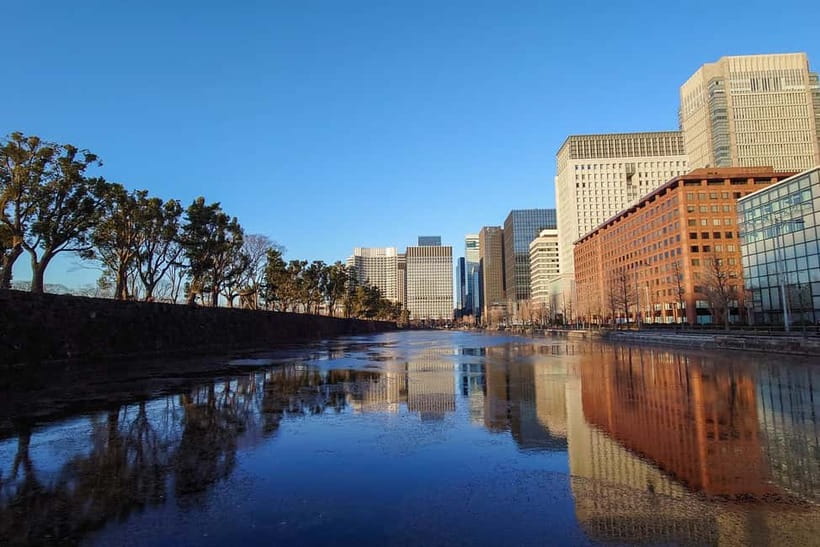
I would choose this for a first-time Tokyo visitor who wants orientation without spending the day underground. It also suits couples and families with older children who want a private pace and the freedom to request particular neighborhoods.
It is especially useful if you want a mix of famous sights and ordinary streets. The possible route includes Shibuya Crossing, Tokyo Tower, the Imperial Palace, Asakusa, and Tokyo Skytree, but also Kitasenju, riverside paths, shrine grounds, and back streets.
I would skip it if you are uncomfortable on a bicycle, outside the stated body-size range, or hoping for a food tour. I would also think twice if your hotel is far outside the listed pickup districts and you do not want to pay for an alternate meeting point.
Should you book it?
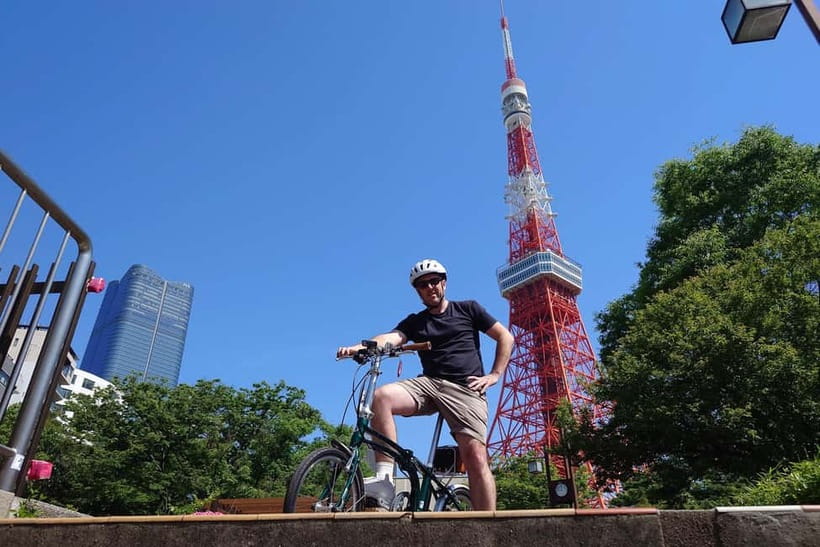
Book this tour if you want to cover a lot of Tokyo in a short time while keeping the route personal. The hotel pickup, e-bike assistance, and private guide solve several common problems at once.
Before paying, send a clear list of your top two or three priorities. Ask about the route, any extra charges, and whether the ride can include the districts you care about. If you do that, this can be a smart first look at Tokyo, with enough street-level detail to guide the rest of your visit.
FAQ
Where does the Tokyo e-bike tour start and finish?
The tour starts and ends at your hotel if it is within the operator’s service area. Listed pickup areas include Shibuya, Shinjuku, Roppongi, Ginza, Asakusa, Marunouchi, Toranomon, Ebisu, Shinbashi, and several other central districts.
How long is the tour?
The private tour lasts three hours. Starting times are available when you check the booking calendar.
How far will the group cycle?
The typical route covers about 15 to 20 kilometers. The exact distance depends on the route and any custom requests.
Is the tour private?
Yes. The booking is for a private group, and the route, pace, distance, and stops can be adjusted within the tour’s available time.
Are e-bikes, helmets, and insurance included?
Yes. The price includes the e-bike, helmet, safety instruction, insurance, hotel start, and a live guide.
What languages are available?
The tour is offered with a live guide in English or Japanese.
Who cannot join the tour?
The activity is not suitable for children under 12, people under 145 centimeters, or people over 100 kilograms. High heels, sandals, flip-flops, and skirts are not allowed.
Can I cancel the booking?
You can cancel up to 24 hours before the scheduled start for a full refund. The reserve-now, pay-later option is also available.
More Private Cycling Tours in Tokyo
- VIP Mekong Delta Adventure Cycling & Kayaking – Private Day Trip
★ 5.0 · 179 reviews - 3 Hour Sonoran Desert Private Guided Mountain Bike Tour
★ 5.0 · 154 reviews - 2 Hour Sonoran Desert Private Guided Mountain Bike Tour
★ 5.0 · 92 reviews - Romantic Cycling Tour with Private Picnic at the beach
★ 5.0 · 69 reviews
More E-Bike Tours in Tokyo
- Epic Electric Bike Tour by Cycle City Tours
★ 5.0 · 848 reviews - Private Self-Guided E-Bike Ride in Tuscany with Vineyard Visit
★ 5.0 · 775 reviews - Cycle Dublin – Bike & ebike Tours
★ 5.0 · 748 reviews - Saint-Emilion Electric Bike Day Tour with Wine Tastings & Lunch
★ 5.0 · 696 reviews
Just added around Tokyo
- Tokyo Non-Touristy Local Private E-bike Cycling Tour from Asakusa★ 5.0 · 2 reviews
- 2.5 Hour-Guided Cycle Tour in the Central Tokyo★ 5.0 · 25 reviews
- Little Adventure with Cycling in Tokyo No. 1 Crystal Clear River★ 5.0 · 6 reviews
- Tokyo Night Bike Tour: From Shibuya to Tokyo Tower via Roppongi★ 5.0 · 29 reviews
- Tokyo’s hidden nature cycling tour – Okutama Historical Road Tour★ 5.0 · 6 reviews
- MTB, Hybrid or Gravel Road Bike Rental in Okutama, Tokyo★ 5.0 · 2 reviews
- Tokyo: Private Cycling Tour with cute E-bike★ 5.0 · 11 reviews
- Tokyo: Super Local Private E-bike Cycling Tour from Asakusa★ 5.0 · 4 reviews
E-Bike Tours, compared.

Private Self-Guided E-Bike Ride in Tuscany with Vineyard Visit
Read our review →
Saint-Emilion Electric Bike Day Tour with Wine Tastings & Lunch
Read our review →
Phnom Penh Silk Island Bike Tour/ E-Bike or Tuk Tuk
Read our review →
Ultimate Calanques Panoramic e-bike Ride – 3h (Small Group)
Read our review →
Naples Scenic E-Bike Ride to a Local Vineyard with Meal
Read our review →Browse the lists this tour appears in