
Review · MARRAKECH
Marrakech: Cycling Tour in Palm Groove with Local Breakfast
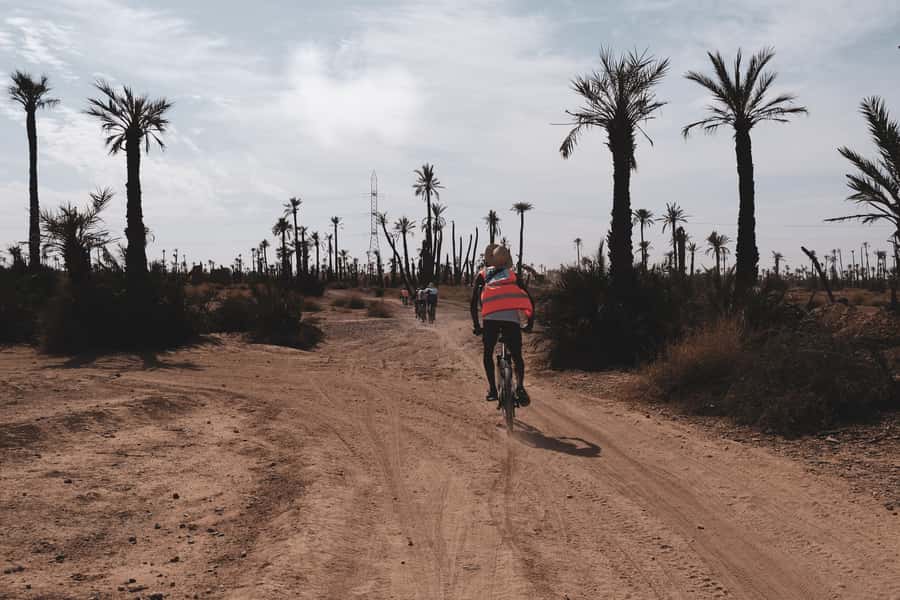
Marrakech’s palm oasis is only a short ride from the city, yet it feels like another world. This tour takes you from Medina traffic past villas and grand compounds into small villages where palm trees, irrigation channels, bread ovens, and family workshops still shape daily life. I like the mix of outdoor activity and local contact, especially the tea stop with fresh bread, butter, olive oil, and pastries at Aziz’s place.
I also like that the guides explain why water and date palms matter here instead of simply pointing out scenery. The main thing to consider is the ride through and out of the Medina. It is manageable, flat, and carefully guided, but you need to feel reasonably comfortable on a bicycle in narrow city streets.
Key points to know before you book
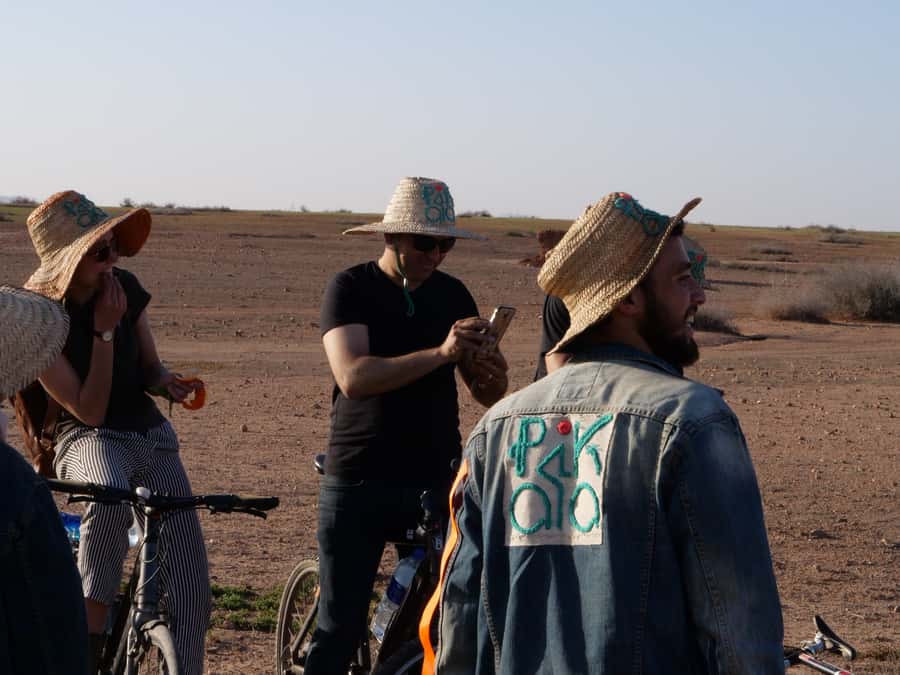
- A gentle ride with a real city section: The route begins and ends near central Marrakech, so the most demanding part may be handling Medina traffic rather than cycling distance.
- The Palmeraie beyond the villas: You pass luxury homes and large compounds before reaching quieter village roads and palm groves.
- A proper local breakfast stop: Expect Moroccan tea or juice, fresh bread, butter, olive oil, and pastries at host Aziz’s atelier.
- Useful cultural explanations: Guides cover local water systems, the importance of palm trees, bread customs, and village life.
- Hands-on craft and food stops: You may see zellij tile work and villagers baking bread in a local oven.
- Good value at $34: Bikes, water, suncream, drinks, pastries, and guiding are included, though hotel transport and the Water Museum are not.
From Pikala Bikes to the Palmeraie
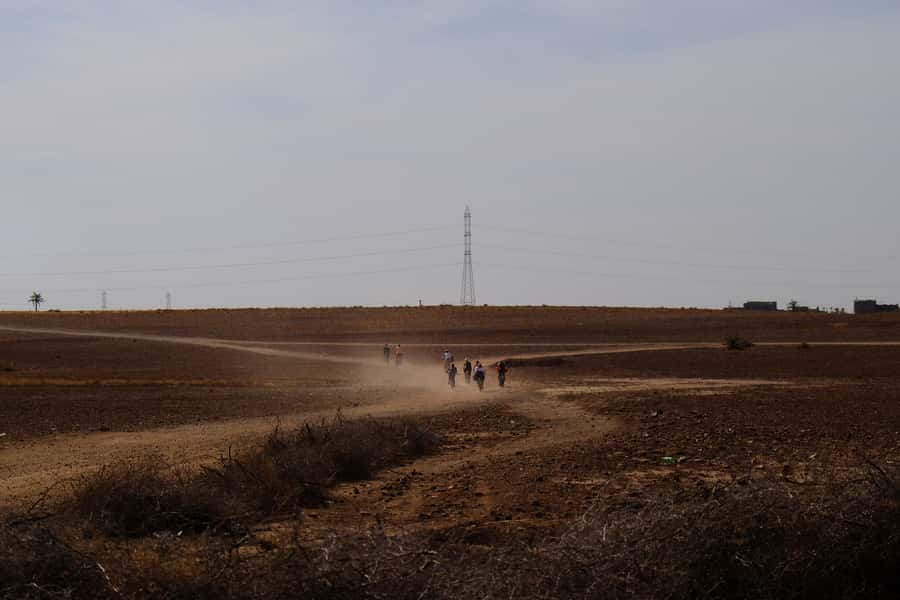
You meet at Pikala Bikes headquarters, not at your hotel or riad. That makes the meeting point easy to understand, but you need to allow time to reach it yourself. Hotel or riad pickup is not included.
The tour lasts 150 minutes. The first stretch takes about 15 minutes by bicycle from the city center, and this is where you get a feel for the ride. Marrakech is not built around calm cycling lanes. You may need to negotiate narrow streets and changing traffic, so listen closely to the guide and follow the group’s pace.
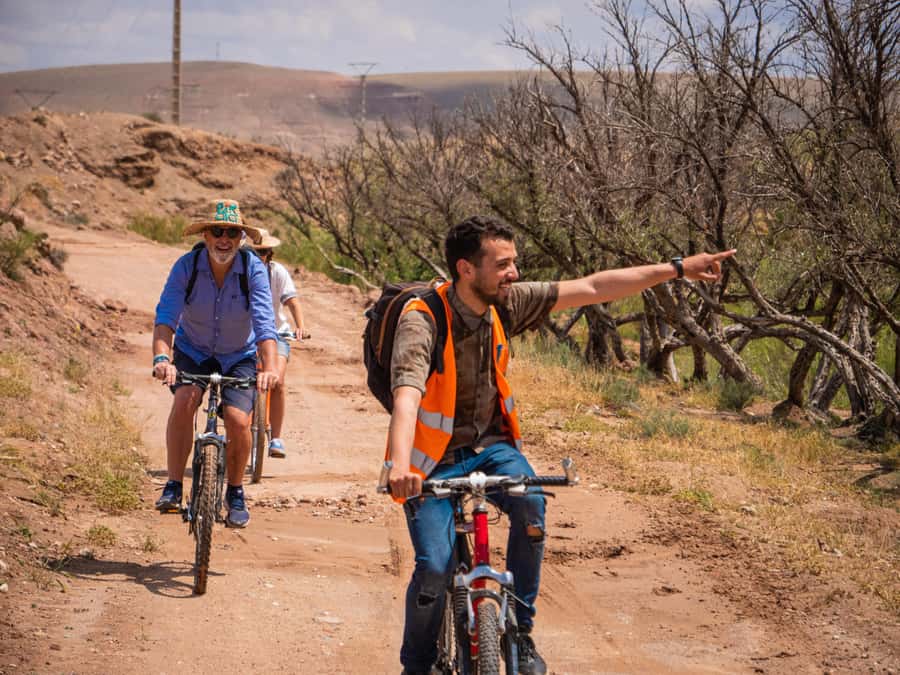
This part is not just a necessary transfer. It shows you how quickly the city changes. One moment you are near the Medina and its busy streets; soon you are passing walls, villas, and larger private compounds. The guides are young, trained locals, and their role is especially useful here. Ahmed has been praised for his patience and careful attention to safety, while Yassim is noted for sharing personal insight about growing up in Morocco.
If you are nervous about cycling in Marrakech, tell the guide at the start. The route has been described as fairly gentle and flat, but comfort in city traffic matters more than athletic ability. Riders who cycle regularly at home should find the physical side easy. Less confident cyclists may still enjoy it, provided they are ready for the opening and closing sections through town.
A few more rides around Marrakech worth a look
- Cycling Adventure in Marrakech
★ 5.0 · 289 reviews - Dutch Bike Tour in Marrakech with Local Guide
★ 4.7 · 269 reviews - Marrakech:Guided City Cycling Tour – Culture, Colors & Charm
★ 4.7 · 231 reviews
Villas, palms, and village roads
The contrast is the point of the ride. Around the Palmeraie, you pass expensive villas and huge private residences, then turn onto rougher, quieter roads leading into the oasis. The change gives you a clearer picture of Marrakech than a sightseeing loop around the main monuments.
Here, palm trees are not just decoration. They are central to the identity of the oasis and have long helped support life in a dry region. Your guide explains why the palms matter and how the community makes use of land and water in difficult conditions.
The route takes you off the main roads and into tiny villages. That means the ride is more personal than a standard city tour, but it also means surfaces may be uneven. The supplied information does not promise a particular bike model or road quality at every point. It does say that bikes are provided, and one experienced cyclist found the equipment to be good quality.
The total route may be around 17 kilometers, based on a description of the ride, though you should check the current route when booking. In practical terms, this is an active morning or afternoon rather than a quick photo stop. You will be on a bicycle for much of the time, with several breaks to talk, eat, and look around.
Aziz’s atelier and a simple Moroccan breakfast
One of the best parts of the experience is the stop at Aziz’s place. It is not presented as a polished restaurant. Instead, you share tea or juice and Moroccan pastries in a more personal setting, with fresh bread, butter, olive oil, and other simple breakfast items.
That simplicity works in the tour’s favor. Bread with olive oil and tea tells you more about ordinary Moroccan hospitality than a staged tasting menu would. Aziz also shares stories in his atelier, giving the stop a human focus rather than making it only a food break.
You should not book this expecting a large meal. The word breakfast here means a light Moroccan spread, not a hotel buffet. You can expect bread, butter, olive oil, tea or juice, pastries, and possibly olives based on the experience described. Water is also included.
This stop gives your legs a rest and helps break up the cycling. It is also one reason the tour feels more worthwhile than simply renting a bike and following a map. You get a place to pause, a local host, and an explanation of the area from someone connected to it.
Irrigation, water, and the life of an oasis
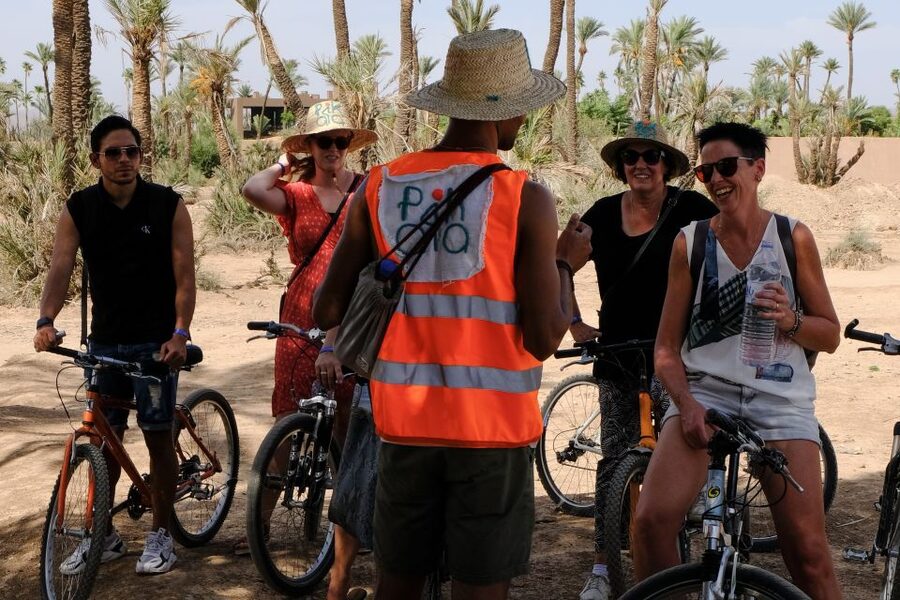
The Palmeraie exists because people have managed water carefully. During the ride, the guide introduces an old irrigation system and explains how water reaches the community.
This is a useful part of the tour because palm groves can look natural to a first-time visitor. They are not simply wild greenery beside Marrakech. They depend on human planning, maintenance, and shared water systems. Learning this gives the palm oasis a practical meaning.
The discussion also connects to present-day village life. Your guide explains how local people continue to live and work in a demanding geographic setting, where water is precious. You do not need specialist knowledge to follow this section. The value is in seeing a familiar holiday setting, the palms and villas, through the needs of the people who live there.
The Water Museum is not included. If that museum is important to you, treat it as a separate activity rather than assuming this bicycle tour covers it.
Same roads, a different day in the saddle:
- Marrakech’s Best Cycling Tour: Culture, Colors, and Charm
★ 5.0 · 154 reviews - Marrakesh: Toubkal National Park Mountain Bike Trip w/Lunch
★ 4.4 · 63 reviews - E-Bike Day Trip From Marrakech To the Atlas Mountains
★ 5.0 · 27 reviews - E-bike day tour Atlas Mountains from Marrakech
★ 4.5 · 17 reviews
Zellij workshops and Moroccan craft
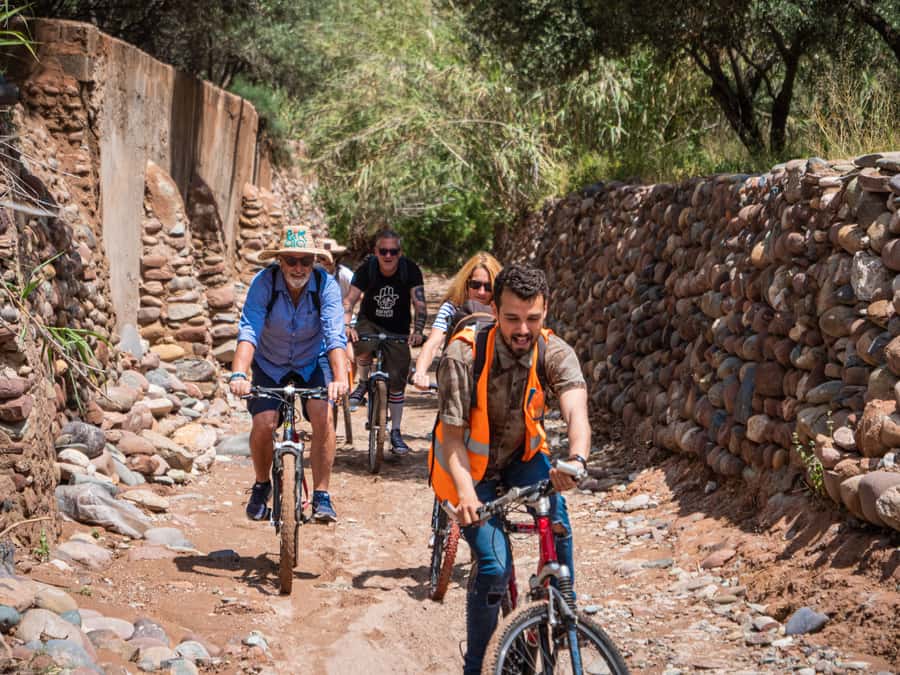
Several stops focus on local handicrafts, including small workshops making Moroccan zellij tiles. These tiles are known for their geometric patterns and careful arrangement, and the point of the visit is to see the work close up rather than only admire finished decoration in a palace or riad.
A workshop stop is a good match for this route because it connects village employment with the buildings you see across Morocco. Zellij often appears in courtyards, fountains, walls, and floors, but it can seem like a decorative background if nobody explains how it is made. Here, you get a closer look at the craft and the small-scale settings where it is practiced.
The stops are short parts of a moving tour, not long classes. If you want to buy a great deal of tilework or take a full craft lesson, this may feel brief. If you want context and a glimpse behind the finished designs, it adds substance without turning the ride into a museum visit.
The village oven and the value of bread
The local oven is another memorable stop. You may see villagers baking bread in an open-air setting and learn why bread has such an important place in Moroccan culture.
This is the sort of detail that makes the tour feel grounded. Bread is not treated as a minor side item at breakfast. It is part of daily life, hospitality, and community routine. Seeing it made in a village oven helps you understand why the bread at Aziz’s table matters.
As with the tile workshops, this is an observation stop rather than a formal cooking lesson. The exact activity can depend on what is happening when you arrive. Still, it offers a useful connection between the food you eat and the people who prepare it.
For many people, this may be more memorable than a long list of monuments. You are not only looking at Marrakech. You are seeing how food, water, craft, and religion-adjacent customs shape local life.
What the guides add to the experience
The guide can make or break a bicycle tour, and this one puts clear emphasis on local young guides. English and French are offered, and individual guides mentioned in the tour information include Ahmed, Yassim, Ayoub, and Khawla.
Their strengths are slightly different. Ahmed is described as patient, attentive, and particularly good at helping riders feel safe. Yassim is noted for explaining Moroccan culture and sharing details from his own life. Khawla is described as enthusiastic, with a strong interest in culture and architecture. These examples suggest that the tone may vary by guide, but the common thread is personal, local interpretation.
I would ask questions as you ride. The route opens the door to subjects such as village customs, water use, tilework, bread, and the place of palms in the oasis. You will get more from the tour if you treat it as a conversation rather than waiting for a nonstop speech.
The organization behind the bicycles also has a social and environmental purpose, which may appeal to you if you prefer activities that support local training and lower-impact transport. The bicycle is not only a way to move around. It lets you reach narrow roads and small workshops that a larger vehicle could not easily visit.
Is $34 a fair price?
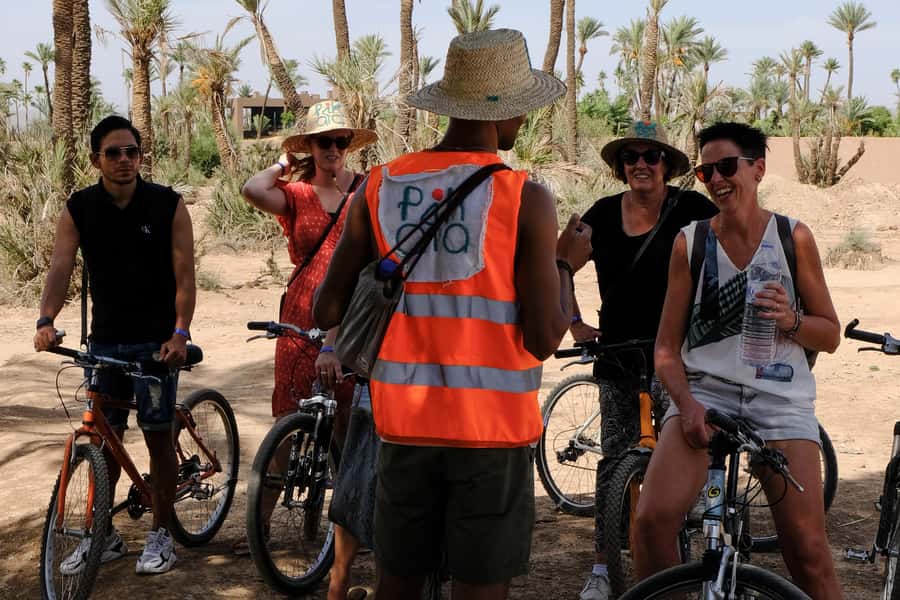
At $34 per person, the tour offers solid value if you want more than a simple bike rental. The price includes the bicycle, water, suncream, guiding, tea or juice, pastries, and the breakfast spread at Aziz’s place. You also get several cultural stops and a guided route into the Palmeraie.
A similar self-guided outing would not give you the same help getting through the Medina, explanations of the irrigation system, or introductions to artisans and a village oven. The cost is reasonable for a 150-minute activity with food included.
The price does not cover transport to or from your riad, and the Water Museum is separate. You should also allow for the possibility that the breakfast is modest. The value is strongest if you care about local contact, movement, and context. It is less strong if you want a long, leisurely food tour or a formal museum visit.
The booking terms are practical: you can cancel up to 24 hours before the start for a full refund, and you can reserve now and pay later. Check the available starting times, since the length is fixed but the departure time can vary.
Who should book this ride?
I would recommend it to you if you want to get beyond Marrakech’s central sights without committing to a full-day excursion. It suits active couples, families with older children who can manage city cycling, and visitors who like meeting local people through food and craft.
It is also a good choice for cyclists who want an easy route with cultural stops. The ride is described as flat and fairly gentle, but you should not confuse that with completely effortless. The Medina section requires attention, and the route may include rougher off-track roads.
You may want to choose another activity if you dislike bicycles, feel very uneasy around urban traffic, or want a tightly scripted sightseeing tour. This is a working oasis, not a polished attraction. The charm comes from the ordinary details, and those details can be simple, dusty, and dependent on what is happening locally that day.
Wear practical clothing, bring a little patience, and use the included suncream. Water is provided, but staying aware of the heat is still sensible. Since the ride begins at Pikala Bikes headquarters, plan your route to the meeting point before the tour day.
Should you book the Palmeraie cycling tour?
Book it if you want a low-impact way to connect Marrakech with village life, and if tea, bread, water systems, tilework, and local stories sound more appealing than another palace visit. The combination is unusually well judged: enough cycling to feel active, enough food to feel welcomed, and enough explanation to make the oasis meaningful.
I would be especially comfortable recommending it to a first-time visitor who is curious about the Palmeraie but does not want to arrange transport or plan a route alone. Just be honest about your cycling confidence. The guides can help, but you still need to handle the streets in and out of the Medina.
At $34, with food and equipment included, this is a worthwhile half-day-sized experience. Choose it for the people and the everyday details, not for luxury, speed, or a major museum. That is exactly where its strength lies.
FAQ
Where does the Marrakech cycling tour begin?
The tour begins at the Pikala Bikes headquarters. Hotel or riad pickup and drop-off are not included.
How long does the cycling tour last?
The activity lasts 150 minutes, or two and a half hours. You should check the available starting times when booking.
Which languages are available?
The live tour guide is available in English and French.
What food and drinks are included?
The tour includes tea or juice, Moroccan pastries, fresh bread, butter, olive oil, and water. The breakfast is served at host Aziz’s place.
Are bicycles and suncream included?
Yes. Bikes, water, and suncream are included in the price.
Is the Water Museum included?
No. The Water Museum is not included in this cycling experience.
Just added around Marrakech
- The Palmery Off-Road Bike Tour from Marrakech★ 5.0 · 5 reviews
- Full Day Private Mountain Bike Trip in the Atlas Mountains★ 5.0 · 4 reviews
- Atlas mountain bike★ 5.0 · 2 reviews
- E-Bike Day trip from Marrakech to atlas Mountain imlil valley★ 5.0 · 2 reviews
- Atlas Mountains Beginners Mountain Biking Tour from Marrakech★ 5.0 · 14 reviews
- E-bike day tour Atlas Mountains from Marrakech★ 4.5 · 17 reviews
- E-Bike Day Trip From Marrakech To the Atlas Mountains★ 5.0 · 27 reviews
- Beginners On-Road Bike Tour of the Atlas Mountains from Marrakech★ 5.0 · 4 reviews
Cycling Tours, compared.
Ninh Binh Day Trip: Hoa Lu-Trang An/Tam Coc-Mua Cave-Cycling-Boat
Read our review →
Cai Be Mekong Delta Tour: Cooking Class, Cycling & Craft Villages
Read our review →
Countryside Bike Tour from Amsterdam: Cheese, Clogs & a Windmill
Read our review →
Electric Cycling Tour of Ubud with Free Hotel Transfer and Lunch
Read our review →
Browse the lists this tour appears in