
Review · CYCLING TOURS
Bike ride in the city
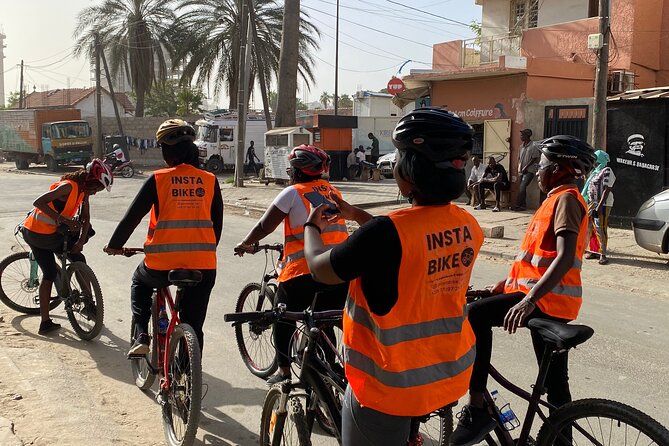
Dakar makes more sense from a bicycle. This private four-hour ride links major monuments, colonial buildings, a sea view, the Gorée ferry point, and the Museum of Black Civilisations without trapping you in a vehicle. The personal guide and flexible route are the main draw.
I like the mix of exercise and sightseeing, and I like that the tour ends at a major museum rather than simply circling the city. The private format also lets you ask for changes. The main catch is that Dakar traffic, heat, and uneven streets can make the ride tiring, and the museum entrance fee costs extra.
Key points at a glance
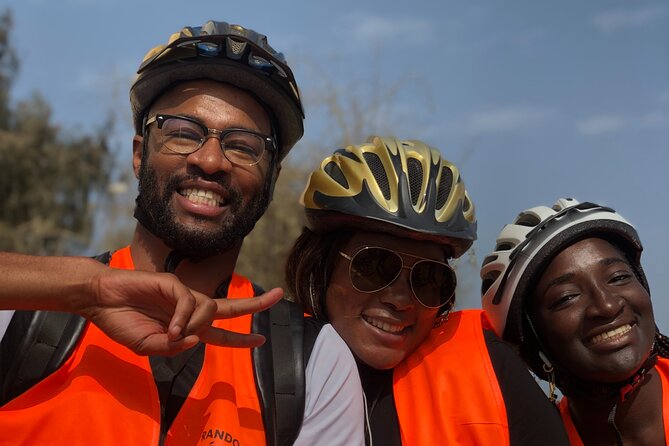
- A private ride through central Dakar: Your group rides with a French- or English-speaking guide rather than joining a large cycling group.
- The route covers major city symbols: Stops include the Millennium Monument, Place de l’Indépendance, the Presidency area, and the Gorée ferry departure point.
- A useful museum finale: The ride ends at the Museum of Black Civilisations, where an on-site guide leads the museum visit.
- Coastal scenery is built in: Anse Bernard provides a short stop for wide views and photographs.
- The itinerary can change: You can discuss your interests with the operator before the ride and request adjustments.
- The price includes practical extras: The $92.92 cost covers the bicycle, cycling jersey, and snacks, but not the 5,000 CFA museum admission.
Why a bicycle is a smart way to see Dakar
Dakar is spread across a peninsula, with important sights scattered between busy central streets, waterfront areas, and historic districts. A bicycle gives you a closer look at the city than a quick drive. You can pause at monuments, see the changing architecture, and move between neighborhoods at a human pace.
This is not a race or a long countryside cycling trip. It is a sightseeing ride with short stops. The schedule allows about 30 minutes at the Millennium Monument, 20 minutes at Hotel Sokhamon, another 30 minutes at the former courthouse, 15 minutes at Anse Bernard, and 30 minutes at Place de l’Indépendance. The final museum visit takes about an hour.
I would think of the experience as an active city tour, not as a dedicated athletic outing. The four-hour length gives you enough time to cover a lot of ground, but you should still be comfortable riding in a warm, busy capital.
The private format matters here. You are not tied to the pace or interests of a large group. If you care more about architecture, modern Senegal, coastal views, or public monuments, you can ask the guide to shape the ride around those interests. The operator specifically invites you to discuss changes before the activity begins.
A few more rides around the world worth a look
- The Grand Bicycle Tour by Cycle City Tours
★ 5.0 · 1,827 reviews - Epic Electric Bike Tour by Cycle City Tours
★ 5.0 · 848 reviews - The Stanley Park Bicycle Tour by Cycle City Tours
★ 5.0 · 785 reviews
Starting at 10:00 at Rue 22
The stated starting point is 817 Rue 22, Dakar, with a 10:00 a.m. start. Pickup is offered, but because a specific meeting address is also provided, confirm the exact pickup arrangement before the day of the ride.
The experience ends at the Museum of Black Civilisations in Dakar-Plateau. That point-to-point design is useful because you do not have to cycle back to the starting location after the museum visit. It also places you near a major cultural attraction at the end of the morning.
The tour includes use of a bicycle, a jersey, and snacks. Those details may sound small, but they affect comfort. The jersey gives the activity a clear cycling feel, while the snacks are useful during a four-hour outing. The supplied information does not specify the bicycle type, helmet arrangements, storage, or the exact snack menu, so ask about those points if they matter to you.
The tour is described as suitable for most people, and only your own group participates. Still, you should be honest about your comfort with city cycling. This is an urban ride, not a quiet path through the countryside.
Millennium Monument and the meaning of the new century
The first major stop is the Monument du Millénaire, also known as La Porte du Troisième Millénaire. Built at the beginning of the 21st century, it symbolizes the opening of Africa to the new millennium.
This is a useful first stop because it introduces a modern side of Senegal. Dakar is often presented only through older colonial buildings or the history of Gorée Island, but this monument points to a newer national identity. You get around 30 minutes here, with no admission charge.
The monument is best understood as a place of symbols rather than a museum visit. Ask the guide to explain the meaning of its form and its role in Senegalese public life. The stop is short enough to keep the ride moving, but long enough for photographs and questions.
Hotel Sokhamon and Dakar’s colonial architecture
The ride then moves to Hotel Sokhamon, described as a colonial architectural jewel in the city center. The stop lasts about 20 minutes.
This portion of the route adds texture to the monument stops. Instead of seeing Dakar only as a collection of large public landmarks, you get to look at a building and consider how older architectural styles fit into the modern city.
There is no admission included for this stop, and the schedule suggests an exterior look rather than a full hotel visit. That is worth knowing if you expect an interior tour. The value here lies in the guide’s explanation and in seeing the building as part of the surrounding city.
A quick break is also built into the ride so you can catch your breath. That pause is welcome, especially if the weather is hot or you are not used to cycling in city traffic.
Same roads, a different day in the saddle:
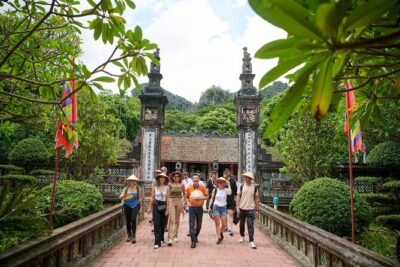
- Ninh Binh Day Trip: Hoa Lu-Trang An/Tam Coc-Mua Cave-Cycling-Boat
★ 5.0 · 1,886 reviews - Cai Be Mekong Delta Tour: Cooking Class, Cycling & Craft Villages
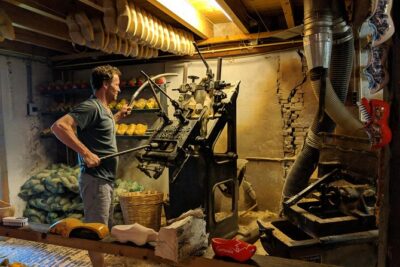
★ 5.0 · 1,881 reviews - Countryside Bike Tour from Amsterdam: Cheese, Clogs & a Windmill
★ 5.0 · 1,485 reviews - Electric Cycling Tour of Ubud with Free Hotel Transfer and Lunch
★ 5.0 · 1,397 reviews
The former courthouse and the Biennale connection
The Ancien palais de Justice provides one of the more distinctive stops. This former courthouse now houses art exhibitions connected with the Biennale of Dakar. You have about 30 minutes here.
The building links Senegal’s legal and colonial past with its current role as a place for contemporary African art. That change in use is more interesting than simply looking at an old government building. It shows how Dakar’s older structures can take on new cultural purposes.
Admission is not included, and the information provided does not promise entry into an active exhibition during your visit. Treat this as a guided stop with the possibility of learning about the building and its art role, rather than as a guaranteed exhibition ticket.
If art is a priority for you, mention it before the tour. The private format gives you a better chance of adjusting the balance between cycling time and cultural stops.
Anse Bernard for a short coastal pause
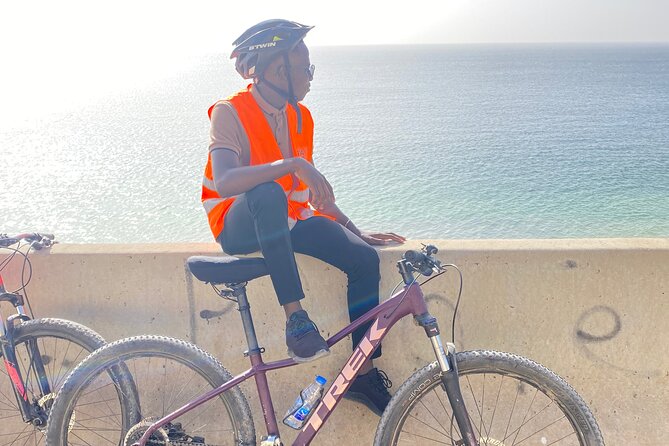
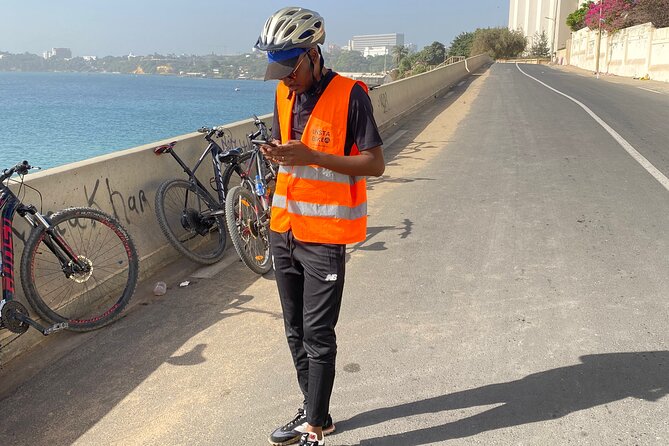
At Plage de l’Anse Bernard, the tour pauses for around 15 minutes. This is the route’s main photo stop, with a broad view over the water.
The stop is brief, so it is not designed as beach time. You should not expect a swim, long rest, or extended stay. Instead, it gives you a break from the streets and a chance to see Dakar from the coast.
I like this kind of pause on a city ride. It changes the rhythm and gives you a clear sense of Dakar’s position beside the Atlantic. Bring your phone or camera if you want photographs, but keep the timing in mind. The group needs to continue toward the central city.
Passing the Presidency and Place de l’Indépendance
The bicycle route passes in front of the Presidency of Senegal before reaching Place de l’Indépendance. The presidential area is a pass-by point, not a stop for an interior visit. Follow the guide’s instructions and avoid treating it like a normal photo stop.
Place de l’Indépendance is one of the central civic spaces in Dakar. Its symmetrical design is framed by colonial-era buildings, including the Gouvernance, once the office of the French governor, and the Chamber of Commerce. You have around 30 minutes here.
This is one of the best places to connect Dakar’s physical layout with its political past. The square is not just an open space. It reflects the city’s colonial planning and its role as a center of administration and business.
The stop should suit anyone who enjoys architecture and urban history. If you prefer active cycling to standing in a square, 30 minutes may feel long. That is another reason to use the private setting well: ask questions, look closely at the surrounding buildings, and tell the guide if you want more or less time at a particular point.
The Gorée ferry point and Senegal’s modern transport
The route includes the place where the maritime link to Gorée Island begins. Gorée is an island in the bay of Dakar and one of the capital’s 19 districts.
This is not a Gorée Island excursion. The bike ride only takes you to the ferry departure area. That distinction matters when planning your day. If you want to visit Gorée itself, you would need to arrange that separately or ask whether the private itinerary can be modified before booking.
The ride also includes a look at the TER, Senegal’s newer regional express train. Together, the ferry point and the train offer a quick view of how people move around Dakar and the wider area. One connects the capital with an island by sea, while the other represents newer rail infrastructure.
These short pass-by moments help the tour feel like a city orientation rather than a string of isolated monuments. You see Dakar as a working capital, not only as a set of historic sites.
Finishing at the Museum of Black Civilisations
The tour ends at the Museum of Black Civilisations, near downtown Dakar. An on-site museum guide leads the visit, which takes about an hour.
The museum occupies a 14,000-square-meter, four-story building facing the Grand Théâtre National. Its design draws on the impluvium huts of Casamance in southern Senegal and the structures of Great Zimbabwe. The building is intended to recall a small African round hut while using its form to bring daylight into the museum spaces.
This is a strong way to finish the ride. The earlier stops focus on monuments, colonial architecture, public spaces, and the city’s transport links. The museum gives those subjects a wider Pan-African setting.
Admission is not included. The stated price is 5,000 CFA per person. Add that cost to your budget, and remember that the museum portion is a guided visit rather than an optional exterior photo stop.
The museum is also the endpoint, which makes the schedule practical. You can continue with a museum visit, meet transport afterward, or plan another Dakar activity from the Plateau area. The tour does not include a return ride to the original starting point.
Is $92.92 a fair price?
At $92.92 per person, this is not the cheapest way to see Dakar. You are paying for a private guide, bicycle use, a jersey, snacks, a four-hour route, and the convenience of connecting several city sights in one outing.
The strongest value comes if you are traveling with others who share your interests. A private activity lets your group ask for a modified route and avoid waiting for strangers. It is also useful if you want a guide who can explain the city in French or English while you ride.
The cost is harder to justify if you mainly want a quick photo tour or already plan to visit these places independently. The museum fee is extra, and the listing does not state that every stop includes interior admission. You are buying context, movement, and personal attention more than a series of entrance tickets.
The fact that this experience is booked an average of 44 days ahead suggests that planning early is sensible, especially if you have fixed dates. Confirmation is issued at booking, and mobile tickets are available.
Weather, cancellation, and practical comfort
The activity requires good weather. You can cancel for a full refund up to 24 hours before the start time, but cancellations or changes made inside that window are not refunded or accepted. If poor weather causes the operator to cancel, you are offered another date or a full refund.
Dakar’s heat is the main comfort issue to consider. The 10:00 a.m. start avoids the earliest part of the morning but still puts you on the road during a warm part of the day. Wear comfortable clothing, bring anything you normally need for a bike ride, and use the scheduled breathers.
The route is near public transportation, but the experience itself begins at a specific street address and ends elsewhere. Confirm the pickup details, especially if you are staying outside central Dakar.
The activity is private, and most people can participate. The supplied information does not give a maximum group size or explain the bicycle setup, so ask the operator if you need a particular bike or have mobility concerns.
Who should book this Dakar bike ride?
I would choose this for an active first look at Dakar, especially if you want a guide and prefer seeing several districts in one morning. It suits couples, families with capable riders, and small groups who want control over the pace.
It is also a good match for anyone interested in more than one side of the city. You get modern symbolism at the Millennium Monument, colonial architecture at Hotel Sokhamon and Place de l’Indépendance, coastal views at Anse Bernard, transport and ferry links, and a major Pan-African museum.
I would be more cautious if you dislike cycling in urban areas, need a slow and fully vehicle-based sightseeing day, or expect a long beach stop. I would also clarify the pickup arrangement, bicycle details, and museum entry before paying.
Should you book it?
Book this ride if you want a private, active city introduction and value a guide who can adjust the route. The strongest parts are the variety of stops, the point-to-point design, and the Museum of Black Civilisations finale.
Skip it if you only want Gorée Island, since the ride visits the ferry point but does not include the island. Also skip it if the extra 5,000 CFA museum fee or the possibility of hot, demanding city cycling bothers you.
For the right person, this is a useful way to get Dakar oriented quickly. You see the city’s public face, its older buildings, its Atlantic edge, and its cultural institutions, all while moving under your own power.
FAQ
How long does the Dakar bike tour last?
The tour lasts approximately four hours, including the cycling stops and the museum visit.
What time does the activity start?
The stated start time is 10:00 a.m.
Where does the tour begin?
The listed starting point is 817 Rue 22, Dakar, Senegal. Pickup is offered, so confirm the exact arrangement before the activity.
Where does the tour end?
The tour ends at the Museum of Black Civilisations in Dakar-Plateau, Dakar.
Is this a private activity?
Yes. Only your group participates in the activity.
Is a guide included?
Yes. The experience includes a French-speaking or English-speaking guide.
What equipment is included?
Use of a bicycle and a cycling jersey are included. Snacks are also included.
Is the Museum of Black Civilisations admission included?
No. Museum admission costs 5,000 CFA per person and is paid separately.
Does the tour visit Gorée Island?
No. The route passes the place where the maritime link to Gorée Island begins. The provided details do not include a ferry trip or a visit to the island.
Can the itinerary be changed?
Yes. You can contact the operator before the activity to discuss your interests and request changes to the basic itinerary.
Can I cancel for a full refund?
Yes, if you cancel at least 24 hours before the start time. Cancellations made less than 24 hours before the start time are not refunded. If poor weather causes the operator to cancel, you are offered a different date or a full refund.
Just added around the world
- Zagreb: 2.5-Hour Cycle Back to Socialism Tour★ 4.6 · 25 reviews
- Zell: Bike and boat tour with wine tasting and picnic★ 4.7 · 3 reviews
- Yogyakarta: Countryside Cycling and Cooking Class Experience★ 4.9 · 8 reviews
- Yogyakarta: Countryside Village Cycling Tour With Guide★ 5.0 · 16 reviews
- Amsterdam: Zaanse Schans E-Bike Tour with Windmills & Cheese★ 4.5 · 12 reviews
- Yamaha Fat Bike Adventure: Valencia’s Past and Future★ 4.5 · 2 reviews
- World’s Most Dangerous Road “Private” Mountain Biking Trip★ 5.0 · 7 reviews
- Yangshuo: Highlights Karst landscapes & Village Cycling★ 5.0 · 4 reviews
Cycling Tours, compared.
Ninh Binh Day Trip: Hoa Lu-Trang An/Tam Coc-Mua Cave-Cycling-Boat
Read our review →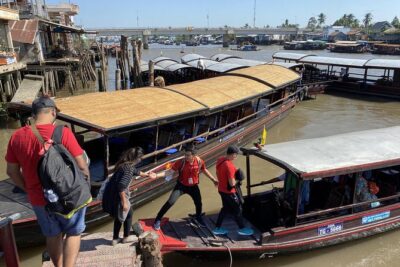
Cai Be Mekong Delta Tour: Cooking Class, Cycling & Craft Villages
Read our review →
Countryside Bike Tour from Amsterdam: Cheese, Clogs & a Windmill
Read our review →
Electric Cycling Tour of Ubud with Free Hotel Transfer and Lunch
Read our review →
Browse the lists this tour appears in