
Review · MOSHI
Cycling from Kilimanjaro to Ngorongoro Crater
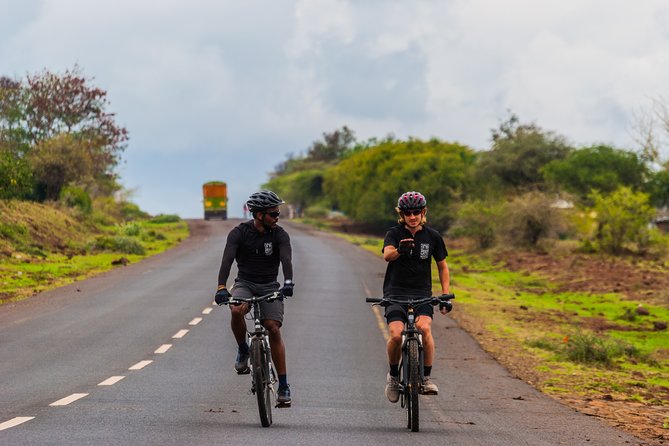
From the banana farms below Kilimanjaro to the rim of Ngorongoro Crater, this six-day ride links Tanzania’s northern highlights in one long, rewarding route. I like the shift from Chagga villages and coffee plantations to Maasai plains, and I like having a support vehicle, meals, lodging, and local guides such as Hilary, Goodluck, and Joseph built into the trip.
The main caution is physical effort. This is not a gentle sightseeing ride. You will face long dusty stretches, undulating tarmac, and a hard climb up the Great Rift Valley escarpment. The tour can be adjusted to suit your group, but you still need a moderate level of fitness and a willingness to ride for several hours a day.
Key points to know before booking
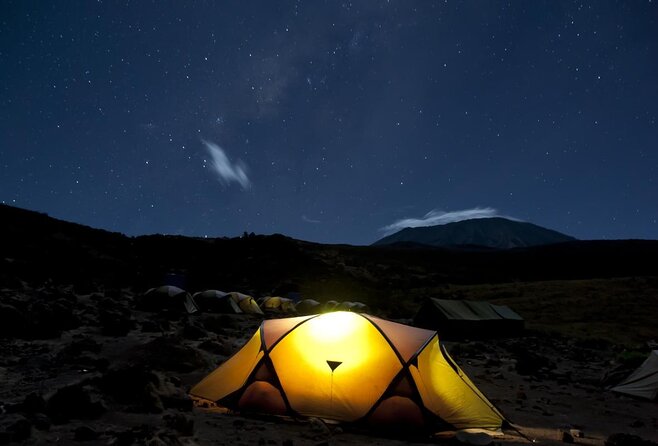
- Kilimanjaro to Ngorongoro in six riding days: You move from Chagga farmland and forest to Maasai country, Tarangire, Lake Manyara, Karatu, and the Ngorongoro Conservation Area.
- The hardest day comes last: The climb from Lake Manyara toward the Rift Valley escarpment is the tour’s biggest physical test, but it also brings some of the finest views.
- A support vehicle follows the ride: This gives you practical help on long roads and makes the trip more manageable when heat, dust, or fatigue sets in.
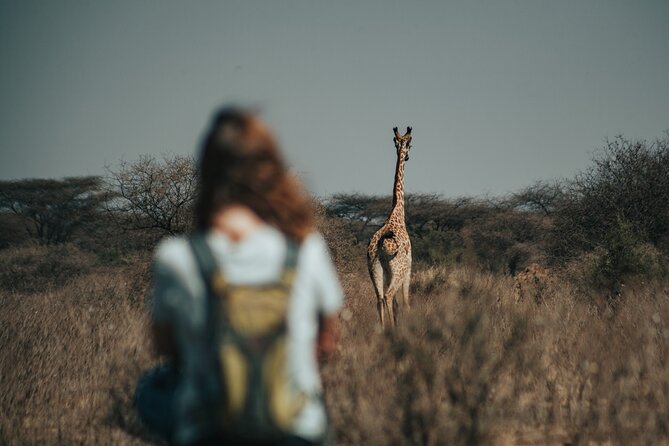
- Wildlife is part of the route: You ride near elephant migration paths and wildlife corridors, then finish close to Tarangire and Lake Manyara. A separate game drive can be arranged on day six.
- The trip is private: Only your own group participates, and the cycling schedule can be shaped around your abilities and requests.
- Check the insurance details: The highlights say cycling insurance is provided, while the inclusions list says insurance is not included. Confirm this before paying.
Why this route works so well
Many northern Tanzania trips move by vehicle from one park to the next. This one asks you to earn the scenery under your own power. That changes the pace. You pass through villages rather than simply stopping at them, and the country changes gradually from green mountain country to dry plains, farmland, wildlife corridors, and steep Rift Valley country.
I especially like the contrast on the first two days. Near Moshi, you ride through Chagga communities, banana groves, coffee plantations, and thick forest. Later, the plants thin out and the open country of the Maasai appears. It is a clear, memorable change in both scenery and culture.
The route also has a sensible support system. A vehicle accompanies the cycling, and the price includes six lunches, six dinners, five breakfasts, and accommodation. That matters on a point-to-point ride. You do not need to arrange a new transfer every night or search for food after a tiring day.
The tour costs $2,820.52 per person. That is a serious price, but it covers six days of cycling, lodging, meals, support transport, and trip coordination. It can offer good value if you want a private, active journey rather than a standard safari circuit. It is less attractive if you mainly want wildlife viewing, since a conventional vehicle safari will give you more time in the parks with less physical strain.
The tour is private, so you are not placed with a large mixed group. Past guests have included first-time cycling tourists and people over 55 who were reasonably fit. The team adjusted the daily plan to suit their abilities, but that should not be read as a promise of an easy ride. The terrain remains real, and day five is demanding.
A few more rides around Tanzania worth a look
- Chagga Villages in Mount Kilimanjaro Cycling Day Trip
★ 5.0 · 42 reviews - Moshi city bike day trip
★ 5.0 · 17 reviews - Cycling through the TPC plantations
★ 5.0 · 10 reviews
Day one: From Kilimanjaro’s foothills to Ngabobo
You start at One Bike Shop on Mailimoja Road in Moshi at 7:00 a.m. The first day gives you the broadest change of scenery in the shortest time.
The ride begins on a mixture of paved road and rough gravel. You pass through Chagga villages, banana plantations, coffee-growing areas, and green forest on the western side of Kilimanjaro. This section provides a close look at settled mountain life, with farms and villages shaping the route.
As you continue west, the vegetation becomes thinner. The road leads into more open, dry country associated with Maasai communities. The shift is gradual, which makes it more interesting than a quick drive between two unrelated stops. Small climbs and descents keep the day active without the itinerary describing any major uphill test.
You may also cross routes used by wildlife. That does not mean a guaranteed animal sighting, and you should follow the guides’ instructions closely. The attraction here is the mix of cycling, village life, and open country, not a formal game drive.
The overnight stop is in Ngabobo village. This first day is a useful test of your bike fitness because the surface changes often. If you are new to multi-day cycling, the gravel and dust may take more out of you than the hills.
Day two: Dusty plains and Mount Meru views
Day two is long, but the route has no major climbs. Much of the riding takes place on a dusty, unpaved road through the Ngasurai open plains. These plains form a wildlife route, especially for elephants moving from Amboseli National Park in Kenya.
This is one of the most distinctive parts of the trip. You are not simply riding from one hotel to another. You are moving through open country used by people and wildlife, with the road itself providing the day’s main adventure.
The surface will likely be the chief challenge. A dirt road without large hills can still be tiring, especially under heat and dust. The support vehicle becomes important here. You can discuss your pace with the cycling team and take practical help if the day proves harder than expected.
Near the main paved road toward Arusha, riding becomes easier. You pass several villages with Mount Meru visible in the background, then continue to a lodge in Arusha. The change from remote plains to a more developed urban area gives you a clear transition before the longer road stages ahead.
Arusha is also a useful overnight position. You finish the second day with a proper lodge stay rather than camping, which helps you recover before the longest ride of the trip.
Day three: The longest ride toward Tarangire
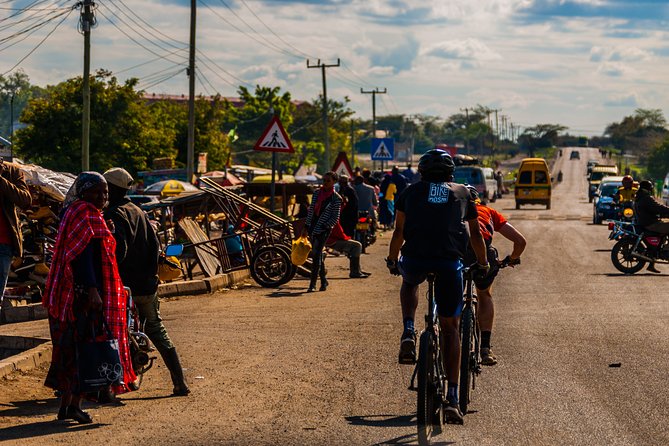
Day three is described as the longest cycling day, but much of it runs on paved, rolling road. That makes it less rough than day two, though distance still matters. You pass through colorful Tanzanian villages and see daily life at a slower pace than you would from a moving safari vehicle.
The word undulating is important here. You are not facing one giant climb, but repeated rises and falls can wear down your legs. Keep your pace steady and use the support vehicle as a safety net rather than waiting until you are completely exhausted.
The route ends near Tarangire National Park, an area known for a high concentration of elephants. You spend the night at Roika Tented Lodge, where the planned rest is part of the appeal. The lodge provides a chance to recover before the route becomes more scenic and more demanding.
This day may be the least dramatic in terms of one single viewpoint, but it is valuable for the human side of the journey. Village roads, passing communities, and regular stops offer a closer sense of northern Tanzania than a fast transfer between parks.
Same roads, a different day in the saddle:
- Arusha:Canoeing/Kayaking &/or Cycling Adventure (with Lunch)
★ 4.9 · 28 reviews - Materuni Waterfall E-Bike Day Trip
★ 5.0 · 9 reviews - West Kilimanjaro cycling Adventures
★ 4.5 · 8 reviews - Private Cycle to Kilimanjaro Bike Park Safari
★ 5.0 · 6 reviews
Day four: Wildlife corridors and the Great Rift Valley
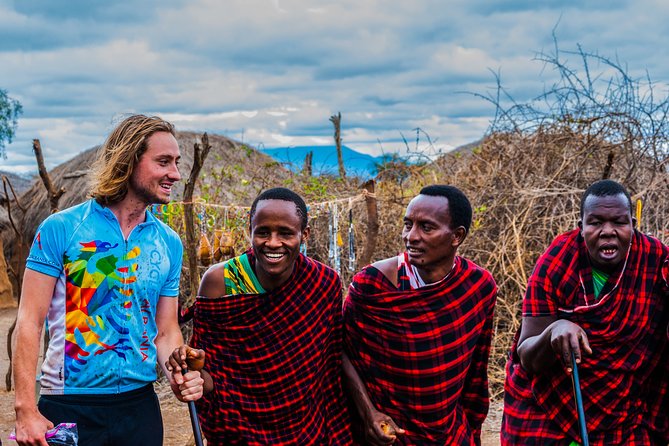
Day four brings some of the most attractive scenery on the route. You ride through wildlife corridors between Tarangire and Lake Manyara, pass Maasai settlements, and follow roads with views toward the Great Rift Valley.
Most of the ride is on tarmac, which should make the day more comfortable than the dusty plains. The final few kilometers shift to dirt on the way to Migombani Camp. That late change in surface is worth keeping in mind when you plan your energy. A mostly paved day does not mean the finish will be effortless.
This is also a strong day for cultural observation. Maasai settlements appear along the route, but you should treat them as lived-in communities rather than staged photo stops. Your guides can help you understand what you are seeing and how to behave respectfully.
The Rift Valley views give the day a strong visual payoff. You are seeing the relationship between the parks, wildlife movement, settlements, and the road network all at once. It is one reason this route feels broader than a standard point-to-point bike ride.
You overnight at Migombani Camp. The camp location makes sense for the next morning, when you head toward Lake Manyara and begin the most difficult climb.
Day five: Lake Manyara, the escarpment, and Ngorongoro
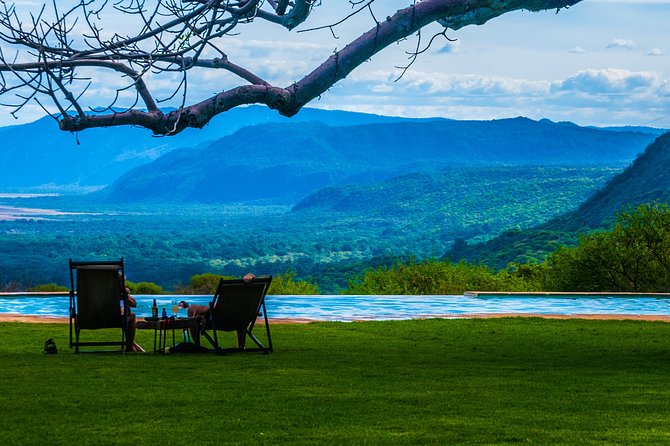
Day five is the toughest and most rewarding day. You first reach the gate of Lake Manyara National Park, then begin the steep ascent toward the top of the Great Rift Valley escarpment.
This is the section to take seriously. The itinerary identifies it as the hardest riding day, and the combination of a climb, accumulated fatigue, and the previous days’ distance will test you. The support vehicle is useful here, but the tour remains a cycling challenge. You should be ready for a slow, steady effort.
The reward comes during the climb, when you stop for views over Lake Manyara and its surrounding country. This is a good example of why the route works by bicycle. You notice the change in elevation and scenery as it unfolds rather than arriving at a viewpoint by vehicle.
From the top, you continue through Karatu, a colorful town, and onward to the entrance of the Ngorongoro Conservation Area. The ride ends there, followed by a transfer to your lodge for rest and a well-earned celebration.
The final destination is not the bottom of the crater itself. It is the Ngorongoro Conservation Area gate, with a lodge transfer afterward. If seeing the crater floor is essential to your plans, arrange the separate game drive rather than assuming it is part of the cycling day.
Day six: Rest, departure, or a Ngorongoro game drive
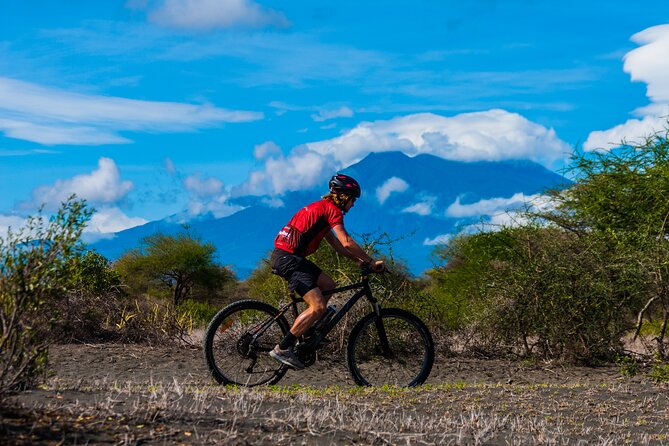
The final day is deliberately light. You can relax at the lodge while waiting for a transfer to Kilimanjaro Airport or another departure point. A game drive can also be arranged for this day.
That optional drive is a useful addition. After five days on a bike, you may want a slower day focused on wildlife. It also lets you experience Ngorongoro in the conventional safari style, from a vehicle rather than a bicycle.
The information supplied for the tour gives two different descriptions of the ending. The meeting details say the activity ends back at the starting meeting point, while the day five and day six plans describe a lodge stay and onward transfer. Confirm the exact end point for your booking, especially if you have a flight or another safari scheduled.
Guides, safety, and the private format
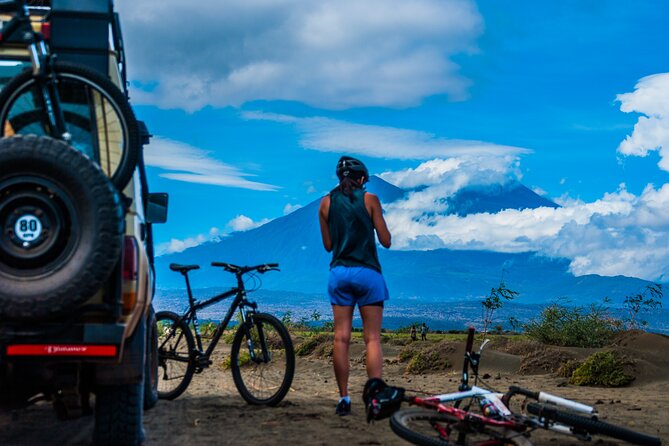
The named cycling team includes Hilary, Goodluck, and Joseph. Their role goes beyond leading the route. They help manage pace, explain local culture and wildlife, and adjust the day when a group needs a different rhythm.
That flexibility is especially helpful for mixed-ability groups. One group of four reasonably fit people over 55 completed the trip with daily adjustments based on their requests. Another first-time cycling tourist described each day as challenging but achievable. Those details suggest the team is used to working with people who are active but not professional cyclists.
Still, do not book this expecting a relaxed bike holiday. You need moderate physical fitness, and the trip includes long distances, rough roads, dust, and a steep final climb. The private format gives you more control, but it does not remove the demands of the route.
One detail needs clarification before you go. The tour highlights say insurance is provided for the cycling journey, while the inclusion list says insurance is not included. Ask One Bike Tanzania exactly what coverage is supplied and what you must arrange yourself.
What the price includes, and what it does not
At $2,820.52 per person, the tour is priced as a full-service private adventure rather than a basic bicycle rental. You receive a supporting vehicle, six lunches, six dinners, five breakfasts, and accommodation across the route.
The price also buys logistical simplicity. You do not need to plan how your bags move between villages, find a meal after each ride, or arrange a new vehicle for every section. For a route covering Moshi, Arusha, Tarangire country, Lake Manyara, and Ngorongoro, that coordination has real value.
Tips are not included. Insurance also needs confirmation because the supplied details conflict. A game drive on day six is listed as something that can be arranged, not as a guaranteed inclusion, so ask about its cost and availability before you depend on it.
The tour has a free cancellation policy up to 24 hours before the start time. Poor weather or failure to meet the minimum number of participants can lead to a different date, another experience, or a full refund. Any changes made within 24 hours are not accepted, and the weather decision follows local time.
Who should book this ride?
I would choose this trip if you want Tanzania to unfold slowly and actively. It suits cyclists who value village roads, changing scenery, local contact, and the satisfaction of reaching Ngorongoro under their own power.
It is also a good fit for a private group with different riding speeds. The support vehicle and adaptable guides can make the days more manageable, and the trip has already been shaped for first-time cycling tourists as well as older riders with reasonable fitness.
I would not choose it if your main goal is maximum time watching animals. Wildlife is part of the route, but this is not a six-day game drive. It is also a poor match if you dislike dirt roads, heat, long rides, or a hard climb near the end.
Should you book Cycling from Kilimanjaro to Ngorongoro?
Book it if you want a demanding, well-supported way to connect Tanzania’s northern sights. The route has real variety: Kilimanjaro’s farming communities, Maasai plains, elephant country, Tarangire, Lake Manyara, the Rift Valley, and Ngorongoro.
Before confirming, ask for the expected daily distances, clarify the insurance coverage, confirm the final drop-off point, and price the optional game drive. If those details fit your plans, this is a strong choice for an active private trip that gives you more contact with Tanzania than a standard vehicle itinerary.
FAQ
Where does the cycling tour start?
The tour starts at One Bike Shop on Moshi Mailimoja Road in Tanzania. The stated start time is 7:00 a.m.
How long does the tour last?
The cycling and travel program lasts approximately six days.
Where does the route finish?
The cycling route finishes at the Ngorongoro Conservation Area gate on day five, followed by a transfer to a lodge. Day six is for rest and onward transfer. The meeting details also say the activity ends back at the meeting point, so confirm the exact arrangement when booking.
Is the tour private?
Yes. Only your own group participates in this private activity.
Is a support vehicle provided?
Yes. A supporting vehicle is included throughout the cycling journey.
Are meals included?
Six lunches and six dinners are included, along with five breakfasts.
Is accommodation included?
Yes. Accommodation is included, with overnight stops described in Ngabobo village, Arusha, near Tarangire, Migombani Camp, and the Ngorongoro area.
Can I arrange a game drive?
Yes. A game drive can be arranged on day six while you are waiting for your onward transfer.
How fit do I need to be?
You should have a moderate level of physical fitness. The route includes long dusty roads, rolling paved sections, and a steep climb up the Great Rift Valley escarpment.
Is cycling insurance included?
The supplied tour details are not consistent. One section says insurance for the cycling journey is provided, while another says insurance is not included. Confirm the coverage directly with One Bike Tanzania before booking.
Just added around Tanzania
- Cycling to Amboni Caves & Sulphur Hot Springs-(Taste of Tanga)★ 4.5 · 2 reviews
- Private Cycle to Kilimanjaro Bike Park Safari★ 5.0 · 6 reviews
- West Kilimanjaro cycling Adventures★ 4.5 · 8 reviews
- Materuni Waterfall E-Bike Day Trip★ 5.0 · 9 reviews
- Chemka Hotpsrings E-Bike Day Trip★ 5.0 · 3 reviews
- Kilimanjaro Shira Plateau E-Bike Day Trip★ 4.5 · 3 reviews
- Private Canoeing, Cycling, Coffee and Hiking Tour in lake Duluti.★ 5.0 · 2 reviews
- Mountain Bike Tour of the Foothills of Mount Meru★ 5.0 · 2 reviews
Cycling Tours, compared.
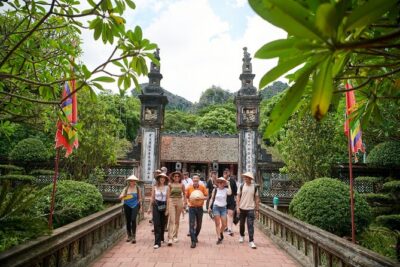
Ninh Binh Day Trip: Hoa Lu-Trang An/Tam Coc-Mua Cave-Cycling-Boat
Read our review →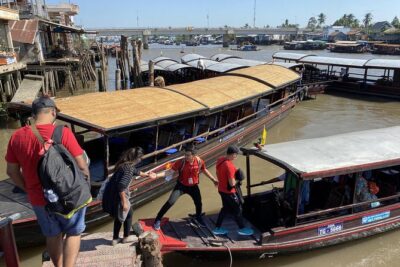
Cai Be Mekong Delta Tour: Cooking Class, Cycling & Craft Villages
Read our review →
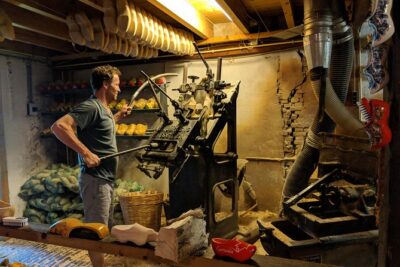
Countryside Bike Tour from Amsterdam: Cheese, Clogs & a Windmill
Read our review →
Electric Cycling Tour of Ubud with Free Hotel Transfer and Lunch
Read our review →
Browse the lists this tour appears in