
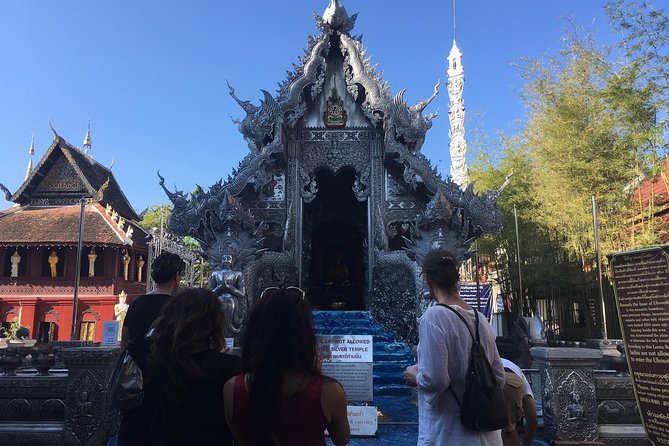
Review · CHIANG MAI
Chiang Mai City Culture Half-Day Cycling Tour
Chiang Mai makes more sense from a bicycle seat. This four-hour ride threads through narrow lanes, old temples, craft workshops, markets, and neighborhoods that are easy to miss from a taxi. You cover about 25 kilometers, enough to see far more than the central temple strip without giving up your whole day.
I like the mix of major sights and ordinary city life, especially the stop at a local silversmith and the visit to the Women’s Correctional Institution for refreshments. Guides such as Wit, Koi, and Tong have received praise for giving clear local context. The main caution is that you need to be an experienced cyclist, and a group of up to 50 people can feel large.
Key points at a glance
- A 25-kilometer city route: Ride beyond the famous temple core into alleys, markets, craft areas, and local communities.
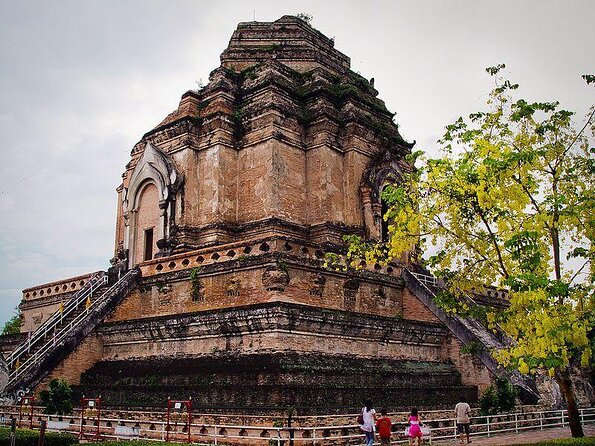
- Two major temples included: Visit Wat Chedi Luang Varavihara and Wat Phra Singh, with admission covered.
- Local stops add depth: See a silversmith, a Chinese community, fresh food and flower markets, and the Women’s Correctional Institution.
- Morning timing works well: The 8:30 am start leaves time for more Chiang Mai plans later in the day.
- Lunch, drinks, snacks, bike, and helmet included: The price covers the practical pieces you need for the ride.
- Plan your own way to the start: Transport to and from attractions is not included, and the meeting point outside the old center may take care to locate.
Riding Chiang Mai beyond the temple walls
At $46.98 per person, this tour is priced as a guided sightseeing ride rather than a simple bicycle rental. You get the bike, helmet, English-speaking guide, temple admissions, food, drinks, snacks, and insurance. The value improves if you want an organized introduction to Chiang Mai and would otherwise pay separately for transport, entrance fees, and a guide.
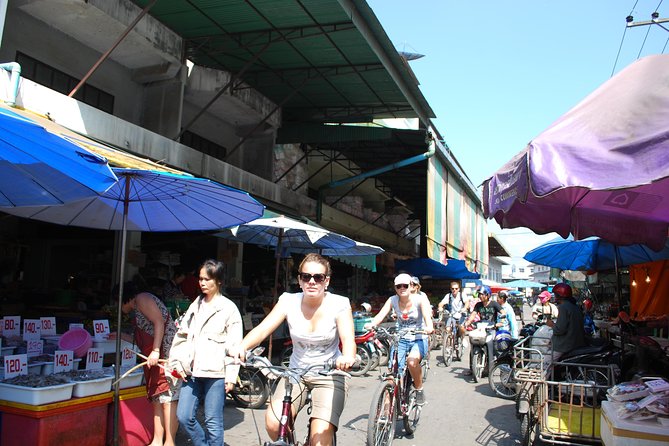
The route is the real reason to book. Chiang Mai’s old center is compact, but its character changes quickly once you leave the main roads. A bicycle lets you move through narrow lanes and quieter neighborhoods at a useful pace. You see temples as part of a living city, not just as isolated stops on a checklist.
I would place this tour near the beginning of a Chiang Mai stay. The guide can help you understand the city’s religious sites, crafts, food culture, and local communities before you explore on your own. Since the ride takes about four hours, you still have the afternoon for a market, massage, museum, or unplanned wandering.
The route covers a lot of ground, so this is not a gentle, short pedal around the moat. You should be comfortable cycling for several hours and covering 16 miles. The information specifically recommends the tour for experienced cyclists. That advice matters more than the attractive sightseeing list.
A few more rides around Chiang Mai worth a look
- Chiang mai Hike & Downhill Bike Adventure –Suthep National Park
★ 4.5 · 204 reviews - From Chiang Mai: Mae Taeng Valley and Waterfalls Cycle Tour
★ 4.9 · 159 reviews - Chiang Mai: Suthep National Park Hiking & DH Mountain Biking
★ 4.8 · 151 reviews
Starting at Pa Daet at 8:30 am
The meeting point is the ThailandBiking Chiang Mai branch at Baan Nai Fun 1, 135/157, Soi 7-9, in Pa Daet. The tour begins at 8:30 am and finishes back at this same meeting point.
This location is not the most convenient place for a casual walk-in from the old city. One participant found the cycle shop difficult for a taxi driver to locate, so give yourself extra time and keep the full address available. Transport to the meeting point is your responsibility, as transportation to and from attractions is not included.
The operator provides the bicycle and helmet. Names and dates of birth for all participants are required for insurance. Confirmation is sent within 48 hours of booking, subject to availability, so do not leave the reservation until the last minute if your schedule is tight.
The maximum group size is listed as 50 people. That is a sizable group for city cycling. The guide’s quality will matter, especially at intersections and busy sections, and the pace may feel less personal than on a small private ride. If you want a quieter experience, ask about private arrangements directly, particularly if children are joining.
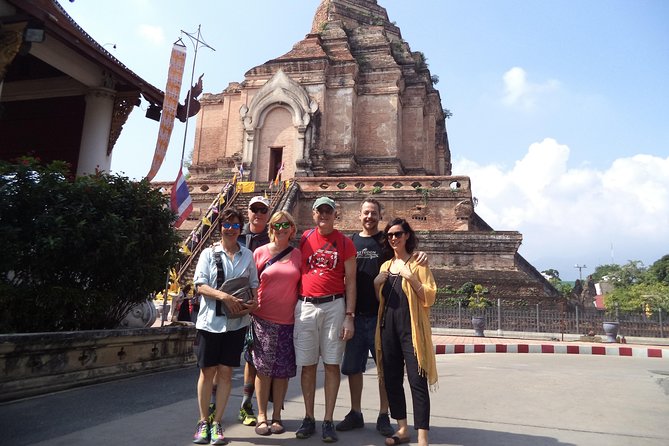
Wat Chedi Luang and the old city center
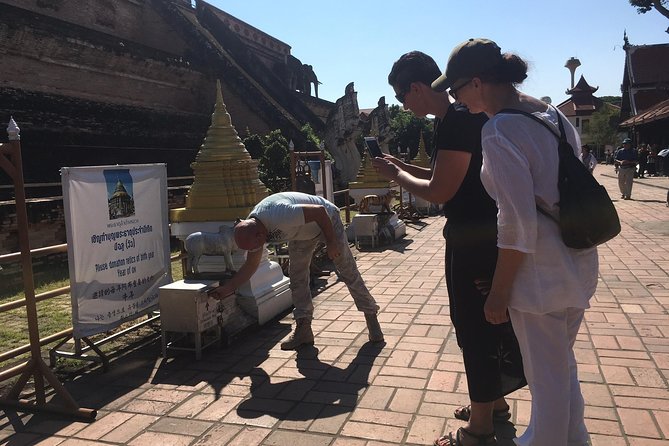
The first listed temple stop is Wat Chedi Luang Varavihara, an ancient temple complex in central Chiang Mai. You have about 15 minutes there, with admission included.
That short stop is enough for an introduction and photographs, but not a long architectural study. The value comes from having a guide explain what you are seeing and place the temple within Chiang Mai’s religious and civic life. You should expect a focused visit rather than free time to explore every corner.
The route to the temple is part of the experience. Instead of arriving by vehicle and leaving again, you approach through the city by bicycle. Narrow lanes and atmospheric neighborhoods give you a better sense of how the old center connects to daily life.
Dress for temple visits. Smart casual clothing is requested, and you should choose attire that covers shoulders and knees when needed. The practical approach is to dress respectfully from the start rather than depend on finding a cover-up later.
Wat Phra Singh, Chiang Mai’s principal temple stop
The second named temple stop is Wat Phra Singh, described as the city center’s holiest place. You have about 15 minutes here, and admission is included.
Like Wat Chedi Luang, this is a compact visit. The guide’s explanation is important because the stop is not designed as a long, self-guided temple tour. You get a clear look at one of Chiang Mai’s central religious landmarks, then return to the bicycle and continue into less formal parts of the city.
The two temple visits give the morning a useful structure. Wat Chedi Luang introduces an ancient complex, while Wat Phra Singh shows you another major center of worship. Together, they cover the essential old-city sights without making the entire tour about temples.
If religious architecture is your main interest, you may want more time at both locations than this tour provides. The strength here is breadth: you see important temples and then keep moving into neighborhoods, markets, and workshops.
Same roads, a different day in the saddle:
- Half-day E-bike Nam Phrae (hilly, fully paved roads, GUIDED)
★ 5.0 · 122 reviews - Half-day E-bike Countryside and rice paddies (flat land, GUIDED)
★ 4.5 · 94 reviews - Chiang Mai: Half-Day Old Town Cycling Tour
★ 4.9 · 87 reviews - Sticky Waterfall Cycling Tour
★ 5.0 · 68 reviews
Silversmiths, local crafts, and everyday work
One of the more appealing parts of the route is the stop at a local silversmith. This gives you a look at Chiang Mai’s craft traditions and the work behind objects that can otherwise seem like simple market goods.
The supplied details do not specify how long you stay or whether a purchase is expected. I would treat it as a cultural stop, not a shopping commitment. You can observe the craft, ask questions through the guide, and decide for yourself if anything interests you.
This kind of visit adds balance to the temple stops. Religious buildings show one part of Chiang Mai’s identity; craft work shows another. It also gives the guide a chance to discuss local skills and livelihoods in a more direct way than a standard sightseeing commentary.
Guides are central to the quality of this section. Wit has been praised for giving detailed explanations, while Koi led a ride through country roads on another departure. Tong also guided the City Culture excursion. Your guide may be different, but the tour depends on having someone who can turn the passing streets and workshops into useful context.
Refreshments at the Women’s Correctional Institution
The ride includes a stop at Chiang Mai’s Women’s Correctional Institution for refreshments. This is an unusual inclusion and one of the tour’s more socially focused moments.
The stop connects tourism with a local institution and gives you a chance to support a setting that offers food and drinks to visitors. It also raises questions about women’s rights, rehabilitation, and how tourism can interact with correctional programs. The information provided does not describe the exact refreshments or the length of the stop, so keep your expectations flexible.
The experience may feel more serious than a normal café break. That is part of its value, but it may not suit someone who wants a purely light sightseeing morning. Approach it with respect and listen to the guide’s explanation rather than treating it as a novelty.
Chinese community, food markets, and flower stalls
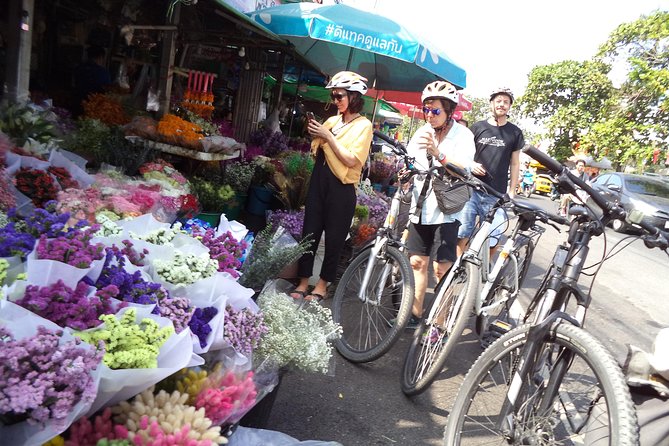
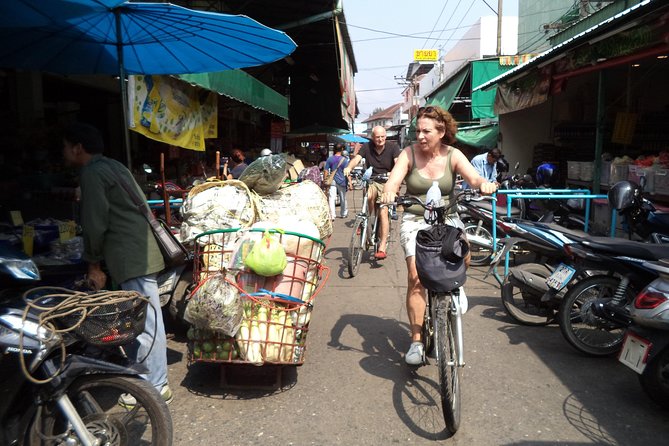
After the central temples, the route moves toward a Chinese community and fresh food and flower markets. These stops widen the picture of Chiang Mai beyond its best-known Buddhist sites.
Markets are useful places to understand a city through its ingredients and daily routines. You may see products from around the region, fresh foods, and flowers prepared for homes, businesses, or religious use. The tour information does not promise a market tasting session or a set shopping period, so think of this as a moving introduction rather than a dedicated food tour.
The Chinese community also adds a different cultural layer to the ride. Rather than presenting Chiang Mai as one uniform place, the route points to the city’s varied communities and commercial traditions. A local guide can explain details that would be easy to miss while cycling past.
Keep your belongings secure and follow the guide closely in market areas. The group size can affect how easily everyone stops, and a large group may not linger at every stall. If you want extensive time for photographs or shopping, plan a separate market visit later.
Food, drinks, and the pace of the morning
Lunch, beverages, and snacks are included. That makes the $46.98 price easier to justify, particularly because you do not need to pause the ride to arrange food on your own.
The details do not identify the lunch menu, restaurant, or exact serving time. If you have allergies or strict dietary needs, confirm those details before booking rather than assuming the included meal will suit you.
The ride lasts about four hours, including temple visits and cultural stops. That is enough time for a broad introduction, but not enough for long visits at every location. You should expect a steady sightseeing rhythm: pedal, stop, listen, look around, and continue.
Because the tour starts in the morning, heat may be less of a problem than on an afternoon ride, though the distance still makes hydration important. Drinks are included, but bring practical cycling clothing and sun protection. Comfortable shoes are more useful than formal footwear, provided your temple clothing remains respectful.
What the guide can add
The best part of a guided bicycle tour is not simply finding the streets. It is learning why they matter.
Wit received strong praise for explaining the places along the route in detail. That is exactly the quality you want here, since the tour includes temples, a silversmith, a correctional institution, a Chinese community, and markets. Each stop can feel disconnected without a guide to tie it together.
The available information also names Koi and Tong as guides on different departures. One ride with Koi followed country roads, and another with Tong was described as a comfortable introduction to the city. Your specific guide is not guaranteed, but these names give you an idea of the operator’s guide team.
Sunday scheduling deserves attention. Some places on one departure were closed because it was Sunday, and the route had to change. If a particular workshop, market, or institution is important to you, ask whether it operates on your chosen date. A changed route may still be worthwhile, but you should not assume every stop runs identically every day.
Who should book this cycling tour?
I would recommend it to a first-time Chiang Mai visitor who wants an overview with more local texture than a standard vehicle tour. It suits people who enjoy seeing how neighborhoods connect and who are happy to trade long temple visits for a wider route.
It is also a good fit if you like guided activity but do not want to spend an entire day cycling. The four-hour schedule leaves room for your own plans, and the included lunch and equipment simplify the morning.
I would be more cautious if you are a beginner cyclist, dislike riding in city conditions, or need a very relaxed pace. The 25-kilometer distance is substantial, and the group may include many riders. Families should note that private tours with children under 11 must be arranged directly by phone.
The tour is less suitable for anyone seeking a highly flexible private itinerary. The route, meal arrangements, and stop lengths are organized in advance. That structure is helpful for a first visit, but it limits spontaneous detours.
Booking advice and cancellation terms
The tour costs $46.98 per person, with group discounts available. Since the fee includes the bicycle, helmet, English-speaking guide, insurance, temple admissions, lunch, beverages, and snacks, it offers fair value for an organized half-day introduction.
Free cancellation is available if you cancel at least 24 hours before the 8:30 am start. Changes or cancellations made within 24 hours are not accepted for a refund, and the cut-off follows local Chiang Mai time.
Book this tour if you want to cover a lot of Chiang Mai in one morning and value local explanation over extended time at a single monument. Skip it if you are not comfortable cycling 25 kilometers or if your priority is a small, slow, fully private experience. For an active first look at temples, crafts, markets, and everyday neighborhoods, it is a useful choice.
FAQ
How long is the Chiang Mai City Culture Cycling Tour?
The tour lasts about four hours.
What time does the tour begin?
The tour starts at 8:30 am.
Where does the tour begin and end?
It begins at the ThailandBiking Chiang Mai branch at Baan Nai Fun 1, 135/157, Soi 7-9, Pa Daet, Chiang Mai. It ends back at the same meeting point.
How far do you cycle?
The route covers about 16 miles, or 25 kilometers.
Are a bicycle and helmet included?
Yes. Bicycle and helmet use are included in the tour price.
Is lunch included?
Yes. Lunch, beverages, and snacks are included.
Which temples are included?
The tour includes Wat Chedi Luang Varavihara and Wat Phra Singh. Admission tickets for both are included.
Is the tour suitable for children under 11?
Private tours with children under 11 can only be booked directly by phone. The general activity information recommends the tour for experienced cyclists.
Just added around Chiang Mai
- Buffalo Soldier Trail Mountain Biking Tour from Chiang Mai with Lunch★ 5.0 · 15 reviews
- Half-Day Lanna Countryside Cycling Tour in Chiang Mai★ 4.5 · 24 reviews
- Stairway to Heaven Trail Mountain Biking Tour Chiang Mai★ 5.0 · 12 reviews
- Full-day E-bike Countryside and Nam Phrae (flat-hilly, GUIDED)★ 5.0 · 11 reviews
- Full-Day Cycle and Kayak trip in Sri Lanna National Park★ 5.0 · 2 reviews
- FIELDS OF GOLD Mountain Biking Tour Chiang Mai★ 5.0 · 18 reviews
- Doi Suthep National Park To Chiang Mai Beginner Downhill Mountain Biking★ 5.0 · 4 reviews
- Cycling tour and Buatong waterfall★ 5.0 · 7 reviews
Cycling Tours, compared.
Ninh Binh Day Trip: Hoa Lu-Trang An/Tam Coc-Mua Cave-Cycling-Boat
Read our review →
Cai Be Mekong Delta Tour: Cooking Class, Cycling & Craft Villages
Read our review →
Countryside Bike Tour from Amsterdam: Cheese, Clogs & a Windmill
Read our review →
Electric Cycling Tour of Ubud with Free Hotel Transfer and Lunch
Read our review →
Browse the lists this tour appears in