
Review · INDONESIA
Borobudur: Cycling Tour and Explore Java Villages
The best part of this tour happens away from Borobudur’s temple crowds. You pedal along narrow village roads, past rice fields and simple homes, then stop to see how families make coconut sugar, tofu, pottery, and batik.
I like the easy, mostly flat cycling route, which makes this a good choice for beginners and families. I also like the hands-on stops, especially shaping a pottery piece and creating batik art instead of simply watching a demonstration.
The main consideration is time. Four to six hours can pass quickly, and batik is optional rather than included in the base price. If you want every workshop, confirm the plan and extra cost before setting off.
Key points to know before you book
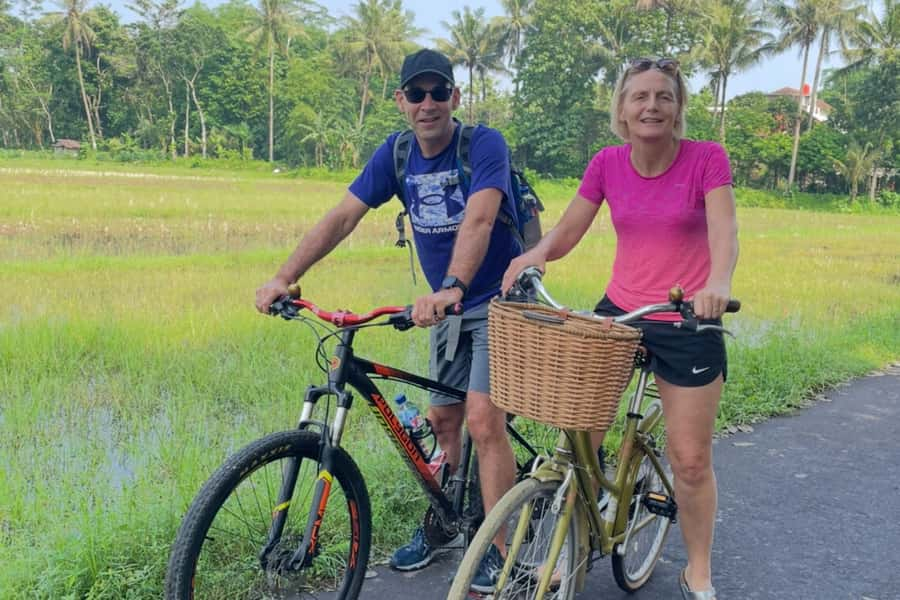
- The cycling is gentle and beginner-friendly: You ride through Tanjungsari and Wanurejo on quiet village roads, with regular stops.
- The tour connects you with working home industries: Coconut sugar and tofu are made using simple local methods you can see up close.
- Pottery is included: A private local artisan guides you as you shape clay by hand.
- Batik is optional: You can request a workshop and make your own wax-resist artwork to take home.
- The group is private: You get an English-speaking guide and a more personal pace than on a large group outing.
- The price is $29 per person: Bicycle use, guide, water, snacks, village visits, pottery, and local industry donations are included.
Why the countryside around Borobudur is worth your morning
Borobudur is one of Java’s major sights, but the countryside around it gives you a different kind of cultural encounter. Instead of spending the whole day moving from one famous monument to another, you spend several hours in places where people work, make things, and carry on ordinary village life.
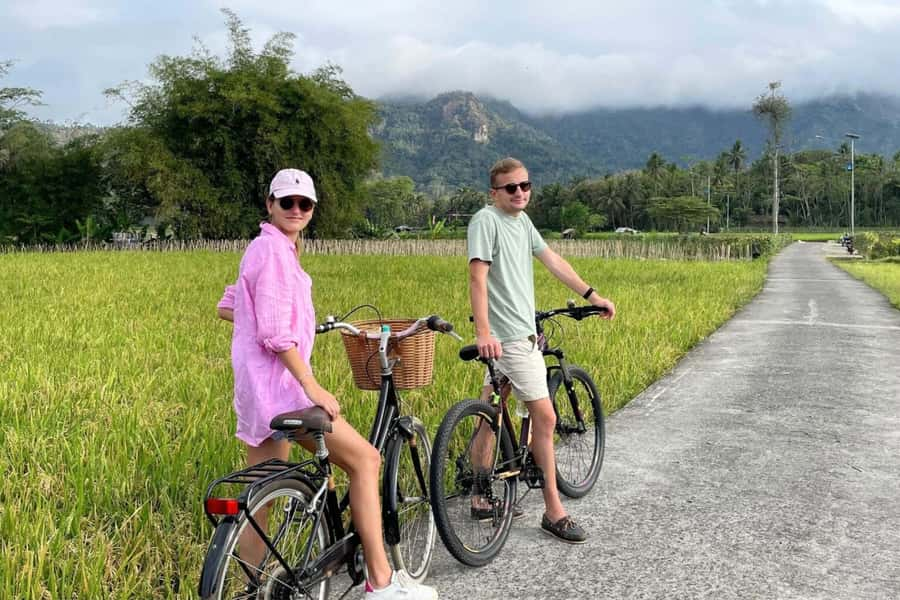
The route passes rice fields, traditional homes, and small roads where the pace is slow. You may see broad views toward Borobudur and plenty of good photo stops, but the real value lies in the pauses. You have time to meet local people and learn how familiar products are made.
That makes this more than a bike ride. It is a practical introduction to rural Javanese life, with enough activity to keep the morning lively but without turning the experience into a race.
The tour is arranged as a private group, so the pace can be more comfortable than on a large shared departure. You can stop for photos, ask questions, and spend more time at a workshop if the schedule allows.
A few more rides around Indonesia worth a look
- Electric Cycling Tour of Ubud with Free Hotel Transfer and Lunch
★ 5.0 · 1,397 reviews - Menoreh Village Cycling
★ 5.0 · 611 reviews - Ubud: Downhill Cycling with Volcano, Rice Terraces and Meal
★ 5.0 · 536 reviews
Starting near Borobudur Temple or from Yogyakarta
The usual meeting point is the main gate of Borobudur Temple. Four pickup and drop-off areas are available: Borobudur Temple, Borobudur, Yogyakarta, and Jalan Prawirotaman.
Free hotel pickup is available around Borobudur when requested in advance. Pickup and drop-off in Yogyakarta can also be arranged, but an additional charge applies. Give the operator your hotel name so the transfer can be organized by WhatsApp or email.
The activity is usually planned for the morning, when cycling is more pleasant and the countryside feels calm. Starting times vary, so check availability when booking. One useful detail is that the experience lasts four to six hours, not a fixed length every day. The exact timing may depend on your pickup point, the pace of your group, and which workshops you choose.
Meet your English-speaking guide at the agreed location, then get set up with your bicycle. Wear clothing that lets you move freely, and choose shoes that are comfortable for pedaling and walking around workshops.
The flat ride through Tanjungsari
The first main section takes you through Tanjungsari, with about an hour and a half devoted to visiting, guided cycling, and stops along the way.
This is the part for enjoying the countryside rather than chasing a particular monument. The route is described as flat and easy, so you do not need advanced cycling skills. That said, you must be able to ride a bicycle independently, and the tour is not suitable for people who cannot cycle or who have back problems.
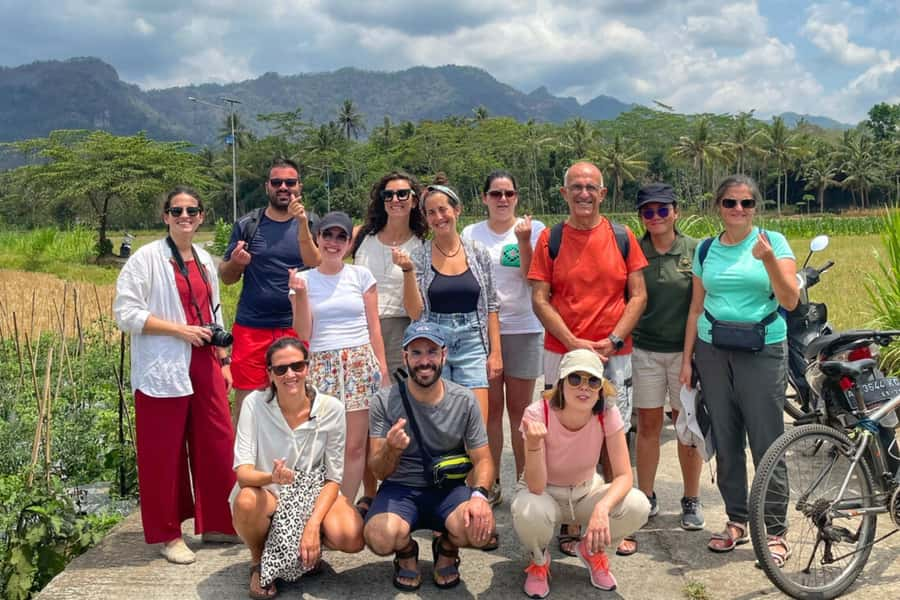
Quiet village roads lead through rice fields and green rural views. Your guide can point out details of daily life and explain local customs as you ride. The planned stops also give you time to catch your breath, take photographs, and enjoy the view instead of pedaling continuously.
The roads become narrower as the ride continues, according to the experience described by one recent participant. That can make the route feel more intimate, but it also means you should stay alert and follow your guide’s instructions.
Bring a hat and sunscreen. Java’s sun can make an easy ride feel harder than expected, especially if you are not used to cycling in warm weather. Mineral water and local snacks are included, but bringing extra water is sensible if you normally drink a lot while exercising.
Coconut sugar made in a family workshop
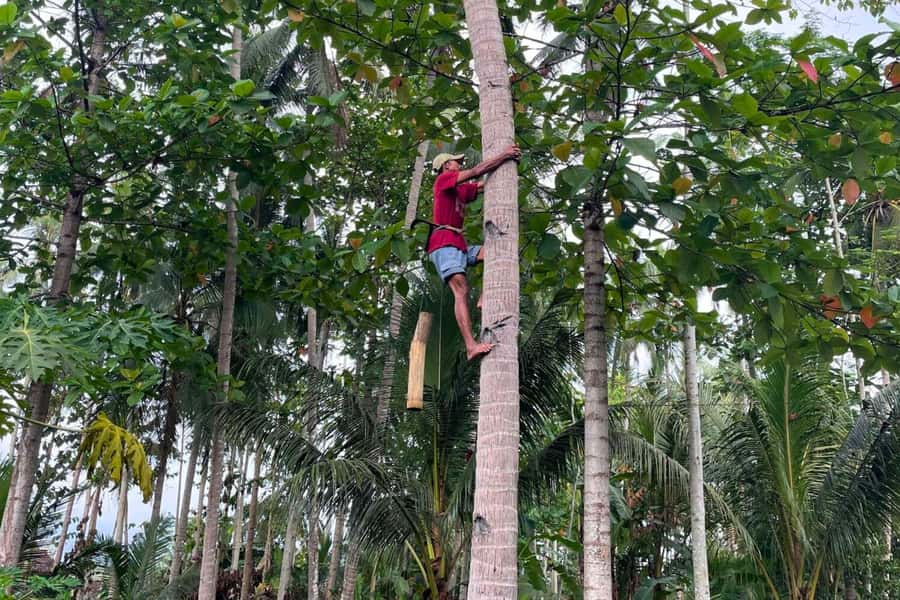
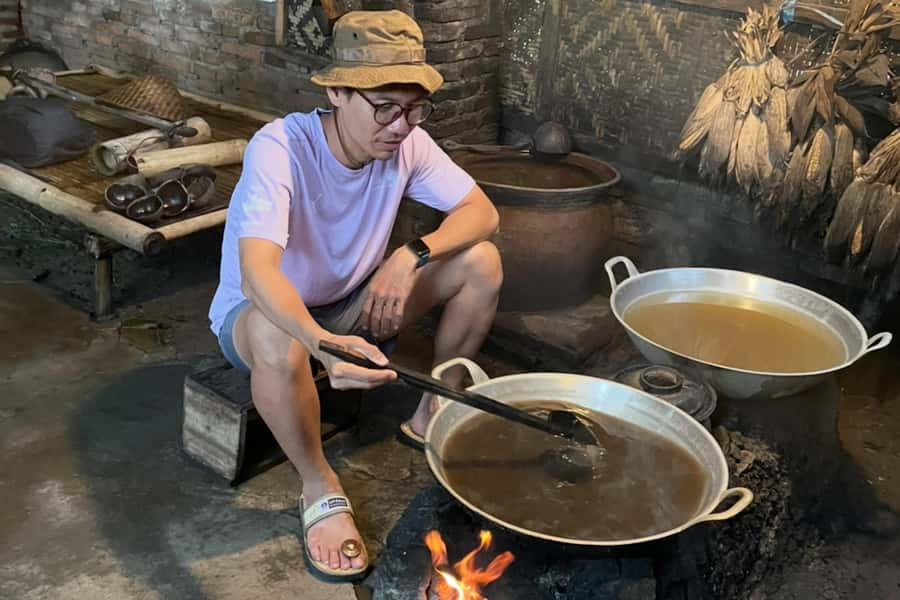
One of the first stops is a small coconut sugar home industry. You see coconut sap being cooked and meet the family behind the product.
This is a useful stop because it shows the connection between the countryside and the food on local tables. Coconut sugar is not presented as a factory product. You see a small-scale process carried out with traditional methods, and your guide can explain what the family does and how the product is made.
The visit is short enough to keep the cycling day moving, but it adds context to the ride. You are not only looking at palms and fields. You are seeing how local resources become an income for a household.
This kind of stop also helps explain why the tour includes a donation for local industries. Your fee supports the activity in a direct way, rather than treating the village visits as scenery arranged only for photographs.
Same roads, a different day in the saddle:
- Half-Day Ubud Electric Cycling Tour to Tirta Empul Water Temple
★ 5.0 · 315 reviews - Kintamani Cultural and Nature Cycling Tour ( Manual Bike )
★ 5.0 · 257 reviews - Bali Countryside Cycling Tours
★ 5.0 · 246 reviews - Half Day Cycling Tour ( Manual Bike )
★ 5.0 · 225 reviews
Tofu making with simple tools
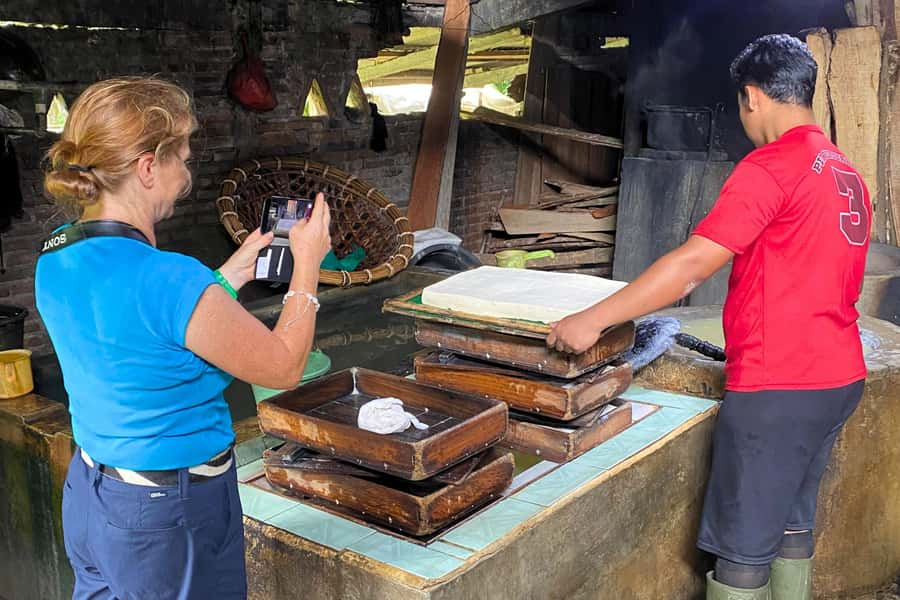
The next visit is a tofu home industry. Here you can see fresh tofu being produced daily with basic equipment and long-used methods.
Tofu is familiar to many people, but seeing it made in a local setting gives you a better sense of the work behind an everyday food. The stop is practical and hands-on in spirit, though the main activity is watching and learning rather than making tofu yourself.
I would not book this tour expecting long formal demonstrations at every stop. The appeal is the variety and the chance to meet people in their work settings. Coconut sugar and tofu may be simple products, but they make the countryside feel lived-in and useful.
Your guide’s role matters here. The tour promises an English-speaking guide who shares information about Javanese traditions and daily life. That turns the stops from quick photo breaks into small cultural lessons.
Shaping clay with a local artisan
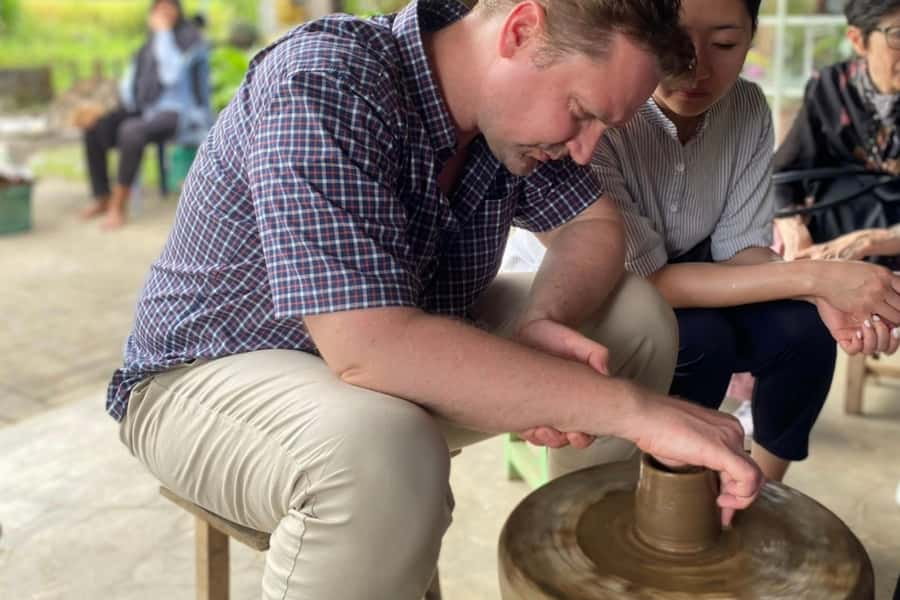
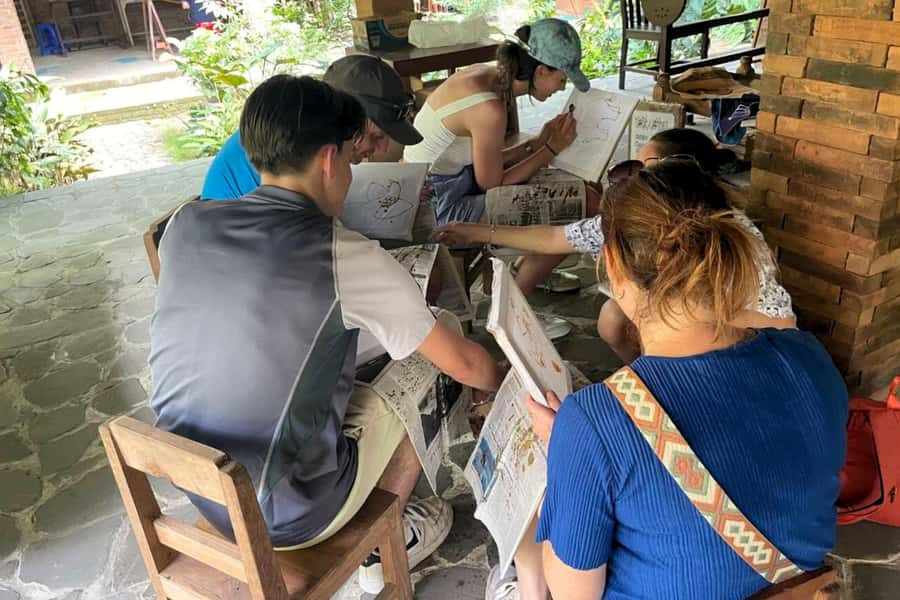
The pottery visit is the most clearly hands-on part of the included program. At a pottery village, a local artisan shows you how to shape clay by hand, and you get to try making your own piece.
You do not need prior pottery experience. That is good news, because this is meant to be fun rather than polished studio work. Your finished piece may be simple, but the memory comes from handling the clay and trying a craft that supports the local community.
The workshop also gives the cycling day a change of pace. After riding through open fields and village lanes, you sit down and focus on one task. It is a good stop for families and for anyone who likes making things rather than only looking at them.
Ask your guide what happens to the pottery afterward. The supplied details confirm that you can make your own piece, but they do not specify whether it is fired or how it is collected. If taking a finished item home matters to you, clarify that before booking.
Optional batik, the tour’s best souvenir
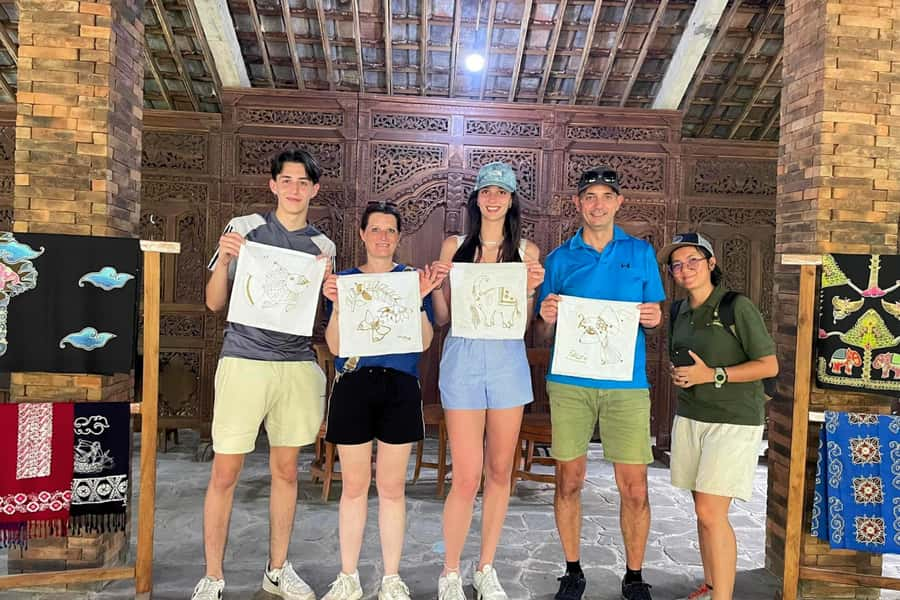
The batik workshop is available on request and is not included in the basic price. If you choose it, you learn about wax-resist dyeing and create your own batik artwork.
This is an appealing add-on because it gives you something personal to take home. A mass-produced souvenir can be attractive, but making your own design connects it to your time in Java.
Batik also adds a visual and historical layer to the experience. The wax-resist method is an old Javanese craft, and your guide can explain the basic process while you work. Do not expect a full professional textile course in a short tour, but you should get a clear introduction and a chance to produce your own small artwork.
Because the workshop is optional, tell the operator in advance if it is important to you. Confirm the extra charge, the amount of time available, and whether the cycling route changes when batik is added. The base price of $29 does not include this activity.
Wanurejo and the return through the rice fields
The second major cycling area is Wanurejo, with another section of guided riding, village visits, and scenic views along the way.
Wanurejo gives you more time on the smaller roads and among rural views. The route is not presented as a strenuous sporting ride. It is a relaxed cultural outing, with the bicycle used to connect one local experience to the next.
Keep your camera ready at the rice-field stops and the Borobudur viewpoint. The views are one of the pleasures of the route, particularly when the fields open out and the temple area comes into sight.
The timing may also allow you to see the sun lowering over the rice fields with Borobudur in the background. This was described as a memorable finish, but the published schedule begins in the morning and the total duration is four to six hours, so you should not assume sunset is guaranteed. Ask about the day’s timing if that view is a priority.
How much value do you get for $29?

At $29 per person, this is a strong value if you want several experiences in one half-day. The fee includes a private English-speaking guide, bicycle, mineral water, local snacks, village cycling, rice-field and viewpoint stops, pottery with an artisan, visits to coconut sugar and tofu producers, and donations to local industries.
That is a lot of variety for the price. You are not paying only for bicycle rental. You are also paying for the route planning, interpretation, introductions to local families, and the chance to take part in a craft.
The value is even better for people who would otherwise need separate transport to reach the villages and arrange each workshop alone. The guide brings the day together and handles the practical side.
There are a few costs to watch. Batik is optional and costs extra, personal expenses are not included, and tips are optional. Yogyakarta pickup and drop-off also require an additional charge. Ask for the full price if you are staying in Yogyakarta or want the batik session added.
Who will enjoy this cycling tour most?
This experience suits you if you want a slower look at the Borobudur area and enjoy meeting local people. It is especially good for:
- Beginners who prefer a flat route
- Families with older children who can ride a bicycle
- Couples looking for a relaxed outdoor activity
- Visitors interested in crafts and small home industries
- Anyone who has already seen Borobudur and wants a different side of the area
- Private groups who prefer their own pace
It may not suit you if you want a hard bike ride, a long-distance route, or a tightly scheduled sightseeing program. It is also not suitable if you cannot ride a bike or have back problems.
The activity includes stops and conversation, so it works best for people who value local contact over speed. If your main goal is exercise, you may find the ride too gentle. If your main goal is understanding how people live and work around Borobudur, the mix is much more satisfying.
Practical tips for a smoother ride
Wear light, comfortable clothes and shoes that stay secure while cycling. A sun hat, sunscreen, and water are important, even though mineral water is supplied.
Bring a camera, but do not let it turn every stop into a rushed photo session. The best part of the tour is the mix of views and conversation, so leave room to watch the craft demonstrations and ask questions.
Smoking is not allowed during the activity. Tell the operator your hotel name ahead of time if you need pickup around Borobudur. For Yogyakarta transfers, ask about the extra cost before confirming.
Cancellation is flexible: you can cancel up to 24 hours in advance for a full refund. You can also reserve now and pay later, which helps if your Java plans are still changing.
Should you book the Borobudur village cycling tour?
Book it if you want to see the countryside around Borobudur through ordinary village life rather than only from a temple entrance. The route is easy, the price covers a generous set of inclusions, and the pottery stop gives you a genuine hands-on activity.
I would add the batik workshop if making a personal souvenir matters to you, but confirm the extra fee and timing first. I would also request hotel pickup if you are staying around Borobudur, since it makes the morning simpler.
Skip it if you cannot ride a bicycle, have back problems, or want a demanding cycling route. For everyone else, this is a friendly, well-priced way to connect rice fields, home industries, local crafts, and Borobudur’s countryside in one relaxed outing.
FAQ
How long does the Borobudur cycling tour last?
The activity lasts about four to six hours. Starting times vary, so check availability for your chosen date.
Where does the tour start?
The main meeting point is the main gate of Borobudur Temple. Pickup can also be arranged from Borobudur-area hotels, and other pickup points include Borobudur, Yogyakarta, and Jalan Prawirotaman.
Is hotel pickup included?
Free hotel pickup is available on request around the Borobudur area. Pickup and drop-off in Yogyakarta can be arranged for an additional charge.
Is the cycling route suitable for beginners?
Yes. The route is described as flat and easy, and it is suitable for beginners and all ages. You must be able to ride a bicycle independently.
Is batik making included in the price?
No. The batik workshop is optional and available on request. Confirm the additional cost and timing when you book.
What is included in the $29 price?
The price includes an English-speaking guide, bicycle, local snacks, mineral water, village cycling, rice-field and Borobudur viewpoint stops, pottery making with a local artisan, visits to coconut sugar and tofu home industries, and donations for local industries.
Just added around Indonesia
- Yogyakarta: Countryside Cycling and Cooking Class Experience★ 4.9 · 8 reviews
- Yogyakarta: Countryside Village Cycling Tour With Guide★ 5.0 · 16 reviews
- Ubud: Kintamani Downhill Cycling with small group & Private★ 5.0 · 4 reviews
- Bali: Mountain Bike Tour and River Rafting with Lunch★ 5.0 · 3 reviews
- Ubud: Half-Day Tegallalang Electric Cycling Tour★ 4.9 · 24 reviews
- Ubud: Downhill Countryside Cycling From Kintamani★ 4.5 · 4 reviews
- Ubud: Cycling Tour Local Villages, Temple, and Rice Field★ 4.8 · 12 reviews
- Ubud Cycling Tour : All Inclusive Cycling Adventure★ 4.2 · 7 reviews
Cycling Tours, compared.
Ninh Binh Day Trip: Hoa Lu-Trang An/Tam Coc-Mua Cave-Cycling-Boat
Read our review →
Cai Be Mekong Delta Tour: Cooking Class, Cycling & Craft Villages
Read our review →
Countryside Bike Tour from Amsterdam: Cheese, Clogs & a Windmill
Read our review →
Electric Cycling Tour of Ubud with Free Hotel Transfer and Lunch
Read our review →
Browse the lists this tour appears in