
Review · BALI
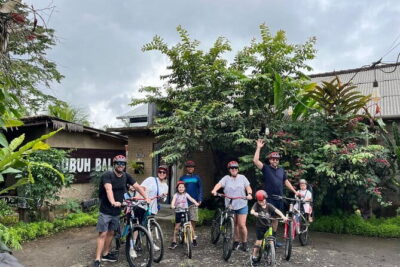
Bali Downhill Cultural Cycling Tour
The best part of this day is the way it connects Bali’s scenery with everyday life. You start high in the Kintamani volcano area, then pedal through villages and farms toward Ubud, stopping at a school, an organic plantation, and a local priest compound. I like the school charity visit and the chance to speak with a Balinese family, rather than simply passing them behind a bus window.
I also like the mostly downhill route, which makes a 27-kilometer ride manageable for ordinary cyclists. Guides such as Agus, Ari, Dika, and Nyomah have been praised for clear English and careful pacing. The main consideration is that this is not a continuous ride through rice paddies. Much of it uses village roads, with traffic, a few uphill sections, and one reported breakfast issue that you should confirm before booking.
Key points to know before booking
- A cultural cycling day, not just a bike ride: You visit a school, plantation, family compound, and rice-growing areas.
- The route runs mostly downhill: The ride takes about 3.5 hours, but expect a few climbs and road traffic.
- School support is built into the price: Part of the tour cost goes toward essential school supplies.
- Coffee is a major stop: You taste several coffees and teas at an organic plantation, with luwak coffee included in the tastings.
- The family visit is unusually personal: A local priest and relatives welcome you for coffee and conversation, with the guide translating.
- Good value at $45: Transport, bicycle, equipment, breakfast, lunch, guide, charity contribution, and insurance are included.
From your hotel to the highlands of Kintamani
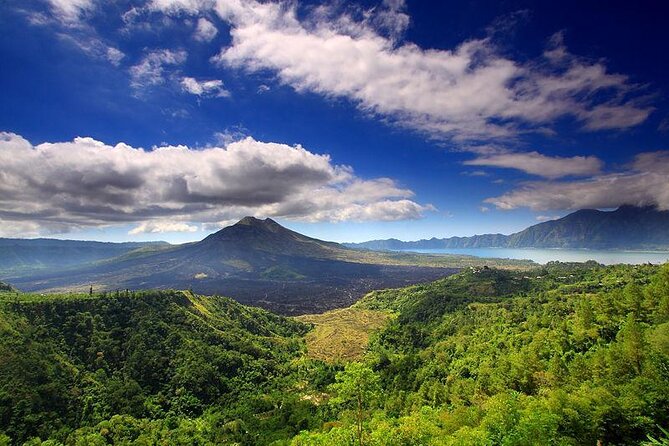
Your day begins with pickup from your hotel, usually around 30 minutes before the stated pickup time. The exact start varies, so check the schedule when you reserve. From there, you travel uphill toward the Kintamani volcano area before getting on the bicycle.
This drive matters because the ride begins well above the warmer, busier parts of Bali. The change in setting gives you a useful look at the island beyond Ubud’s restaurants, shops, and galleries. The early view is meant to include Mount Batur and Lake Batur, and the tour includes a light breakfast in that area.
One practical note: the breakfast viewpoint has not always matched the advertised plan. One booking account specifically reported that breakfast overlooking the lake did not take place. If the Mount Batur view is a major reason you are booking, ask the operator to confirm the current breakfast stop.
The included breakfast is light rather than a major meal. It gives you something to eat before cycling and a chance to enjoy the highland air before the route begins.
More Mountain Bike Tours in Indonesia
- Ubud: Downhill Cycling with Volcano, Rice Terraces and Meal
★ 5.0 · 536 reviews - Bali Downhill Cultural Cycling Tour
★ 5.0 · 224 reviews - Ubud: Downhill Cycling with Volcano, Rice Terraces, and Meal
★ 4.9 · 189 reviews
A rural school visit with a practical purpose
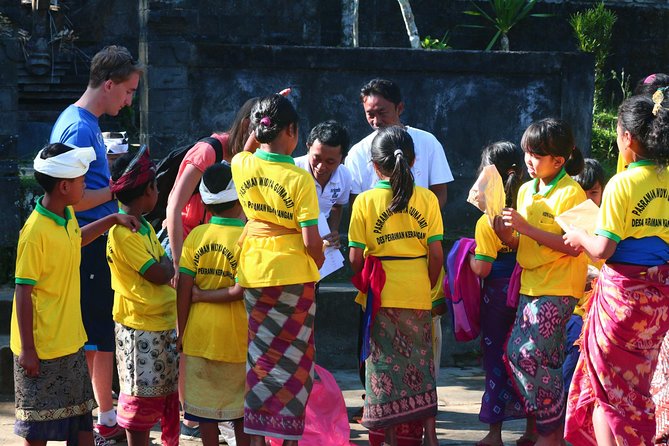
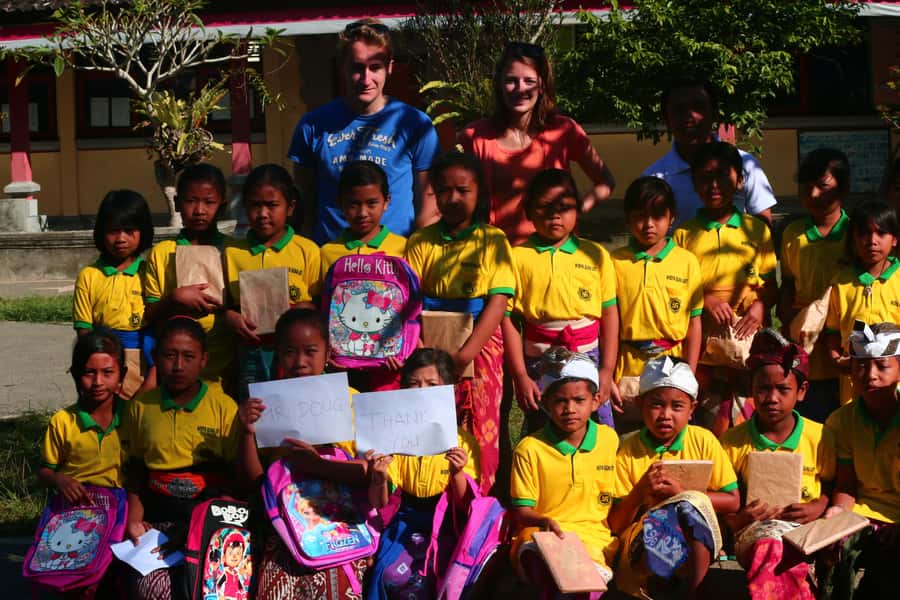
The school visit is one of the more meaningful parts of the morning. You enter a local village school and see a typical rural Bali education setting, rather than treating the community as scenery from the roadside.
A portion of your tour payment is used to buy essential school supplies. These are distributed during your visit. You may also bring extra items if you wish to contribute personally, though the tour already includes a charity donation.
If you bring supplies, keep them simple and useful. One previous family suggested bringing about 20 packs of pencils and 20 drawing books because teachers may share donations across classes. That is a suggestion, not a stated requirement, and cash is listed as something to bring for personal expenses. Ask your guide what the school currently needs instead of arriving with random gifts.
The school stop also sets the tone for the day. You are not only seeing Balinese scenery. You are getting a small, direct view of local services, family life, and the practical differences between rural and tourist areas.
Coffee, tea, and the organic plantation stop
The plantation visit adds a familiar Bali activity, but it fits this tour because farming is part of the day’s main theme. You visit an organic plantation and taste several coffees and teas, including luwak coffee.
There is also a chance to see the small animals connected with luwak coffee production. This can be an interesting stop, but it is worth remembering that coffee tasting areas often include a shop. You may be tempted to buy handmade coffee, tea, or chocolate. Nothing requires you to purchase anything, and souvenirs and personal expenses are not included.
The tasting gives you a clearer sense of how agricultural products are presented and sold in Bali. It also breaks up the cycling before the longer ride through villages and farms.
If you are sensitive to caffeine, pace yourself. Several tastings can add up before lunch. Mineral water is included, but sunscreen is not, so bring your own protection.
The 3.5-hour ride from Kintamani toward Ubud
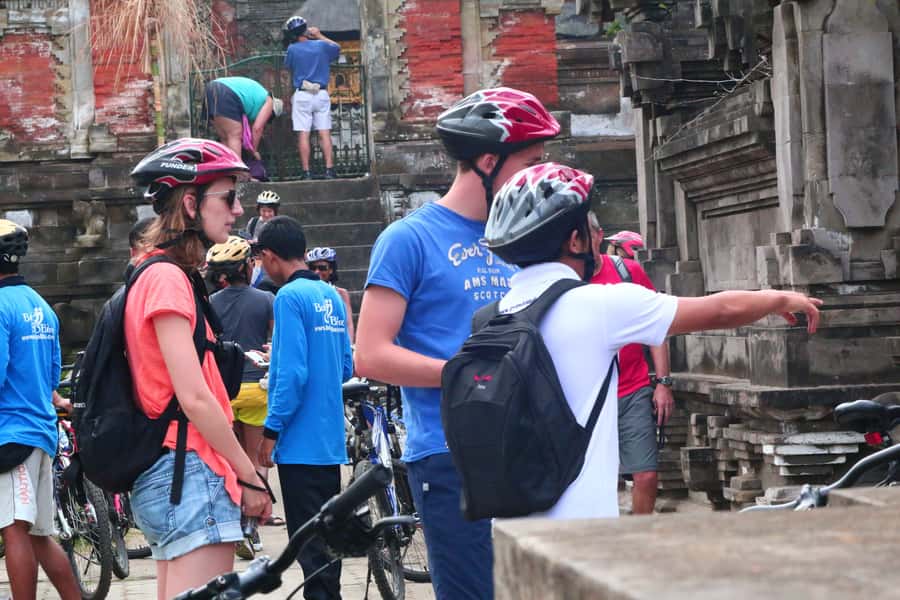
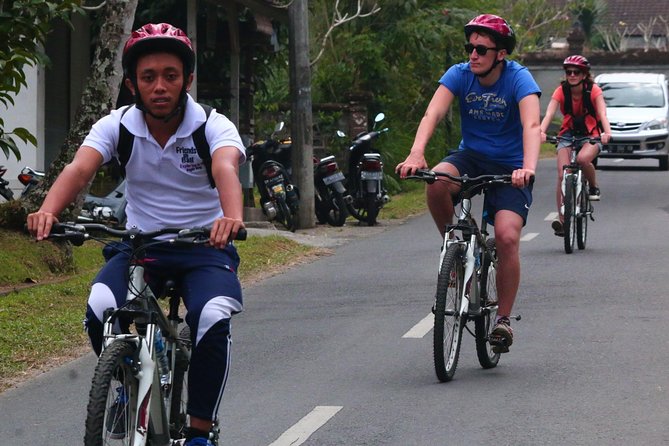
The main ride lasts about 3.5 hours and covers roughly 27 kilometers according to one detailed account. It is described as an easy downhill ride, but that should not be read as completely effortless.
Most of the route slopes down from the Kintamani area toward Ubud. Still, there are a few short climbs. One rider simply walked the bicycle up a steep section, while another noted that riders need a reasonable level of fitness. You should be comfortable cycling for several hours and controlling a bike on village roads.
The route passes through rural villages, rice-growing areas, and local farms. You get changing views of fields, homes, and working agricultural land rather than a single scenic road. The guide stops along the way to explain Balinese traditions, rice planting, family structure, and daily life.
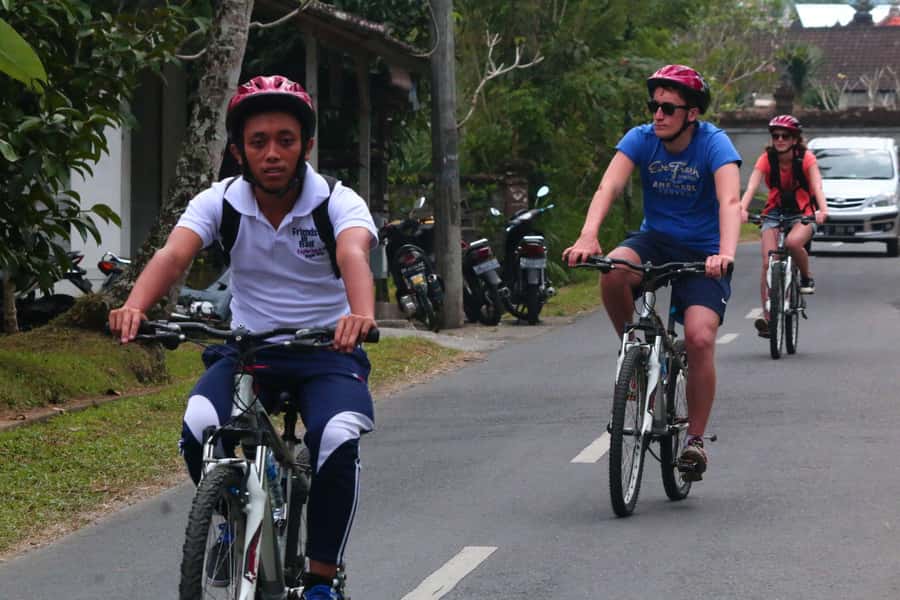
The ride is not a technical mountain-bike course. It is also not a quiet path entirely separated from traffic. One account specifically noted more road riding than expected, though the roads were fairly quiet. You should feel comfortable sharing the road and following the guide’s instructions.
Closed-toe walking shoes and sportswear are sensible. Layered clothing helps because Kintamani can feel cooler at the start, while lower elevations are warmer. The operator provides cycling equipment and mineral water.
The guides are an important part of the ride. Agus has been praised for careful attention and strong English. Ari was noted for clear explanations and a relaxed pace, while Dika slowed down for riders who were less confident. Nyomah has been described as especially good at explaining Bali’s culture and modern realities. Your guide may be someone else, but English and Indonesian are the listed tour languages.
Same roads, a different day in the saddle:
- Electric Cycling Tour of Ubud with Free Hotel Transfer and Lunch
★ 5.0 · 1,397 reviews - Menoreh Village Cycling
★ 5.0 · 611 reviews - Half-Day Ubud Electric Cycling Tour to Tirta Empul Water Temple
★ 5.0 · 315 reviews - Kintamani Cultural and Nature Cycling Tour ( Manual Bike )
★ 5.0 · 257 reviews
Rice fields and the story behind Balinese farming
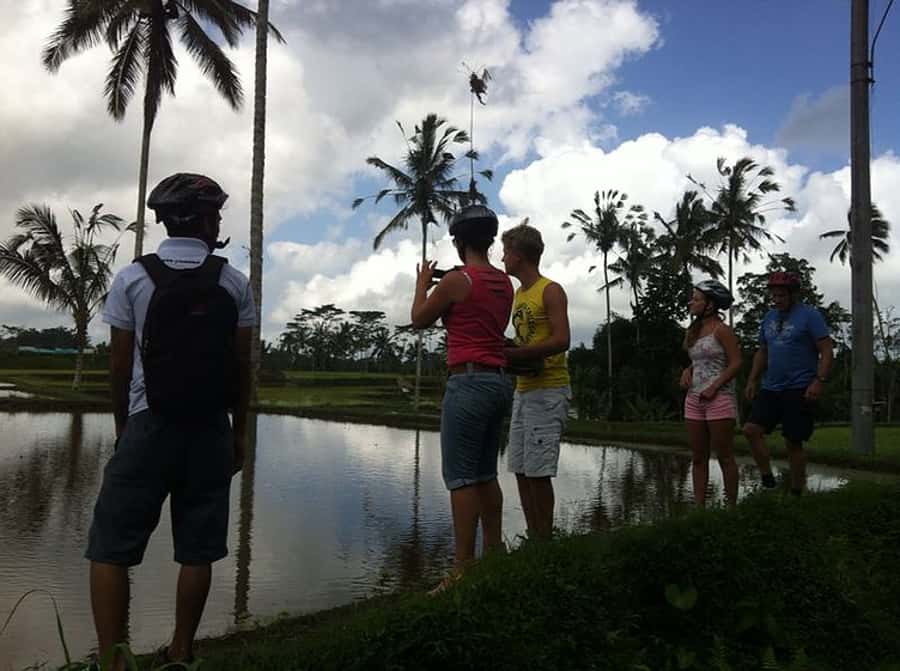
A short walk through the rice fields lets you leave the bicycle for a while. Your local guide explains rice planting culture and how farming fits into Balinese life.
Do not book this expecting a long hike through paddies. The information describes a short walk, and one account noted that the cycling stayed more on roads than inside the fields. If getting fully into the rice paddies is your priority, you may want to pair this tour with a separate rice-field walk.
Even so, the stop is useful. Rice farming is not just a scenic backdrop in Bali. It shapes village routines, land use, and community life. A guide who explains those connections gives you more than a quick photo stop.
The pace also helps. After several kilometers on the bike, a short walk offers a chance to stretch, take pictures, and listen without trying to steer at the same time.
Coffee with a priest and his family
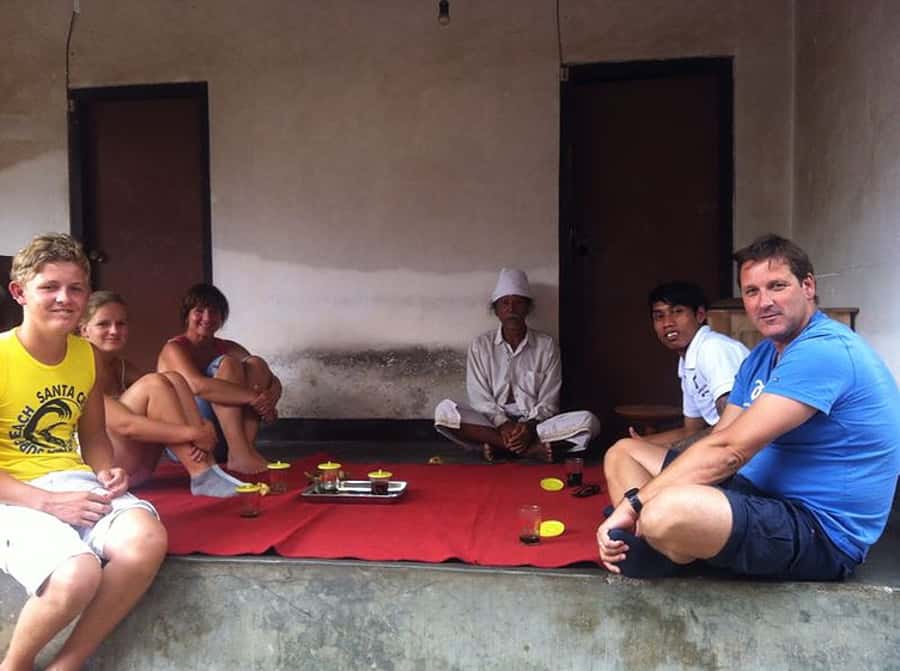
The family compound visit is the most personal stop on the route. You enter a local compound and meet a Balinese priest, family members, and the household that welcomes you.
The priest shares coffee with you, while your guide translates the conversation. This is a chance to ask about family life, rural routines, and Balinese traditions in a setting that feels more direct than a staged cultural performance.
The compound visit is also a reminder that Balinese homes and religious life are closely linked. You are visiting someone’s living environment, so modest clothing and respectful behavior matter. Listen carefully, ask before taking close-up photographs, and let the guide manage the conversation.
This stop has been a highlight for people interested in how Balinese families live today. It does not offer a polished show or a large historic site. Its value comes from the conversation and the opportunity to ask ordinary questions through a translator.
Lunch at Padi Organic in Laplapan
The ride ends at Padi Organic restaurant in Laplapan, a village surrounded by rice paddies. A Balinese lunch is included, and food has been one of the most consistently praised parts of the day.
Breakfast and lunch make the tour easier to manage because you do not need to arrange meals while cycling. Lunch is described as a traditional Indonesian meal, with chicken satay specifically mentioned in one account. The setting in Laplapan gives you a quiet finish after the road portion of the tour.
Alcoholic drinks are not included, and personal purchases are extra. Bring cash if you want to buy drinks, coffee, souvenirs, or other items.
After lunch, your driver takes you back to your hotel. Return transfers are included, which adds real value because the cycling route ends away from your starting point.
What $45 really gets you
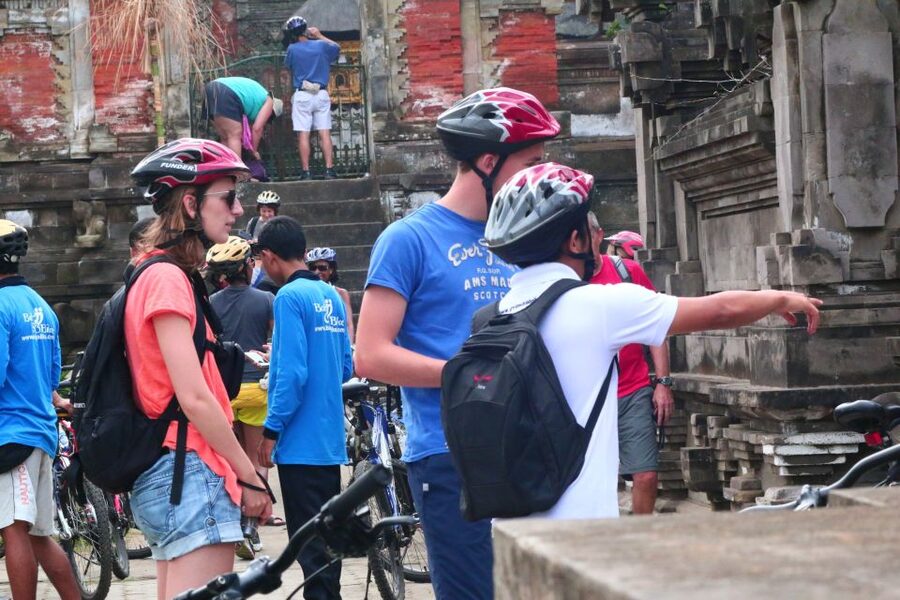
At $45 per person, this is a strong package for a full eight-hour day. You receive hotel pickup and return transport, cycling equipment, mineral water, light breakfast, lunch, a guide, the school charity contribution, and personal insurance up to $75,000.
You are also getting several different experiences in one outing: highland views, a school visit, coffee tasting, a family conversation, rice-farming explanations, and a long countryside ride. Booking each piece separately would take more planning and transport.
The price does not include sunscreen, alcoholic drinks, souvenirs, personal expenses, or gratuity. Those are small additions, but you should carry cash. Tips are optional and left to your discretion.
The value is best for someone who wants a full cultural day without arranging transport between scattered rural stops. It is less compelling if you only want a pure cycling workout or a quiet path away from cars.
Who should book this cycling tour?
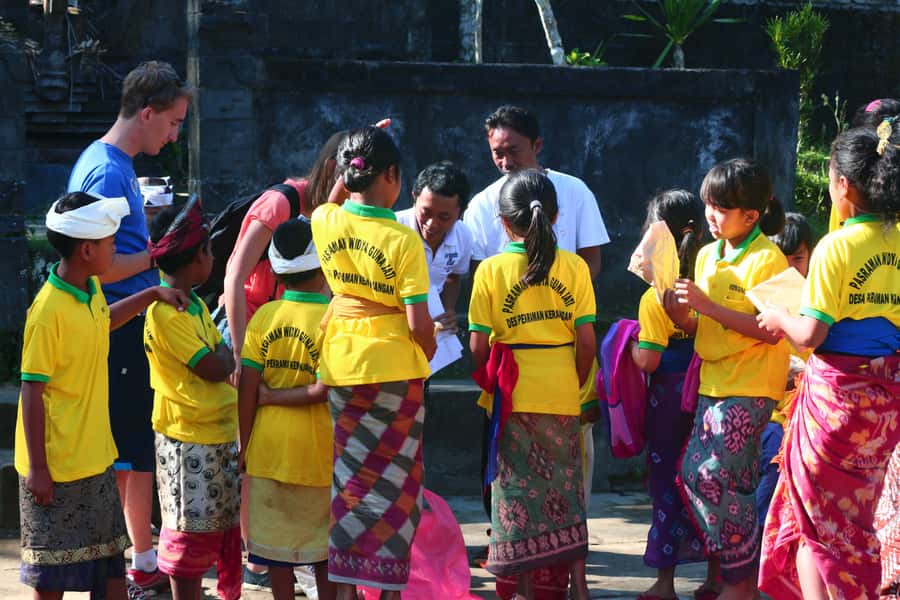
You should consider it if you are an average cyclist who can ride for several hours and handle a few short climbs. The downhill direction helps, and riders in their mid-60s have completed the roughly 27-kilometer route. Still, the ride is not suitable for anyone who cannot manage a standard bicycle or road conditions.
Families can enjoy it, especially if older children are comfortable cycling. The school and priest compound give the day more substance than a simple scenic ride.
This tour also suits you if you want practical cultural contact. The guide explains what you are seeing, translates at the family compound, and gives context about schools, farms, religion, and village life.
It is a poor fit for pregnant women and wheelchair users. It is also not ideal if you want to spend the whole day off paved roads, deep in the rice paddies, or on a quiet bike trail.
The tour has a 4.8 rating from 42 bookings, with repeated praise for organization, guide quality, food, and the relaxed downhill format. The more useful takeaway is not the number itself. It is that the experience depends heavily on your guide, your comfort on roads, and whether the current breakfast stop matches the plan.
Small details that will improve your day
Wear layered clothing at the start, comfortable sportswear, and closed-toe shoes. Kintamani can be cooler than the lower villages, and you will want shoes that work for both cycling and the short walk.
Bring sunscreen, since it is not supplied. Carry cash for drinks, purchases, and any tip you choose to give.
Pickup may begin about 30 minutes before the advised time. Be ready early at your hotel, especially if you are staying in a large property.
The tour allows free cancellation up to 24 hours before departure, and you can reserve now and pay later. Check the current start time and confirm the breakfast viewpoint before committing.
Should you book the Bali Downhill Cultural Cycling Tour?
Book it if you want to combine an easygoing bike ride with real contact with village life. The school donation, priest compound visit, organic plantation, rice-field explanation, and Balinese lunch give the day a clear purpose beyond sightseeing.
Skip it if you want a fully traffic-free ride, a long walk through rice paddies, or a demanding cycling route. Also confirm the breakfast arrangements if the Mount Batur and Lake Batur view is central to your plans.
For $45, the combination of transport, meals, equipment, guide, and cultural stops is hard to beat. Just arrive ready for a few hills, shared roads, and a full day outside.
FAQ
How long does the Bali Downhill Cultural Cycling Tour last?
The tour lasts about eight hours, including hotel transfers, cultural stops, cycling, meals, and the return journey.
Where does the cycling route begin?
The ride begins in the Kintamani volcano area of Bali and continues downhill toward Ubud.
How long is the cycling portion?
The cycling takes about 3.5 hours. One detailed account described the route as approximately 27 kilometers.
Is the cycling route entirely downhill?
No. It is mostly downhill, but you should expect a few uphill sections. One steep section may be easier to walk.
Is breakfast included?
Yes. A light breakfast is included, with the planned setting overlooking Mount Batur and Lake Batur. Confirm the current breakfast location because this has not always taken place as described.
Is lunch included?
Yes. A Balinese lunch at Padi Organic restaurant in Laplapan is included.
What does the school charity visit involve?
You visit a local village school, and part of the tour cost supports essential school supplies. You may bring extra items if you wish.
Which languages are available?
The tour is offered with live guides speaking English or Indonesian.
Is hotel pickup included?
Yes. Hotel pickup and return transfers are included. Pickup may begin approximately 30 minutes before the advised time.
What should I bring?
Bring cash, sportswear, sunscreen, layered clothing, and comfortable closed-toe walking shoes. Alcoholic drinks, souvenirs, and personal purchases are not included.
Just added around Indonesia
- Yogyakarta: Countryside Cycling and Cooking Class Experience★ 4.9 · 8 reviews
- Yogyakarta: Countryside Village Cycling Tour With Guide★ 5.0 · 16 reviews
- Ubud: Kintamani Downhill Cycling with small group & Private★ 5.0 · 4 reviews
- Bali: Mountain Bike Tour and River Rafting with Lunch★ 5.0 · 3 reviews
- Ubud: Half-Day Tegallalang Electric Cycling Tour★ 4.9 · 24 reviews
- Ubud: Downhill Countryside Cycling From Kintamani★ 4.5 · 4 reviews
- Ubud: Cycling Tour Local Villages, Temple, and Rice Field★ 4.8 · 12 reviews
- Ubud Cycling Tour : All Inclusive Cycling Adventure★ 4.2 · 7 reviews
Mountain Bike Tours, compared.
Downhill Cycling with Volcano, Rice Terraces and Meal
Read our review →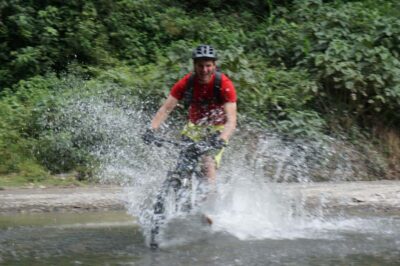
Mountain Bike Down the World’s Most Dangerous Road
Read our review →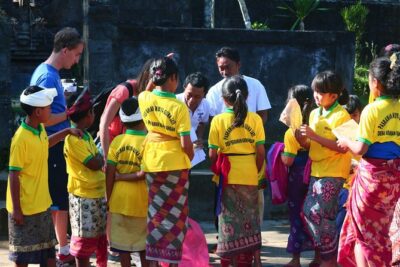
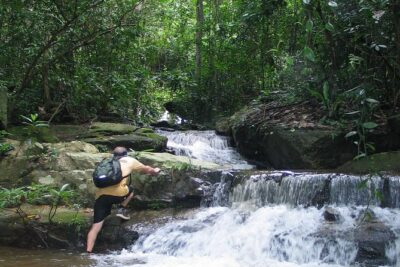
Chiang mai Hike & Downhill Bike Adventure –Suthep National Park
Read our review →Downhill Cycling with Volcano, Rice Terraces, and Meal
Read our review →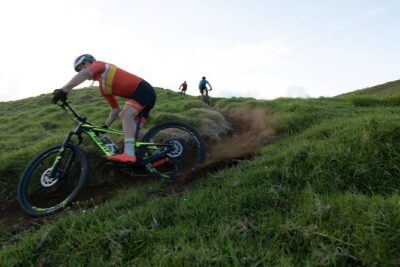
Browse the lists this tour appears in