
Review · NEW DELHI
Old Delhi Bike Tour Morning 4 Hours: Delhi By Cycle
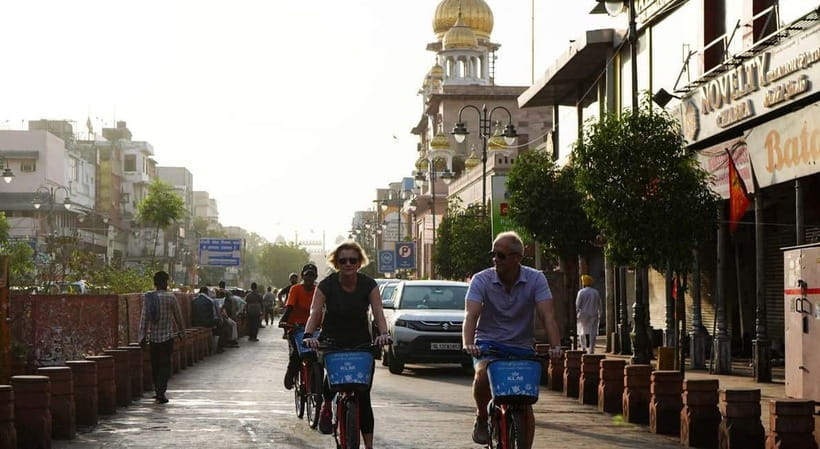
Old Delhi is best seen before the day gets fully wound up. On this four-hour morning bike tour, you ride through Shahjahanabad as shutters rise, tea brews, breakfast cooks, and the old city shakes itself awake. The route links Mughal landmarks with working markets and narrow lanes that are hard to reach by car.
I like two things right away: the early start, which gives you a close look at daily life before the heat builds, and the mix of places, from Khari Baoli’s spice trade to the Red Fort and Jama Masjid. Chai, breakfast, drinking water, a helmet, and a support rider are included, which makes the $21 price quite fair.
The catch is the traffic. Old Delhi roads can feel chaotic, and one rider called the experience dangerous even while finding it manageable with the guide. You need to be comfortable on a bicycle, alert around vehicles, and ready for a real city ride rather than a quiet recreational cycle.
Key points to know before you book

- Dawn reveals Old Delhi at work: You see shops opening, tea brewing, and breakfast being prepared before the streets reach their full daytime pace.
- The route covers Mughal and British-era Delhi: Shahjahanabad, the Red Fort, Jama Masjid, and a look toward Civil Lines connect several periods of the city.
- Khari Baoli and Chawri Bazar are working markets: These are not polished museum displays. They are busy commercial areas filled with trade, smells, movement, and local stories.
- A second leader helps with safety: The co-leader assists with traffic, first aid, bicycle repairs, and group support.
- Breakfast and chai are part of the morning: The short stop in Chandni Chowk gives you time to eat, drink tea, and catch your breath.
- The $21 price covers the basics: You get a maintained single-speed bicycle, basket, helmet, water, leaders, food, and tea, but hotel transfers and personal spending cost extra.
Why cycling makes sense in Shahjahanabad

Shahjahanabad was the Mughal capital built by Emperor Shah Jahan in the 17th century. The old city covered about 1,500 acres and was once known for its wealth, grand buildings, gates, and commercial life. Today, its old structure remains, but it is threaded with electric cables, packed lanes, shops, workshops, food stalls, and constant traffic.
A car can take you past Old Delhi. A bicycle lets you notice it. You move slowly enough to see the small details, but quickly enough to cover several districts in one morning. You also avoid spending the whole tour walking on crowded streets.
That advantage comes with a tradeoff. You share the road with traffic, and the tour is not designed for someone who wants an easy, quiet pedal. The support leader and trained guide matter here. They provide safety help, first aid, and on-the-spot bicycle maintenance, but they cannot remove the need for your own attention.
The bikes are single-speed city cycles with baskets. That setup is simple and practical for a mostly urban route. Helmets are provided, along with baby seats if needed, though children under two are not suitable for the tour. You must already know how to ride a bike.
A few more rides around India worth a look
- Early Morning Old Mumbai Private Cycle Tour With Breakfast
★ 5.0 · 21 reviews - Mysore City Bike Tour Morning 3.5 Hours: Mysore By Cycle
★ 5.0 · 4 reviews - Hiroshima in a Nutshell: Morning Bike Adventure
★ 5.0 · 524 reviews
Starting at Turkman Gate
The tour begins at the Delhi By Cycle meeting point. To find the bicycles, walk straight inside lane 4B. The orange cycles are at the end of the lane. This is a useful detail to save before leaving your hotel, since the meeting point is not described as a large public landmark.
Turkman Gate is the first guided stop. It is one of the old gates associated with Shahjahanabad, so the tour begins with the city’s walls and entry points rather than with a generic ride through modern Delhi. A short explanation here helps you understand that Old Delhi was planned as a fortified capital, not simply a random collection of old lanes.
The guided stop lasts about 10 minutes. That pattern continues through much of the morning: ride, pause, hear the story, and continue. You get a broad sense of the city rather than a long visit inside every monument.
Chawri Bazar and Fatehpuri Masjid
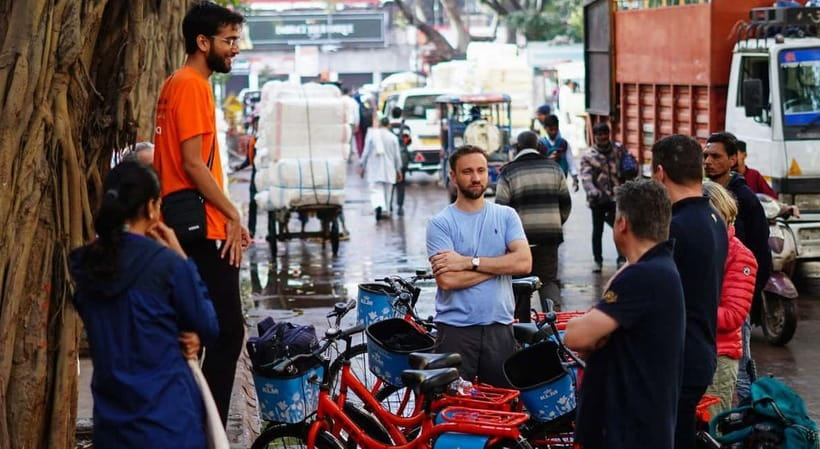
Chawri Bazar brings you into one of Old Delhi’s famous commercial areas. The tour presents it as a market with its own stories and character, distinct from Khari Baoli. That difference matters because Old Delhi is not one single market. Each area has its own trade, rhythm, and visual identity.
Expect a close look at the old city’s working side. The route passes through streets where commerce is part of the scenery, not an attraction arranged for visitors. You may find the lanes crowded and difficult to navigate at moments, so keep your hands steady and follow the leader’s directions.
The next stop is Fatehpuri Masjid, a mosque from the Mughal period. It gives the route another architectural and religious point of reference before you reach the spice market. The stop is brief, but it helps place the market streets within the larger design of Shahjahanabad.
Khari Baoli, where Old Delhi smells like trade

Khari Baoli is the famous spice market, and it is likely to be one of the most memorable parts of the ride. The tour uses this stop to explain the market’s stories and commercial importance. You are not simply looking at colorful sacks. You are seeing a place where the old city’s trading identity still shapes the street.
The morning timing works well here. As the city prepares for the day, the smells of spices, tea, and cooked food become part of the experience. If strong smells or close traffic bother you, this is worth knowing in advance. Khari Baoli is a working market, not a calm photo stop.
Your guide is also an important part of this section. Without context, a ride through a market can become a blur of people, signs, and goods. The English or Hindi-speaking leader explains what you are seeing and connects the market to the wider story of Shahjahanabad.
Same roads, a different day in the saddle:
- Delhi By Cycle & Old Delhi
★ 5.0 · 329 reviews - Fontainhas Tales & Trails: E-Bike Adventure Journey
★ 5.0 · 135 reviews - Cyclin’Jaipur – Explore the city on a cycle!
★ 5.0 · 133 reviews - Nahargarh Cycle Tour in Jaipur
★ 5.0 · 62 reviews
Chandni Chowk and the wealth of the Mughal capital
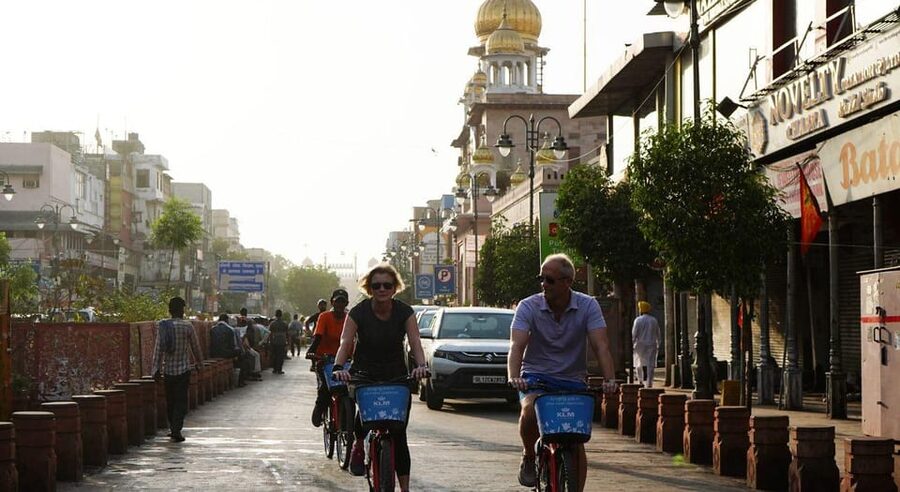
Chandni Chowk was the most affluent market of the 17th and 18th centuries. Its name is tied to the old Mughal capital, and the tour uses it to show how grand commercial planning and everyday trade now exist side by side.
This is one of the places where you most clearly feel the clash of centuries. Old architecture, tangled cables, shopfronts, tea stalls, and modern city traffic all compete for your attention. I like that the route does not treat Old Delhi as a preserved relic. It shows the place as a living district that has changed repeatedly while keeping much of its older shape.
The tour returns to Chandni Chowk later for a 10-minute breakfast and free-time break. That pause is practical. Four hours on a bicycle, especially in traffic and morning heat, is more pleasant when you can stop for food and chai instead of treating the ride as a nonstop exercise session.
Breakfast is included, as is Indian tea. The specific food is not listed, so you should expect a local breakfast stop rather than a choice of a full restaurant menu. Personal expenses are not included, so carry some money if you want anything beyond the provided food and chai.
The Red Fort and Jama Masjid

The Red Fort is presented as a symbol of Mughal power and wealth. It gives you the grand political setting behind the lanes and markets you have just ridden through. The contrast is useful: one moment you are close to market life, and the next you are looking at the monument that represents imperial authority.
The itinerary lists a guided stop at the Red Fort, but it does not state that entry tickets are included or that you tour the interior. Plan on seeing and discussing the fort from the route unless the operator confirms otherwise. That distinction matters if you are hoping for a full palace visit.
Jama Masjid, also called the Friday Mosque, is the final major landmark. It adds a religious center to the political and commercial places already covered. Together, the Red Fort, Jama Masjid, markets, and city gates show the main forces that shaped Shahjahanabad: government, faith, trade, and daily life.
The Jama Masjid stop is also brief, about 10 minutes. This tour works best as an introduction to Old Delhi rather than as a detailed monument tour. If your main goal is to spend hours inside the Red Fort or mosque, you will need separate time later in your itinerary.
A glimpse of British-era Delhi
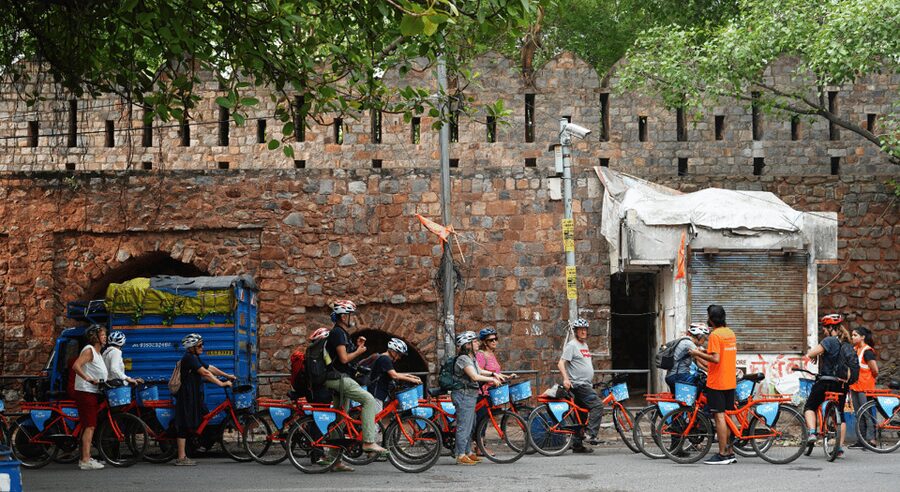
The tour information also includes Civil Lines as part of the morning route, showing a different chapter in Delhi’s past. Civil Lines is associated with the British period, so its inclusion broadens the story beyond the Mughal city.
The published stop-by-stop schedule does not give Civil Lines its own timed entry, unlike Turkman Gate, Khari Baoli, or Jama Masjid. I would ask the guide at the start how much of this area is included on your particular departure. It may be a passing section of the route rather than a long guided pause.
That uncertainty is not a serious problem if you book this for a general Old Delhi overview. It matters more if British colonial history is one of your main interests.
What the traffic is really like
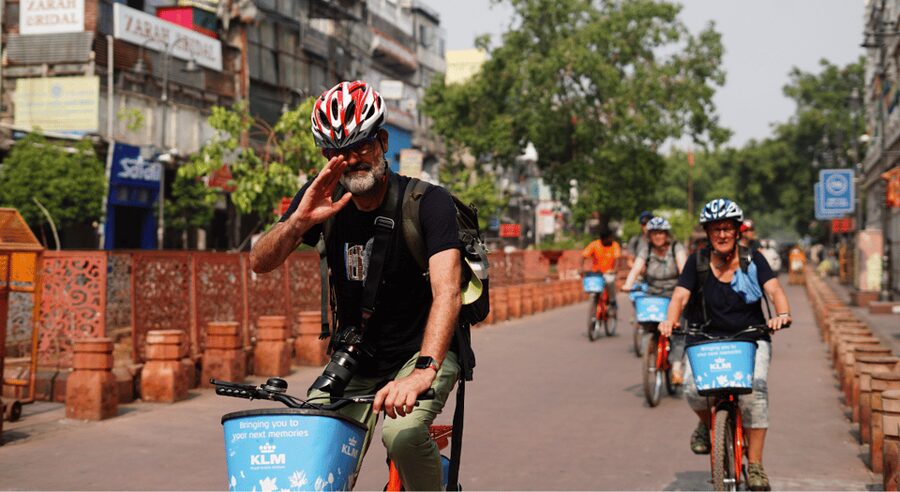
The traffic is the main issue to consider. One rider described it as very dangerous but still manageable with an experienced guide. Another called the ride chaotic while praising the chance to reach parts of Old Delhi that would otherwise be missed.
Those comments point to a fair expectation. You are not riding on a protected cycle path. You are moving through a crowded Indian city, and the route demands concentration. Follow the guide, stay with the group, and do not treat the bicycle as a sightseeing seat where you can drift along without watching the road.
The second leader is a real advantage. This person is assigned to assistance, safety, first aid, and bicycle maintenance. That does not make the traffic harmless, but it gives the group an extra set of eyes and practical help if a bicycle needs attention.
The tour is not suitable for anyone who cannot ride. Children under two are not accepted, and baby seats are available if needed. Wear comfortable clothing and shoes, bring sunscreen and any personal medicines, and carry a refillable bottle if you prefer. Filtered water is available, and packaged drinking water is included.
Shorts and see-through clothing are not allowed. Choose modest, comfortable clothing suitable for visits near religious sites and for cycling in a crowded city.
Is four hours enough?
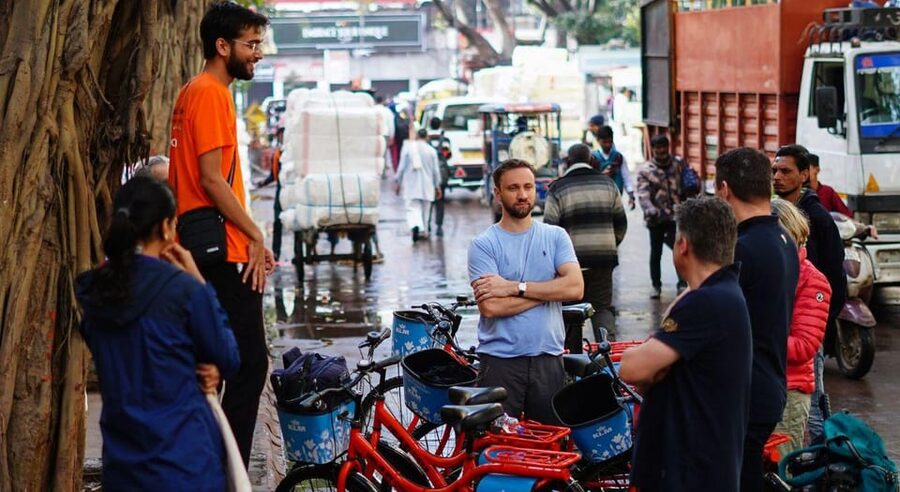
Four hours is a good length for a first look at Old Delhi. The morning start gets you back by about 10:30 AM, leaving the rest of the day for the Red Fort interior, other Delhi sights, rest, or a longer meal.
The schedule is active but not rushed in the sense of racing between distant landmarks. Most named stops receive about 10 minutes, with a short breakfast break in Chandni Chowk. You have time to hear a story and look around, but not enough time for long shopping, extended photography, or full monument visits.
I see that as a strength for a first morning in Delhi. The ride gives you orientation and local context before you decide where to return on foot. If you prefer a slow cultural walk with long pauses, this format may feel too quick.
What you get for $21
At $21 per person, the price is reasonable because it includes more than bicycle hire. The package covers a maintained cycle with basket, helmet, water, chai, breakfast, an English or Hindi-speaking guide, and a second leader for safety and mechanical help.
You still need to arrange your own hotel transport. The operator can help book an Uber or cab, but the transfer is not included. You also pay for personal purchases and anything not specifically listed.
The real value is access. A basic bicycle rental would not give you the stories, route planning, traffic support, market interpretation, food, or backup leader. You are paying for a guided introduction to an area that can be difficult to understand on your own, especially during a short Delhi stay.
The tour can be booked as a private group, which may be useful if you want a more personal pace or are traveling with family and friends. The supplied information does not state the standard group size, so ask before booking if that detail affects your choice.
Who should book this ride?
I would choose this tour if you want to see Old Delhi as a living city rather than only as a list of monuments. It suits confident cyclists who enjoy street life, local food, markets, and short historical explanations.
It is also a strong choice for a first morning in Delhi. You finish early, get an overview of several important areas, and still have time to return to a favorite spot later.
I would not choose it if you dislike traffic, cannot ride comfortably, or want a quiet sightseeing route. It is also not the best match if your priority is detailed interior visits to the Red Fort or Jama Masjid. The tour gives you a wide view of the old city, not a long stay at one monument.
Final call: book it for access, not calm
Book the Old Delhi Bike Tour if you want an active, compact introduction to Shahjahanabad and you are prepared for crowded roads. The early hour, market route, Mughal landmarks, breakfast, and support leader make the $21 cost good value.
Skip it if cycling in traffic sounds stressful. For the right rider, the disorder is part of the point: you see Old Delhi waking up, smell the tea and spices, and reach streets that are harder to understand from a car window.
FAQ
Where does the Old Delhi Bike Tour begin?
It begins at the Delhi By Cycle meeting point. Walk straight inside lane 4B, where you will find orange cycles at the end of the street.
How long does the tour last?
The tour lasts four hours and finishes at about 10:30 AM when it starts in the morning.
Which languages are available?
The live guide service is available in English and Hindi.
Is breakfast included?
Yes. Indian chai and breakfast are included, with a short break in Chandni Chowk.
Is hotel transportation included?
No. Transport to and from your hotel is not included, though the operator can assist with booking an Uber or cab.
Can children join the tour?
Children under two are not suitable for the tour. Baby seats are available if needed, but every participant who rides must be able to ride a bicycle.
What should I wear and bring?
Wear comfortable clothes and shoes, and bring sunscreen, personal medicines, and a water bottle if you want to use the available water filter. Shorts and see-through clothing are not allowed.
Just added around India
- Varanasi: Cycle of Life, Death, and Rebirth Guided Tour★ 4.2 · 7 reviews
- Cycle of Life, Death & Rebirth (2 Hours Guided Walking Tour)★ 4.5 · 10 reviews
- Udaipur Countryside Electric Cycle Tour★ 5.0 · 8 reviews
- Ebike Tour of Chorao Island with Cycling Zens★ 5.0 · 26 reviews
- Premium Hidden Jewels of Delhi Cycling Tour – The First Chapter of Delhi★ 5.0 · 10 reviews
- Delhi Rickshaw Tour: Explore Old Delhi Hertiage by Cycle Rickshaw★ 5.0 · 2 reviews
- New Delhi Cycle Tour★ 5.0 · 7 reviews
- Half-Day Premium Delhi Heritage Cycling Tour – An Illustrious Tryst with time★ 5.0 · 3 reviews
Cycling Tours, compared.
Ninh Binh Day Trip: Hoa Lu-Trang An/Tam Coc-Mua Cave-Cycling-Boat
Read our review →
Cai Be Mekong Delta Tour: Cooking Class, Cycling & Craft Villages
Read our review →
Countryside Bike Tour from Amsterdam: Cheese, Clogs & a Windmill
Read our review →
Electric Cycling Tour of Ubud with Free Hotel Transfer and Lunch
Read our review →


Browse the lists this tour appears in