
Review · SIEM REAP
Angkor Cycling Tour
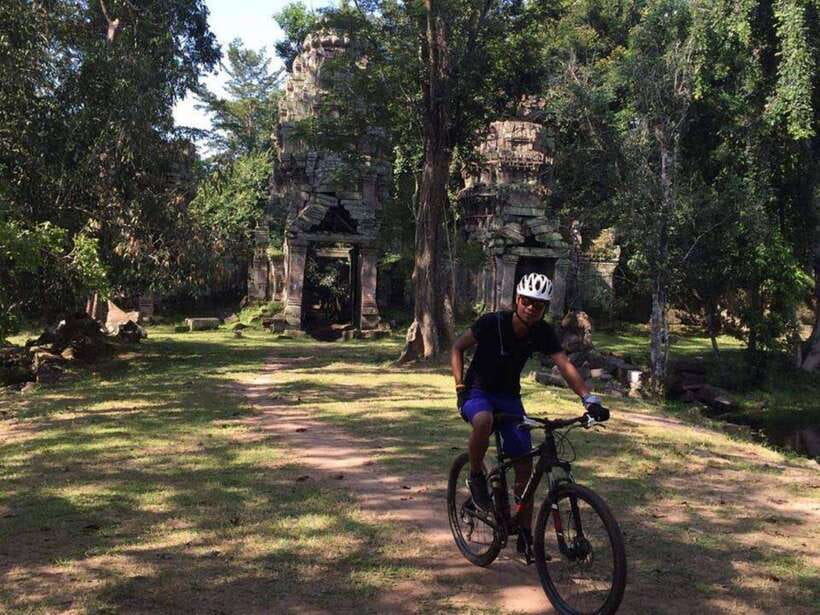
The best part of this Angkor tour is the way it gets you away from the main roads. You pedal beside the Angkor Wat moat, cut through forest tracks near Bakheng Hill, ride along the ancient wall of Angkor Thom, and reach temple ruins by bike instead of simply stepping off a vehicle.
I like the 70 percent off-road route, which gives the day a real sense of adventure without turning it into an endurance test. I also like the mix of major monuments and quieter places, especially Ta Nie and Jayatataka Baray, where you can watch for birds, butterflies, monkeys, and freshwater otters. The main consideration is the 35 km distance in Cambodian heat. The ride is rated medium, and most of it is manageable, but you should be comfortable on a bicycle and ready for sun, dust, and uneven ground.
Key Points to Know Before You Book
- 35 km with 70 percent off-road riding: Expect forest tracks, single trails, paved lanes, and some moderate sections.
- Major temples in one day: The route includes Angkor Wat, Bayon, Ta Prohm, Ta Nie, the Elephant Terrace, and Angkor Thom’s walls.
- Wildlife stop at Jayatataka Baray: Bring patience for birdwatching, with cranes, egrets, kingfishers, lesser whistling ducks, and possible otter sightings.
- Lunch and support are included: You get a mountain bike, helmet, guide, water, snacks, seasonal fruit, lunch, a first aid kit, spare parts, and tuk tuk transfers.
- Temple pass is extra: You must arrange and pay for your Angkor temple pass separately.
- Best for active sightseers: This suits riders who want history with fresh air, quiet tracks, and a little mud or dust under the tires.
Why Cycling Changes Your Angkor Day
Angkor is enormous. From the road, you can see the famous temples, but cycling lets you notice the spaces between them. The moat, tree cover, canals, jungle paths, and old walls become part of the experience instead of empty distance between stops.
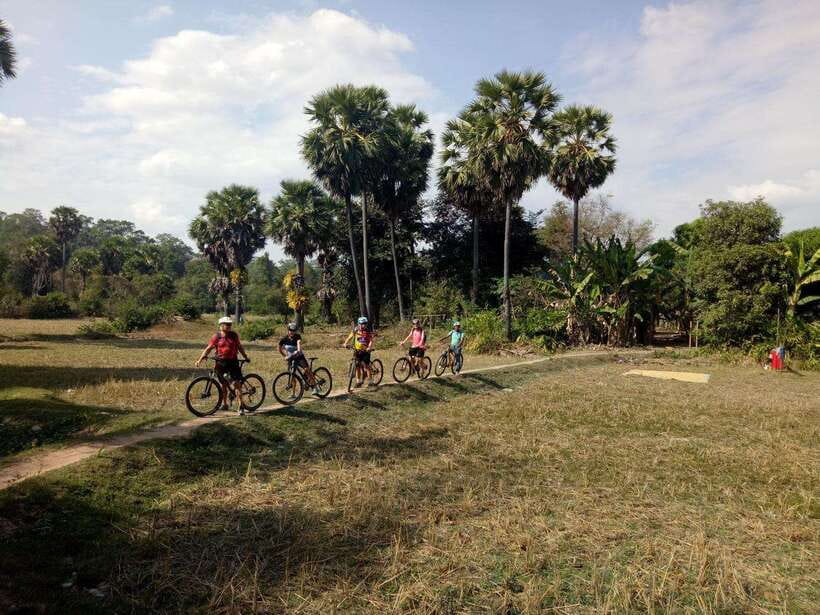
This route uses paved roads for about 30 percent of the ride. The remaining 70 percent follows off-road trails through forest and countryside. That balance matters. You get enough smooth riding to recover, but plenty of rougher tracks to make the day feel different from a standard temple circuit.
I especially like the slower rhythm. You can stop for a photograph without making a whole vehicle wait, and the guide can point out small details along the route. The ride also spreads out the temple visits. Angkor Wat receives the longest early stop, while Bayon, Ta Nie, and Ta Prohm arrive as separate chapters rather than one long run of stone monuments.
The cycling level is listed as medium. That does not mean a hard race. One review describes most of the ride as easy, with only a few moderate parts, and praises the patient, dedicated guiding. Still, 35 km under the Cambodian sun is a serious day for anyone who rarely rides. You should be able to cycle for several hours, handle uneven trails, and stay comfortable in warm conditions.
A few more rides around Siem Reap worth a look
- Siem Reap: Guided Countryside Bike Tour
★ 4.9 · 294 reviews - Cycle the Angkor Backroads with lunch / E-Bike or Tuk Tuk
★ 5.0 · 124 reviews - Floating Village Bike & Boat Sunset / E-Bike Available
★ 5.0 · 78 reviews
7:45 AM Pickup and Bike Fitting
Pickup begins around 7:45 AM from hotels, apartments, and Airbnb lobbies in Siem Reap city. A tuk tuk or minivan is used depending on the group size, and the transfer is included.
At the shop, you receive a mountain bike and helmet, with bike sizes available for riders of different heights. The operator asks for your height in centimeters, so give that information when booking. A proper fit is important on a long ride, especially when the route includes single tracks and rough forest surfaces.
The tour starts toward Angkor Wat, passing through the Siem Reap River area before reaching the rainforest trails of the Angkor complex. This opening section helps you settle into the bike before the main temple stops begin.
Bring closed-toe shoes. Sturdy footwear gives you better control on uneven trails and is safer when you get off to walk around the temple grounds. Avoid loose clothing, since it can catch on the bike or become uncomfortable during the ride.
Angkor Wat: Two Hours With the Khmer Masterpiece
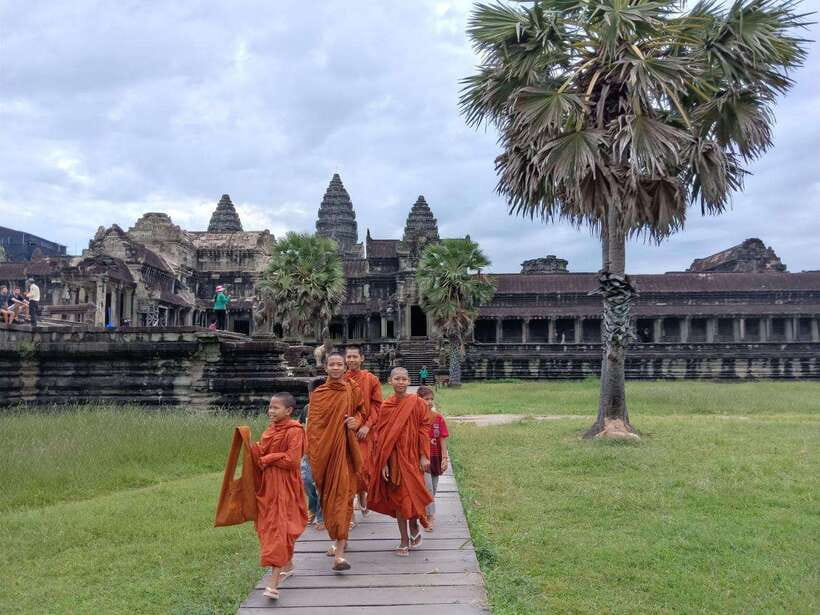
Angkor Wat is the first major stop and receives about two hours. That is a sensible choice. You do not want to hurry through Cambodia’s most famous monument after cycling across the grounds to reach it.
The route takes you along the ancient moat, where the temple’s towers and reflections create some of the day’s strongest views. After locking up the bikes, your guide leads you through the complex and explains its stories, design, and religious meaning.
You will also have time to walk and take photographs. This is not a quick roadside photo stop. The temple is large, and two hours gives you room to see its main areas at a more measured pace.
Temple clothing rules matter here. You can wear shorts while riding, but bring spare clothing for temple visits. Dress modestly, cover shoulders and knees as required, and use the temple breaks to drink water and have a snack. Bottled water and snacks are provided along the route.
Bakheng Hill and the Wall of Angkor Thom
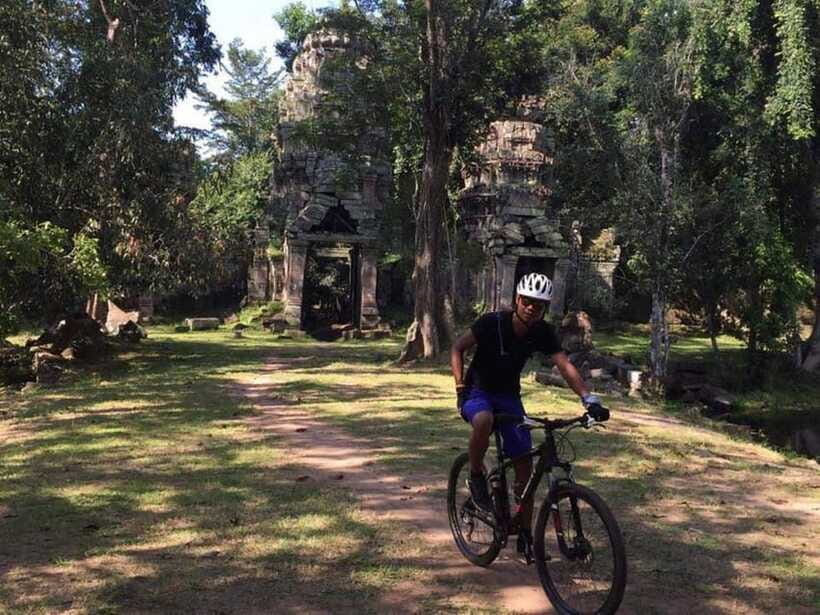
After Angkor Wat, the route returns to the moat and heads toward the forest tracks around Bakheng Hill. This is one of the more enjoyable riding sections because the traffic and crowds give way to trees and narrower paths.
You then enter Angkor Thom through the South Gate. The tour’s unusual feature is the chance to cycle along part of the ancient city wall. Riding on top of an old fortification gives you a different view of the surrounding forest and adds a little thrill to the day.
The wall section is also where the medium rating makes sense. You need to pay attention to the surface and your position on the trail. It is not a flat bike lane, and the route may feel more demanding than the smooth sections near the temples.
At the Ghost Gate, you stop for photographs and a short explanation of its past. This is a quieter, more atmospheric point on the route, with carved stone and forest around the gateway. The guide helps turn what might look like a simple ruin into part of Angkor Thom’s wider story.
Same roads, a different day in the saddle:
- Angkor Sunrise Expedition Cycling Through Serene Backroads
★ 5.0 · 70 reviews - Siem Reap: Countryside Cycle and Local Village Life Tour
★ 4.7 · 32 reviews - Short Cycling at Countryside
★ 5.0 · 29 reviews - Small Group Sunset, Picnic & Countryside, Bike Tours
★ 5.0 · 29 reviews
Bayon’s Stone Faces and Lunch at the Elephant Terrace
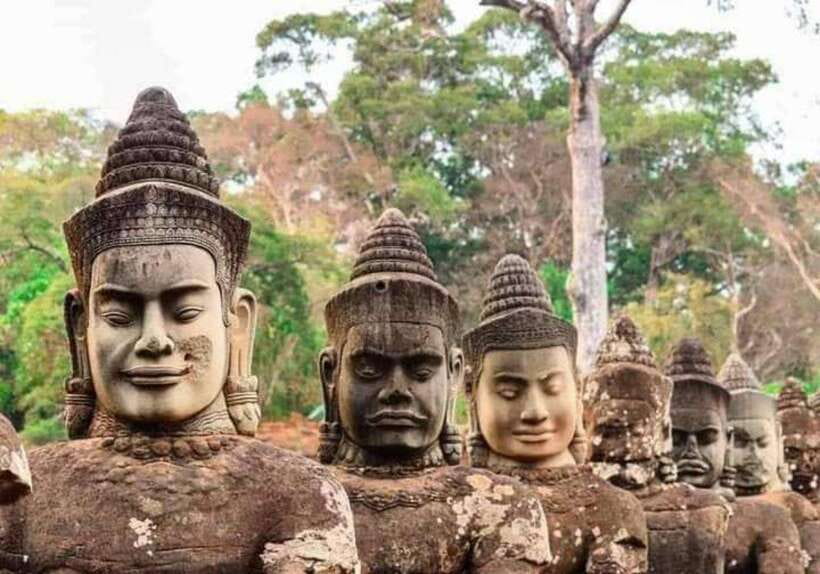
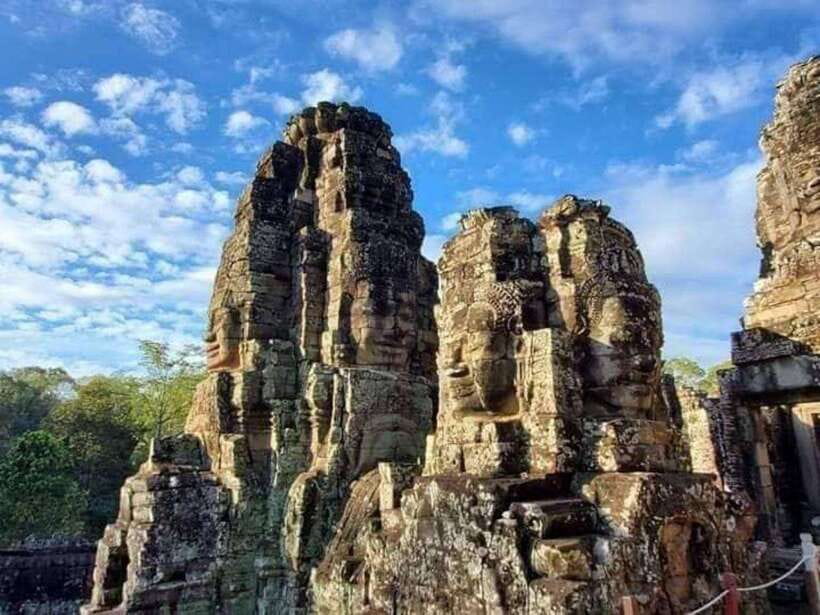
Bayon is about one kilometer from the Ghost Gate. Its towers carry the famous serene stone faces, which seem to watch from every direction. You can expect a guided visit with time to walk, photograph the carvings, and take in the unusual layout.
Bayon can feel visually busy because of its towers and galleries. After the open riding route, the temple gives you a concentrated dose of sculpture and stonework. A guide is useful here, since the faces, reliefs, and changing viewpoints are easy to appreciate without understanding how the temple fits into the wider Angkor complex.
Lunch follows a short ride at the Elephant Terrace. The meal is served at a local restaurant in front of the terrace, and the package includes lunch, seasonal fruit, snacks, and a taste of Khmer specialties.
This is a practical break, not a luxury dining stop. You are refueling near the monuments, with cold water and a chance to rest before the afternoon trails. The location also gives you a direct look at the Elephant Terrace, the long ceremonial platform once used for royal processions.
Ta Nie: A Small Ruin With Room to Breathe
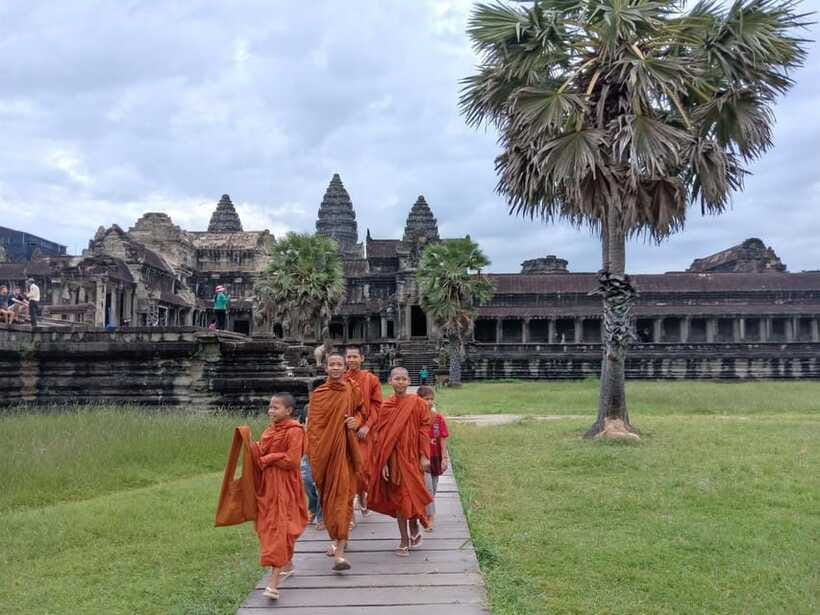
Ta Nie is one of the best reasons to choose this route instead of a basic temple loop. It is hidden in the forest and lacks the scale of Angkor Wat or the fame of Ta Prohm, but that is exactly its appeal.
The ride out to Ta Nie takes you beyond the busiest part of Angkor Thom. You get a stronger sense of the trees and old paths that surround the monuments. At the temple, you can focus on weathered stone, roots, and quiet corners without the same pressure to move through a major landmark.
I like the way Ta Nie changes the pace of the day. Angkor Wat and Bayon are grand, formal, and visually demanding. Ta Nie feels more like a discovery reached by bicycle. It also rewards riders who enjoy small details rather than only the most famous photographs.
Jayatataka Baray and the Wildlife Pause
The route then reaches Jayatataka Baray, where the focus shifts from architecture to nature. This is a birdwatching stop, so you should treat it as a chance to observe rather than a promise of a particular sighting.
Possible birds include cranes, egrets, lesser whistling ducks, and kingfishers. You might also see butterflies, monkeys, and freshwater otters playing in the river. The sightings will depend on timing and luck, but the stop gives the ride a welcome change of subject.
This is one of the tour’s strongest ideas: Angkor is not only a collection of temples. Water, forest, wildlife, and old roads are part of the setting. At Jayatataka Baray, you get to slow down and notice that connection.
Bring sunglasses and sunscreen. The shade can vary along the route, and the combination of cycling and open water can make the sun feel stronger than expected. Keep drinking even when you do not feel thirsty.
Ta Prohm and the Jungle-Ruin Encounter
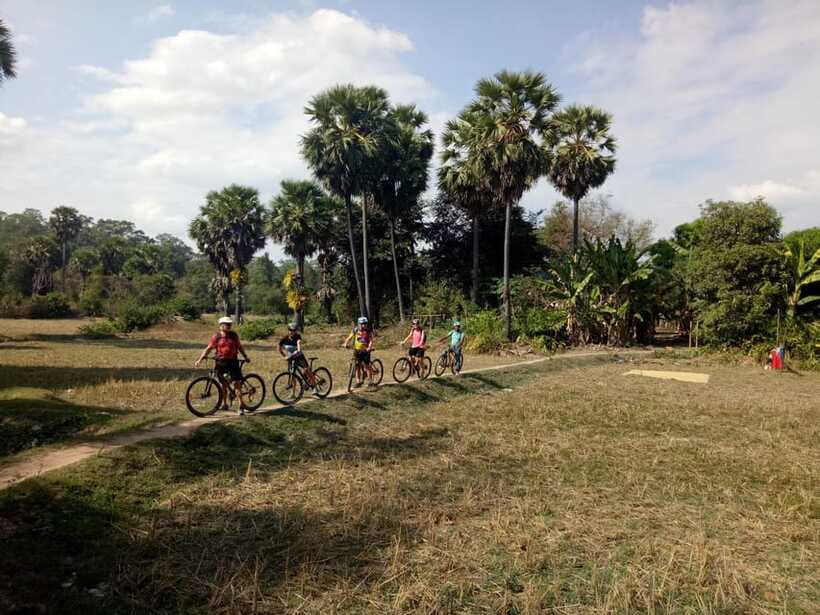
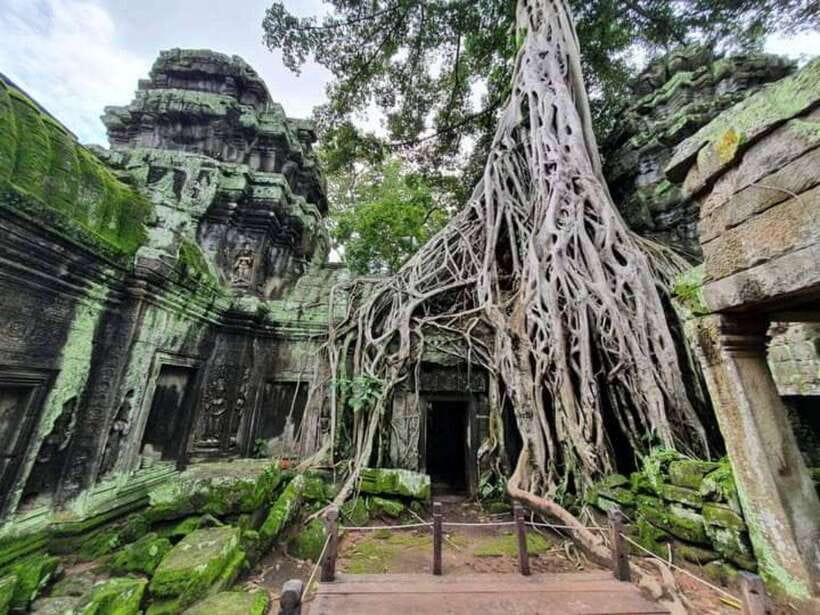
Ta Prohm is the afternoon’s major temple stop. Known as the Tomb Raider temple, it is famous for giant tree roots wrapped around stone walls and galleries.
The appeal is obvious, but Ta Prohm is not only a photo backdrop. The trees show how the forest has shaped the ruins over time, while the carved stonework reminds you that this was once a planned religious complex. The contrast between human construction and natural growth gives the visit a different mood from Angkor Wat’s formal scale or Bayon’s carved faces.
The tour arrives at Ta Prohm after the quieter stop at Ta Nie and the wildlife break. That order works well. You have already spent much of the afternoon in the forest, so Ta Prohm feels like a final, dramatic meeting of nature and architecture rather than an isolated attraction.
Expect walking at the temple, uneven ground, and more time in the sun between shaded sections. Comfortable clothing helps, but keep a spare modest outfit for temple visits.
The 12 km Ride Back to Siem Reap
The return section covers about 12 km along winding single tracks and smoother bike lanes. After a full day, this can be the part that tests your legs, but the change between rough trails and easier riding gives you chances to recover.
The route finishes back in town, with tuk tuk transfer support included. Depending on the group and timing, you may ride much of the final section before using the vehicle, but the listed plan describes a cycle back through tracks and bike lanes. The day lasts about seven hours from activation.
You receive a first aid kit and spare bike parts as part of the support setup. That does not remove the need to ride carefully, but it is reassuring on a route that spends most of its time away from paved roads.
What the $65 Price Really Covers
At $65 per person, the value depends on how much of the included support you would otherwise arrange yourself. The price includes the mountain bike, helmet, English or Spanish-speaking guide, lunch, water, snacks, seasonal fruit, temple-stop refreshments, tuk tuk transfers, a first aid kit, and spare parts.
The Angkor temple pass is not included. That is the major extra cost to plan for, and you cannot enter the temple areas without it. Travel insurance and personal expenses are also separate.
For a full day with six major temple and heritage stops, a local meal, transport support, and a 35 km guided route, the price is reasonable for riders who want more than a standard vehicle circuit. You are paying for route planning, access to quieter tracks, bike equipment, guiding, and the convenience of not arranging food or transfers separately.
The value is weaker if you mainly want to see Angkor Wat and Bayon quickly. In that case, a shorter temple visit may suit you better. This tour earns its price through the combination of cycling, forest access, wildlife watching, and the less direct route between monuments.
Who Should Book This Ride?
I would choose this tour if you want Angkor to feel like an active day outdoors, not a sequence of vehicle stops. It suits couples, friends, and solo riders who enjoy moderate exercise and want a guide to connect the temples with the countryside around them.
It is also a good match for riders who prefer a slower, quieter rhythm. The route gives you time to pause at the canal, follow forest trails, and watch for wildlife at Jayatataka Baray. The three available reviews give the tour a perfect 5 rating, with praise focused on the patient guide, personal service, organization, and balance between adventure, nature, and culture.
You should think twice if you dislike heat, uneven trails, or long periods on a bicycle. Pregnant women should not book this activity. Loose clothing is not allowed, and closed-toe shoes are required.
The tour is offered every day, with English and Spanish guiding. You can cancel up to 24 hours ahead for a full refund, and reserve now while paying later. Those policies help if your Siem Reap schedule is still shifting, but the practical decision is simpler: book when you know you can handle the distance and have arranged your temple pass.
Should You Book the Angkor Cycling Tour?
Book it if you want the famous temples plus the forest paths that connect them. Angkor Wat, Bayon, and Ta Prohm provide the headline sights, while the wall ride, Ta Nie, and Jayatataka Baray give the day its character.
I would not choose it for a relaxed sightseeing day with little physical effort. But if 35 km sounds manageable, the route offers a fine balance: enough paved riding to keep the day comfortable, enough off-road riding to make it memorable, and enough history and wildlife to keep the focus broader than the monuments alone.
FAQ
Is the temple pass included in the $65 price?
No. The Angkor temple pass is required but must be purchased separately. Travel insurance and personal expenses are also excluded.
How long is the Angkor Cycling Tour?
The experience lasts about seven hours and covers approximately 35 km.
How much of the route is off-road?
About 70 percent of the route uses off-road trails. The remaining 30 percent follows paved roads or smoother cycling paths.
What temples and historic sites does the route visit?
The route includes Angkor Wat, the wall of Angkor Thom, the Ghost Gate, Bayon, the Elephant Terrace, Ta Nie, and Ta Prohm.
What equipment and food are included?
You receive a mountain bike, helmet, lunch at a local restaurant, water, snacks, seasonal fruit, a first aid kit, and bike spare parts. Tuk tuk transfers are also included.
Is pickup from my accommodation included?
Yes. Pickup is provided about 15 minutes before the start from hotel, apartment, and Airbnb lobbies in Siem Reap city.
What should I bring?
Bring closed-toe shoes, sunscreen, sunglasses, and spare clothing for temple visits. You can wear shorts while cycling, but temple areas require modest clothing.
Is the tour suitable for pregnant women?
No. Pregnant women should not take this cycling tour.
Just added around Siem Reap
- Short Cycling at Countryside★ 5.0 · 29 reviews
- Small Group Sunset, Picnic & Countryside, Bike Tours★ 5.0 · 29 reviews
- Ruins Temples of Beng Mealea Cycling Tour★ 5.0 · 2 reviews
- Morning Village & Countryside Bike Experience – Siem Reap★ 5.0 · 5 reviews
- Phnom Krom for Sunset Cycling Tour★ 5.0 · 3 reviews
- Private Siem Reap Countryside Cycling Tour★ 4.5 · 4 reviews
- 1-Day Angkor Wat Cycling Tour: Scenic Bike Adventure in Siem Reap★ 5.0 · 9 reviews
- Half-Day Countryside Local Village Cycling Tour★ 5.0 · 13 reviews
Cycling Tours, compared.
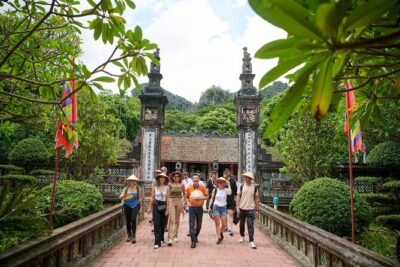
Ninh Binh Day Trip: Hoa Lu-Trang An/Tam Coc-Mua Cave-Cycling-Boat
Read our review →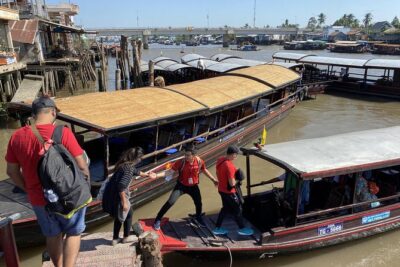
Cai Be Mekong Delta Tour: Cooking Class, Cycling & Craft Villages
Read our review →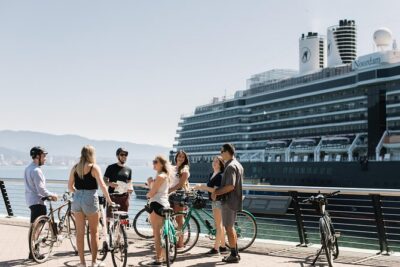
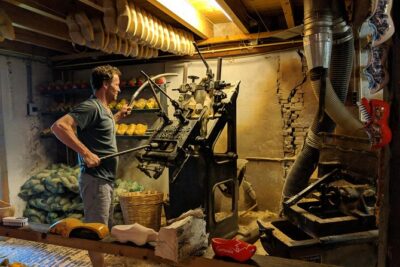
Countryside Bike Tour from Amsterdam: Cheese, Clogs & a Windmill
Read our review →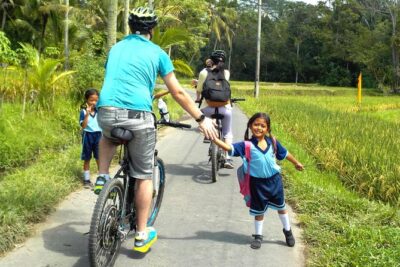
Electric Cycling Tour of Ubud with Free Hotel Transfer and Lunch
Read our review →
Browse the lists this tour appears in