
Review · INDIA
Cycle of Life, Death & Rebirth (2 Hours Guided Walking Tour)
Varanasi’s ghats make the Hindu cycle of life, death, and rebirth feel close at hand. This two-hour walk moves from Dashashwamedh Ghat, the center of evening Ganga aarti, to cremation ghats where beliefs about salvation and moksha take on a serious, human meaning.
I like the small group, capped at 10, because it gives you room to ask direct questions. I also like the focus on explanation rather than sightseeing alone, with discussion of rituals, philosophy, and energy practices along the Ganges. The main consideration is that cremation ghats can feel intense, and the walk offers no hotel pickup, food, or air-conditioned transport.
Key points to know before booking
- Manikarnika Ghat brings the subject into sharp focus: This is one of Varanasi’s most sacred cremation sites, linked with the belief that cremation here can lead to moksha.
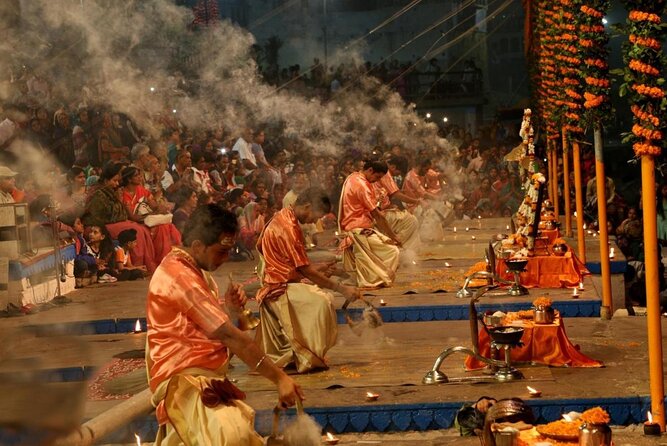
- Dashashwamedh Ghat connects ritual with daily life: You’ll see the ghat famous for the Ganga aarti and learn how the riverfront functions as a spiritual center.
- The group is limited to 10 people: That is a useful size for asking questions about Hindu beliefs and local customs.
- Guide Manish has received specific praise: One booking account describes him as friendly, well-informed, and especially good at answering questions about Hinduism and cremation rituals.
- The walk returns to its starting point: Begin and end at St. Thomas Church on Luxa Road, near public transportation.
- The price is modest for a guided cultural walk: At $13.20 per person, the main value is the guide’s interpretation, not transportation or meals.
What this Varanasi walk is really about
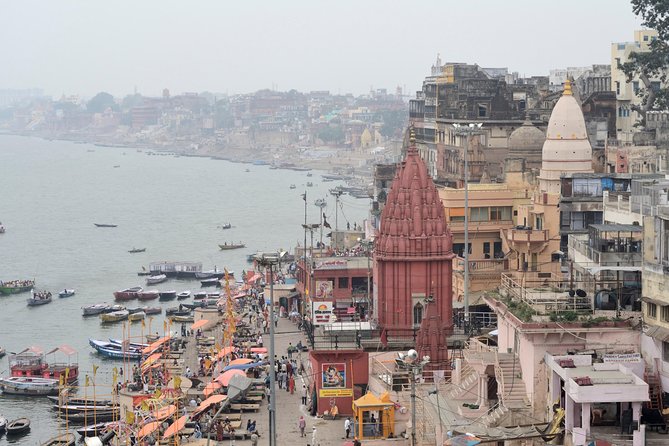
This is not simply a stroll beside the Ganges. It is a short introduction to the ideas that shape Varanasi’s sacred identity: birth, death, cremation, the soul, rebirth, prayer, meditation, and the hope of release from the cycle of existence.
You’ll walk along the old riverfront ghats while an English and Hindi-speaking guide explains the religious meaning behind what you see. That matters in Varanasi, where a visitor can easily mistake a cremation ritual, a prayer gathering, or a riverside ceremony for a colorful public spectacle without understanding its place in Hindu life.
The small-group format works well here. With a maximum of 10 people, you should have more chance to ask about difficult or unfamiliar subjects. A larger group would make it harder to pause, listen, and discuss beliefs that often need careful explanation.
The experience is led by a trained storyteller and guide. Manish is specifically praised for being friendly, well-informed, and willing to answer questions about Hinduism, temples, the Ganges, and cremation grounds. Your assigned guide may vary, so treat Manish’s name as a useful reference rather than a guarantee.
More walking tours in India:
- Private Bruges Countryside Cycling Tour to Damme with Guided Walk
★ 4.5 · 24 reviews - Xi’an City Center Private Cycling and Walking Tour
★ 5.0 · 4 reviews - Waitomo E-bike ride including enchanting bush walk
★ 5.0 · 4 reviews
Starting at St. Thomas Church on Luxa Road
The walk begins at St. Thomas Church, Luxa Road, in the Ramapura Luxa area of Varanasi. The activity ends back at this same meeting point, which makes planning simpler than a walk that leaves you at a distant ghat.
There is no hotel pickup or drop-off. You’ll need to reach the meeting point yourself, but the location is near public transportation. The experience is designed for most people who can participate in a walking tour, though the supplied details do not provide a specific accessibility assessment.
Because the tour lasts about two hours, it fits neatly into a morning or afternoon plan. It can also work as an introduction before you return to the ghats on your own. The price is $13.20 per person, and group discounts are available.
Dashashwamedh Ghat and the ritual heart of the river
Dashashwamedh Ghat is described as Varanasi’s oldest and holiest ghat, and it is the best-known setting on this walk. It is also where the famous Ganga aarti takes place each evening, making it one of the city’s key places for public religious ceremony.
Even if your tour does not coincide with the evening aarti, the guide can help you understand why this ghat matters. You’ll hear about the way the Ganges is treated as a sacred presence and how the riverfront brings together prayer, ritual, pilgrimage, and ordinary daily activity.
The walk also includes discussion of energy transformation techniques intended to help balance the body’s energy system. This part may appeal most if you are interested in Hindu spiritual ideas, meditation, or the connection between religious practice and personal well-being.
I would approach this portion with an open but practical mind. The guide’s role is to explain the belief system and local importance, not to turn the walk into a clinical or scientific lesson. Ask questions if the language of energy and balance is unfamiliar.
Manikarnika Ghat and the meaning of moksha
Manikarnika Ghat is the most serious stop on the route. It is known as one of the holiest riverfront cremation sites in Varanasi. Hindu belief holds that if a person is cremated here, the soul may find salvation, or moksha.
That belief gives the ghat a meaning far beyond its physical appearance. The guide explains funerary rites and the ideas surrounding death, so you can place what you see within a religious framework rather than viewing it only as an unusual sight.
You should be prepared for the subject to feel confronting. This is not a light sightseeing stop, and the walk does not present death as entertainment. Its value lies in helping you understand why cremation is central to Varanasi and how the city’s spiritual identity is tied to the hope of release from rebirth.
Respect and quiet attention are especially important here. The supplied information does not state specific photography rules, so ask your guide before taking pictures around sensitive ritual activity.
A few more rides around India worth a look
- Delhi By Cycle & Old Delhi
★ 5.0 · 329 reviews - Fontainhas Tales & Trails: E-Bike Adventure Journey
★ 5.0 · 135 reviews - Cyclin’Jaipur – Explore the city on a cycle!
★ 5.0 · 133 reviews - Nahargarh Cycle Tour in Jaipur
★ 5.0 · 62 reviews
Walking the old ghats beside the Ganges
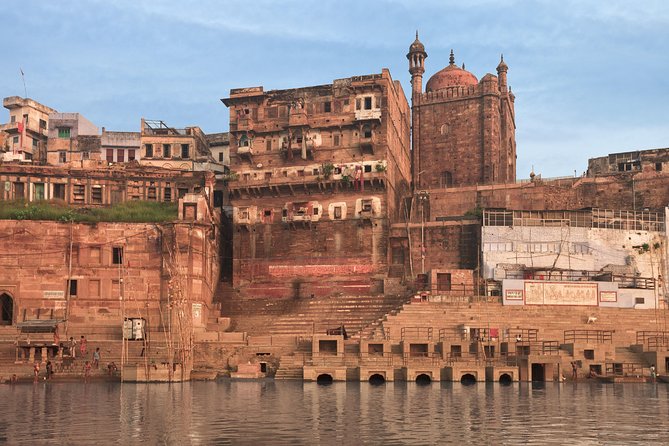
Between the main stops, you’ll walk along other old and visually striking ghats on the bank of the Ganges. These riverfront steps give the tour its sense of place. Instead of hearing about Varanasi in a classroom, you’ll move through the physical setting where prayer, meditation, cremation, and pilgrimage take place.
The guide points out the different people who use the ghats, including Hindu gurus meditating and praying on the steps. That mixture is part of what makes the walk useful. You are not only learning about formal beliefs. You are also seeing how religious practice appears in public spaces.
The route is described as a walk through the ghats of Kashi, the sacred name associated with Varanasi. Expect the experience to focus on observation and conversation rather than a long list of monuments. If you prefer a fast tour with many attractions checked off, this may feel slow. If you want context for the riverfront, the pace is more suitable.
The Ganges views are another strong point. You’ll have repeated opportunities to look out across the river while the guide explains its spiritual importance. The scenery is not separate from the lesson here. The river is the central subject.
Harishchandra Ghat and cremation traditions
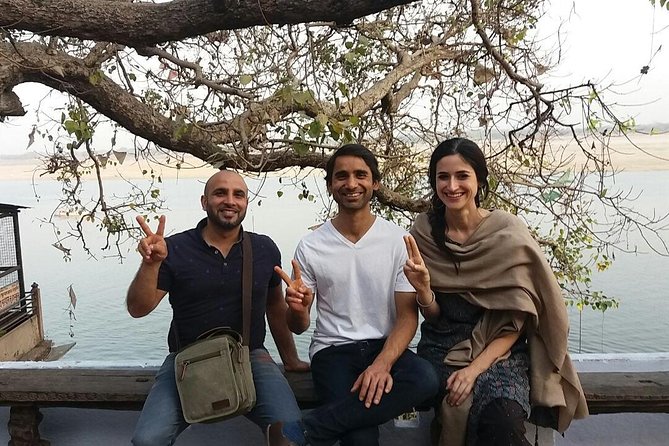
Harishchandra Ghat is dedicated to cremation rituals and provides another setting for the guide to explain Hindu funerary customs. Together with Manikarnika, it helps show that cremation is not a minor detail in Varanasi. It is part of the city’s sacred function.
The stop also adds balance to the discussion. One ghat introduces the wider religious life of the riverfront, while the cremation ghats focus attention on death, the soul, and salvation. The walk connects those subjects instead of treating them as unrelated sights.
You may find this section emotionally demanding. That is not a flaw in the experience, but it is an important choice to make before booking. The title promises a tour about life, death, and rebirth, and the route takes that promise seriously.
How the guide affects the experience
The guide is the main reason to book this walk rather than simply exploring the ghats alone. The included service is an English and Hindi-speaking storyteller who leads conversations about religious beliefs, local importance, and ritual practice.
Manish is singled out for giving clear answers about Hinduism, temples, the Ganges, and crematoriums. That kind of direct conversation is especially helpful in Varanasi, where many customs can be misunderstood when seen without explanation.
A small group of no more than 10 people gives the guide a reasonable chance to respond to individual interests. You can ask about the difference between ritual and philosophy, the purpose of cremation, the idea of moksha, or the role of prayer and meditation on the steps.
The experience is not designed as private guiding, so you will share the conversation with other group members. Still, the cap is small enough to feel more personal than a large coach-style tour.
Is $13.20 good value?
At $13.20 per person, this is an inexpensive way to add cultural context to time in Varanasi. You are paying for about two hours of guiding and conversation, not for transport, meals, or a private vehicle.
That distinction matters. If you need door-to-door service, air conditioning, or food included, the price will not cover those needs. You arrange your own way to St. Thomas Church and return there after the walk.
For a visitor who would otherwise walk the ghats without knowing what the rituals mean, the value is strong. The guide helps connect specific places with Hindu ideas about death, rebirth, and salvation. Group discounts may make the cost even more attractive if you are booking with others.
The rating provided for the experience is 4.3 out of 5 from 10 ratings. That is a positive result, though the sample is small. The most specific praise centers on the guide’s explanations, friendliness, and ability to answer questions, so those are the aspects I would place the most weight on.
Who should book this walk?
I would recommend it to first-time visitors who want an introduction to Varanasi’s religious life. It suits you if you are curious about Hindu beliefs and want more than photographs of the riverfront.
It is also a good match if you like asking questions. The group limit and conversation-based format give you more opportunity to raise subjects that may not be covered on a standard city tour.
You should think twice if you want a relaxed sightseeing walk with no serious subject matter. Manikarnika and Harishchandra ghats deal directly with cremation, and the tour asks you to consider death and salvation rather than simply pass through the scenery.
The experience may also suit visitors who already know something about Hinduism but want to connect those ideas with real places in Varanasi. The guide’s explanations of local importance can add meaning to later visits to the ghats or the evening Ganga aarti.
Practical details for a smoother visit
Wear footwear suitable for walking, since the experience moves through several riverside ghats. The supplied details do not state the exact surface conditions, so you should be ready for an urban walking route rather than a polished indoor attraction.
Bring questions. This is one of the clearest ways to get value from the small group. You might ask about funerary rites, the meaning of moksha, the role of the Ganges, or the energy practices discussed along the route.
The tour requires good weather. If poor weather causes cancellation, you are offered another date or a full refund. You can cancel for a full refund if you do so at least 24 hours before the start time. Cancellations or changes made within 24 hours are not refunded or accepted.
Should you book Cycle of Life, Death & Rebirth?
Book it if you want a short, affordable, guide-led explanation of why Varanasi’s ghats matter. The route covers Dashashwamedh, Manikarnika, Harishchandra, and other old riverfront ghats, while the guide connects them to Hindu ideas about cremation, rebirth, and moksha.
The best reason to choose it is the chance for direct conversation in a group of no more than 10 people. The main drawback is equally clear: this is a serious walk, not a casual sightseeing outing, and you must arrange your own transport to and from the meeting point.
For $13.20, it offers solid value if your priority is understanding the spiritual meaning behind the Ganges and its ghats.
FAQ
How long does the walking tour last?
The tour lasts approximately two hours.
Where does the tour begin?
It begins at St. Thomas Church on Luxa Road, Luxmanpura, Ramapura Luxa, Varanasi, Uttar Pradesh 221001, India.
Where does the tour end?
The activity ends back at the meeting point at St. Thomas Church.
What language does the guide speak?
The guide can speak English and Hindi.
How large is the group?
The tour has a maximum of 10 participants.
Does the price include hotel pickup and drop-off?
No. Hotel pickup and drop-off are not included.
Is food or drink included?
No. Food and drinks are not included.
What places are included on the walk?
The walk includes Dashashwamedh Ghat, Manikarnika Ghat, Harishchandra Ghat, and other old ghats along the Ganges.
Can I cancel for a full refund?
Yes. You can receive a full refund if you cancel at least 24 hours before the experience start time. Cancellations within 24 hours are not refunded.
Just added around India
- Varanasi: Cycle of Life, Death, and Rebirth Guided Tour★ 4.2 · 7 reviews
- Udaipur Countryside Electric Cycle Tour★ 5.0 · 8 reviews
- Ebike Tour of Chorao Island with Cycling Zens★ 5.0 · 26 reviews
- Premium Hidden Jewels of Delhi Cycling Tour – The First Chapter of Delhi★ 5.0 · 10 reviews
- Delhi Rickshaw Tour: Explore Old Delhi Hertiage by Cycle Rickshaw★ 5.0 · 2 reviews
- New Delhi Cycle Tour★ 5.0 · 7 reviews
- Half-Day Premium Delhi Heritage Cycling Tour – An Illustrious Tryst with time★ 5.0 · 3 reviews
- Delhi Starry Night Cycling Tour★ 5.0 · 3 reviews
Cycling Tours, compared.
Ninh Binh Day Trip: Hoa Lu-Trang An/Tam Coc-Mua Cave-Cycling-Boat
Read our review →
Cai Be Mekong Delta Tour: Cooking Class, Cycling & Craft Villages
Read our review →

Countryside Bike Tour from Amsterdam: Cheese, Clogs & a Windmill
Read our review →
Electric Cycling Tour of Ubud with Free Hotel Transfer and Lunch
Read our review →


Browse the lists this tour appears in