
Review · UBUD
Kintamani Cultural and Nature Cycling Tour ( Manual Bike )
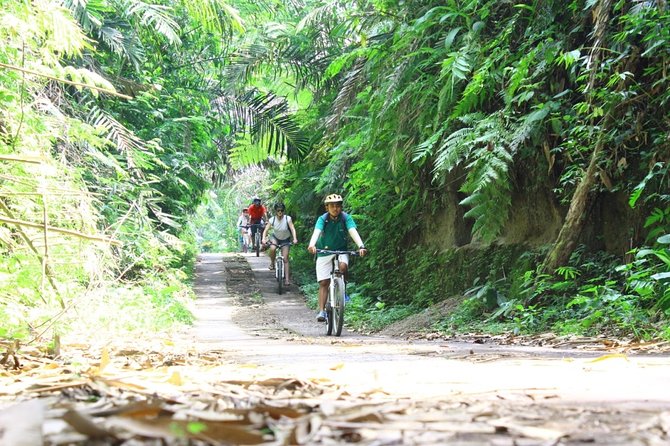
The best thing about this tour is the route. You start high in Kintamani and roll down through village lanes, rice fields, and forest paths toward Payangan, far from the usual Ubud traffic. It is about 95 percent downhill, so you get a good look at rural Bali without signing up for a hard day in the saddle.
I like the stop at a local home, where the tour connects the scenery with daily life. I also like the food plan: coffee and a pancake or smoothie bowl in the morning, snacks along the route, and lunch at Greenkubu. The main caution is that some lanes are narrow or bumpy, and one poor bike or late pickup can spoil an otherwise fine day.
Key points
- Mostly downhill route: Start in Abuan, Kintamani, and finish near Hyang Api Temple in Payangan.
- Rural Bali up close: Pass villages, rice terraces, forest, home industries, and irrigation channels.
- Useful guiding: Guides commonly ride at the front and back, helping with traffic, directions, and hazards.
- Cultural stops: Visit a local home, Gunung Raung Temple, and Hyang Api Temple.
- Food included: Enjoy a plantation coffee break, snacks, and lunch at Greenkubu Restaurant.
- Good value at $33: Ubud transport, guiding, cycling, meals, and several stops are included.
A downhill start in Kintamani
This is not a ride around central Ubud. Your day begins with pickup at your Ubud hotel, followed by a drive uphill toward Kintamani and the cooler countryside. At the plantation, you stop for coffee with a pancake or smoothie bowl. If you need gluten-free food, request the smoothie bowl when booking.
That first break matters. It gives you time to eat before cycling and lets you settle into the day before the bike route begins. Bring sunscreen and insect repellent, since you will spend much of the morning outdoors.
There is also a brief stop at Tegallalang Rice Terrace for photographs. It lasts about 15 minutes, so think of it as a quick viewpoint rather than a full visit. If you already plan to see Tegallalang separately, this stop may feel familiar. If you have not seen it, it offers a useful first look at the stepped rice fields before you leave the busier sightseeing areas behind.
The actual ride starts in Abuan village, in the Kintamani area. From here, the route heads downhill toward Payangan. The easy grade is the tour’s biggest physical advantage, but downhill cycling still requires attention. You need to control your speed, watch the road surface, and listen to the guide’s instructions.
A few more rides around Ubud worth a look
- Electric Cycling Tour of Ubud with Free Hotel Transfer and Lunch
★ 5.0 · 1,397 reviews - Ubud: Downhill Cycling with Volcano, Rice Terraces and Meal
★ 5.0 · 536 reviews - Half-Day Ubud Electric Cycling Tour to Tirta Empul Water Temple
★ 5.0 · 315 reviews
What the route feels like on two wheels
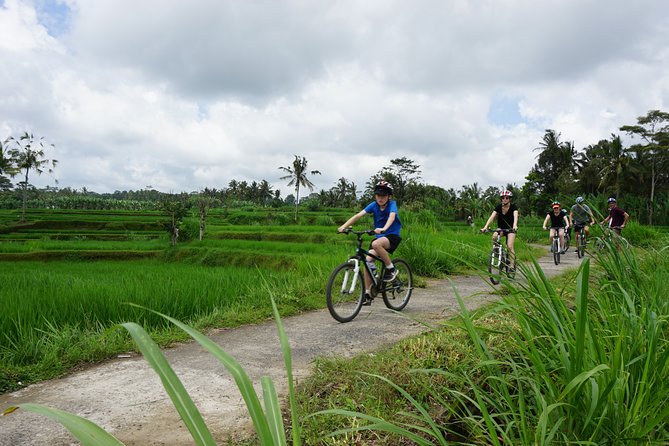
The ride is designed to show you parts of Bali that are hard to reach by car. You pass through villages, back lanes, jungle forest, rice paddies, and small rural roads. The views change often, which keeps the ride from feeling like a long transfer on a bicycle.
I especially like the way this route links scenery with local work. Along the way, the guides explain Balinese life and point out home industries such as stone making and woodworking. These details give the ride a purpose beyond taking pictures. You begin to see how homes, temples, farms, and workshops fit together.
The route is described as mostly downhill, but it is not a smooth bike path. One Spanish-language account of the ride notes narrow stretches and some bumps that require confidence on a bicycle. That is a fair warning. You do not need to be a serious cyclist, but you should be comfortable steering, braking, and staying upright on uneven lanes.
The guides are one of the strongest parts of the day. The standard setup may include one guide leading and another following behind. That arrangement helps keep the group together and gives you someone to watch for hazards ahead. Guides named in the feedback include Gede, Wayan, Ben, Gudday, Yoga, Madi, Amin, and Madi’s fellow guide, though your own guide will depend on the date and group.
One guide, Gede, was praised for giving clear directions and pointing out hazards. Ben was noted for sharing stories about Balinese culture and for taking the route away from the main road. Wayan was described as attentive and willing to answer questions. These are useful qualities on a ride where the scenery can tempt you to look everywhere except at the road.
A Balinese home in Abuan village
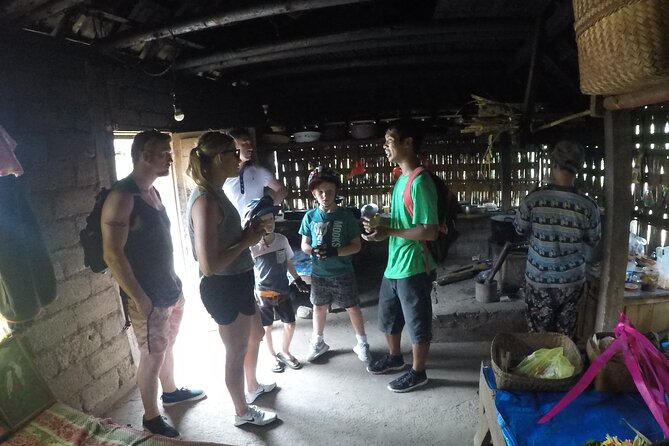
The first major stop is a local home in Abuan. You spend about 45 minutes here, learning about everyday life rather than simply passing through a photo stop.
This is the cultural heart of the tour. Bali is easy to reduce to temples, rice terraces, and resort pools, but a home visit shows how people actually live. The guide can explain local customs, family life, and the role of religion in the household. The supplied information does not promise a formal workshop or a set demonstration, so expect an informal visit rather than a staged performance.
This stop also gives you a chance to slow down. The cycling portion is gentle, but a seven to nine-hour day can feel long if every minute is spent moving. A home visit breaks up the ride and makes the day feel more connected to the communities along the route.
Be respectful with photographs and follow the guide’s instructions. The point is to meet people in their own setting, not to treat the home as scenery.
Coffee and Gunung Raung Temple in Taro
In Taro village, you get another coffee break and visit Gunung Raung Temple, described as one of the most unusual temples in Bali. The stop lasts about an hour.
The second coffee break is welcome, especially after several downhill sections where you have been concentrating on steering. It also gives you another chance to ask questions. If your guide is like Ben or Wayan, this is a good moment to ask about religion, village life, or the meaning of the places you are seeing.
Temple visits require a little care. Dress and behave respectfully, and follow the instructions given on site. The supplied tour details do not specify a dress code, so you should ask the operator if you have concerns about clothing or temple access.
Do not expect a long, museum-style temple tour. The value here is the setting and the explanation from the guide. You are seeing a religious site as part of a living village route, not checking off a monument in isolation.
Same roads, a different day in the saddle:
- Bali Countryside Cycling Tours
★ 5.0 · 246 reviews - Half Day Cycling Tour ( Manual Bike )
★ 5.0 · 225 reviews - Bali Downhill Cultural Cycling Tour
★ 5.0 · 224 reviews - Ubud: Downhill Cycling with Volcano, Rice Terraces, and Meal
★ 4.9 · 189 reviews
Rice-field irrigation in Bresela
The Bresela stop focuses on how the rice fields receive water. You spend about 45 minutes looking at the irrigation system.
This is one of the more useful stops because it explains the practical side of Bali’s famous rice terraces. The fields are not just attractive green steps. They depend on shared water systems and careful coordination between farming areas. A guide can help you notice channels and boundaries that you might otherwise miss.
The stop also rewards patience. The most interesting details may be small: where water enters a field, how the channels run beside a path, or how homes and paddies sit close together. If you are holding a camera, this is a good place to take wider views, but listen first. The explanation gives the scenery meaning.
The route through the fields may include uneven ground. Wear walking or sports shoes rather than sandals. You should also carry a small backpack for your camera or phone, keeping your hands free for the bike.
Finishing at Hyang Api Temple in Payangan
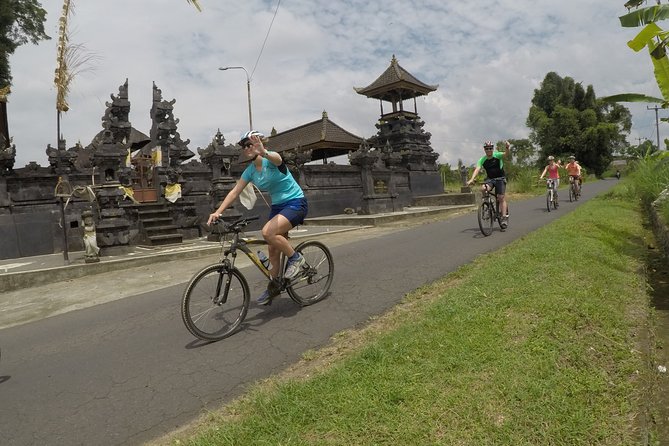
The cycling portion finishes at Hyang Api Temple in Payangan after about 30 minutes at the final stop. By this point, you will have moved from the higher Kintamani area through villages and farmland toward the Ubud side of Bali.
Ending at a temple gives the ride a clear cultural finish. It also marks the shift from the quiet cycling route to the meal and return transport. The exact amount of time spent riding versus stopping can vary, since the full outing lasts about seven to nine hours and includes pickup, food, sightseeing, and transfers.
This is not a race. The guides are there to manage the pace and keep the group together. Families have used the tour, and guides have taken extra care with children. Still, children should be confident on a bicycle and able to follow directions. The stated age range is 6 to 12 for children and over 12 for adults.
Lunch at Greenkubu Restaurant
After the ride, you have lunch at Greenkubu Restaurant and Swing. The lunch stop lasts about an hour and is included in the price.
The meal is more than a minor extra. After a morning outdoors, having food arranged at the finish means you do not need to search for a restaurant while tired and dusty. Breakfast, snacks, and lunch make the $33 price look strong, especially when combined with transport and a guide.
The food received positive comments, though the supplied details do not list the exact dishes. If you have dietary needs, raise them early. The only specific alternative mentioned is a gluten-free smoothie bowl for the first meal, so do not assume every dietary request is covered without confirmation.
The Greenkubu stop may also include time around the swing area. The information does not promise a swing ride as part of the price, so treat it as part of the restaurant setting unless the operator confirms otherwise.
Price, group size, and practical value
At $33 per person, this is a good-value day if you want several services handled at once. The price includes Ubud pickup and return transport, bicycles, guides, coffee, a morning meal, snacks, and lunch. You also get cultural stops that would be difficult to arrange independently without knowing the village roads.
The maximum group size is 50. That is a fairly large possible group, although smaller departures can happen. A large group may mean more waiting at road crossings, stops, or meals. On the other hand, the two-guide setup described in the experience helps with safety and pace.
Transport deserves a little attention. Most of the feedback about the ride itself is strong, but one account reported a pickup that was an hour late and another noted a driver who did not complete the hotel drop-off because of traffic. These appear to be exceptions, not the main pattern, but you should leave flexibility in your day. Do not schedule a flight, spa appointment, or tightly timed attraction immediately after returning.
Payment can be made by cash or bank transfer without a charge. Visa and Mastercard incur a 3 percent bank fee. Confirmation is provided at booking, and you can cancel for a full refund up to 24 hours before the start time. Changes or cancellations inside that window are not accepted for a refund.
The tour is commonly booked about 17 days ahead. That is a useful planning clue, particularly if you want a specific date during a busy period. It is not a guarantee that late booking will fail, but booking early is sensible.
Who should book this ride?
I would choose this tour if you want to see rural Bali without spending the day on a demanding bike route. It suits you if you can ride a bicycle confidently, enjoy short cultural stops, and prefer a guided route to planning village roads yourself.
It is also a good option for families with cycling children. The downhill profile keeps the physical effort manageable, and guides can ride at the front and back. Parents should still be ready for narrow roads, uneven surfaces, and road awareness.
You may want a different activity if you want a serious cycling workout. The route is mostly downhill, so the challenge comes from control and road conditions rather than sustained climbing. You may also be disappointed if you expect a private tour, since the group can reach 50 people.
Check the bike before setting off. One negative account described slipping gears that caused a fall, while other riders found the bikes in good condition. A quick brake, tire, and gear check is a sensible step. If something feels wrong, tell the guide before leaving.
Should you book the Kintamani cycling tour?
Book it if your priority is quiet countryside, local culture, and easy downhill cycling rather than a hard workout. The combination of Ubud transport, meals, guiding, village access, and a route through rice fields gives you a lot for $33.
I would be comfortable recommending it to most people who know how to ride a bike and can handle uneven lanes. Go in with practical expectations: this is a full day, the road surface is not always smooth, group size can vary, and transport timing may not be perfect. Pack sunscreen, insect repellent, sports shoes, and a small camera bag, then let the guides handle the route.
FAQ
How long does the Kintamani Cultural and Nature Cycling Tour last?
The tour lasts approximately seven to nine hours, including hotel pickup, cycling, stops, meals, and return transport.
Where does the cycling begin?
The ride begins in Abuan village in the Kintamani area.
Where does the cycling finish?
The cycling finishes at Hyang Api Temple in Payangan.
Is the cycling route mostly downhill?
Yes. The route is described as about 95 percent downhill, though you should still expect narrow or bumpy sections.
Is pickup from Ubud included?
Yes. Round-trip transport from Ubud is provided.
What food is included?
The tour includes a plantation coffee break with a pancake or smoothie bowl, snacks during the ride, another coffee break in Taro, and lunch at Greenkubu Restaurant.
Can children join the tour?
Children between 6 and 12 years old may join, while the adult category is for people over 12. Most participants can take part, but children should be able to ride a bike and follow safety instructions.
What should I bring?
Walking or sports shoes, sunscreen, insect repellent, and a small backpack for a camera or phone are recommended.
How large can the group be?
The activity has a maximum capacity of 50 people. The actual group may be smaller.
Can I cancel for a full refund?
Yes. You can cancel at least 24 hours before the local start time for a full refund. Cancellations or changes made less than 24 hours before the start time are not refunded.
Just added around Ubud
- Ubud: Kintamani Downhill Cycling with small group & Private★ 5.0 · 4 reviews
- Ubud: Half-Day Tegallalang Electric Cycling Tour★ 4.9 · 24 reviews
- Ubud: Downhill Countryside Cycling From Kintamani★ 4.5 · 4 reviews
- Ubud: Cycling Tour Local Villages, Temple, and Rice Field★ 4.8 · 12 reviews
- Ubud Cycling Tour : All Inclusive Cycling Adventure★ 4.2 · 7 reviews
- Bali Amazing Cycling Tour★ 5.0 · 4 reviews
- The Volcano Trail – Epic Volcano Cycling Adventure★ 5.0 · 12 reviews
- Ubud Eco Culture Cycling Exploration★ 5.0 · 31 reviews
Cycling Tours, compared.
Ninh Binh Day Trip: Hoa Lu-Trang An/Tam Coc-Mua Cave-Cycling-Boat
Read our review →
Cai Be Mekong Delta Tour: Cooking Class, Cycling & Craft Villages
Read our review →
Countryside Bike Tour from Amsterdam: Cheese, Clogs & a Windmill
Read our review →
Electric Cycling Tour of Ubud with Free Hotel Transfer and Lunch
Read our review →

Browse the lists this tour appears in