

Review · SIEM REAP
1-Day Angkor Wat Cycling Tour: Scenic Bike Adventure in Siem Reap
Angkor is at its most rewarding when you can get beyond the main road and move between temples under your own power. This private ride covers about 20 kilometers on mostly flat ground, linking Angkor Wat, Bayon, Ta Prohm, Ta Nei, and Kravan Temple with forest paths and local village roads along the way.
I like the private format, since your guide can adjust the pace for your group. I also like the practical touches: bicycles, water, cool towels, local snacks, hotel pickup, and an English-speaking guide are all included.
The main drawback is the heat. Six to seven hours of cycling and temple walking is a full day in Cambodia, and the $37 Angkor Pass is extra, as are meals and tips.
Key points to know before you book
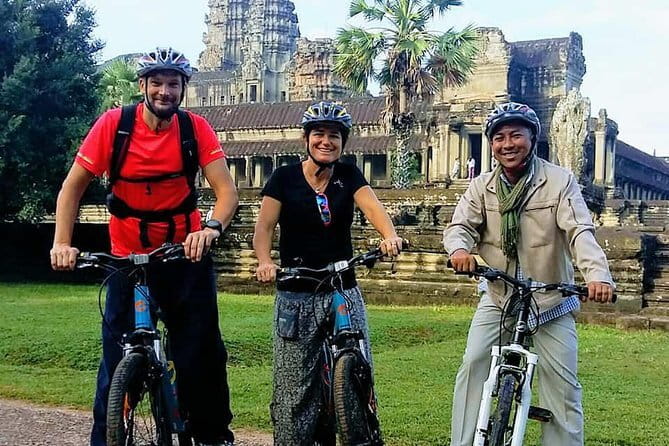
- About 20 kilometers of mostly flat cycling: You ride on a mix of roads, trails, and smaller forest paths rather than staying on one busy route.
- Five temple areas in one day: The route includes Angkor Wat, Angkor Thom, Bayon, Ta Prohm, Ta Nei, and Prasat Kravan.
- A genuinely private outing: Only your group takes part, so you can set a comfortable pace and pause when needed.
- Hok Cambodia Journeys provides the essentials: Your bike, English-speaking guide, water, cool towels, safety equipment, and local snacks are included.
- Hotel pickup starts at 8:00 am: The guide collects you directly from your accommodation and returns you there after the ride.
- Budget for the temple pass: The Angkor Pass costs $37 per person and is not included in the $49 tour price.
Why cycling works well at Angkor
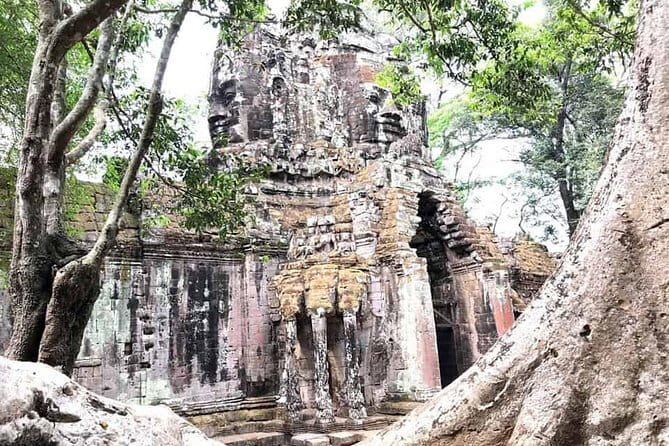
Angkor is a huge archaeological area. The temples are not arranged like rooms in a museum, where you simply walk from one exhibit to the next. Roads, trees, gates, ponds, villages, and long stone walls fill the spaces between them.
A bicycle gives you a better sense of that scale. You are not simply being driven from one famous entrance to another. You pedal between the major monuments and get short stretches of forest and village life along the way. That movement is part of the day.
The route covers roughly 12 miles, or 20 kilometers. The ground is described as flat, but flat does not mean effortless in Siem Reap’s heat. You will also spend a fair amount of time walking around temple grounds, climbing some steps, and standing in the sun.
The private setup matters here. If you are comfortable on a bike, you can keep moving. If you need a slower morning, more water stops, or extra time at a temple, your guide can work around your group instead of following a fixed bus schedule.
A few more rides around Siem Reap worth a look
- Siem Reap: Guided Countryside Bike Tour
★ 4.9 · 294 reviews - Cycle the Angkor Backroads with lunch / E-Bike or Tuk Tuk
★ 5.0 · 124 reviews - Floating Village Bike & Boat Sunset / E-Bike Available
★ 5.0 · 78 reviews
Starting at Angkor Wat at 8:00 am
The guide collects you from your hotel at 8:00 am with the bicycles. From there, the ride heads toward the Angkor complex, with time to pass local villages and wooded areas before reaching the main monuments.
Angkor Wat receives the most attention because it is the site most people picture when they hear the word Angkor. Its long approach, broad moat, towers, galleries, and carved walls make it a strong place to begin. You get the scale of the Khmer building program right away.
The planned stop at Angkor Wat lasts about two hours. That is enough time for a meaningful visit, though not enough to inspect every gallery at length. Your guide’s role is important here. Without context, Angkor Wat can become a procession of courtyards and stone carvings. With a guide, the layout and religious purpose make more sense.
Bring clothing that covers your shoulders and knees. This is required for the temple visit, not just a style suggestion. Light fabric helps with the heat, but make sure it meets the dress rule.
Entering Angkor Thom through the South Gate
After Angkor Wat, the route continues to Angkor Thom, the large walled city that once served as the capital under King Jayavarman VII. The entrance through the South Gate gives you one of the most memorable approaches of the day.
The gate is framed by rows of figures holding a serpent, a scene that is easy to appreciate from a bicycle because you approach it along the road rather than stepping straight out of a vehicle. The gate also gives you a sense of the city’s scale before you reach its central temples.
The Angkor Thom portion is scheduled for about an hour. You cycle among the remains of the ancient city, stopping at the Bayon, the Elephant Terrace, and the Victory Gate. There is also time to stop for something to eat, although meals are not included in the tour price.
This is one place where the itinerary can feel full. Angkor Thom covers a large area, and the Bayon alone can absorb plenty of time. If you want long, careful visits at every stop, tell your guide early in the day. The private format gives you some room, but the route still has several temples to fit into six or seven hours.
Bayon and the famous stone faces
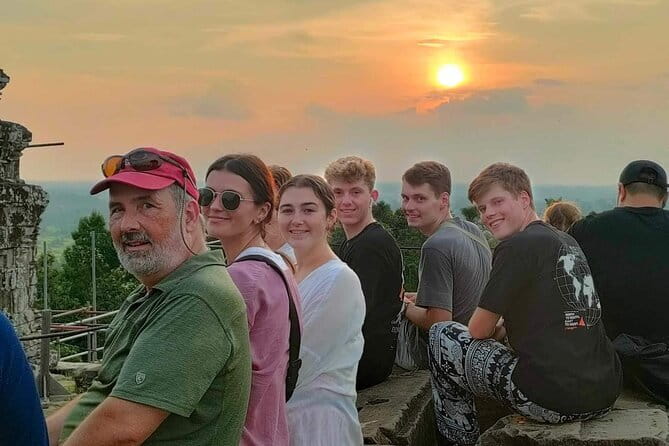
Bayon sits near the center of Angkor Thom. Its towers carry large carved faces, creating a very different mood from Angkor Wat’s grand symmetry.
The scheduled visit lasts about 30 minutes. That is a short stop, but it lets you walk among the towers and see how the faces appear from different angles. The close quarters, narrow passages, and stacked stone towers make Bayon feel more enclosed and personal than Angkor Wat.
The temple is associated with King Jayavarman VII and Mahayana Buddhism. Your guide can help explain the religious setting and the role of Lokesvara, a Buddhist savior figure linked with compassion.
Thirty minutes will not cover every detail. I would treat this as a focused introduction rather than a complete study. If Bayon is your main interest, ask for enough time to look closely at the carvings instead of rushing onward.
Same roads, a different day in the saddle:
- Angkor Sunrise Expedition Cycling Through Serene Backroads
★ 5.0 · 70 reviews - Siem Reap: Countryside Cycle and Local Village Life Tour
★ 4.7 · 32 reviews - Short Cycling at Countryside
★ 5.0 · 29 reviews - Small Group Sunset, Picnic & Countryside, Bike Tours
★ 5.0 · 29 reviews
The Elephant Terrace and Victory Gate
The Elephant Terrace was part of the royal center of Angkor Thom. Its name comes from the elephant carvings along the terrace wall, which are among the easiest details to spot as you walk and cycle nearby.
The stop is planned for about 30 minutes. It is more open than Bayon, so shade can be limited. The terrace is especially useful for understanding how the royal city was organized, with formal public spaces in front of the former palace area.
The Victory Gate is also part of this section of the ride. Passing through different gates by bicycle helps you see Angkor Thom as a city with movement and purpose, rather than a collection of isolated temples.
You may not spend long at either feature, but together they give the middle of the day a useful change of pace. After the enclosed stonework at Bayon, the broad terrace and roads make it easier to pause, drink water, and reset before the forest route.
Ta Nei, a quiet forest stop
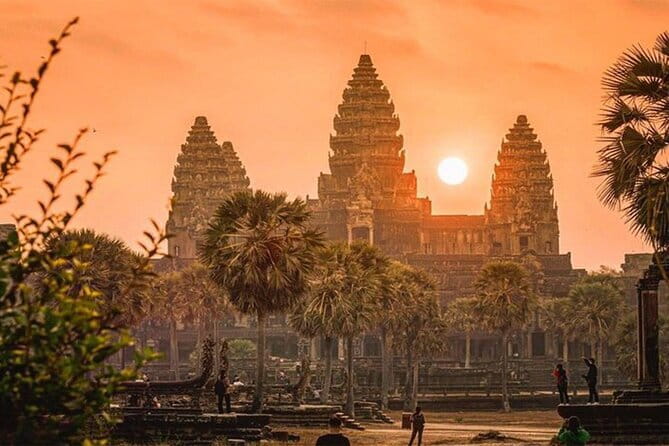
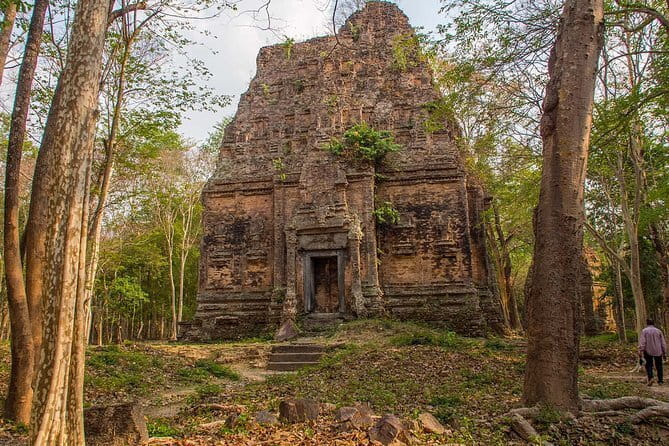
Ta Nei is one of the most appealing parts of this cycling day for people who want a calmer temple visit. The route uses a smaller path through the forest, leading to a modest temple complex away from the biggest crowds.
The visit is scheduled for about 30 minutes. Ta Nei does not have the scale of Angkor Wat or the instantly recognizable towers of Bayon. Its appeal is the setting: trees, quiet, and a more peaceful atmosphere around the old stones.
This is where cycling provides something a vehicle tour cannot offer as easily. You approach through the forest, and the ride itself becomes part of the visit. The smaller path also adds variety after the main roads around Angkor Thom.
Do not expect a long guided lecture or a large collection of intact buildings. Ta Nei is best for the feeling of being in the woods among old ruins. If you value calm stops as much as famous monuments, this may be one of your favorite parts of the day.
Ta Prohm and the jungle-temple setting
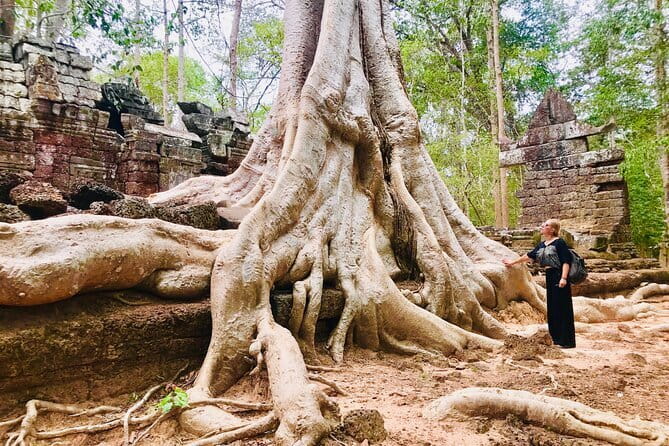
Ta Prohm is the best-known temple after Angkor Wat and Bayon on this route. Its fame comes partly from its appearance in the film Tomb Raider, but the real attraction is the way trees and stone share the same space.
The visit lasts about an hour. That gives you more time than at Bayon to walk through the galleries, see the carved details, and appreciate the large roots growing over sections of the temple.
Ta Prohm can be busy, and its popularity means the visit may feel less quiet than Ta Nei. Still, it is a key Angkor stop for good reason. The broken walls, shaded corridors, and tree roots give it a mood that is unlike the formal design of Angkor Wat.
Your guide can help you find the important areas without losing the route’s cycling rhythm. Wear shoes that are comfortable for walking over uneven stone and ground. The tour includes safety equipment, but the equipment does not replace sensible footwear or care around old surfaces.
Prasat Kravan and village roads
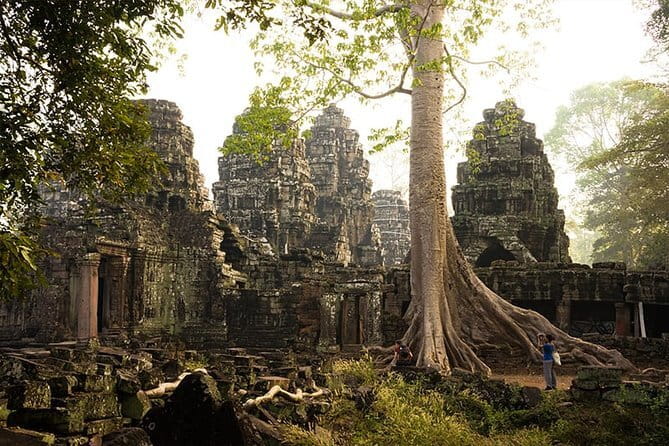
The final temple stop is Prasat Kravan, reached after cycling through local villages. The route is meant to give you more than a temple checklist. You also get a look at everyday local life, including homes, traditions, and the way villages sit around the Angkor area.
The stop is scheduled for about 30 minutes. Prasat Kravan is smaller than the major monuments, but it adds another architectural style to the day and gives you a final temple visit after the larger crowds and grander sites.
The village section is also a useful reminder that Angkor is not an empty ruin field. People live and work around the park. Keep your pace respectful and follow your guide’s lead when stopping or taking photographs.
Local snacks are included, along with water and cool towels. These are modest details, but they matter after hours in the sun. Meals are not included, so plan to bring money for food or confirm with your guide when the eating stop will happen.
What the $49 price really covers
The tour costs $49 per person. For a private day with hotel pickup and drop-off, a bicycle, an English-speaking guide, water, towels, snacks, and safety equipment, that is a reasonable price for people who want a guided ride rather than arranging the day alone.
The important extra cost is the Angkor Pass at $37 per person. Add that to the tour price before comparing it with other ways to see the temples. Meals and tips are also outside the stated price.
The value is strongest for a small group that wants flexibility. A private group can pedal at its own pace and avoid waiting for strangers. If you are traveling alone and mainly want the cheapest possible temple visit, a shared option may cost less. If you want a planned route, local context, and a more active day, the price is easier to justify.
The tour is commonly booked about 25 days ahead, so I would not leave it until the last minute if your Siem Reap dates are fixed.
Who will enjoy this ride most
This tour suits you if you enjoy active sightseeing and are comfortable spending a full day outdoors. You do not need an extreme fitness level, since the terrain is mostly flat, but you should be ready for around 20 kilometers of cycling mixed with temple walking.
It works especially well for:
- Couples or friends who want a private pace
- Families with older children who can manage a full day on bicycles
- Visitors who want both major temples and quieter stops
- People who prefer forest paths and village roads to constant vehicle transfers
- First-time Angkor visitors who want historical explanations along the way
It is less suitable if you dislike heat, cannot comfortably ride for several hours, or want a slow, detailed study of only one or two temples. The schedule covers a lot of ground.
The tour has a five-star rating from nine published bookings, and the strongest praise centers on the guides’ flexibility, safety, and knowledge of the route. One account specifically describes Hok leading a ride on both road and trail at a pace that felt safe and comfortable. Another highlights an accommodating guide and the mix of temples and natural scenery. Those details point to the tour’s real strength: not just reaching Angkor’s famous sites, but making the ride between them feel manageable.
Practical details for a smoother day
Wear clothing that covers your shoulders and knees, and choose something that dries quickly. You will be outside for most of the day, and temple visits require suitable coverage.
Start with water, even though more is provided. The cool towels are welcome, but they do not remove the need to pace yourself. Take the heat seriously, especially during the open sections around Angkor Thom and the Elephant Terrace.
The tour begins at 8:00 am and lasts about six to seven hours. Pickup and drop-off are at your hotel, which saves time and removes the need to arrange transport to the park.
Confirmation is provided when you book. The tour is private, and safety equipment is supplied. Most people can participate, but the route still demands basic cycling ability and the stamina for a long day.
Free cancellation is available up to 24 hours before the start time. Changes made inside that window are not accepted, and poor weather can lead to a different date or a full refund. That policy is worth noting during the rainy season.
Should you book this Angkor cycling tour?
I would book it if you want to see the major Angkor sites while also riding through forest and village areas. The route is ambitious, but it gives you a strong first look at Angkor Wat, Angkor Thom, Bayon, Ta Prohm, Ta Nei, and Prasat Kravan in one day.
The best reason to choose it is the private pace. You are not locked into a large group, and the combination of guide support, water, towels, snacks, and hotel transfers removes much of the day’s fuss.
Skip it if you want air-conditioned transport, long leisurely temple visits, or a short outing. For an active visitor who can handle the heat, this is a practical and memorable way to see more of Angkor than the usual road-based circuit.
FAQ
How long does the Angkor cycling tour last?
The tour lasts approximately six to seven hours.
What time does the tour start?
Hotel pickup starts at 8:00 am.
How far do you cycle?
The route covers about 12 miles, or 20 kilometers.
Is the terrain difficult?
The route is described as mostly flat and includes roads, trails, and forest paths.
Which temples and sites are included?
The route includes Angkor Wat, Angkor Thom, Bayon, the Elephant Terrace, Ta Nei, Ta Prohm, and Prasat Kravan.
Is the Angkor Pass included?
No. The Angkor Temple Pass costs $37 per person and must be paid separately.
What is included in the tour price?
The price includes a bicycle, an English-speaking guide, water, cool towels, local snacks, and safety equipment.
Can I cancel for a full refund?
Yes. You can cancel at least 24 hours before the start time for a full refund. If poor weather causes the operator to cancel, you will be offered another date or a full refund.
Just added around Siem Reap
- Short Cycling at Countryside★ 5.0 · 29 reviews
- Small Group Sunset, Picnic & Countryside, Bike Tours★ 5.0 · 29 reviews
- Ruins Temples of Beng Mealea Cycling Tour★ 5.0 · 2 reviews
- Morning Village & Countryside Bike Experience – Siem Reap★ 5.0 · 5 reviews
- Phnom Krom for Sunset Cycling Tour★ 5.0 · 3 reviews
- Private Siem Reap Countryside Cycling Tour★ 4.5 · 4 reviews
- Half-Day Countryside Local Village Cycling Tour★ 5.0 · 13 reviews
- Angkor Wat Cycling Tour★ 5.0 · 8 reviews
Cycling Tours, compared.
Ninh Binh Day Trip: Hoa Lu-Trang An/Tam Coc-Mua Cave-Cycling-Boat
Read our review →
Cai Be Mekong Delta Tour: Cooking Class, Cycling & Craft Villages
Read our review →
Countryside Bike Tour from Amsterdam: Cheese, Clogs & a Windmill
Read our review →
Electric Cycling Tour of Ubud with Free Hotel Transfer and Lunch
Read our review →
Browse the lists this tour appears in