
Review · GERMANY
Berlin Wall History Small Group Cycling Tour
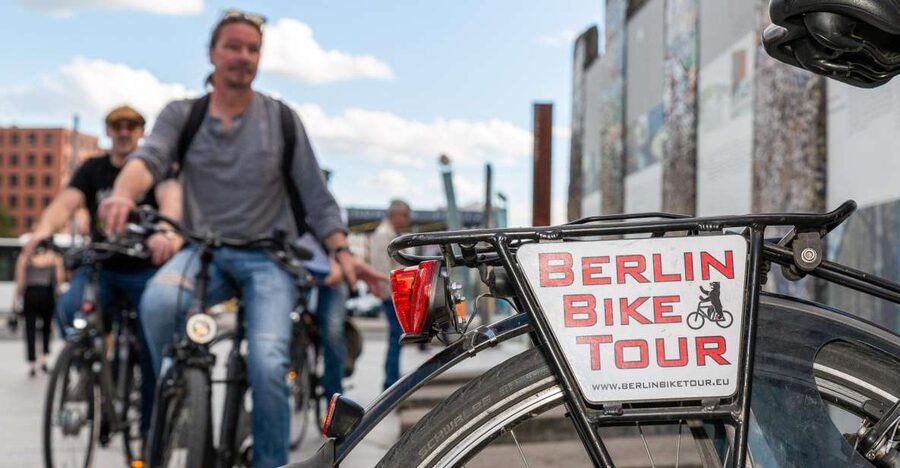
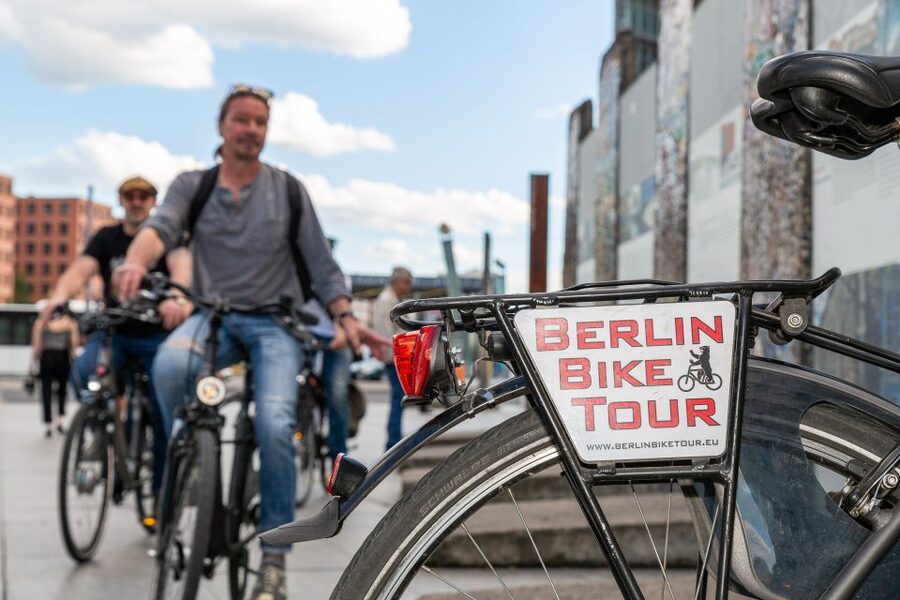
Berlin’s Wall story begins at the place where it ended. From Bornholmer Straße, you cycle through the former border zone toward Checkpoint Charlie, following traces that are easy to miss on foot or by sightseeing bus. The small group size keeps the ride personal, while the route links memorials, watchtowers, escape sites, and the city’s best-known Cold War landmarks.
I especially like the mix of major sights and less obvious places, including Invaliden Cemetery, the Chapel of Reconciliation, and the Parliament of the Trees. I also like that guide Ferenz can add personal memories of the period around reunification. The main consideration is language: the live tour is in German, and four hours on a bicycle requires reasonable comfort with steady city riding.
Key points to know before booking
- Start where the Wall opened: Begin at Bornholmer Straße, the first East Berlin border crossing opened on November 9, 1989.
- Small groups of 3 to 8: This is a more attentive format than a large bike convoy.
- A route packed with context: Visit Mauerpark, Bernauer Straße, Invaliden Cemetery, Brandenburg Gate, Potsdamer Platz, Checkpoint Charlie, and the Tränenpalast.
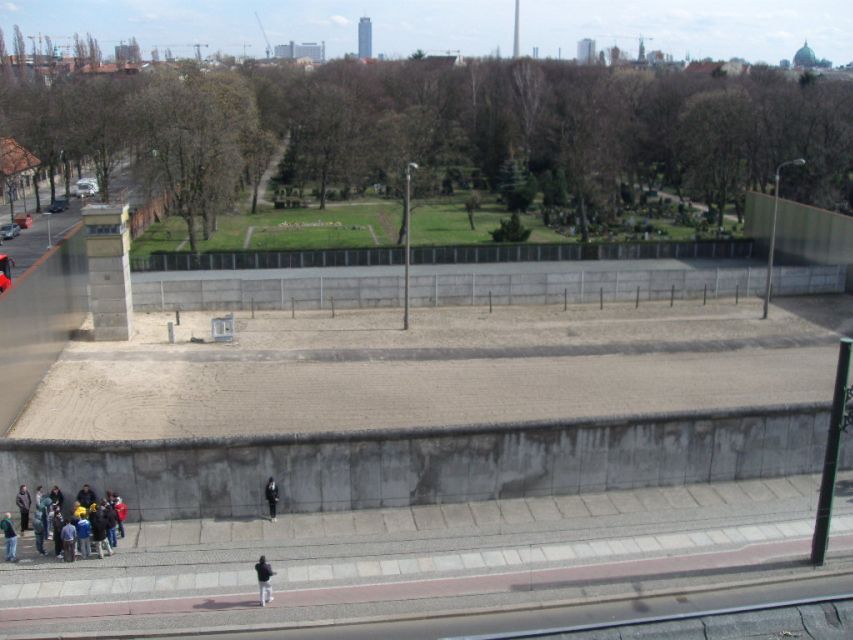
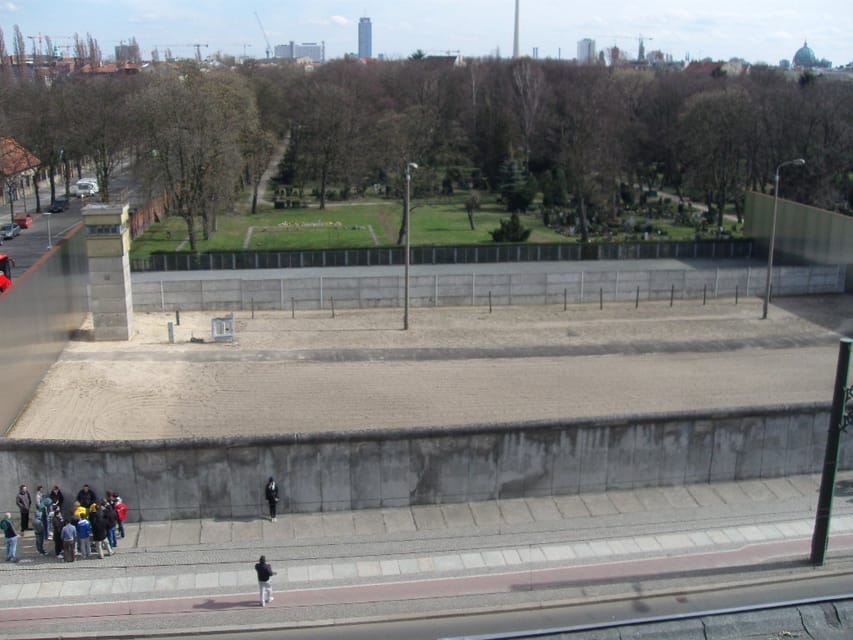
- Real Wall remains, not just famous landmarks: Expect a watchtower, sections of the former Death Strip, memorials, photographs, and marked traces.
- German-speaking guide: Ferenz is specifically praised for clear explanations and personal insight into the years around reunification.
- Good practical value: At $40, the price includes the bicycle, guide, fees, and a rain poncho when needed.
Starting at Bornholmer Straße, where the border first broke
The tour begins at Berlin Bike Tour, 75 Bornholmer Straße, in the north of the city. The meeting point is easy to reach: Björnsonstraße tram stop is about one minute away, Bornholmer Straße S-Bahn station is about two minutes away, and Schönhauser Allee is roughly a ten-minute walk.
That location matters. You are not starting with a general introduction somewhere downtown. You begin at the Square of November 9, 1989, the spot associated with the first East German citizens crossing after the border announcement. It gives the tour a strong opening because the end of the Wall is placed before the earlier decades of division.
Here you can hear how the Bornholmer Straße crossing became the first border station to open that night. You also see the cherry trees planted along the former border. Their presence softens a place once controlled by guards, barriers, and paperwork, but the guide connects the pleasant setting to the difficult story underneath it.
Your bicycle is included, and the group is limited to eight people. That is a useful balance. You get the reach of a bike route without being lost inside a large procession. The tour provider also supplies a rain poncho if needed, since the ride goes ahead in all weather.
More heritage and temple rides in the world:
- Half-Day Ubud Electric Cycling Tour to Tirta Empul Water Temple
★ 5.0 · 315 reviews - Sukhothai: Historical Park & Countryside Cycling Tour
★ 5.0 · 276 reviews - Full Day Cycling tour to Sukhothai Historical Park
★ 5.0 · 163 reviews
Mauerpark and the first physical traces of the Wall
From Bornholmer Straße, the route moves through Mauerpark. The park occupies part of the former border strip, and its name keeps the old division visible even as the area has changed use.
This is one of the places where a guide adds real value. Much of the Wall has disappeared, and a visitor moving through modern Berlin can easily miss where the border once ran. You may see only open paths, greenery, or a busy urban neighborhood. The route and explanations help you read those spaces as former checkpoints, patrol areas, and restricted ground.
The ride also follows rabbit pictures painted on the pavement. They mark portions of the old route toward Brandenburg Gate. It is a small detail, but it gives you something concrete to follow between the larger memorial sites.
The city cycling itself is part of the experience. You cover more ground than you would on a walking tour and move between northern Wall sites and central Berlin without repeatedly returning to public transport. Still, remember that this is a four-hour bicycle tour, not a stop-and-start bus outing. You should be prepared for regular riding, brief stops, and time outdoors.
Bernauer Straße and the Chapel of Reconciliation
Bernauer Straße is one of the most important Wall memorial areas on the route. The street became a symbol of division because the border cut directly through the built-up neighborhood. Buildings stood so close to the border that residents could face a Wall where their doorway or windows had once connected them to the next street.
The memorial area helps explain the Wall as a working border system, not simply a concrete barrier. You encounter reminders of the Death Strip, the fortified zone between barriers, and the attempts people made to cross it. The guide also points out places connected with escape efforts and the personal cost of the division.
The Chapel of Reconciliation occupies a particularly reflective part of the route. Its location recalls an earlier church that stood in the border zone and was later destroyed. You will not spend the whole tour inside museums, so stops like this provide a quieter pause between the more active cycling sections.
I like this part for readers who want more than the familiar Wall photographs. Bernauer Straße gives physical form to stories about families, homes, escape attempts, and forced separation. It is also a place where the missing sections of Wall become meaningful rather than disappointing. The absence itself shows how quickly Berlin removed much of the barrier after 1989.
Chausseestraße, Invaliden Cemetery, and Günter Litfin
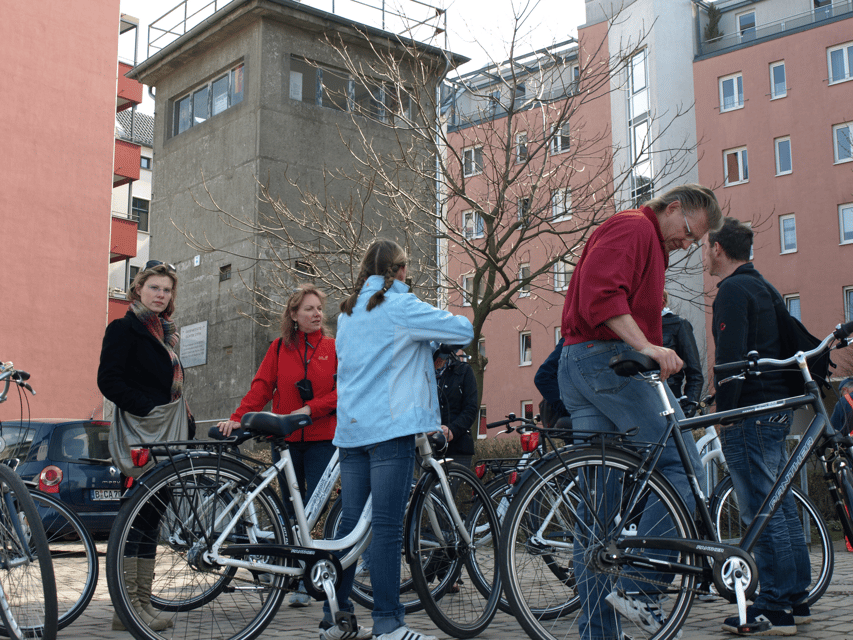
The ride continues to the former Chausseestraße border crossing and then to Invaliden Cemetery. These are less instantly recognizable than Brandenburg Gate, but they help widen your understanding of the border.
At Chausseestraße, the guide explains another crossing point and how movement between East and West was controlled. The tour does not treat every stop as a grand monument. Instead, it uses a sequence of locations to show how the border operated across central Berlin.
Invaliden Cemetery adds a different layer. The former border ran through or beside this historic burial ground, and the cemetery became part of the controlled zone. You can see how a place intended for quiet remembrance was affected by the security system around it.
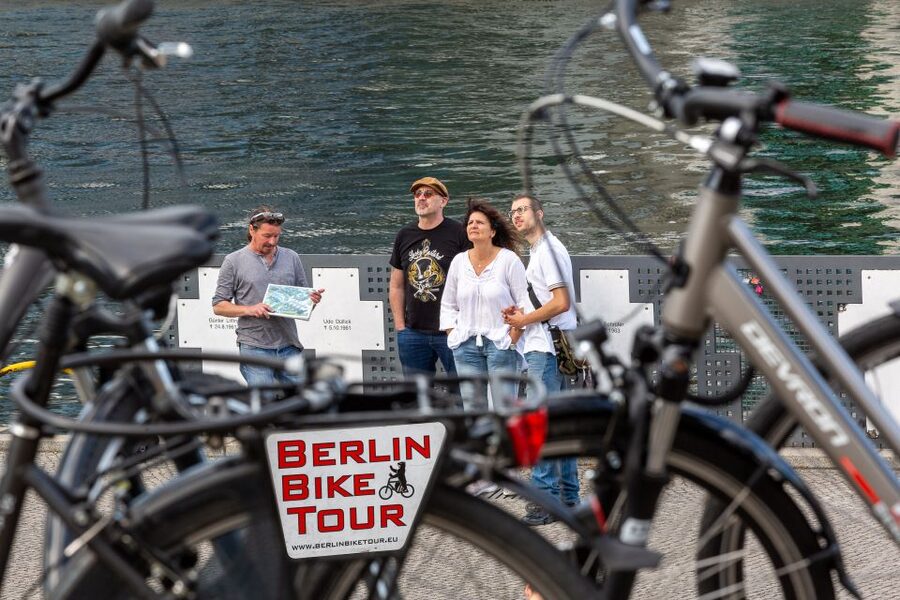
The Günter Litfin Memorial recalls one of the early people killed while trying to cross the border. His name is tied to the former border area near the water, where a watchtower remains. This stop gives the tour a human focus. Statistics about deaths at the Wall can feel distant, but a named person and a specific place make the story easier to grasp.
You should expect the guide to cover tragic and fateful stories throughout the ride. This is not a light sightseeing loop with occasional Wall photos. The subject includes failed escapes, deaths, separation, and state control. That seriousness is part of the value, though families with young children may want to consider how much of that material feels suitable.
More heritage tours in the world:
- Discover Trang An Natural World Heritage, Bich Dong Pagoda, Cycling Day Tour
★ 5.0 · 82 reviews - Sukhothai: Full-Day Historical Park Cycling Tour with Lunch
★ 4.9 · 55 reviews - Mountain Bike Historical Tunnel Trail to Hoover Dam from Las Vegas
★ 5.0 · 46 reviews - Anuradhapura Heritage Mountain bike / bicycle Tour
★ 5.0 · 34 reviews
Along the Government Bank to the Parliament of the Trees
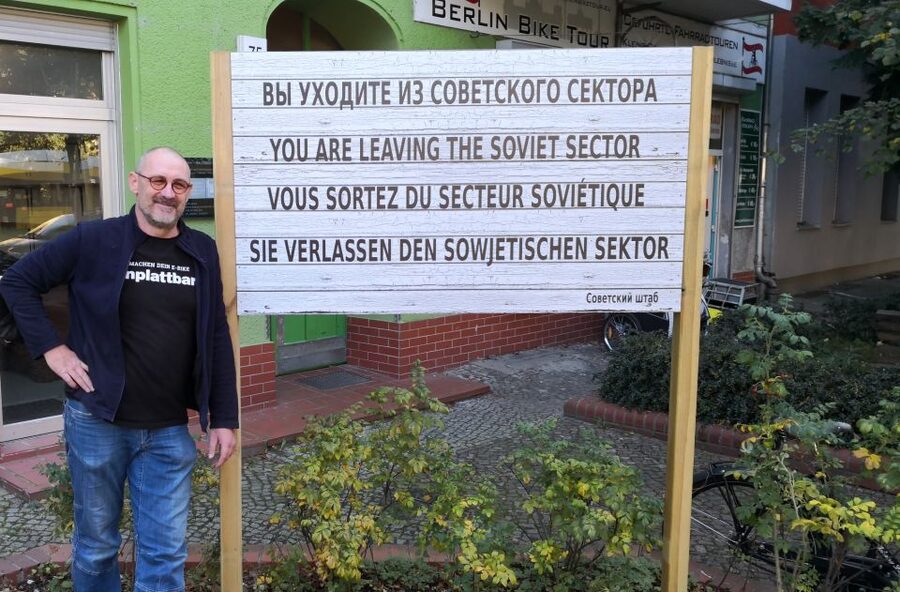
The route then follows the Government Bank toward the Parliament of the Trees. This section shows how the former border ran beside modern government districts and open public areas.
The Parliament of the Trees is a memorial built from parts of the Wall and connected to those who died at the border. Its setting invites you to pause and consider how remembrance has been placed into the rebuilt city. Rather than seeing only a preserved slab of concrete, you get a site designed to keep individual loss visible.
This portion is also useful for understanding the changing face of Berlin. Government buildings and public spaces now occupy areas once shaped by armed border controls. The bike route lets you move through that contrast at street level.
There may be fewer obvious remains here than at Bernauer Straße. That is worth knowing. The experience depends on the guide’s explanations and your willingness to picture what is no longer present. If you prefer a museum with labels and exhibits, this outdoor format may feel less structured. If you like connecting city streets to past events, it works well.
Brandenburg Gate, Potsdamer Platz, and the city’s rebuilt center
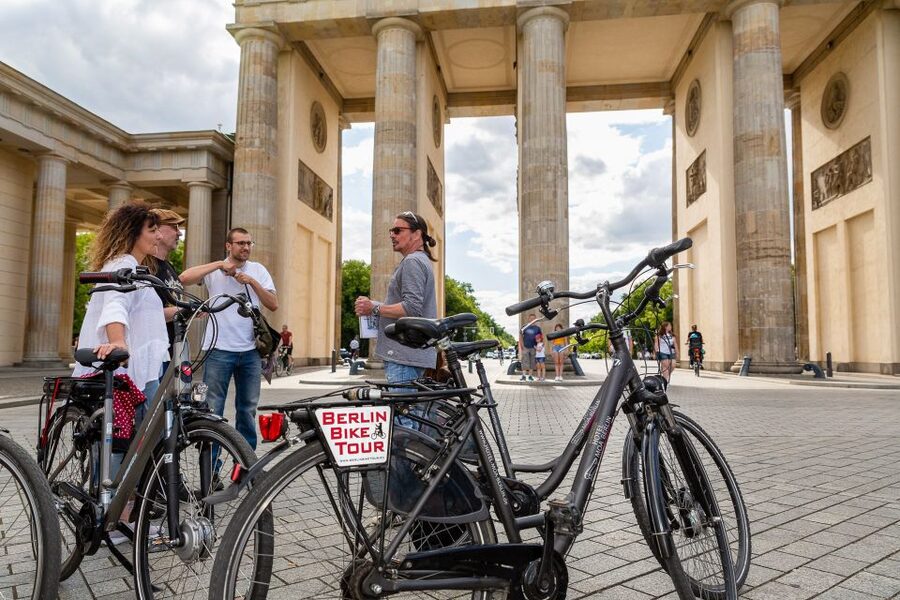
Brandenburg Gate is one of the tour’s major visual moments. During the division, the gate sat in the restricted area near the Wall. Today it is one of Berlin’s main public landmarks, and the ride gives you a clear sense of how its role changed.
Cycling through or near this part of central Berlin also links the Wall story to the city’s earlier history. The route continues toward Potsdamer Platz, an area that became a dramatic symbol of Berlin’s post-Wall rebuilding. The contrast between an empty border zone and a modern commercial center is central to understanding how much the city changed after 1989.
You will not get a full architectural tour of Potsdamer Platz, and that is not the purpose here. The stop works as a before-and-after point in the Wall story. Your guide places the modern streets against the former border line, helping you see why this part of Berlin became such a powerful image of reunification.
The route also passes the Friedrichstadt Palace, Museum Island, the New Synagogue, and the Old Berlin Post Office. These sights broaden the ride beyond Cold War history. You get glimpses of Berlin’s cultural and architectural center while staying focused on the route of the former border.
Checkpoint Charlie and the Tränenpalast
Checkpoint Charlie is probably the Wall site most familiar to first-time visitors. The former crossing has become one of Berlin’s busiest photo stops, but the tour gives it a wider setting by approaching it from the less obvious sections of the route.
The name refers to the Allied checkpoint used for crossings between East and West Berlin. The modern area can feel crowded and commercial, so the guide’s historical explanation matters. You learn to separate the current displays and visitor activity from the serious function the checkpoint once served.
The ride finishes its central sequence at the Tränenpalast on Friedrichstraße. Its nickname, Palace of Tears, reflects the emotional farewells that took place there. It was a departure hall for people leaving East Berlin, and the site helps explain the personal strain of a divided city through the experience of travel and separation.
This is a strong final stop because it moves the story from walls and guard towers to people saying goodbye. You end with the human consequences of border control rather than only its architecture.
After the final sightseeing stops, you cycle back to Berlin Bike Tour at Bornholmer Straße. The route forms a long historical line across the city, beginning with the border opening and returning to the place where the ride started.
What the $40 price includes
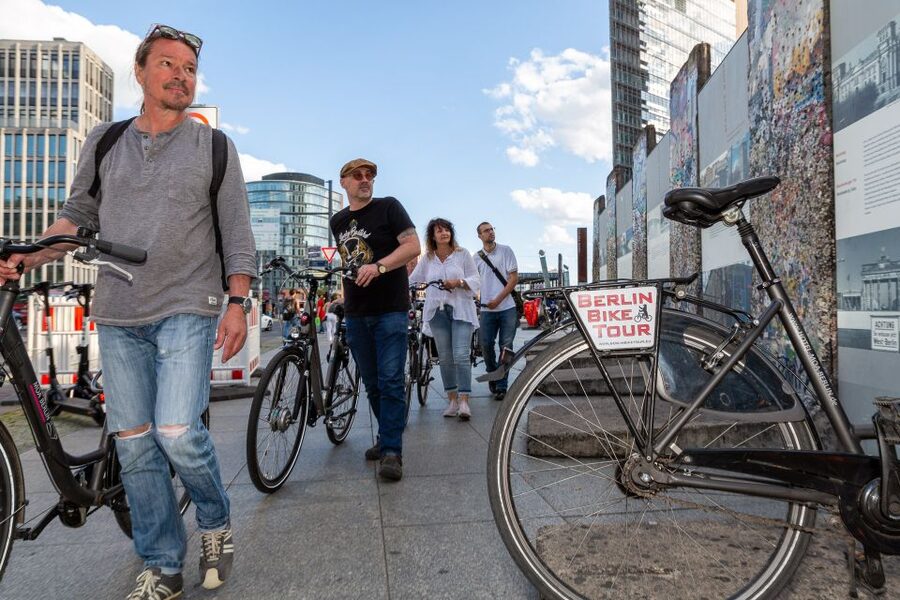
At $40 per person, the tour offers solid value if you want both transport and explanation. The fee includes the bicycle, guide, entrance or activity fees listed for the tour, and a rain poncho when necessary. Food and drinks are not included, so plan to eat before or after the four-hour outing.
A bicycle rental alone would not give you the historical framework or the carefully connected route. On the other hand, this is not a full museum tour, and you should not expect extended indoor visits at every stop. The price makes the most sense for you if you want to cover a large section of the Wall route while receiving live commentary.
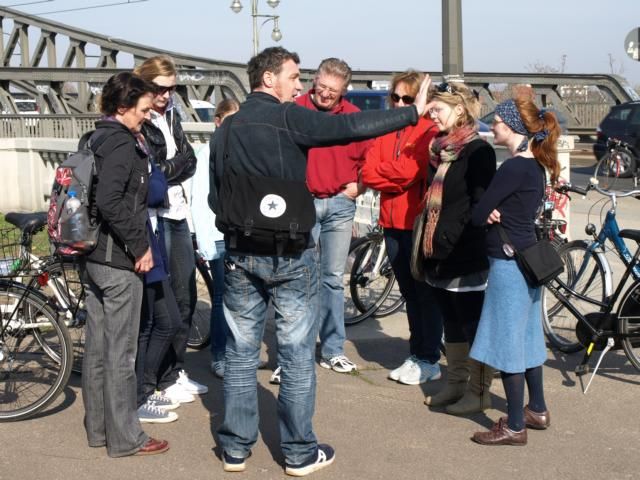
The group limit of eight is another part of the value. A small group makes it easier to hear the guide, stop without causing a large traffic jam, and ask questions. It also means the tour may feel more personal than a standard city sightseeing ride.
The strongest praise has focused on the explanations, the quality of the bicycles, the range of Wall sites, and the personal touch offered by Ferenz. His combination of friendly delivery, clear facts, and personal memories from the time around reunification adds something a printed guide cannot.
Practical details for a smoother ride
Wear clothing suited to the forecast. The tour runs in all weather, and a poncho is provided on rainy days, but sunglasses and a sun hat are also listed as useful items for bright conditions.
Bring a passport or identity card, sunglasses, a sun hat, and a camera. Do not bring luggage or large bags. The tour involves cycling and regular stops, so a small personal item is more practical than a suitcase or oversized day bag.
The live tour language is German. If you do not understand German well, this is an important reason to choose another format. The historical value comes mainly through the guide’s explanations, not simply from looking at the sites.
Cancellation is free up to 24 hours before the start, and you can reserve now and pay later. Those terms are useful if your Berlin schedule is still changing, but the key booking decision is still the language and the physical format.
Who will get the most from this tour?
I would choose this ride if you want a clear, connected account of the Berlin Wall rather than a short visit to one preserved section. It suits adults, older children, and teenagers who can manage four hours on a bicycle and are ready for serious historical stories.
It is also a good choice for repeat visitors. Even if you have seen Brandenburg Gate or Checkpoint Charlie, the northern stops, cemetery, memorials, and former border crossings can add places you might not find on your own.
I would think twice if you dislike cycling in city streets, need frequent indoor breaks, carry substantial luggage, or want an English-language tour. The listing provides a German-speaking guide only, so confirm that this matches your needs before booking.
Should you book the Berlin Wall cycling tour?
Book it if you want to connect Berlin’s famous sights with the quieter places where the Wall actually shaped daily life. The route covers a lot, the group stays small, and the included bicycle makes the $40 price reasonable. The strongest reason to go is the combination of physical traces and personal explanation, especially if Ferenz leads your group.
Skip it if you want a short, museum-based visit or cannot follow German commentary. For everyone else, this is a thoughtful way to understand the Wall as a citywide border, not just a piece of painted concrete beside a souvenir shop.
FAQ
Where does the Berlin Wall cycling tour start?
The tour starts at Berlin Bike Tour, 75 Bornholmer Straße, Berlin 10439.
How long does the cycling tour last?
The tour lasts four hours.
How many people are in the group?
The group has a minimum of three and a maximum of eight participants.
What language is the tour in?
The live tour guide speaks German.
What sights does the route include?
The route includes Bornholmer Straße, Mauerpark, Wall memorials at Bernauer Straße and Chausseestraße, the Chapel of Reconciliation, Invaliden Cemetery, the Günter Litfin Memorial, the Parliament of the Trees, Brandenburg Gate, Potsdamer Platz, Checkpoint Charlie, and the Tränenpalast.
Is a bicycle included?
Yes. The bicycle is included in the tour price.
What happens if it rains?
The tour runs in all weather. A rain poncho is provided when necessary.
Can I cancel the booking?
Yes. You can cancel up to 24 hours in advance for a full refund.
Just added around the world
- Yogyakarta: Countryside Cycling and Cooking Class Experience★ 4.9 · 8 reviews
- Zagreb: 2.5-Hour Cycle Back to Socialism Tour★ 4.6 · 25 reviews
- Zell: Bike and boat tour with wine tasting and picnic★ 4.7 · 3 reviews
- Amsterdam: Zaanse Schans E-Bike Tour with Windmills & Cheese★ 4.5 · 12 reviews
- Yogyakarta: Countryside Village Cycling Tour With Guide★ 5.0 · 16 reviews
- Yamaha Fat Bike Adventure: Valencia’s Past and Future★ 4.5 · 2 reviews
- World’s Most Dangerous Road “Private” Mountain Biking Trip★ 5.0 · 7 reviews
- Yangshuo: Highlights Karst landscapes & Village Cycling★ 5.0 · 4 reviews
Heritage & Temple Bike Tours, compared.
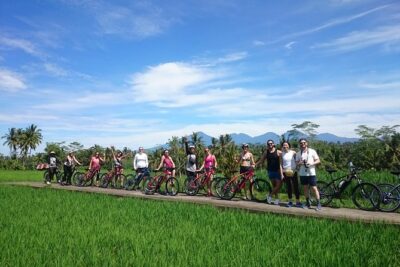
Half-Day Ubud Electric Cycling Tour to Tirta Empul Water Temple
Read our review →
Full Day Cycling tour to Sukhothai Historical Park
Read our review →
Discover Trang An Natural World Heritage, Bich Dong Pagoda, Cycling Day Tour
Read our review →
Full-Day Historical Park Cycling Tour with Lunch
Read our review →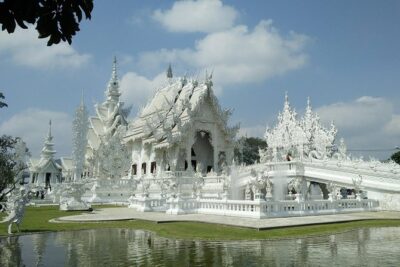
Full Day Cycling Amazing Chiangrai countryside and the White temple
Read our review →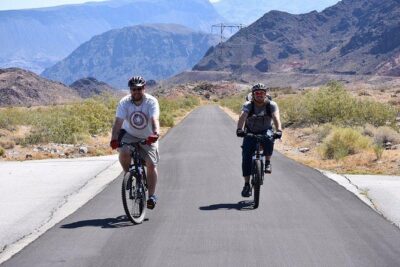
Mountain Bike Historical Tunnel Trail to Hoover Dam from Las Vegas
Read our review →Browse the lists this tour appears in