
Review · SRI LANKA
Anuradhapura Heritage Mountain bike / bicycle Tour
The best part of this Anuradhapura tour is the way it links the grand monuments with quiet forest tracks, rice fields, and ancient irrigation tanks. You are not simply moving from one famous stupa to the next. You are riding through the setting that made this old capital work.
I like the small private format and the slow pace. Guide Saranga can focus on your group, explain Buddhist customs, and add local insight that is easy to miss when visiting alone. I also like that the tour uses proper mountain bikes from brands such as Giant, Trek, and Louis Garneau rather than basic city bicycles.
The main thing to consider is the extra UNESCO entrance charge, listed as $30 per adult and $15 for children under 13. The ride is about 10 kilometers, but it lasts four and a half hours because of the many stops, so you need moderate fitness and comfortable clothing that covers your knees at temple sites.
Key points to know before you ride
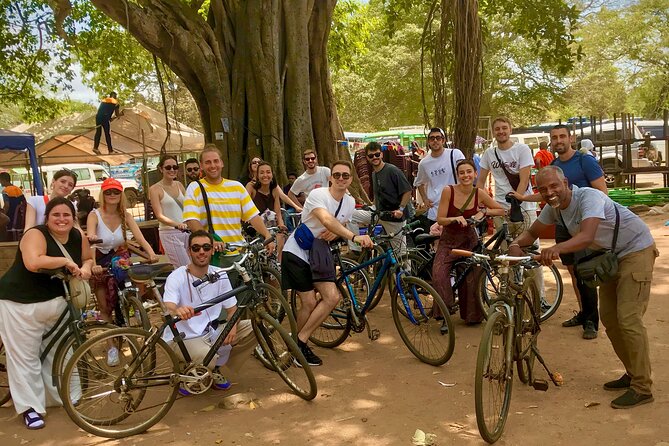
- A 10 km heritage loop: The route covers Anuradhapura’s main monuments while leaving time for explanations, photographs, and quiet stops.
- Saranga leads the ride: You get an English-speaking local guide who can discuss Buddhism, culture, and the ancient city.
- Quality mountain bikes: The bikes may be Giant, Trek, or Louis Garneau models, subject to availability.
- A private experience: Only your own group takes part, which allows the pace to be adjusted within the tour schedule.
- Local vegetarian food included: A meal prepared by local people at Hela Bojun is part of the experience.
- Plan for temple etiquette: Bring a wraparound cloth if your knees are not covered, and expect to remove shoes where required.
Why cycling suits Anuradhapura
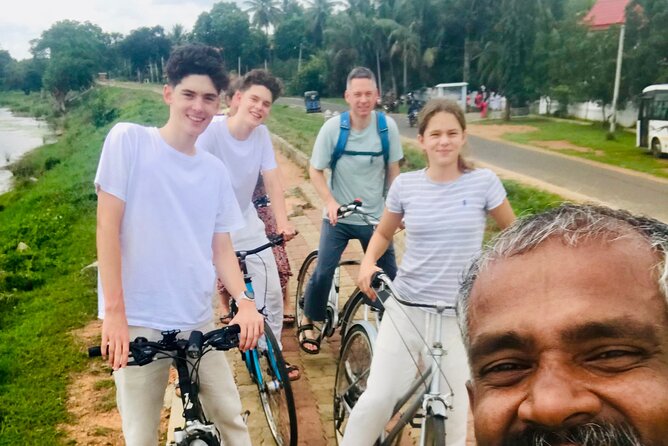
Anuradhapura is spread across a large archaeological area. Its monuments are not packed into one compact square, and the spaces between them matter. Cycling lets you cover more ground than walking without sealing yourself inside a vehicle.
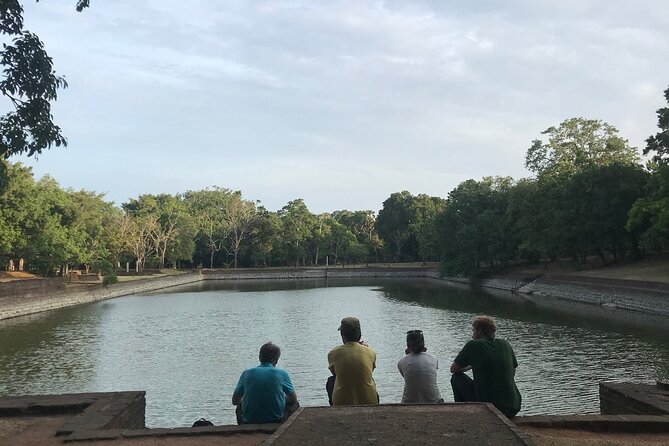
The route also gives you a better feel for the city’s old water system. Basawkkulama Tank and Eth Pokuna are not just pleasant places to stop. They show how seriously the ancient kingdom planned water storage, bathing, farming, and monastery life.
A bicycle is especially useful on a four-and-a-half-hour visit because you can move between the major sights at a steady pace. The tour is not built around speed. It is meant to give you time at each site, with stops ranging from 10 to 30 minutes.
The ride covers a listed loop of about 10 kilometers. That is manageable for anyone with moderate fitness, but you should still expect heat, sun, and repeated mounting and dismounting. An early start or a cooler part of the day may make the ride more comfortable, though the exact start time should be confirmed when booking.
More heritage and temple rides in Sri Lanka:
- Half-Day Ubud Electric Cycling Tour to Tirta Empul Water Temple
★ 5.0 · 315 reviews - Sukhothai: Historical Park & Countryside Cycling Tour
★ 5.0 · 276 reviews - Full Day Cycling tour to Sukhothai Historical Park
★ 5.0 · 163 reviews
Starting with Jetavanaramaya
The first stop is Jetavanaramaya, one of Anuradhapura’s great brick stupas. When King Mahasena built it between 273 and 301, it reached about 122 meters, or 400 feet, making it one of the tallest structures in the world at the time.
You get about 15 minutes here. That is enough to take in the scale and hear the basic story, though it is not a long archaeological visit. The stupa is a good opening stop because it immediately shows how ambitious Anuradhapura’s builders were.
Look beyond the monument itself. The broad grounds help you understand the scale of the ancient religious center. This is one reason the bicycle format works well: the site feels spacious rather than like a single isolated building.
Samadhi Buddha and the Abhayagiri area
The Samadhi Statue gives the tour a quieter pause. The Buddha is shown in meditation, using the Dhyana Mudra, a posture associated with calm and concentration. The scheduled stop is 20 minutes, giving Saranga time to explain both the statue and its place within Buddhist practice.
From there, the route reaches Abhayagiriya Stupa and the wider Abhayagiri monastery complex. This was once a major center connected with several Buddhist traditions, including Mahayana, Theravada, and Vajrayana Buddhism.
You get another 20-minute stop at the stupa, followed by more time at nearby ruins. The scale of the old monastery is difficult to grasp from one monument alone. Cycling between its remains helps you see that this was a large working institution, not simply a shrine.
The quiet routes around this section are one of the strongest parts of the outing. You may ride through wooded areas and open fields between the ruins, with fewer distractions than you would have on a tightly scheduled bus visit.
Ancient bathing pools and the Elephant Pond
Kuttam Pokuna, known as the Twin Baths, is one of the most carefully preserved features in the Abhayagiri area. The two stone-lined pools were used as bathing tanks and show the skill of the ancient builders.
The stop lasts about 20 minutes. Take time to study the edges, steps, and water channels. The site is not large, but it rewards a slower look. Saranga’s explanation can help you notice how practical design and religious life were linked.
Eth Pokuna follows, with another 20-minute stop. The Elephant Pond is a huge ancient reservoir, measuring about 159 meters long and 52 meters wide. Its size can be surprising after the more intimate Twin Baths.
These two stops work well together. Kuttam Pokuna shows precision on a smaller scale, while Eth Pokuna shows the resources needed to support a major monastic center. You can also see why water management is such a central theme in Anuradhapura.
More mountain bike tours in Sri Lanka:
- Waimea Canyon Downhill Bike Ride
★ 5.0 · 650 reviews - Ubud: Downhill Cycling with Volcano, Rice Terraces and Meal
★ 5.0 · 536 reviews - La Paz: Mountain Bike Down the World’s Most Dangerous Road
★ 4.9 · 386 reviews - Bali Downhill Cultural Cycling Tour
★ 5.0 · 224 reviews
Reading the Moonstone
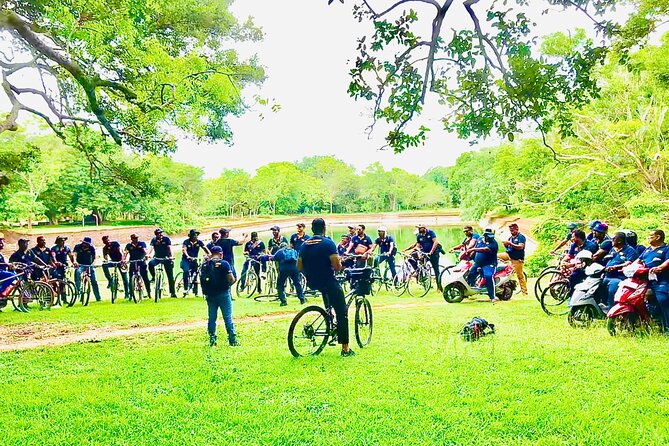
The Sandakada Pahana, or Moonstone, is a carved semicircular stone placed at the base of steps and entrances. It may look like a small detail beside the larger ruins, but it is one of the best places to slow down and look closely.
You have about 25 minutes here. Use it to study the carving rather than treating it as a quick photo stop. The shape and decoration form part of the architectural language of ancient Sri Lanka, especially at important entrances.
This is also the kind of stop where a guide adds real value. Without explanation, a visitor could easily walk past the stone while focusing on a larger building. Saranga’s interest in Buddhism and local culture is useful here because the meaning of a small feature can be as important as the size of a stupa.
Basawkkulama Tank and monastery life
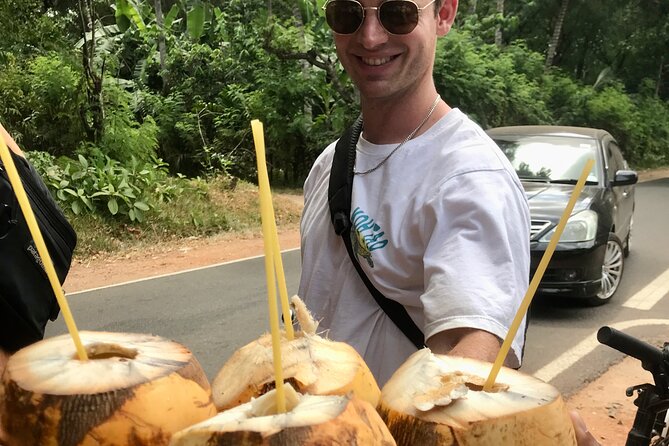
Basawkkulama Tank brings the route back to water and agriculture. Sri Lanka developed some of the ancient world’s most complex irrigation systems, with early works dating to around 430 BC during the reign of King Pandukabhaya.
The stop is scheduled for 20 minutes and is listed as free. The tank gives you a useful break from enclosed ruins and helps place Anuradhapura in its wider setting. The city needed reliable water not only for crops, but also for households, monasteries, bathing, and ceremonies.
At the Main Refectory of Abhayagiri Monastery, you get about 10 minutes. The short stop reflects the fact that the structure is best understood as part of a larger complex. The Chinese monk Fa-Hien wrote in the fifth century that as many as 5,000 monks lived at Abhayagiri, so the refectory’s purpose becomes easier to picture.
This is a good example of why the tour is more than a list of famous monuments. You are also seeing the systems that supported daily monastic life: food, water, bathing, farming, and organized religious practice.
Ruwanweliseya and Sri Maha Bodhi
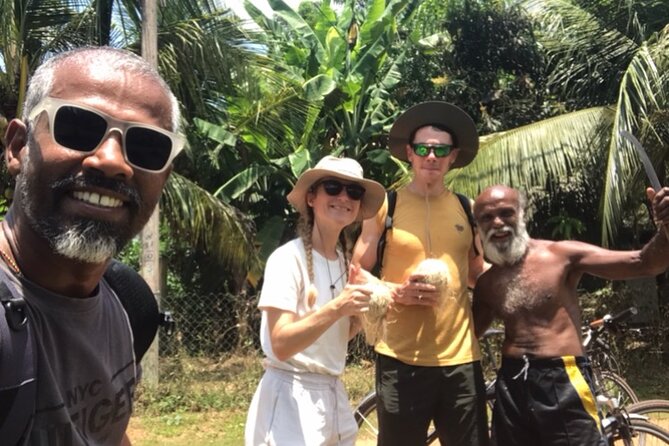
Ruwanweliseya is one of the tour’s major stops, with about 30 minutes set aside. King Dutugamunu began the stupa in the second century BC, and it was completed by his younger brother.
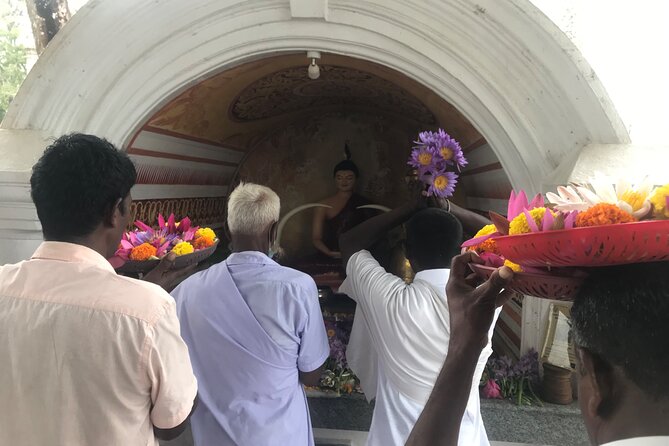
The site remains important to Buddhist worship, so this is not simply an archaeological stop. You may see people praying or taking part in ceremonies, depending on the time of day. Dress respectfully, keep your voice low, and follow local instructions about footwear and temple access.
The final scheduled stop is Sri Maha Bodhi, also with about 30 minutes. This sacred fig tree is regarded as the closest living link to Gautama Buddha. Its religious importance makes it different from the large brick stupas earlier in the route.
The pace here matters. You may find that the visit feels less like sightseeing and more like entering an active place of worship. The tour information specifically asks you to bring a cloth to cover your knees if needed. That small preparation can prevent an awkward pause at the entrance.
Some rides may also line up with ceremonies near sunset, according to the stated tour experience. This is not something to treat as guaranteed, since timing and religious activity can change, but it is a reason to ask about the day’s schedule when arranging your ride.
What Saranga adds to the experience
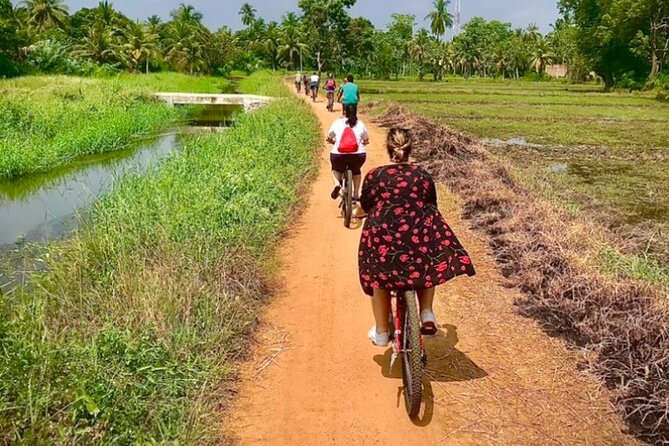
Saranga is an English-speaking guide from the Anuradhapura area. His role is not limited to leading the bicycles between stops. The tour places clear emphasis on local culture, Buddhism, and the meaning behind the sites.
That matters most at places such as the Samadhi Statue, Moonstone, Ruwanweliseya, and Sri Maha Bodhi. A guide can explain why people still use these sites and help you behave properly around active religious spaces.
The personal format also gives you room to ask questions. If you are curious about Buddhist practice, irrigation, local traditions, or the city’s old monasteries, this is a better setup than a large coach group with a fixed script.
The strongest experiences described for this ride combine three elements: the historical explanation, peaceful routes through rice fields and forest, and the local food stop. One especially useful point is that the ride is not rushed. That helps if you prefer to stop, look, and listen rather than collect photographs from a moving schedule.
Bikes, food, and physical effort
The operator provides mountain bicycles from recognized brands including Giant, Trek, and Louis Garneau. The exact bike depends on availability, but the description points to a more serious bicycle setup than a casual rental.
You should still check the bike fit before setting off. Ask for help with the saddle and make sure the brakes and gears feel comfortable. The tour includes bottled water, but you should dress for outdoor exercise and bring any extra water or sun protection you personally need.
A local vegetarian meal prepared by people at Hela Bojun is included. This adds a welcome cultural element to the ride, rather than treating food as an afterthought. If you have dietary restrictions, ask in advance because the available information only identifies the meal as vegetarian.
The experience is not aimed at complete beginners who are uncomfortable on a bicycle. You need moderate physical fitness, and you should be ready for several hours outside. The route itself is only about 10 kilometers, but heat and repeated stops can make the day feel longer than the distance suggests.
Price, private format, and extra costs
At $25 per person, the tour offers a strong amount of included value. You get the bicycle, guide, bottled water, parking fees, and a local vegetarian meal. A private format is also included, so your group is not mixed with a larger departure.
The important extra cost is the UNESCO entrance fee. It is listed separately at $30 per person, with a $15 rate for children under 13. Once that fee is added, the total price is notably higher than the advertised tour rate, so include it in your budget before booking.
Even with the entrance charge, the tour can make financial sense if you want the main heritage area explained in one organized visit. Doing the same circuit alone may cost less in guiding fees, but you would need to arrange a bicycle, work out the route, interpret the monuments, and organize your own meal.
The private setup is especially useful for couples, families with older children, or small groups with shared interests. It may be less attractive if you want a cheap, independent bicycle rental and prefer to set your own stops.
Meeting point and practical preparation
The meeting point is Rides Hubwela Mada Gedara, Garage Waththa, near the old car park, at No. 116/1 Watawandana Road in Anuradhapura. The ride returns to this same point, which makes planning easier if you are staying nearby.
Confirmation is provided at booking, and the meeting point is near public transportation. Since the tour depends on good weather, poor conditions may lead to a different date or a full refund.
Free cancellation is available if you cancel at least 24 hours before the start time. Cancellations or changes made less than 24 hours ahead are not accepted for a refund, so watch the local cut-off time.
Bring clothing that covers your knees, or pack a wraparound cloth for temple visits. Comfortable cycling clothes, sun protection, and shoes suitable for both riding and walking around monuments will make the day easier.
Should you book the Anuradhapura bicycle tour?
I would choose this ride if you want context as well as monuments. It is a good fit for anyone who likes active sightseeing, Buddhist culture, old engineering, and small local meals. Saranga’s local perspective and the private format add value, especially if you want to ask questions rather than follow a fixed group script.
I would think twice if you dislike heat, cycling, or long outdoor visits. The $30 UNESCO fee is also a serious addition to the advertised $25 price, and the ride is not a quick two-hour excursion.
For most reasonably fit visitors who want to see Anuradhapura at a human pace, this is a well-planned half-day. You get the major stupas, sacred sites, monastery remains, bathing pools, and irrigation works, with enough time to notice the quieter parts between them. Ask about the day’s timing if sunset ceremonies matter to you, and confirm the entrance fee before you commit.
FAQ
How long does the Anuradhapura bicycle tour last?
The tour lasts approximately 4 hours and 30 minutes.
How far do you cycle?
The route is described as a 10 kilometer loop through the Anuradhapura heritage area.
Is the tour private?
Yes. This is a private activity, and only your own group participates.
Who guides the tour?
The guide is Saranga, an English-speaking guide from the Anuradhapura area.
Are bicycles provided?
Yes. Mountain bicycles are provided for use during the tour. The listed brands include Giant, Trek, and Louis Garneau.
Is food included?
Yes. A local vegetarian meal prepared by local people at Hela Bojun is included, along with bottled water.
Is the UNESCO entrance fee included?
No. The UNESCO entrance fee is listed separately at $30 per person. Children under 13 are listed at $15.
What happens if the weather is poor?
If the experience is canceled because of poor weather, you will be offered another date or a full refund.
More Heritage Tours in Sri Lanka
- Berlin Wall History Small Group Cycling Tour
★ 4.9 · 152 reviews - Discover Trang An Natural World Heritage, Bich Dong Pagoda, Cycling Day Tour
★ 5.0 · 82 reviews - Sukhothai: Full-Day Historical Park Cycling Tour with Lunch
★ 4.9 · 55 reviews - Mountain Bike Historical Tunnel Trail to Hoover Dam from Las Vegas
★ 5.0 · 46 reviews
Just added around Sri Lanka
- Sigiriya Cycle Tour: Explore Village Life in Sigiriya & Enjoy a Village Lunch★ 5.0 · 3 reviews
- Adventure Cycling from Galle★ 5.0 · 2 reviews
- Discover Ella by Bicycle from Ella★ 4.5 · 5 reviews
- Ella Cycling Experience in Ella★ 4.5 · 6 reviews
- Ella Cycling Tour★ 4.0 · 8 reviews
- Luxury Night Cycle Tour of Colombo★ 5.0 · 5 reviews
- City Highlights Cycle Tour of Colombo★ 4.0 · 2 reviews
- Streetfood Cycling Tour from Colombo★ 5.0 · 2 reviews
Heritage & Temple Bike Tours, compared.
Half-Day Ubud Electric Cycling Tour to Tirta Empul Water Temple
Read our review →
Full Day Cycling tour to Sukhothai Historical Park
Read our review →
Discover Trang An Natural World Heritage, Bich Dong Pagoda, Cycling Day Tour
Read our review →
Full-Day Historical Park Cycling Tour with Lunch
Read our review →
Full Day Cycling Amazing Chiangrai countryside and the White temple
Read our review →Browse the lists this tour appears in