
Review · YOGYAKARTA
Yogyakarta: Countryside Cycling and Cooking Class Experience
Yogyakarta’s countryside is best understood at street level, and this day gets you there in two useful ways: by bicycle and by kitchen table. You begin at a traditional market, shop for ingredients, then cook a full Indonesian meal in a family home before riding through villages and rice fields.
I especially like the market stop, where you learn about herbs, spices, and local greetings, and the warm cooking lesson led by Desy. The ride offers quiet lanes, friendly encounters, and a look at daily village life. One caution: the cycling guide may ride ahead, so hearing every explanation can be difficult.
Key points to know before booking
- A market visit starts the day: Buy and learn about the ingredients used in the cooking class.
- Desy leads a hands-on kitchen session: Prepare several Indonesian dishes, with some sessions making as many as six.
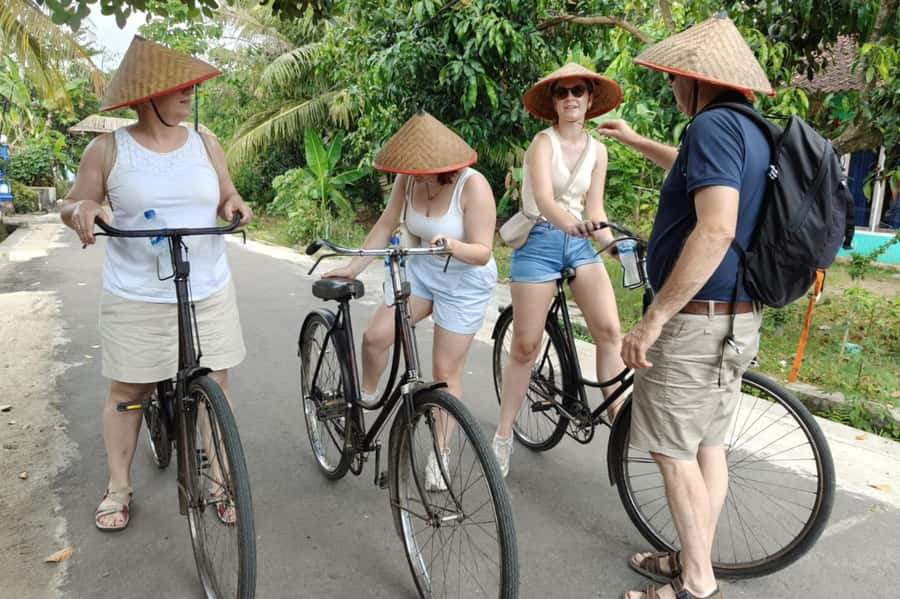
- The cycling route avoids city traffic: Ride old bicycles through villages, rice fields, and local stops.
- You may see food production up close: Stops can include a tempe factory and traditional cracker making.
- The group is limited to eight people: That keeps the cooking class personal and makes village cycling easier to manage.
- Hotel transfers and food are included when the selected option provides pickup: The day lasts about 8 to 10 hours and costs $41 per person.
Leaving Yogyakarta for the village kitchen
The day begins with pickup from your accommodation in Yogyakarta, if you choose the transfer option. A friendly driver takes you away from the city, with the first main stop usually a traditional market. This simple change of setting matters. You are not just shown a finished plate later in the day. You see the ingredients before they become lunch.
Maxi has handled pickups and helped set a welcoming tone for the day. At the market, Desy has guided the food shopping and explained commonly used spices. Some guests have also learned a few Javanese greetings here, which gives you an easy way to greet people during the cycling portion.
The market visit is not a long sightseeing stop with a scripted list of facts. It is practical. You learn what vegetables, rice, herbs, and spices are used, and the organization buys what is needed for the class. If you enjoy food but do not know much about Indonesian cooking, this is a useful introduction before you pick up a knife.
The pace can vary based on the group and the cooking plan. The full experience lasts 8 to 10 hours, so expect a proper day out rather than a quick class attached to a short bike ride.
More Countryside Cycling Tours in Indonesia
- Menoreh Village Cycling
★ 5.0 · 611 reviews - Bali Countryside Cycling Tours
★ 5.0 · 246 reviews - Bali Countryside Cycling Adventure
★ 4.5 · 112 reviews
Cooking six Indonesian dishes in a family home
The cooking class takes place in a private home, using a family kitchen. That setting is a large part of the appeal. You are not standing in a polished demonstration room watching someone else cook. You handle the ingredients, follow the steps, and work through the dishes yourself.
Desy is the main cooking instructor named in the experience, and the class includes help from a cooking assistant. The instruction is described as patient and clear, making this a good choice even if you rarely cook. You can expect to prepare food from scratch, using the market ingredients and learning how herbs, spices, rice, and vegetables fit together.
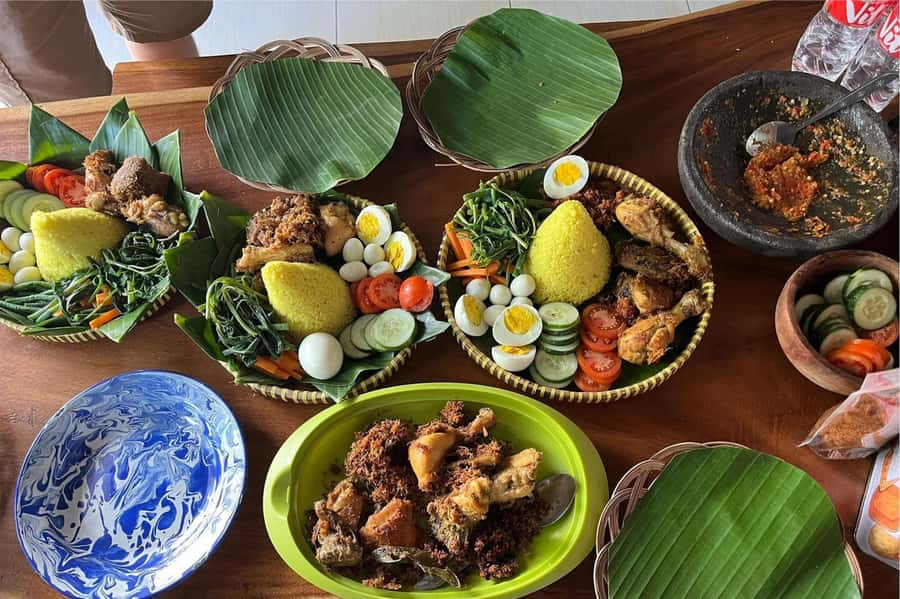
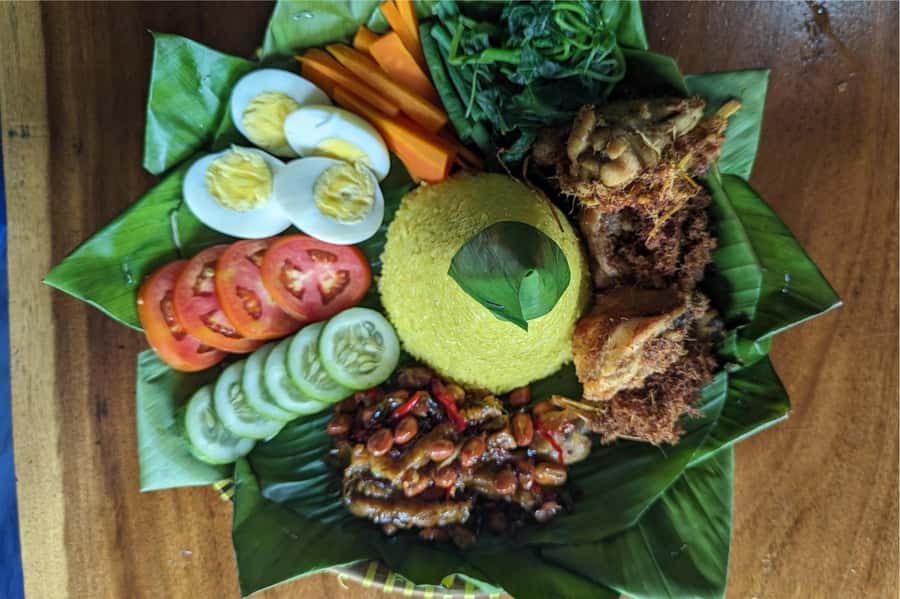
Some sessions have involved making a three-course menu, while others have included six different Indonesian dishes. The exact menu is not specified in advance, so you should book this for the hands-on learning rather than for one particular recipe. You do receive the recipes afterward, which is one of the best practical benefits. The class does not end when you leave Java because you can try the dishes again at home.
Allow three to four hours for cooking and eating. That is a generous amount of time, but it gives the class room to breathe. You can ask questions, work through the techniques, and eat each dish while it is still hot and fresh.
The meal is shared together after the cooking is finished. The tone is informal and communal, more like sitting down with a household than being served at a restaurant. I like this part because it connects the cooking lesson to the people hosting it. You do not simply taste local food. You help prepare it and then sit down to enjoy the result.
The main drawback is also clear: this is not the right choice if you want a short, passive food demonstration. Three or four hours in a kitchen requires patience and participation. The good news is that even people who do not usually enjoy cooking have found the instructions approachable.
Riding old bicycles through quiet Yogyakarta villages
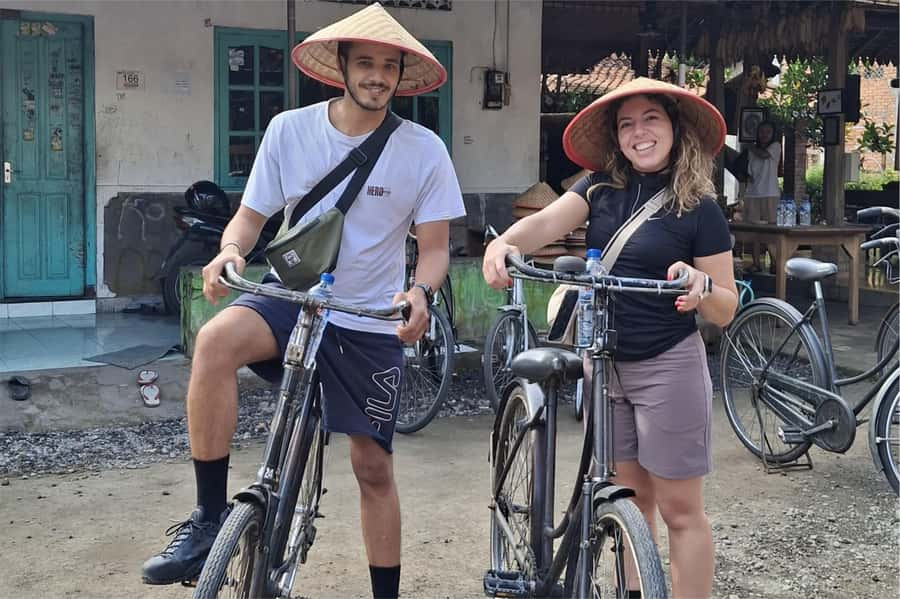
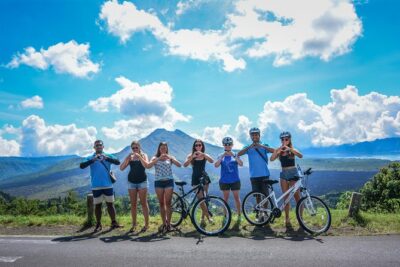
After lunch, you meet Sari for the cycling portion. The bikes are described as old and traditional, which adds character but may not provide the polished feel of a modern cycling tour. The route leads through villages, rice fields, and quieter lanes rather than the traffic-heavy streets of Yogyakarta.
If Indonesian road traffic makes you nervous, this section should feel more comfortable. The village route is described as calm and safe, with little rushed traffic. You get a closer look at houses, fields, and everyday activity than you would from a vehicle window.
The ride is not only about exercise. It includes stops at local places, chances to speak with residents, and opportunities to see how rice is grown. One stop has included helping with rice planting, giving you a direct, muddy connection to farm work. A fresh coconut has also been served at the end of the ride, a welcome finish in the heat.
Children and adults may wave as you pass, and people may want to take photographs with you. That can be a sweet part of the day, though it also means the ride is social rather than purely scenic. You are likely to stop often instead of covering a long distance at speed.
Here is the key issue to watch: one participant found that the guide rode about 400 meters ahead while speaking, making the explanations hard to hear. This is worth keeping in mind if cultural commentary is your main reason for booking. The route itself received strong praise, but guide positioning may affect how much you understand on the move.
Seeing tempe and crackers made locally
The cycling route can include more than fields and village lanes. A stop at a tempe factory has offered a look at one of Indonesia’s familiar foods, while another household has demonstrated how traditional crackers are made.
These visits give the ride more substance. Instead of treating the countryside as scenery, the day shows you some of the work and food production that shape local life. Tempe is especially useful to see in context because it is easy to overlook when it arrives neatly packaged on a restaurant plate.
The cracker-making stop takes place in a private household, according to the experience details. You should think of these visits as informal glimpses rather than formal museum displays. The benefit is direct contact with working people and traditional methods. The tradeoff is that the exact stops may depend on the route and the day.
Same roads, a different day in the saddle:
- Electric Cycling Tour of Ubud with Free Hotel Transfer and Lunch
★ 5.0 · 1,397 reviews - Ubud: Downhill Cycling with Volcano, Rice Terraces and Meal
★ 5.0 · 536 reviews - Half-Day Ubud Electric Cycling Tour to Tirta Empul Water Temple
★ 5.0 · 315 reviews - Kintamani Cultural and Nature Cycling Tour ( Manual Bike )
★ 5.0 · 257 reviews
What $41 buys you for a full day
At $41 per person, this is strong value if you want several activities in one outing. The price covers the cycling tour, the cooking class, all cooking ingredients, food and drinks, and hotel pickup and drop-off if you select the transfer option.
The cooking class alone occupies three to four hours and includes the meal you prepare. Then you add a market visit, a village bicycle ride, local stops, a guide, and transport. You are paying for a full day of access and instruction rather than a short activity with extra costs added along the way.
The value is strongest for people who would otherwise book separate food and countryside experiences. You get two different views of Yogyakarta: one through ingredients and family cooking, the other through village roads and rice fields. The class also leaves you with recipes, which gives the price a lasting benefit.
The price does not mean every part will be equally polished. The older bicycles may not suit someone looking for a high-end cycling setup, and commentary during the ride may be difficult to hear if the guide moves too far ahead. Still, the cooking, meal, transport, and length of the day make the cost reasonable.
Small groups, named guides, and the human side of the day
The group is limited to eight participants. That number matters in a home kitchen. You have a better chance of handling the ingredients, asking questions, and getting help than you would in a large class.
The named team includes Maxi, Desy, and Sari, with Widi also connected to the experience. Maxi has been involved with hotel pickup and the market start, Desy with the cooking class, and Sari with the bicycle tour. This division gives each part of the day its own host rather than asking one person to lead every activity.
The human contact is the heart of the experience. You interact with the family hosting the cooking session, greet people in the villages, and may meet workers involved in tempe or cracker production. The day gives you a chance to ask simple questions and observe ordinary routines without reducing the countryside to a photo stop.
That contact should be approached with respect. People may wave or ask for photos, but the experience is still their home and workplace. A friendly greeting and a patient attitude will make the encounters more pleasant for everyone.
Who will enjoy this Yogyakarta experience most
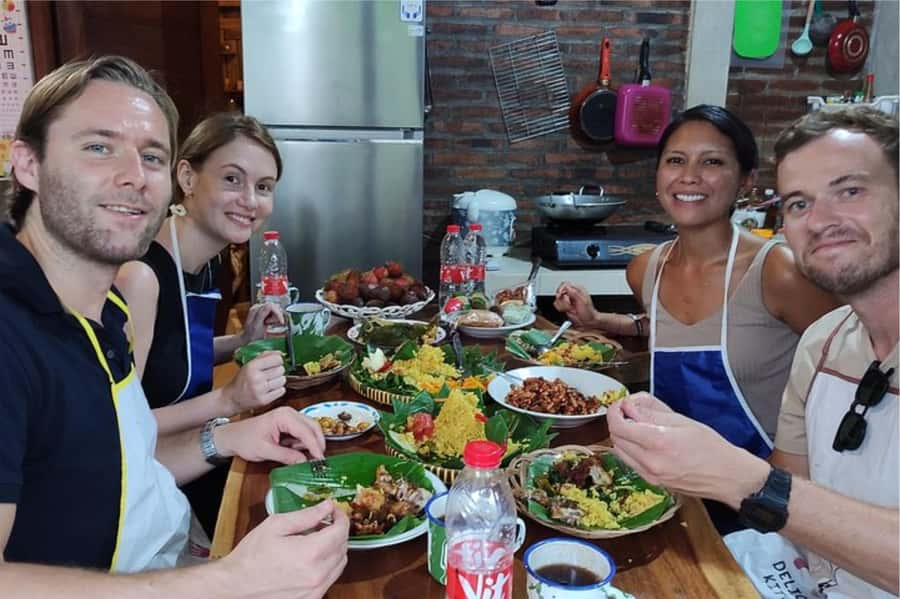
I would choose this day if you want food, countryside, and conversation in one package. It suits couples, small groups of friends, and solo bookers who like joining a limited-size outing. The English-speaking guide makes the class and tour accessible to English speakers.
It is also a good fit for people who want to meet local residents instead of spending the whole day inside the city. The market, family kitchen, village lanes, rice fields, and food-making stops all give you more contact with daily life.
You do not need to be a serious cyclist or an experienced cook. The bike route is described as quiet, and the cooking instruction is designed as a hands-on class. Still, you should be comfortable spending a long day moving between activities and participating actively in the kitchen.
I would hesitate to recommend it if you want a tightly timed sightseeing tour with nonstop commentary. The experience is social and flexible in feel. The cycling commentary may be hard to catch, and the exact food or village stops can vary.
Practical details that affect your day
The tour runs for 8 to 10 hours, so keep your schedule open. Pickup and return are included when you select the hotel transfer option. Food, drinks, cycling, ingredients, and the cooking class are included.
The activity is offered with an English-speaking guide and a small group of no more than eight participants. Starting times depend on availability, so check the schedule before booking.
You can cancel up to 24 hours in advance for a full refund, and the reserve-now, pay-later option lets you hold a place without paying immediately. These terms help if your Yogyakarta plans are still shifting.
Wear clothes that are comfortable for cooking and cycling. The supplied details do not specify a dress code or equipment list, so ask the provider if you need exact guidance before departure. The traditional bikes and countryside route suggest that comfort matters more than speed.
Should you book the countryside cycling and cooking class?
Yes, if you want an active cultural day with real food at its center. The market lesson, family kitchen, recipes, shared meal, quiet village ride, and local food stops create a fuller picture of Yogyakarta than a standard city tour.
Book it with realistic expectations. You are choosing a warm, hands-on outing, not a luxury food school or a precision cycling trip. The strongest part is the cooking class with Desy and the shared meal. The bike route adds a pleasant rural setting, though you may need to ask the guide to slow down or repeat explanations.
At $41, the combination is hard to dismiss. Choose it for local contact, Indonesian cooking, and a relaxed day outside the city. Skip it only if you dislike group activities, long days, or getting your hands dirty in the kitchen.
FAQ
How long does the experience last?
The experience lasts 8 to 10 hours, including transport, the market visit, cooking class, meal, and cycling tour.
What is included in the price?
The experience includes the cycling tour, cooking class, cooking ingredients, food, and drinks. Hotel pickup and drop-off are included if you select the option that provides transfers.
How much does the experience cost?
The listed price is $41 per person.
Is hotel pickup included?
Hotel pickup and drop-off are included if the selected booking option includes transfers.
What language is the tour offered in?
The live tour guide speaks English.
How many people are in the group?
The group is limited to eight participants.
What happens during the cooking class?
You visit a traditional market, learn about local ingredients and spices, prepare Indonesian dishes from scratch, and eat the food together afterward. The class lasts about three to four hours, and recipes are provided for you to take home.
Can I cancel the booking?
You can cancel up to 24 hours in advance for a full refund. You can also reserve now and pay later, which keeps your plans flexible.
More Workshops in Indonesia
- Rural Hoi An Cycling, Cooking Class at Organic Farm
★ 5.0 · 72 reviews - Paella Class, Winery & Bike Ride – Free Hotel Pickup from Sitges
★ 5.0 · 69 reviews - Cai Be Mekong Delta: Cooking Class, Cycling, Craft Villages
★ 4.4 · 36 reviews - Pu Luong 3-Day Adventure: Trekking, Cycling & Local Cooking Class
★ 5.0 · 26 reviews
More Cooking Classes in Indonesia
- Cycling and Cooking Class in Ubud
★ 5.0 · 5 reviews - Cai Be Mekong Delta Tour: Cooking Class, Cycling & Craft Villages
★ 5.0 · 1,881 reviews - HCM: 2-Day Mekong Delta Floating Market with Cooking & Bike Ride
★ 5.0 · 133 reviews - Full-Day Experience in Mekong Cycling and Authentic Home Cooking
★ 5.0 · 89 reviews
Just added around Indonesia
- Yogyakarta: Countryside Village Cycling Tour With Guide★ 5.0 · 16 reviews
- Ubud: Kintamani Downhill Cycling with small group & Private★ 5.0 · 4 reviews
- Bali: Mountain Bike Tour and River Rafting with Lunch★ 5.0 · 3 reviews
- Ubud: Half-Day Tegallalang Electric Cycling Tour★ 4.9 · 24 reviews
- Ubud: Downhill Countryside Cycling From Kintamani★ 4.5 · 4 reviews
- Ubud: Cycling Tour Local Villages, Temple, and Rice Field★ 4.8 · 12 reviews
- Ubud Cycling Tour : All Inclusive Cycling Adventure★ 4.2 · 7 reviews
- Yogyakarta Cycling Tour Around the Villages and Fish Farm★ 5.0 · 16 reviews
Countryside Cycling Tours, compared.
Countryside Bike Tour from Amsterdam: Cheese, Clogs & a Windmill
Read our review →
Mekong Day Trip Explore Village Bicycle CookingClass Group 12 Pax
Read our review →
Cheese Tasting, Windmill & Countryside Bike Tour
Read our review →
Browse the lists this tour appears in