
Review · CYCLING TOURS
4-Hour Morning Cycling City Tour (incl. breakfast)
Taipei reveals itself quickly from a bicycle seat. This four-hour morning ride links markets, temples, government buildings, old trading streets, and the Tamsui River, giving you a useful first look at the city without the stop-and-start pace of a walking tour. You begin with a traditional Taiwanese breakfast, then ride with an English-speaking guide such as Mike, Tony, Priscilla, or Rita, depending on the day.
I especially like the small group of no more than nine and the guides’ storytelling. The route is easy enough for many casual cyclists, and the city’s mostly flat streets keep the effort reasonable. The main drawback is that four hours on a bike still takes stamina, and communication can be harder beside noisy streets. This is also a standard bicycle tour, not an e-bike ride.
Why this morning ride works so well
- Breakfast starts the experience: You try traditional Taiwanese food before sightseeing, with coffee or tea included.
- Eight useful Taipei stops: The route covers temples, markets, old city gates, memorials, government buildings, and the riverfront.
- A strong first-day orientation: You see far more than on foot and finish with a sense of how Taipei’s older districts fit together.
- Local history gives the route meaning: Guides connect Taiwan’s Japanese colonial period, Nationalist rule, religion, trade, and modern civic life.
- Easy-paced cycling: The route is generally flat, with frequent stops and comfortable bikes, though you should be able to ride confidently.
- A compact, personal group: With a maximum of nine people, the guide can watch the group and answer questions.
A breakfast table before Taipei wakes up fully
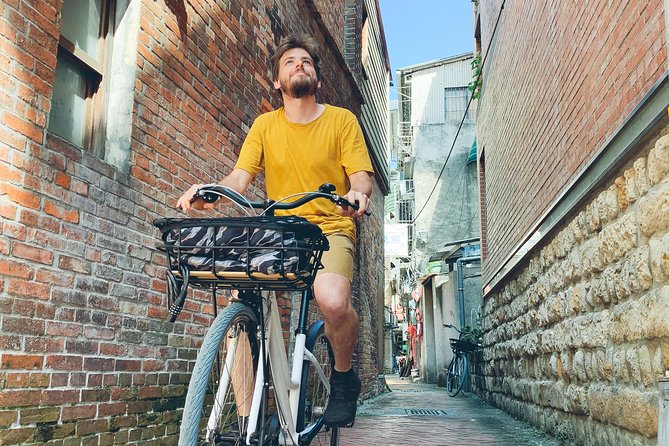
The tour begins at 9:00 a.m. at No. 9, Lane 70, Section 2, Chongqing North Road, in Datong District. That location puts you near one of Taipei’s older commercial areas, where morning markets and traditional food shops help set the tone for the ride.
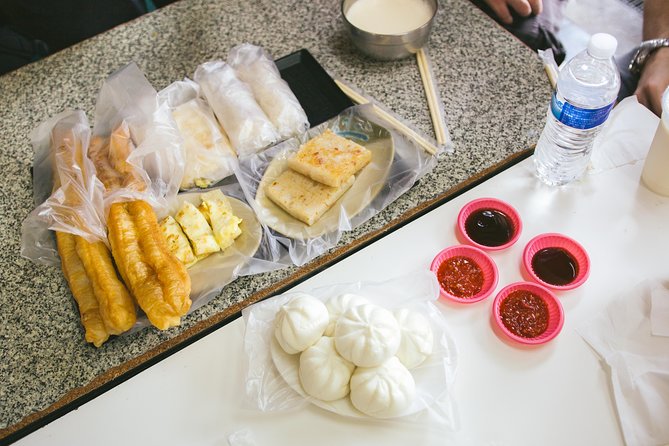
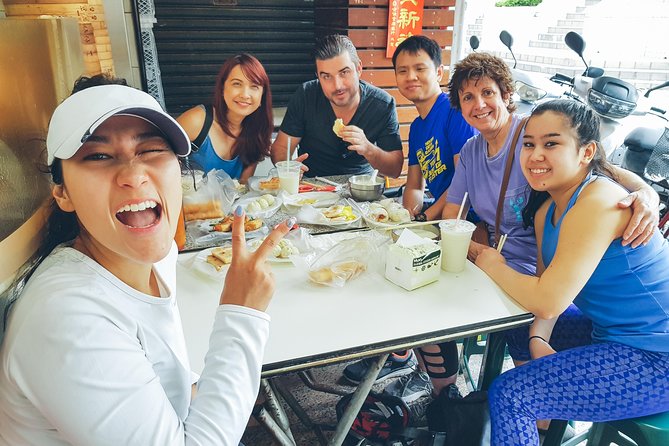
The included breakfast is more than a convenient snack. It gives you an early taste of everyday Taiwanese food before the sightseeing begins. Exact dishes are not specified, so you should expect a traditional local meal rather than a Western cafe breakfast. Coffee or tea is included as well.
I like this opening because it removes one common problem with morning tours: finding food before an early departure. It also gives the guide a natural chance to explain what you are eating and how morning markets work. Several guides, including Mike and Tony, have been praised for mixing food advice with history, so it is worth asking what else to try during your stay.
The meeting point is near public transportation, and the tour returns there after four hours. You will want to arrive with enough time to find the lane and get settled. The start point is not a major named attraction, so checking the address carefully matters.
More city cycling tours in the world:
- Tokyo Top Highlights 3h Guided E-bike Tour
★ 5.0 · 714 reviews - Taipei: 4-Hour Morning City Cycling Tour with Breakfast
★ 4.7 · 275 reviews - Pula Highlights Bike Adventure
★ 5.0 · 254 reviews
Wenchang Temple and Shuanglian Market
The first stop is Wenchang Temple, a Daoist temple dedicated to the deity of culture and literature. It sits within the morning market, which is part of what makes the stop interesting. You are not visiting an isolated monument. You are seeing religion, shopping, and daily routines sharing the same small area.
The stop lasts about 10 minutes. That is enough for a look at the temple and a short explanation, but not enough for a long study of its decoration or rituals. I would treat it as a first glimpse into Taipei’s local religious life rather than a full temple visit.
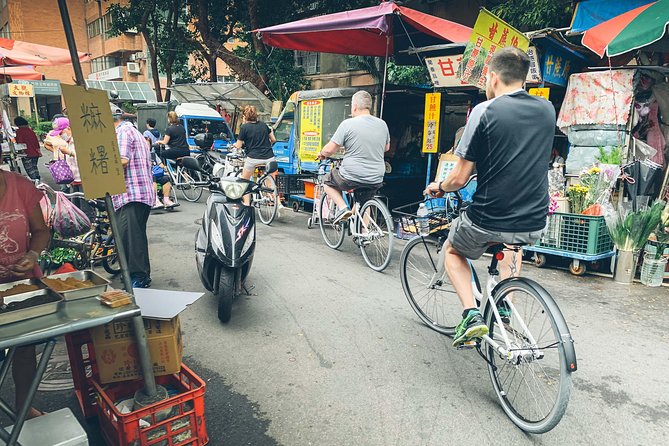
Next comes Shuanglian Market, another 10-minute stop. This is a traditional street market where local people buy produce, meat, clothing, and household needs. The value here is context. Taipei’s older markets are not staged attractions. They are working places, and the guide helps you read what you are seeing.
The short time limit keeps the ride moving, but it also means you cannot browse at length or make a serious food stop. If you want to return, note the area during the tour. A morning market is often best appreciated slowly, and this visit is mainly an introduction.
An old city gate and Chiang Kai-shek Memorial Hall
The route then reaches the reconstructed East Gate of the wall that once enclosed the capital city. It is a small but useful stop because it helps you picture Taipei as a walled settlement rather than the large modern city you see today.
The tour continues to Chiang Kai-shek Memorial Hall, where you have about 15 minutes. This is one of Taipei’s grandest civic spaces, with broad open grounds and monumental architecture. The visit also gives you a chance to watch the changing of the guards, an event that many people find memorable.
The guide can help place the memorial in Taiwan’s complicated political past. Chiang Kai-shek was the former leader of Taiwan and of the Chinese Nationalist Party, so this is not simply a photogenic building. It raises questions about authority, memory, and how Taiwan presents its modern history.
Fifteen minutes is enough to see the ceremony and get a basic explanation, but you will not have time for a full visit to every part of the hall. That is an important tradeoff. This tour samples major sites rather than replacing a museum day.
The Presidential Office and Taiwan’s changing political story
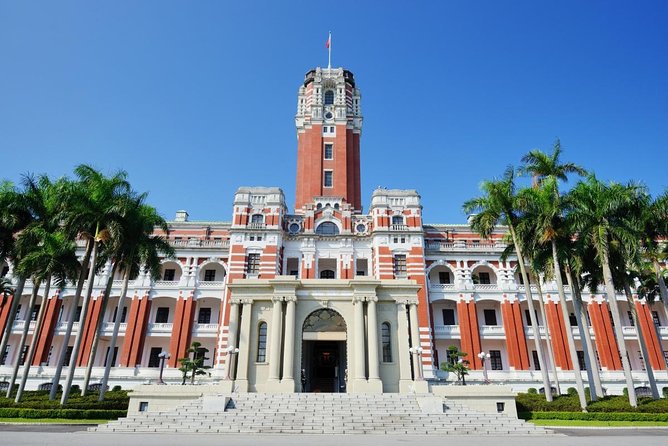
The Presidential Office Building was built during Japanese colonial rule and now serves as the office of Taiwan’s leader. It is a strong example of how one building can carry several layers of history.
The stop lasts about 10 minutes. You will mainly view the building from outside and hear the guide explain its role. The value comes from placing it beside the memorial hall. In a short distance, the route moves from Japanese colonial architecture to Nationalist-era political memory and present-day government.
This is where guides such as Mike and Tony add real value through storytelling. The route is not just a list of buildings. It connects the buildings to Taiwan’s changing governments and identity. If history interests you, ask questions here. The cycling time between stops is useful for linking the pieces together, although street noise may make it difficult to catch every word while moving.
A few more rides around the world worth a look
- Hiroshima in a Nutshell: Morning Bike Adventure
★ 5.0 · 524 reviews - Private-group Morning Cycling Tour in Hida-Furukawa
★ 5.0 · 105 reviews - George Town: Balik Pulau Countryside Morning Cycling Tour
★ 4.9 · 95 reviews - Angkor Sunrise Expedition Cycling Through Serene Backroads
★ 5.0 · 70 reviews
Longshan Temple, Taipei’s most famous place of worship
Longshan Temple receives another 10-minute visit. It is Taipei’s best-known temple and one of the most visually engaging stops on the route. The temple’s appeal comes not only from its decoration, but also from the sense that it remains part of ordinary city life.
Your guide can explain how religious practice fits into Taipei’s neighborhoods and why the temple matters to local people. The brief stop lets you see the main setting and absorb the atmosphere without turning the tour into a long temple study.
There is a practical limit here. Ten minutes passes quickly, especially if the temple is busy or you want detailed photographs. I would note anything you want to examine later and return independently if you have extra time. The cycling tour gives you orientation and context, while a separate visit lets you linger.
Dadaocheng Pier and the Tamsui River view
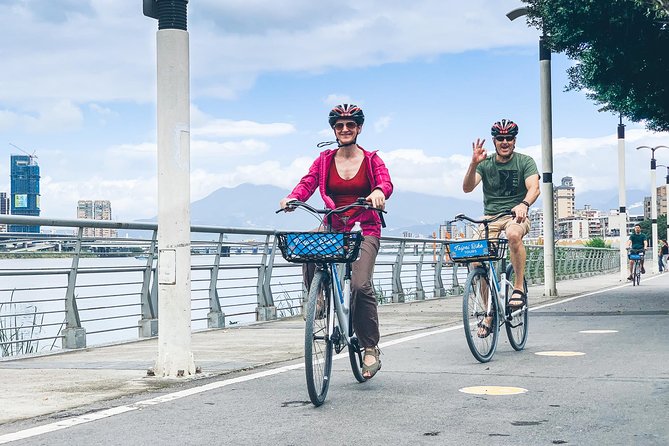
Dadaocheng Pier Plaza offers a change of pace. This area once served as Taipei’s main shipping port and now functions mainly as a ferry port. From the riverside, you can look across toward New Taipei City and see the Yangming mountain range in the distance.
The 10-minute stop gives the tour some breathing room after several dense urban sights. It also explains why Dadaocheng became important. River transport helped move goods into and out of Taipei, and the next stop, Dihua Street, makes that trading past easier to understand.
The view depends on weather and air clarity. The tour includes rain jackets, which is useful in Taipei’s changeable conditions, but you should not expect a long scenic pause. This is a short riverside viewpoint within a moving city tour, not a dedicated nature outing.
Dihua Street and the old trading city
Dihua Street is one of the route’s strongest stops. This 19th-century riverside trading district dealt in herbs, medicines, dried goods, fabrics, tea, and other products. Its importance becomes clearer after seeing the former port.
I like the way these two stops work together. At the pier, you learn how goods reached Taipei. On Dihua Street, you see where trade took place. The route turns urban history into something physical and easy to follow.
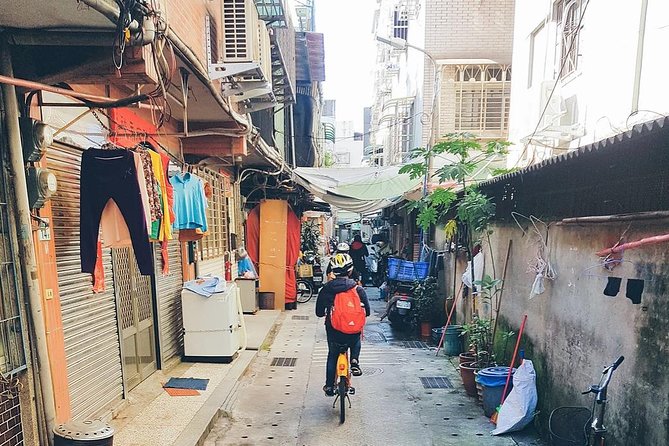
You have about 10 minutes here, so do not plan on a relaxed shopping session. Instead, use the stop to notice the older shopfronts and the way traditional businesses share space with newer uses. The guide can point out what makes the street different from a standard modern shopping area.
If you enjoy food, tea, or old commercial districts, this is a good place to ask for recommendations. Guides have offered useful suggestions for later meals and stops, which can make the tour more valuable than its four-hour length suggests.
Taipei Xia Hai City God Temple and a tea break
The final major stop is Taipei Xia Hai City God Temple, a festive place of worship often visited by people hoping to improve their love life. Free tea is generously offered here, making it a pleasant final pause before returning to the meeting point.
The temple gives you another look at how religion fits into daily concerns. Longshan Temple offers one kind of temple experience, while Xia Hai City God Temple is especially linked with relationships and personal wishes. The contrast is useful, even though each visit is short.
The free tea also helps break up the morning physically. You have been riding, walking, listening, and stopping for photographs. A simple tea pause can make the last part of the route feel easier.
By the end, you have seen a wide slice of old Taipei: markets, religious sites, civic buildings, a former city gate, a trading street, and a river port. You return to the original meeting point rather than being dropped at a different neighborhood.
What the cycling feels like in real terms
The tour uses standard bicycles. E-bikes are not included, and a child seat is not available. You need to be at least 150 centimeters tall, and children under 12 cannot take part.
The route is described by riders as relatively easy, with flat surfaces, regular stops, and comfortable bikes. One person covered more than seven miles, so this is not just a short spin between two nearby attractions. Another found four hours a little tiring but still considered it good exercise.
That is the right way to judge the physical side. You do not need an advanced fitness level, but you should be comfortable riding a bicycle for several hours with breaks. If you have not ridden in years, the pace may still be manageable, though you should be honest about your balance and confidence.
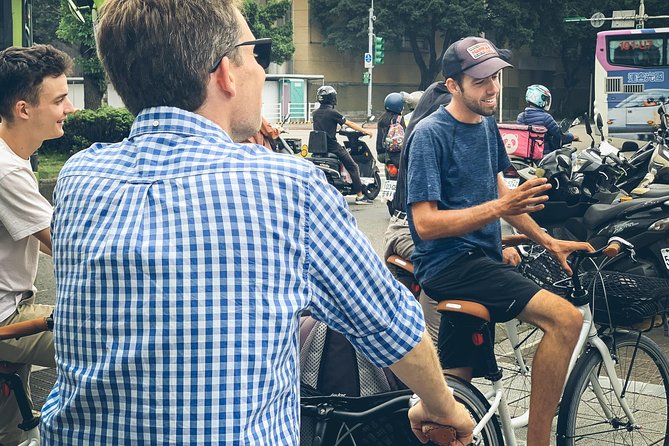
Water, a helmet, and a rain jacket are provided. The guides also pay attention to keeping the group together and helping riders through crowded sections. In noisy streets, it may be harder to hear explanations while moving. Pay close attention when the guide gathers the group, and ask for anything you missed.
The guides and the value of local explanation
The strongest part of this experience is the guide-led interpretation. Mike is especially associated with clear storytelling about Taiwan’s history, while Tony has been praised for linking past events with present-day life and guiding carefully through crowded areas. Priscilla, Rita, Edwin, and Edward have also led versions of the tour.
You should not book this expecting a scripted ride with little conversation. The format works best when you ask questions. Guides can explain the difference between sites, suggest food, take photographs in some cases, and adjust their explanations to the group’s interests.
The group limit of nine matters here. A larger bike convoy would make conversation and street safety harder. With a small group, the guide can notice if someone is falling behind and give more direct answers.
The one communication weakness is built into the setting. Taipei streets can be loud, and there are times when a guide speaking beside a road is difficult to hear. The tour works best when you listen closely during each stop rather than relying on explanations while pedaling.
Is $83 a fair price?
At $83 per person, this is not the cheapest way to see Taipei. You are paying for four hours, a bicycle, helmet, water, rain jacket, breakfast, coffee or tea, an English-speaking guide, and a small group capped at nine.
The price makes more sense if you value the guide’s historical context and want to cover a lot of ground in one morning. A self-guided ride might cost less, but it would not provide the same route planning, food introduction, traffic guidance, or explanation of Taiwan’s complicated past.
The tour is also useful on a first day or during a long layover. You finish with a mental map of several important districts and a list of places worth revisiting. If you prefer spending an entire morning inside one museum or moving slowly through one temple, the price may feel less attractive.
The experience has a 4.9 rating from 407 ratings, with 98 percent recommending it. Those numbers fit the tour’s strengths: breakfast, friendly guides, historical storytelling, manageable cycling, and broad coverage. The two serious complaints involve reliability when a guide was unavailable or failed to appear, so it is sensible to check your messages and meeting details before departure.
Free cancellation is available up to 24 hours before the start time. Poor weather or failure to reach the minimum group size can lead to a new date or a full refund. Last-minute changes are not accepted, so do not wait until the morning of the tour to alter plans.
Who should book this Taipei bike tour?
I would choose it for a first morning in Taipei, especially if you want practical orientation rather than a single major attraction. It suits solo visitors, couples, families with children 12 and older who meet the height requirement, and small groups that enjoy a social ride.
It is also a good fit for a long layover, provided your schedule allows enough time to reach the meeting point and complete the four-hour activity. You see major sites, but you do not spend long inside any one of them.
I would skip it if you dislike bicycles, need an e-bike, want a slow photography tour, or are uncomfortable riding in city traffic. People with limited cycling experience may manage the pace, but four hours is still a real commitment.
Final verdict: book it for orientation and stories
I recommend this tour if you want to understand Taipei through its streets rather than simply tick off monuments. The breakfast, flat route, small group, and wide range of stops make it a strong introduction, while the guides add the historical and social context that a rental bike cannot provide.
Book it early in your stay, then use the rest of your trip to return to the places that caught your attention. Choose another activity if you need an effortless ride, an e-bike, or extended time at each sight. For most confident cyclists, this is a practical and enjoyable way to get your bearings fast.
FAQ
What time does the cycling tour start?
The tour starts at 9:00 a.m. and lasts approximately four hours.
Where does the tour begin and end?
It begins at No. 9, Lane 70, Section 2, Chongqing North Road, Datong District, Taipei City. The tour ends back at the same meeting point.
What is included in the price?
The price includes a traditional Taiwanese breakfast, bicycle use, water, a rain jacket, helmet, English-speaking guide, and coffee or tea.
Are e-bikes or child seats available?
E-bikes and child seats are not included.
Is there an age or height requirement?
Children under 12 cannot participate, and the minimum height is 150 centimeters. Most people who can ride a bicycle can take part.
What happens if the weather is poor?
The experience requires good weather. If it is canceled because of poor weather, you will be offered another date or a full refund.
Just added around the world
- Yogyakarta: Countryside Cycling and Cooking Class Experience★ 4.9 · 8 reviews
- Zagreb: 2.5-Hour Cycle Back to Socialism Tour★ 4.6 · 25 reviews
- Zell: Bike and boat tour with wine tasting and picnic★ 4.7 · 3 reviews
- Yogyakarta: Countryside Village Cycling Tour With Guide★ 5.0 · 16 reviews
- Amsterdam: Zaanse Schans E-Bike Tour with Windmills & Cheese★ 4.5 · 12 reviews
- Yamaha Fat Bike Adventure: Valencia’s Past and Future★ 4.5 · 2 reviews
- World’s Most Dangerous Road “Private” Mountain Biking Trip★ 5.0 · 7 reviews
- Yangshuo: Highlights Karst landscapes & Village Cycling★ 5.0 · 4 reviews
City Cycling Tours, compared.
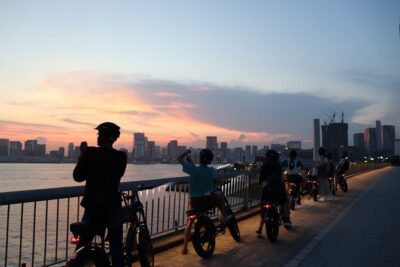
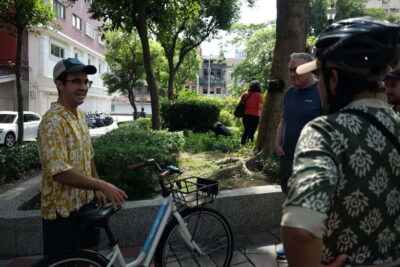
4-Hour Morning City Cycling Tour with Breakfast
Read our review →
Guided City Cycling Tour – Culture, Colors & Charm
Read our review →
Barcelona Highlights Bike Tour: Cycle along the beach!
Read our review →
Bike or E-Bike Tour Tirana: Highlights & Grand Park Guided Cycle
Read our review →Browse the lists this tour appears in