
Review · GREECE
Mountain Biking Red Water
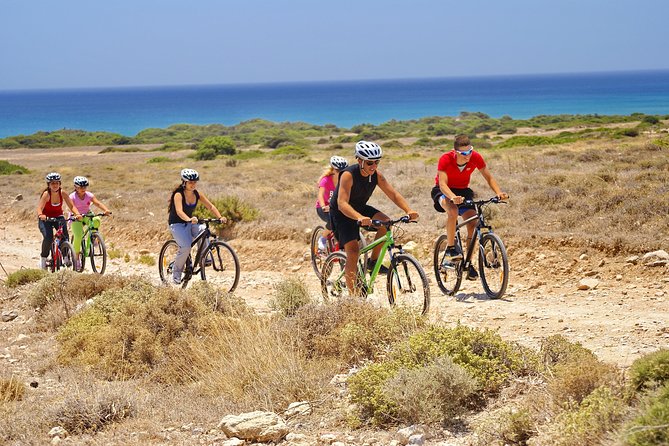
The best part of this full-day ride is how quickly Rhodes changes once you leave the coast. From Haraki, you pedal through old olive groves, orange country, village lanes, river paths, a small gorge, and wartime remains before ending near the sea. It is a useful way to see the island beyond resorts and archaeological headline stops.
I like the well-kept Specialized bikes and the careful pacing, with guides such as Dimitris and Nicos keeping the group together. I also like the mix of riding and short stops: a village church, an old Italian bridge, Second World War battlements, and a Greek meal in a shaded setting. The main consideration is that this is mostly a moderate ride on rough, fairly flat terrain, not a hard-core mountain bike challenge.
At a glance
- Haraki is the starting point: Begin near the fishing village and coast, then move inland through rural Rhodes.
- The route has real variety: Expect country tracks, rural roads, olive and orange groves, river terrain, a gorge, beaches, and old military remains.
- Specialized bikes are supplied: The bike is selected for your body type, and helmets are included.
- Local guides add context: Dimitris, Nicos, and the guiding team explain Rhodesian plants, culture, geology, and history.
- Food and water are built in: Bottled water, snacks, and a light Greek meal help make the hot-weather ride manageable.
- The finish is by the water: Agia Agathi Beach provides the natural place for a refreshing swim after the ride.
Why the Red Water route is worth your day
Rhodes is easy to reduce to beaches, resort pools, and the medieval streets of Rhodes Town. This bicycle trip gives you a different island: one of farm tracks, dry riverbeds, old bridges, village churches, orange trees, and broad views across the countryside.
The route begins in Haraki, a small fishing village on the east coast. From there, the ride passes the beach and heads toward the ancient olive grove at Massari and the orange groves around Malona. These are not polished sightseeing venues. Their value is in the rhythm of the ride, where the island’s agriculture and older rural settlements become the main attraction.
At roughly six to eight hours, this is a full day rather than a quick activity squeezed between hotel breakfast and an afternoon at the pool. That length works well if you want a strong sense of place. It also means you should treat the trip as an active outing, not a casual bicycle tour.
The price is about $102.13 per person. That includes hotel, port, or airport transport, a Specialized bike, helmet, guide, bottled water, snacks, and a light Greek meal. For a full day with transport and equipment included, the cost is fair, especially if you are arriving by cruise ship and want an organized way to see rural Rhodes. It is less appealing if you only want two hours of easy cycling or if you already have access to a bike and local transport.
More Mountain Bike Tours in Greece
- Santorini: Electric Mountain Bike Adventure
★ 4.9 · 98 reviews - Private Electric Mountain Bike Experience and Tour in Santorini
★ 5.0 · 29 reviews - Meteora Trails Electric Mountain Bike Tour
★ 5.0 · 24 reviews
Getting started from Haraki
Pickup is usually between 8:00 and 8:45 a.m. from outside your hotel or accommodation. Cruise passengers are collected about 30 minutes after docking, and pickup can also be arranged from the port gate or airport. The exact time depends on your location and the day’s docking schedule.
The ride itself begins around 9:20. That transfer is useful because Haraki is not just a meeting point. It lets you arrive at the part of the island where the Red Water route makes sense, without having to work out rural roads or bike transport yourself.
The group can reach a maximum of 20 people, though some outings have been much smaller. One reported ride had eight cyclists and two guides. A smaller group is a real advantage on mixed surfaces, since the guides can see how everyone is doing and stop before anyone gets too far behind.
Bikes are selected according to your body type. That matters on a long day, even if the route is not especially steep. You will also receive a helmet. Wear practical clothing, bring sun protection, and choose shoes that feel secure on both paved roads and rough tracks.
Massari, Malona, and the old olive trees
The first part of the route leads through the coast and inland farming country. The ancient olive grove near Massari gives you an early look at the age of Rhodes’ cultivated land. Some of the island’s olive trees are described as being as old as 2,000 years, so this is a place to pause and look closely rather than simply pedal past.
The route continues through Malona’s orange grove. This section adds a pleasant change from the gray-green olive trees. The combination of citrus, olive trees, dry ground, and village roads gives you a better feel for local life than a bus ride along the main highway.
The riding here is mainly moderate. One account describes a mostly flat route over rough terrain and roads, with an optional 800-meter climbing section for stronger riders. That detail is important: you do not need to be an elite cyclist, but you should be comfortable riding for several hours and handling uneven surfaces.
The guides make frequent stops, both for rest and for explanations. Nicos is particularly strong on local plants, geology, and how vegetation has been used. If that side of the island interests you, pay attention during the pauses under trees and beside the paths. The route is as much about noticing the countryside as covering distance.
A church stop in Malona
A stop at Malona’s main church gives the day a human scale. You can leave the bike for a short stroll through the village, rest, and have Greek snacks before continuing.
This is the kind of stop I value on an active tour. A long ride made up only of scenery can become repetitive. A village pause gives you a chance to look at local architecture, stretch your legs, and reset before the next section.
The church also helps explain the structure of the route. You are not being rushed from one dramatic sight to another. Instead, the day moves through ordinary places that reveal how the island works: a village center, cultivated groves, a river course, and older transport routes.
The meal later in the day is another welcome break. It is described as a filling light Greek meal, with food served in a shaded courtyard at one stop. Drinks are not included, so budget for anything beyond the supplied water and food.
Same roads, a different day in the saddle:
- Santorini E-bike Adventures – The Original Bike Tours
★ 5.0 · 223 reviews - Romantic Cycling Tour with Private Picnic at the beach
★ 5.0 · 69 reviews - 3in1; Cycling, sightseeing, tasting
★ 5.0 · 47 reviews - Milos Island e-Bike Ride
★ 5.0 · 35 reviews
Following the Gadoura River to Red Water gorge
After Malona, the ride follows the course of the Gadoura River toward its source. The river terrain brings a rougher, more natural feel to the route, with a change from village roads to tracks and paths.
The Red Water gorge is small but impressive. Do not expect a huge canyon or a major hiking expedition. Its appeal is the contrast: after cycling through agricultural land, you reach a narrow, striking section of rock and water that feels more remote.
Part of the route includes a walk into the canyon. That makes the day more varied, but it also means you should be ready to leave the saddle and walk carefully on uneven ground. The outing is not only a bike ride from start to finish.
Water management is one of the practical strengths of this trip. Cold bottled water is supplied at several points, and cyclists can take as many bottles as needed. That is especially helpful in Rhodes, where heat can make a moderate route feel much harder than the mileage suggests.
Still, do not treat provided water as a reason to ignore the weather. The activity operates in all weather conditions, so dress appropriately. Light clothing, sun protection, and a layer for changing conditions are sensible choices.
Bridges, battlements, and an old airport
Leaving the river’s source behind, the route passes through more olive and orange trees on the way to the Gadoura bridge. The bridge was built in the 1930s and offers a quiet reminder of the infrastructure that once linked these rural areas.
The group can rest beside the old Italian bridge. These pauses are useful for photographs, but the larger value is historical. The route places twentieth-century construction beside older village life and much older agricultural traditions.
Nearby old battlements date from the Second World War. They are not presented as a polished museum site, and that is part of their appeal. You see military traces sitting among the countryside, with little separation between history and everyday land.
The route also passes the runway of an old airport. This is another unusual detail that gives the ride a sense of discovery without turning it into a formal history tour. You will not spend the day inside museums. Instead, history appears along the path, at the edge of a grove, beside a bridge, or near a beach.
The guide’s role matters here. The route has many scattered details, and without explanation some could be easy to miss. The guides discuss local history and culture in more than one language, and Nicos is noted for explaining plants and the surrounding terrain. The tour is offered in English, but the guiding team can communicate in several languages.
Feraklos Castle and the final swim
The ride eventually returns toward the coast, passing Agia Agathi Beach and the Feraklos Byzantine and medieval castle. The castle adds another layer to the day, linking the rural route with Rhodes’ long defensive history.
You do not need to expect a long castle visit. The appeal is seeing the old fortress in relation to the coast, the road, and the surrounding countryside. After hours among groves and river paths, the return to open water gives the day a clear change of mood.
The route description also refers to a refreshing swim in the deep blue water near Haraki Beach. Agia Agathi is described as the ideal place to finish the ride. In practical terms, the beach stop is your chance to cool down, wash away the dust, and enjoy the sea before returning to the coach.
Bring swimwear beneath your cycling clothes or in a small day bag if possible. The supplied information confirms the swimming stop, but it does not specify a towel service or changing facilities, so you should plan simply.
The beach finish is one of the tour’s best design choices. A hard ride ending at another transfer point can feel abrupt. A swim turns the final hour into a reward and gives you time to enjoy the coast without spending the entire day on a beach lounger.
How demanding is the cycling?
This is a good choice for a generally active adult who can ride for several hours and manage mixed surfaces. It is not described as particularly arduous, and the optional climb lets stronger cyclists add effort without forcing the entire group to do so.
The route includes country paths, trails, rural roads, rough flat terrain, and some paved village roads. You may also walk into the gorge and stop several times. The repeated pauses, water stations, and steady group pace keep the day manageable.
It is not the best choice if you want serious downhill riding, technical single-track, or a major climbing workout. One cyclist specifically described the ride as unsuitable for someone seeking lots of hills. For that kind of challenge, ask the operator about a harder route before booking.
Children must be accompanied by an adult. Most people can participate, but the tour still requires basic comfort on a bicycle and the stamina for a full outdoor day. The guides monitor the group and help keep cyclists together, which is reassuring if your group has mixed ability.
Guides, food, and the practical details
The guiding team is a major part of the experience. Dimitris handles pickup and coordination, while Nicos has been praised for his explanations of history, plants, and local life. The guides also respond carefully when someone has a minor fall, which matters on rough roads and village pavement.
Included food is simple rather than elaborate: snacks along the way and a light Greek meal. That is enough to keep the day moving, and a shaded meal stop adds a welcome pause. Do not expect a restaurant meal or a wide choice of drinks. Drinks beyond the supplied water are not included.
The coach returns you to your hotel around 3:30 p.m., or about 40 minutes before cruise departure. Cruise passengers should still confirm the pickup and return timing carefully. The stated schedule is designed to get you back in time, but port days always require attention to the ship’s all-aboard time.
Confirmation is sent within 48 hours, subject to availability. Free cancellation is available up to 24 hours before the start time. If the minimum number of participants is not met, the operator offers another date or experience, or a full refund.
Who should book the Red Water ride?
I would choose this tour if you want to see the Rhodes countryside without arranging transport, bike hire, food, and route planning yourself. It suits couples, friends, active families with adult supervision, and cruise passengers who want a full day away from the usual port circuit.
You will get the most from it if you care about small details: old trees, village churches, orange groves, bridges, plants, military remains, and the way the countryside meets the sea. The guides add much of the meaning, so stay with the group and ask questions.
I would look elsewhere if your priority is a demanding mountain bike workout, long technical descents, or complete freedom to ride at your own pace. The group stays together, the route includes regular stops, and the terrain is mostly moderate.
Should you book it?
Book the Red Water route if you want an active, well-supported day that combines cycling with local history, food, and a beach swim. The included transport, Specialized bike, helmet, water, snacks, and meal make the $102.13 price reasonable for a six to eight-hour outing.
Skip it if you are not comfortable on rough roads or want a pure sightseeing trip. For everyone else, this is a smart way to see a quieter side of Rhodes, with enough variety to keep the day interesting and enough support to keep it comfortable.
FAQ
Where does the Mountain Biking Red Water tour take place?
The tour takes place on Rhodes, Greece. The Red Water route begins from the fishing village of Haraki and passes through nearby rural areas, villages, groves, river terrain, beaches, and historic sites.
How long does the tour last?
The full experience lasts approximately six to eight hours. The ride starts around 9:20 a.m., and return to your hotel is planned for about 3:30 p.m.
What time is hotel pickup?
Hotel pickup takes place between 8:00 and 8:45 a.m. The exact time depends on your hotel location. Cruise passengers are picked up about 30 minutes after docking.
Can I be picked up from the port or airport?
Yes. Pickup is available outside your hotel or accommodation, from the port gate, or from the airport.
What kind of bicycle is provided?
Specialized mountain bikes are provided. The bike is selected according to your body type, and helmet use is included.
Is the route difficult?
The route is mainly moderate and includes country paths, trails, rural roads, and rough terrain. An optional 800-meter climbing section is available for stronger cyclists. The route is not aimed at people seeking extensive hill climbs or technical mountain biking.
What sights are included?
The route includes Haraki, the Massari olive grove, Malona’s orange grove and main church, the Gadoura River, Red Water gorge, the Gadoura bridge, an old Italian bridge, Second World War battlements, an old airport runway, Agia Agathi Beach, and Feraklos Byzantine and medieval castle.
Is food included?
Yes. Snacks, bottled water, and a light Greek meal are included. Drinks beyond the supplied water are not included.
Can I swim during the tour?
Yes. The tour finishes near Agia Agathi Beach, with a refreshing swim in the sea. The route information also refers to the waters near Haraki Beach at the end of the ride.
What happens if the tour is canceled for lack of participants?
If the minimum number of participants is not reached, you are offered another date or experience, or a full refund. Free cancellation by you is available up to 24 hours before the start time.
Just added around Greece
- Private Bike and Hike Tour in Naxos★ 5.0 · 34 reviews
- Olympus Mountain Biking – Rides tailored to you★ 5.0 · 6 reviews
- E-bike (Electric Mountain Bike) Guided tour in West Crete★ 5.0 · 9 reviews
- Cycling Tour in Nafplio★ 5.0 · 6 reviews
- Private Sightseeing Tour in Corfu Town by Electric Mountain Bike★ 5.0 · 3 reviews
- Corfu Old Town Cycle Tour-History,Flavours & Narrow Alleys!★ 4.5 · 4 reviews
- Discover the City e-bike day tours★ 5.0 · 22 reviews
- Naxos: Private e-Mountain Biking and Hiking adventure★ 5.0 · 4 reviews
Mountain Bike Tours, compared.
Downhill Cycling with Volcano, Rice Terraces and Meal
Read our review →
Mountain Bike Down the World’s Most Dangerous Road
Read our review →
Chiang mai Hike & Downhill Bike Adventure –Suthep National Park
Read our review →Downhill Cycling with Volcano, Rice Terraces, and Meal
Read our review →
Browse the lists this tour appears in