
Review · UBUD
Jatiluwih E-bikes Tour Cycling Group
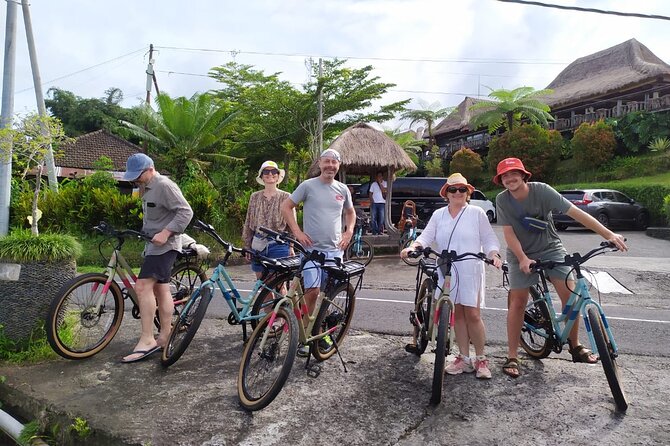
The best part of this Jatiluwih tour is that the electric bike takes you beyond the busiest viewing areas and into quieter rice-field paths. You get mountain views, working farmland, and a close look at Bali’s famous irrigation system without turning the day into a hard cycling workout. I especially like the chance to visit Luhur Besikalung Temple and the way guides such as Gideon and Gilan add useful detail about plants, farming, geography, and local culture.
I also like that the ride suits people who are fit but not eager to wrestle with Bali’s hills. The bikes offer simple controls and electric support, which makes the route manageable for older riders and families with teenagers. The main drawback is that the price does not include admission to Jatiluwih Green Land, and the ride depends on good weather.
What makes this e-bike tour worth considering
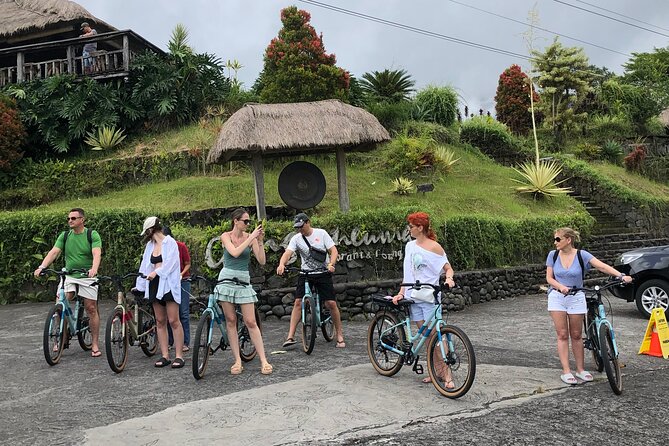
- Quiet rice-field routes: Reach parts of the Jatiluwih terraces that see fewer tourists than the main viewpoints.
- Electric help on hills: The e-bikes reduce the strain of climbs while keeping you active.
- Local explanations: Learn about Subak irrigation, farming, plants, geography, and village life.
- Luhur Besikalung Temple: Visit a distinctive temple connected with a centuries-old Linga Yoni and a gong-like chain necklace.
- Scenic food stop: After the temple, take a boogie ride toward Gong Jatiluwih Restaurant and lounge for lunch with views.
- Small-group potential: The maximum group size is 30, though some departures may be much smaller.
Why Jatiluwih works so well by e-bike
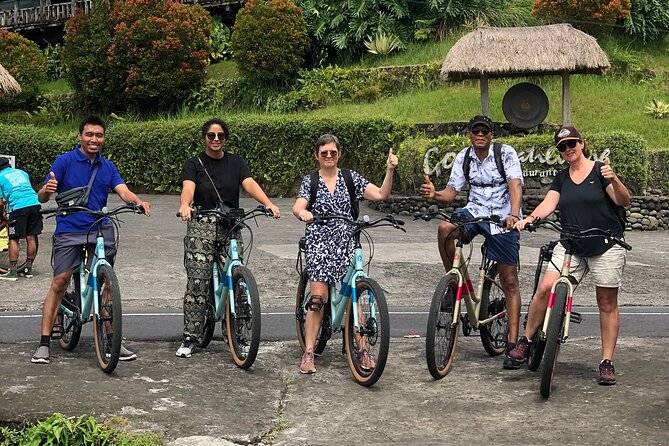
Jatiluwih is not just a place to stop, take a picture, and move on. Its rice terraces form a working agricultural area shaped by water, slopes, village traditions, and careful cooperation between farmers. Exploring by bike lets you see those connections at ground level.
The electric assist matters here. The route includes changes in height, and one rider described the climbs as manageable with gear changes and motor support. That means you can pay attention to the scenery instead of spending the entire ride watching the next hill.
You still need to know how to ride a bicycle. This is not a sightseeing vehicle that carries you from one viewpoint to another. You will pedal, steer, and follow paths through the fields. The useful difference is that the bike helps when the road rises.
The tour uses specially designed e-bikes described as comfortable and simple to operate. That makes the experience a practical choice for people who have not used an electric bike before. One participant had never ridden one, while another had not cycled for some time, yet both were able to enjoy the outing.
The ride lasts about three to four hours. That gives you enough time to see more than a single terrace viewpoint, but it is short enough to fit into a larger day in the Jatiluwih area.
More e-bike tours in Ubud:
- E-Bike: Ubud Rice Terraces & Traditional Villages Cycling
★ 4.6 · 37 reviews - Jatiluwih full day e-bike cycling with lunch & trekking program
★ 5.0 · 8 reviews - Epic Electric Bike Tour by Cycle City Tours
★ 5.0 · 848 reviews
Starting at Giri eBikes in Jatiluwih
The tour begins at Giri eBikes Rental and Tour on Jalan Batu Luwih Kawan, Br. Gunungsari No. 259, Jatiluwih, in Penebel, Tabanan. The activity ends at the same meeting point, so you do not need to arrange a separate return point.
The listed operating hours are 6:00 AM to 3:00 PM, Monday through Sunday. An early start makes sense if you want cooler conditions and softer light over the terraces. A booking option connected with sunrise is also recommended in the available tour information, so you can ask about that timing if morning views matter to you.
The maximum group size is 30 people. That is a fairly large ceiling for a cycling activity, though the actual group may be smaller. One outing had only two participants, along with their driver, which created a much more personal experience. You should confirm the expected group size if a quiet, close-guided ride is important to you.
The listing describes the activity as suitable for most participants and allows service animals. Still, you should be comfortable riding a bicycle and handling some changes in height. The e-bike makes the route easier, not effortless.
Riding through Jatiluwih Green Land
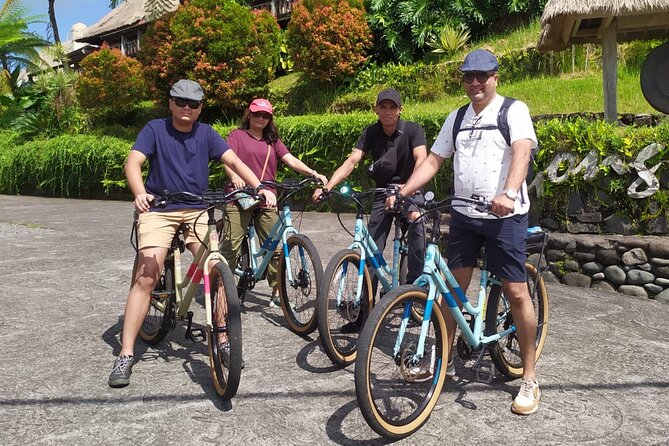
The first main portion lasts about two hours and takes place around Jatiluwih Green Land. Admission to this area is not included in the tour price, so factor that extra cost into your budget.
The main attraction is the rice terrace system itself. Jatiluwih has a long-established irrigation network that distributes water across a large area of fields. The system is connected with the Subak tradition, in which farming communities manage water and cultivation together.
A guide gives context as you ride. You can expect explanations about how the irrigation works, why the terraces are shaped as they are, and how farmers use the land. The experience becomes far more interesting when you understand that the views are also a functioning food-growing system.
The guides also discuss plant life, leaves, and their practical uses. One guide explained the physical characteristics and medicinal properties of plants along the route. That kind of detail rewards you for slowing down rather than treating the ride as a race between photo stops.
The scenery is the easy part to appreciate. You will see broad layers of rice fields backed by mountain views, with footpaths and farm routes cutting through the area. The e-bike lets you reach less-visited sections, a major advantage during busy periods.
The path itself may not feel like a smooth city cycleway. The supplied information describes trails, hills, and changes in height, but does not provide a detailed road surface description. Wear practical clothing and be ready for a ride through an agricultural setting rather than a polished recreational park.
The route also depends on conditions. Rain can make cycling less pleasant, and the operator may cancel the activity in poor weather. If that happens, you can receive a full refund or arrange another date.
Learning how Bali’s water system works
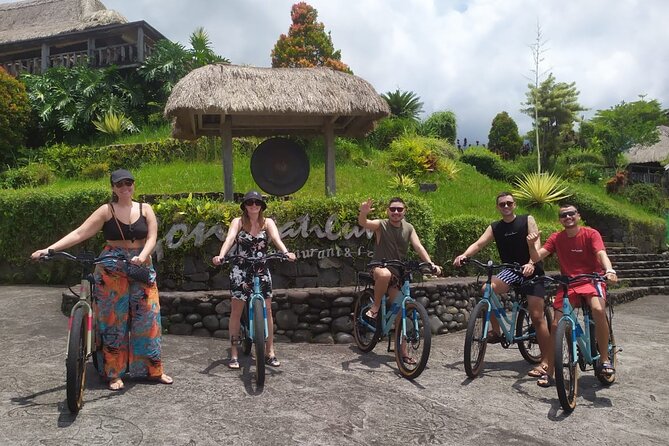
The irrigation explanation is one of the strongest reasons to choose this tour instead of simply renting a bicycle. Without a guide, you might see an impressive pattern of fields but miss the system that keeps them productive.
The guide connects the scenery with everyday life. You learn about agriculture, geography, farmers’ routines, and the plants growing around the paths. That gives the ride a human scale. You are not just looking at Bali from the outside. You are seeing how villages organize water and work.
I also like the balance between movement and interpretation. Two hours on a bike can become tiring if every minute is spent pedaling. Here, the route includes explanations, scenery, and stops, so the experience has more substance than a basic bicycle rental.
That said, the amount of detail may depend on your guide. Gideon received particularly strong praise for explaining plants, culture, geography, and farming. Gilan also guided a family outing. If you have a special interest in agriculture or Balinese culture, mention it when booking so the guide can focus on those subjects where possible.
A few more rides around Ubud worth a look
- Private Self-Guided E-Bike Ride in Tuscany with Vineyard Visit
★ 5.0 · 775 reviews - Cycle Dublin – Bike & ebike Tours
★ 5.0 · 748 reviews - Tokyo Top Highlights 3h Guided E-bike Tour
★ 5.0 · 714 reviews - Saint-Emilion Electric Bike Day Tour with Wine Tastings & Lunch
★ 5.0 · 696 reviews
Luhur Besikalung Temple and its unusual story
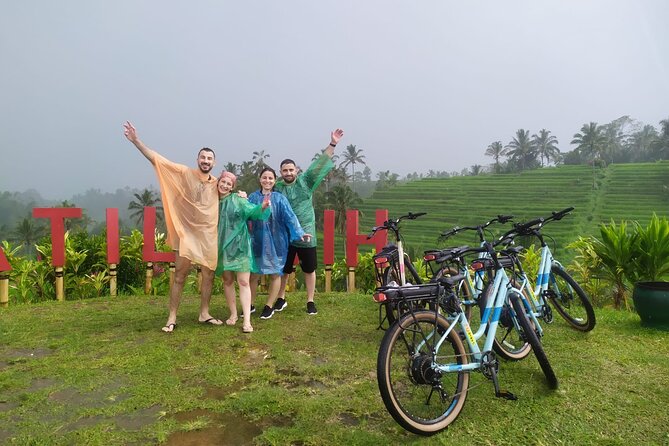
The next listed stop is Luhur Besikalung Temple, also called Pura Luhur Besi Kalung. It is located in Utu Traditional Village in Penebel, Tabanan, and the visit lasts about 30 minutes.
The temple is included in the admission arrangements, unlike the Jatiluwih Green Land entry. Its distinctive feature is a centuries-old Linga Yoni associated with a chain necklace that produces a gong-like sound. This gives the site a clear identity beyond the usual temple photo stop.
Your guide can help explain why the temple matters and how it connects with local beliefs. The visit also breaks up the cycling, giving you time to walk and look around before continuing.
Keep your expectations realistic. The stop lasts only about half an hour, so this is an introduction rather than an extended temple study. The supplied details do not specify a dress code or a particular ceremony, so you should ask the operator about current temple requirements before departure if that is important to you.
The temple also helps broaden the tour. Jatiluwih alone would give you scenery and farming. Adding a sacred site brings in another part of local life, and the short visit fits neatly into a half-day outing.
The ride toward Gong Jatiluwih Restaurant
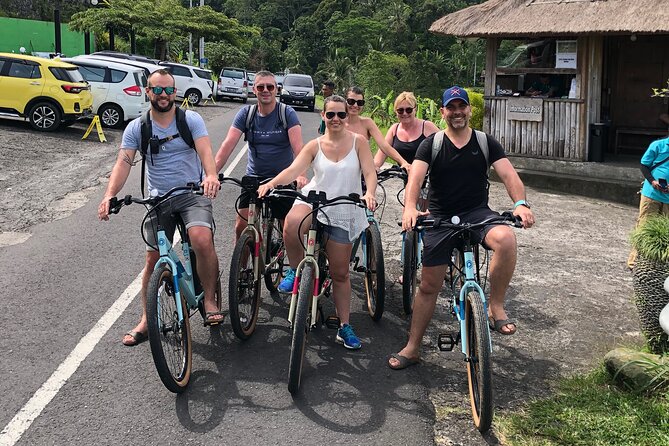
After the temple, participants are invited to take a boogie ride from the temple to Gong Jatiluwih Restaurant and lounge. The wording does not explain the exact vehicle or format of the boogie ride, so clarify that point when booking if you need to know precisely how this section works.
The purpose is clear: you get a scenic transition toward lunch rather than simply ending at the temple. The restaurant is presented as a place to enjoy food with views over the natural surroundings of Jatiluwih.
Lunch is described as an invitation, but the supplied information does not clearly state whether the meal is included in the $49.95 price. Confirm this before you book. That small detail can affect the tour’s real value.
The food stop is a welcome addition after cycling. You can finish the active part of the experience with a meal and scenery instead of rushing directly back to the starting point. Just remember that the activity still ends at the original meeting point.
Is $49.95 a fair price?
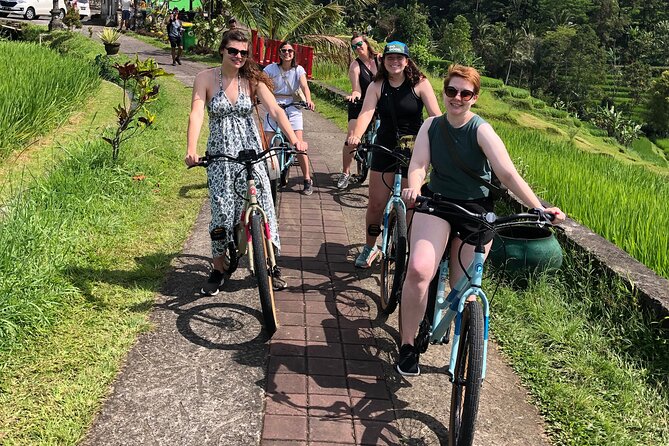
At $49.95 per person, this is more expensive than simply renting a bicycle for a few hours. The difference is the guided route, the electric bike, the interpretation, the temple visit, and the planned movement through quieter sections of Jatiluwih.
For someone who only wants to pedal around the main rice fields, a rental may be enough. For you, the guided tour makes more sense if you want to understand the irrigation system, learn about local plants and agriculture, and avoid working out your route on your own.
The price looks strongest for first-time e-bike users, families, and older riders who want access to the terraces without committing to a demanding bicycle trip. It is also useful if you have limited time and want the main elements arranged into a three to four-hour outing.
You should budget for the Jatiluwih Green Land admission, which is not included. Also confirm the lunch cost and the details of the boogie ride. Those points are not clear enough to assume they are covered.
The activity has a listed rating of 5 from seven ratings, with especially strong praise for the guides, bike comfort, scenery, and ability to reach areas with few tourists. That is a small sample, so I would treat it as encouraging rather than final proof. The consistent themes are still useful: the bikes help on hills, the guides add value, and the route works well for people who want something active without excessive strain.
Who will enjoy this most?
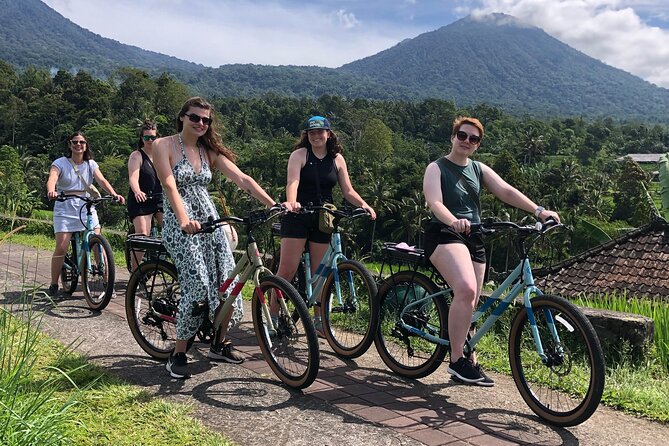
I would recommend the tour to you if you want to see Jatiluwih through more than a roadside viewpoint. It works especially well for:
- Families with teenagers
- Couples who want an active morning
- Older adults who are reasonably fit
- First-time e-bike users
- Anyone interested in farming, irrigation, and local culture
- Visitors who want quieter rice-field paths
You may want a different plan if you dislike bicycles, want a completely private vehicle-based tour, or need a fully detailed schedule with no uncertainty about meals and transport. The maximum group size is 30, so ask about the departure size if you do not like group activities.
The tour is also weather-sensitive. Jatiluwih is at its best when the fields and mountain views are clear, but rain can affect both comfort and safety. A flexible day in your schedule gives you more protection if the operator needs to move the booking.
Booking and cancellation details
Confirmation is provided at the time of booking, and the activity uses a mobile ticket. You can cancel for a full refund if you do so at least 24 hours before the local start time.
Cancellations made less than 24 hours before the start are not refunded, and changes inside that window are not accepted. If poor weather causes the operator to cancel, you will be offered a different date or a full refund.
The early operating window, from 6:00 AM to 3:00 PM, gives you useful flexibility. Still, check the exact start time, expected group size, admission cost, lunch arrangements, and boogie ride details before paying.
Should you book the Jatiluwih e-bike tour?
Book it if you want an easygoing but active way to see the terraces, and if learning about irrigation and farming matters to you. The electric assistance removes much of the worry about hills, while the temple and lunch stop add variety to the ride.
I would be most inclined to choose this tour for a family with teenagers, a reasonably fit older couple, or anyone who has limited cycling experience but still wants to explore beyond the main roads. Guides such as Gideon and Gilan appear to add real value through explanations about plants, culture, geography, and farmers’ lives.
Skip it if you want a hard, athletic ride, a fully private itinerary guaranteed from the start, or a package with every admission and meal clearly included. For most people seeking a practical half-day introduction to Jatiluwih, though, the mix of e-bike support, quiet fields, mountain views, and temple culture makes the $49.95 price worth serious consideration.
FAQ
Where does the Jatiluwih e-bike tour begin?
The tour begins at Giri eBikes Rental and Tour, Jalan Batu Luwih Kawan, Br. Gunungsari No. 259, Jatiluwih, Penebel, Tabanan, Bali 82152, Indonesia.
Where does the tour end?
The activity ends back at the meeting point at Giri eBikes Rental and Tour.
How long does the tour last?
The experience lasts approximately three to four hours.
How much does the tour cost?
The listed price is $49.95 per person.
Is admission to Jatiluwih Green Land included?
No. Admission to Jatiluwih Green Land is listed separately and is not included.
Is the temple admission included?
Yes. Admission to Luhur Besikalung Temple is included.
How many people can join the tour?
The maximum group size is 30 people.
What happens if the weather is poor?
The activity requires good weather. If the operator cancels because of poor weather, you will be offered another date or a full refund. You can also cancel for a full refund up to 24 hours before the experience start time.
Just added around Ubud
- Ubud: Kintamani Downhill Cycling with small group & Private★ 5.0 · 4 reviews
- Ubud: Half-Day Tegallalang Electric Cycling Tour★ 4.9 · 24 reviews
- Ubud: Downhill Countryside Cycling From Kintamani★ 4.5 · 4 reviews
- Ubud: Cycling Tour Local Villages, Temple, and Rice Field★ 4.8 · 12 reviews
- Ubud Cycling Tour : All Inclusive Cycling Adventure★ 4.2 · 7 reviews
- Bali Amazing Cycling Tour★ 5.0 · 4 reviews
- Ubud Eco Culture Cycling Exploration★ 5.0 · 31 reviews
- The Volcano Trail – Epic Volcano Cycling Adventure★ 5.0 · 12 reviews
E-Bike Tours, compared.

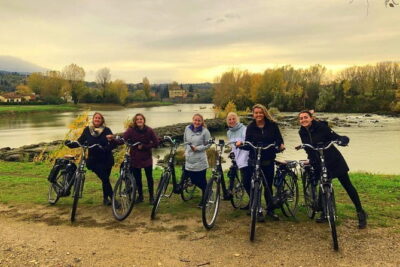
Private Self-Guided E-Bike Ride in Tuscany with Vineyard Visit
Read our review →

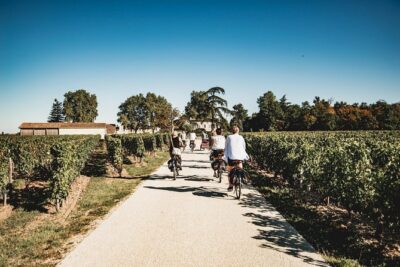
Saint-Emilion Electric Bike Day Tour with Wine Tastings & Lunch
Read our review →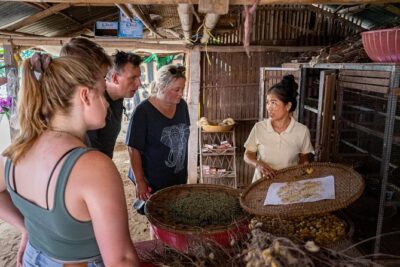
Phnom Penh Silk Island Bike Tour/ E-Bike or Tuk Tuk
Read our review →
Ultimate Calanques Panoramic e-bike Ride – 3h (Small Group)
Read our review →
Naples Scenic E-Bike Ride to a Local Vineyard with Meal
Read our review →Browse the lists this tour appears in